

Rubbish Cage Core Advantages
1. High Load Capacity & Ventilation
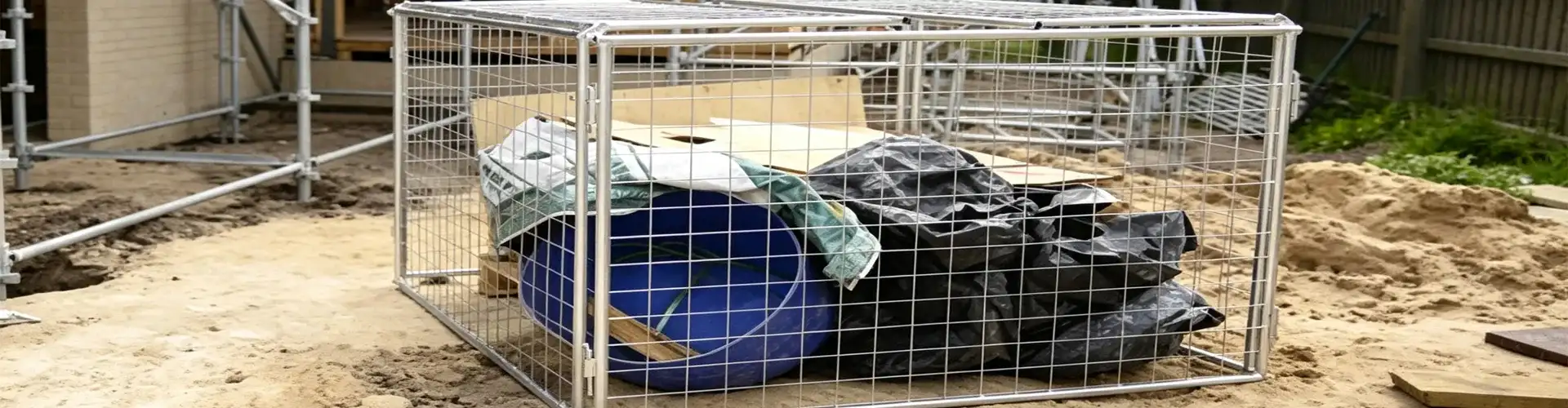
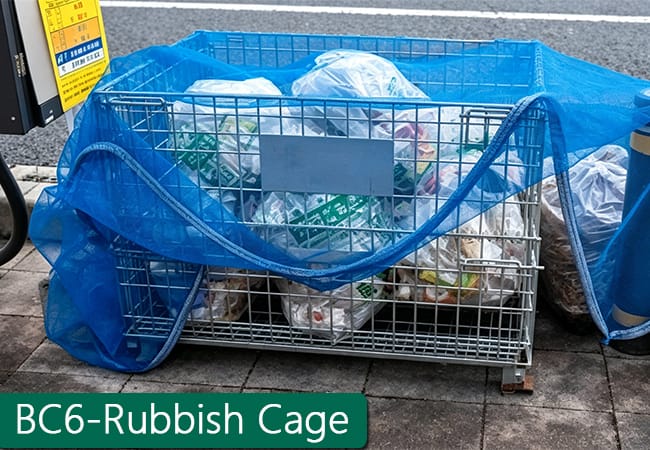
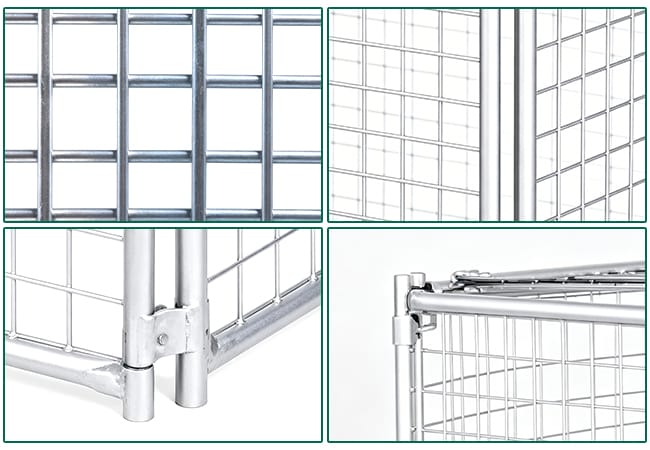
Open mesh structure allows airflow – reduces odor, moisture and dust. Reinforced frame withstands heavy loading.
2. Durable & Weather-Resistant
Hot-dip galvanized or PVC coated steel – rust-proof for long-term outdoor construction and municipal use.
3. Foldable & Space-Saving
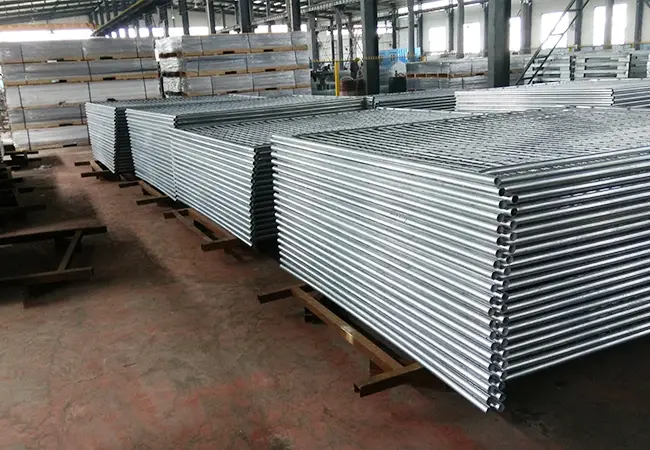
Modular foldable design – collapses flat when empty. Store 10+ cages in the space of one. Reduce return freight cost.
4. Easy Handling
Forklift pockets and crane lifting lugs standard. Quick assembly on site – no tools.
Product Details– BDFENCE
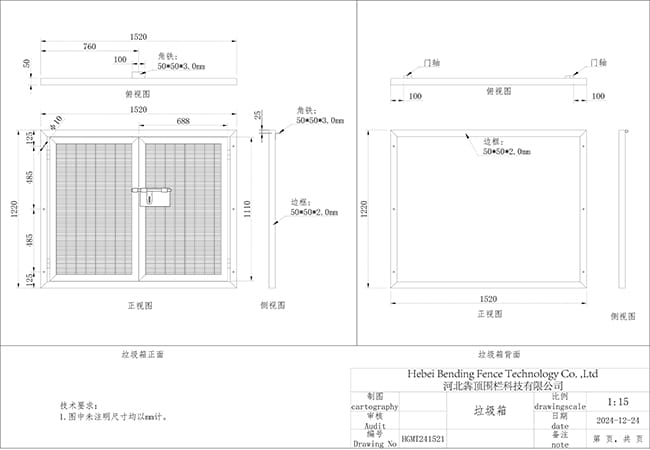
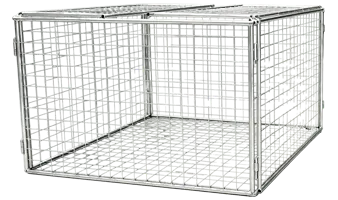
Rubbish Cage Specifications
| Parameter | Specifications |
|---|---|
| Surface Treatment | hot dip galvanized, zinc coating |
| Size | 8m x1.6mx2m, 1.8m,x1.2m,x1.5m, etc. |
| Mesh Opening | available from 50mm to 100mm Send Inquiry Now |
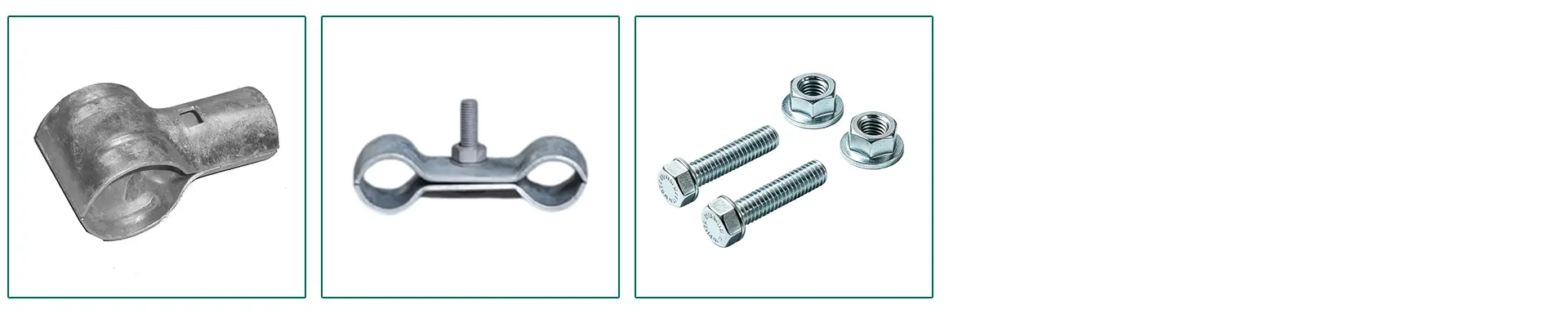
Special Accessories
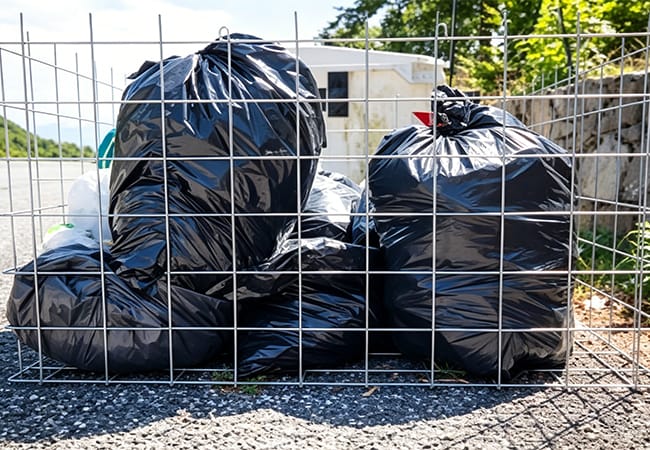
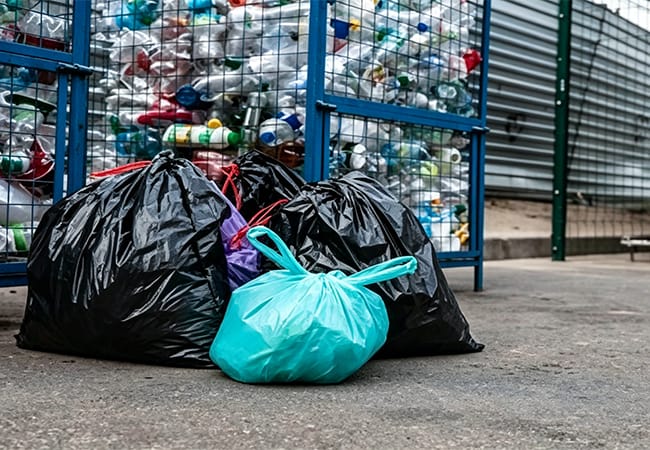
Applications of Rubbish Cage
Detailed Installation & Assembly Process for Rubbish Cage
The assembly and use of rubbish cage requires strict adherence to operational standards and detailed steps to ensure the overall stability, safety and practical performance of the cage. Below is the expanded and detailed process, with in-depth explanations of each step, key points and precautions:
1. Site Preparation & Ground Leveling
Before starting the assembly, thorough site preparation is the foundation to ensure the smooth progress of subsequent operations. First, clear the placement area, remove all obstacles such as stones, debris, construction waste and sundries that may affect placement, and clean the ground to avoid uneven support. Then, use a level to check the flatness of the ground; if there are local uneven areas, level them with compacted gravel or sand to ensure that the rubbish cage can stand stably and evenly. Next, according to the site layout and actual usage requirements, use professional measuring tools to mark the placement position of each rubbish cage. The ground should be compacted to achieve sufficient bearing capacity to prevent sinking during use. At the same time, keep enough space around for waste loading and transportation.
2. Rubbish Cage Unfolding & Assembly
Rubbish cage unfolding and assembly are core links affecting the overall stability of the structure, and every detail needs to be strictly controlled. First, unfold the folded rubbish cage on the leveled ground and check for any damage or deformation; ensure all mesh panels, frames and connecting parts are intact. Then, assemble the cage into a rigid box structure: erect the side panels and secure them with the provided pins, buckles or binding wires at all joints, ensuring tight and firm connections. Adjust the cage to be square and stable, with no tilting or loose sides. For multiple-cage combined use, arrange them in order and connect adjacent units properly to form an integrated layout. Check the squareness and stability of each cage to avoid deformation during use.
3. Position Fixing & Stability Reinforcement
After the rubbish cage is fully assembled, position fixing and stability reinforcement can be carried out. For long-term fixed use, fix the bottom of the cage to the ground with expansion bolts or ground anchors to prevent movement or tipping. For temporary use, place heavy objects at the bottom corners or connect multiple cages together to improve overall stability. During the process, ensure the cage remains vertical and stable, with no loose connections. Avoid overexertion when fixing to prevent mesh or frame damage, which guarantees the cage’s stability and safety during waste loading.
4. Loading Management & Capacity Control
Loading management directly affects the structural integrity and service life of the rubbish cage. When loading construction waste, debris or rubbish, fill the cage evenly layer by layer to avoid concentrated heavy pressure on one side. Do not overload beyond the designed capacity, and keep the waste level below the top edge to prevent spilling. For sharp and heavy waste, avoid violent impact that may damage the mesh or welds. Ensure even distribution of materials inside the cage to maintain balance and structural stability, which extends the service life of the cage.
5. Stability & Safety Inspection
After assembly and placement of the rubbish cage, a comprehensive stability and safety check is required to ensure that the structure meets safety standards. First, check the verticality and firmness of the cage: tilting should be strictly limited to ensure safe use. Then, check the overall structural stability: gently push the cage to ensure no obvious shaking, displacement or loose connections. Check the tightness of all connecting parts and the integrity of the mesh. If any problems are found (such as tilting, loose connections, damaged mesh), adjust and reinforce them immediately to ensure safe use.
6. Site Cleaning & Final Inspection
The final step is site cleaning and final inspection to ensure a tidy site and normal use of the cage. First, remove packaging debris, excess wires and installation tools around the rubbish cage, and keep the area clean and orderly. Then, conduct a full inspection: check the cage dimensions, assembly firmness, connection reliability and overall stability; check for mesh damage, rust or deformed parts; verify loading capacity and safety performance. After passing inspection, the rubbish cage can be officially put into use. If any unqualified items are found, rectify them immediately until meeting usage standards.
Note
During assembly and use, operators should wear protective equipment (such as safety helmets, gloves and safety shoes) to ensure personal safety. In addition, avoid scratching or damaging the surface treatment layer (such as galvanizing, PVC coating) during operation, which may affect the corrosion resistance and service life of the rubbish cage. Do not stand on the cage or throw heavy objects violently to prevent structural damage.
Why Choose BDFENCE for Rubbish Cage?
1. Heavy‑Duty Steel & Full Corrosion Protection
We use Q235 steel with hot‑dip galvanizing (ISO 1461, 80‑100µm) or optional PVC coating. Withstands harsh construction debris, rain, mud, and rust – 10+ years service life.
2. Full Customization – Size, Mesh, Wire, Coating
Standard sizes: 1.8×1.6×2.0m, 1.8×1.2×1.5m. Custom up to 2.5m length. Mesh opening 50‑100mm, wire 4‑6mm. Hot-dip galvanized or PVC coated (green, black, grey, orange). Fork pockets, lifting lugs, gates – tailor to your site needs.
3. Foldable – Save Space & Transport Cost
Folds to 1/4 height – flat storage. 5‑6 units on one pallet vs 1 unit assembled. Reduce return freight by 70%.
4. Easy Handling – 4‑Way Fork & Crane Ready
Base with four‑way fork pockets (120×120mm). Four lifting lugs at top – use forklift or crane. Side gate for easy loading of bulky waste.
5. Factory Direct – Quality & Price
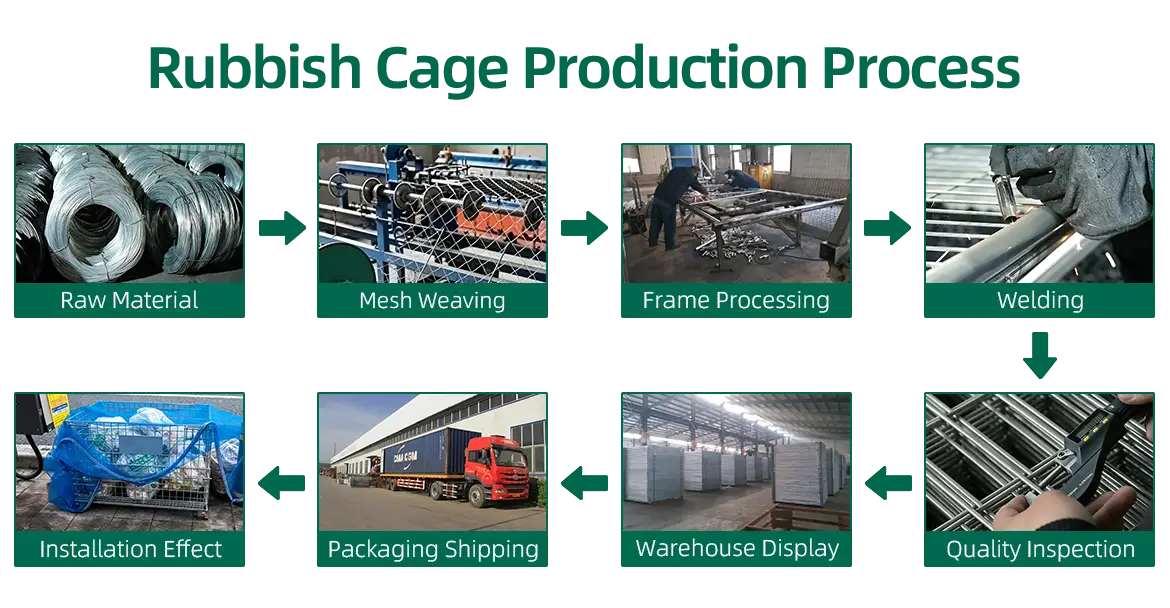
In‑house wire mesh, tube fabrication, welding, galvanizing. Strict QC, fast lead time (12‑15 days), competitive pricing.
6. Global Construction Waste Experience
Supplied building sites, demolition projects, municipal cleaning across Germany, UK, Australia, USA, UAE and more.
📌 In short: Heavy‑duty galvanized steel + foldable design + flexible sizing + full lifting features = BDFENCE, your trusted rubbish cage partner.