

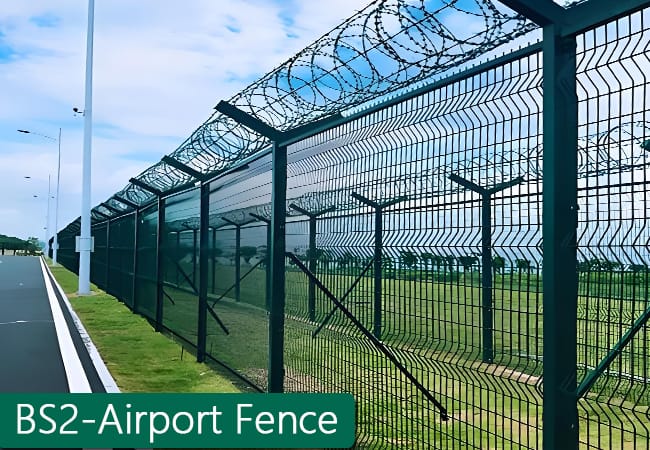
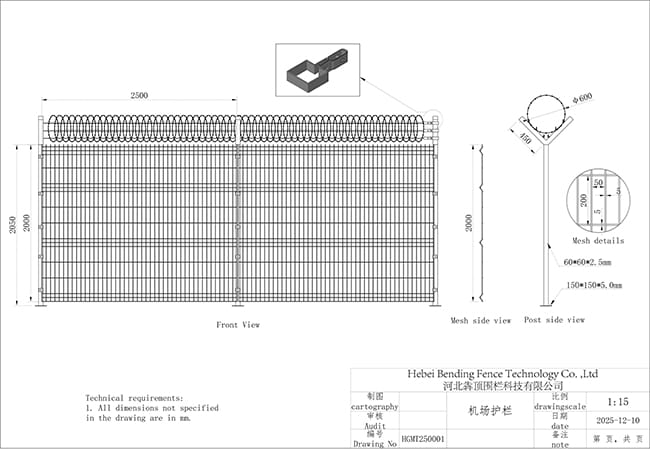
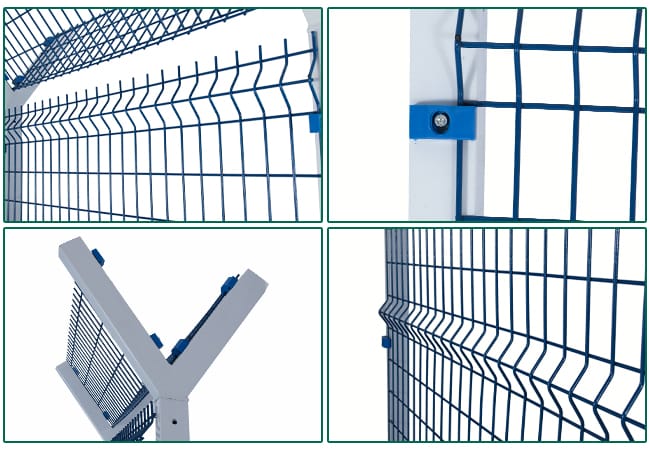
Airport Fence Core Advantages
1. Anti-Climb & Anti-Cut
Heavy-duty welded mesh with tight apertures (50×50mm to 76.2×12.7mm) prevents climbing and resists cutting tools.
2. Anti-Collision & Anti-Vandal
Reinforced steel structure with Y‑type posts and thick wire diameters (up to 6.0mm) withstands vehicle impact and intentional damage.
3. All‑Weather Corrosion Protection
Hot-dip galvanized (ISO 1461) + optional PVC coating – resists rain, UV, salt spray and extreme temperatures.
4. Fast Modular Installation
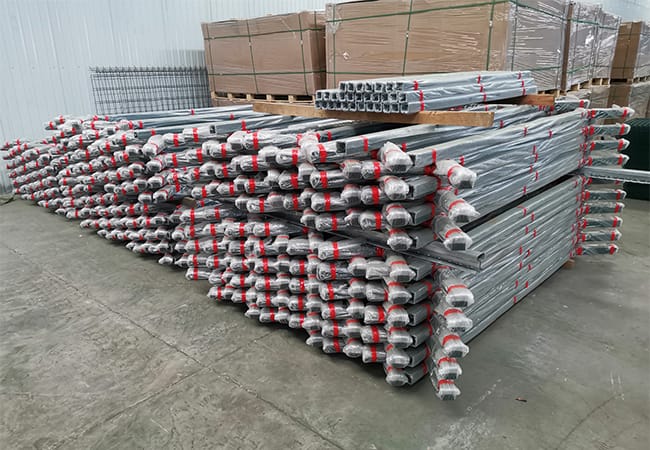
Pre‑fabricated panels + bolt‑on post systems – no on‑site welding. Minimises runway downtime.
Product Details– BDFENCE
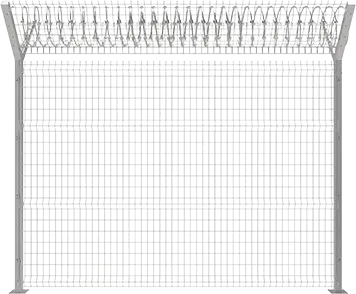
3D Airport Fence Specifications
| Parameter | Specifications |
|---|---|
| Line Wire × Cross Wire | 4.0 x 4.0 mm / 4.5 x 4.0 mm / 4.5 x 4.5 mm / 5.0 x 4.5 mm / 5.0 x 5.0 mm / 6.0 x 5.0 mm / 6.0 x 6.0 mm |
| Mesh Size | 50 x 100 mm / 50 x 200 mm / 55 x 200 mm / 75 x 150 mm / 100 x 300 mm |
| Length | 2000mm / 2400mm / 2500mm / 2800mm / 3000mm |
| Height | 1030 mm /1230 mm / 1530 mm / 1730 mm / 1930 mm / 2030 mm / 2230 mm / 2430 mm |
| Bending Qty. | 2 / 3 / 4 |
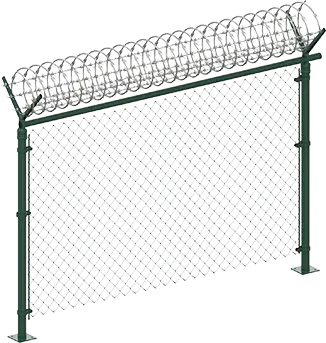
Chain Link Airport Fence Specifications
| Parameter | Specifications |
|---|---|
| Wire Diameter | 2.5mm / 3.0mm / 3.5mm / 4.0mm / 4.5mm |
| Mesh Size | 40×40mm / 50×50mm / 60×60mm / 75×75mm / 100×100mm |
| Roll Height | 1.2m / 1.5m / 1.8m / 2.0m / 2.4m / 2.8m / 3.0m |
| Roll Length | 9m / 10m / 15m / 18m / 20m / 25m / 30m |
| Rail | φ32mm / φ40mm / φ48mm |
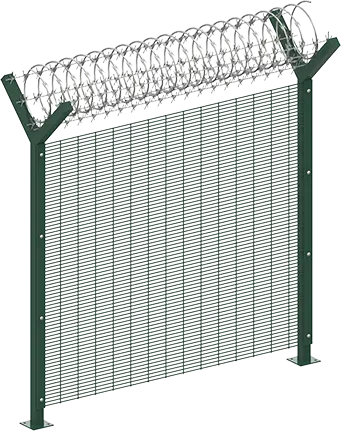
358 Airport Fence Specifications
| Parameter | Specifications |
|---|---|
| Line Wire × Cross Wire | 4.0×3.0mm / 4.0×4.0mm / 4.5×3.0mm / 4.5×4.5mm |
| Hole Size | 76.2×12.7mm / 75×12mm |
| Panel Length | 2.0m / 2.2m / 2.4m / 3.0m |
| Panel Height | 1800mm / 2000mm / 2200mm / 2400mm / 2800mm / 3000mm |
| Number of Bends | 4 / 5 |
| Common Color | Green RAL6005 / Grey RAL7016 / Black RAL9005 |
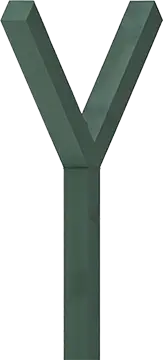
Recommended Y‑Type Post
| Parameter | Recommended Specification |
|---|---|
| Post Type | Y‑type post – industry standard for airport fencing |
| Post Size | 60×60mm, 80×80mm, or 100×100mm square tube |
| Thickness | 2.0mm / 2.5mm / 3.0mm |
| Post Material | Hot-dip galvanized steel |
| Post Height | Fence height + 500‑600mm embedment + Y‑arm extension |
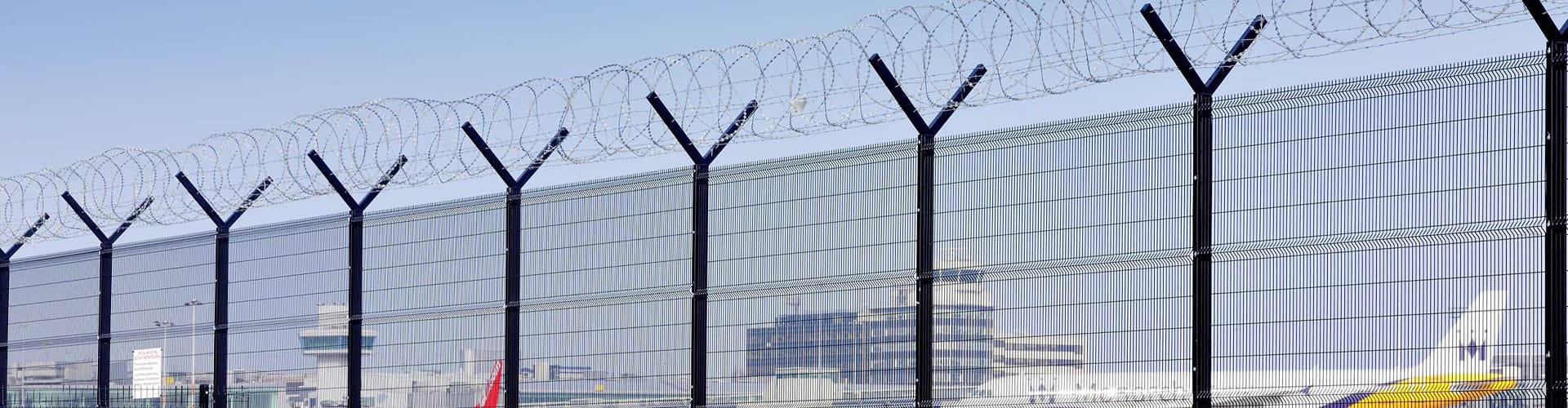
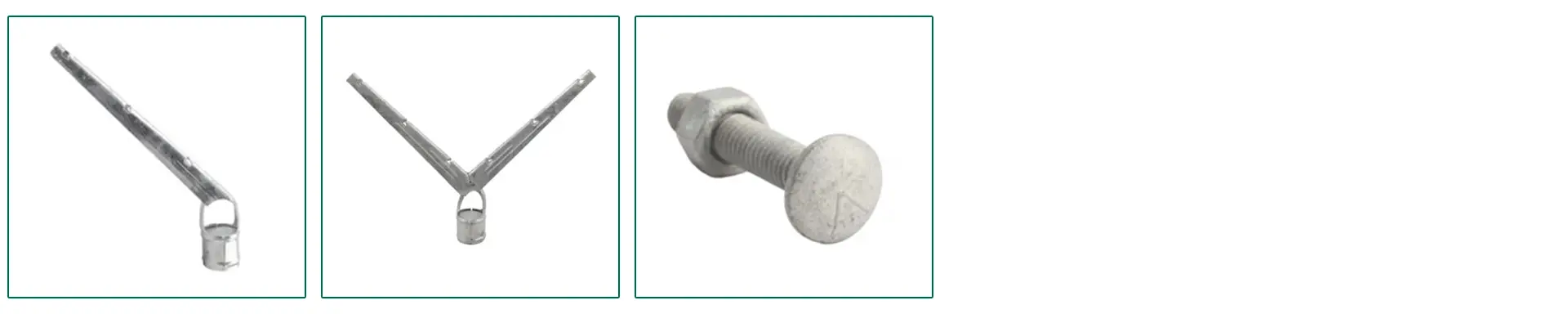
| Barbed Wire Arm | Integrated Y‑bracket at top for 2‑3 strands of barbed wire or concertina coils |
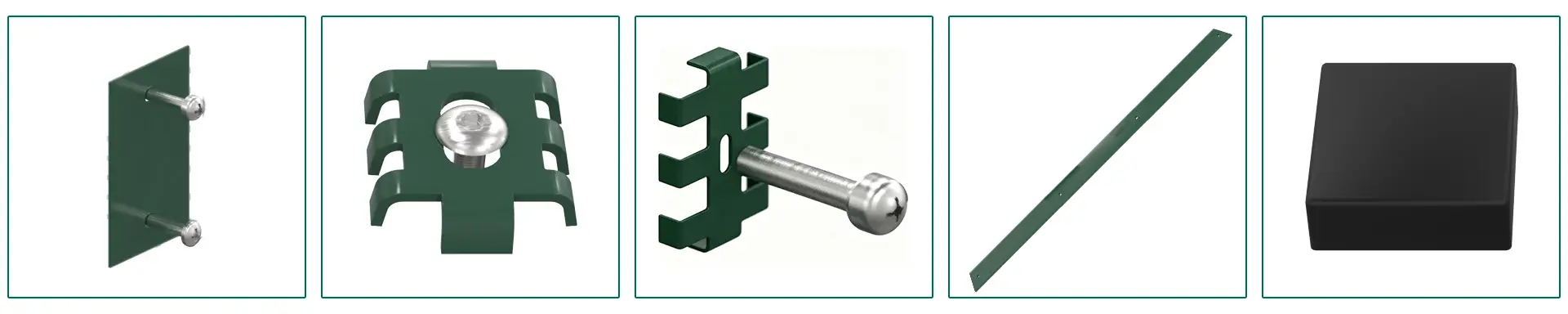
Special Accessories
- 3D Fence
- Chain Link Fence
- 358 Fence
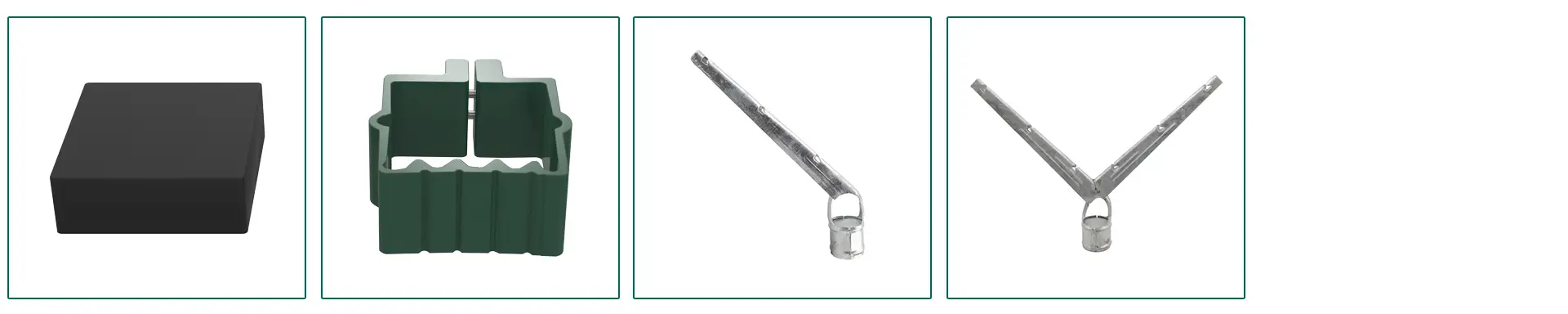
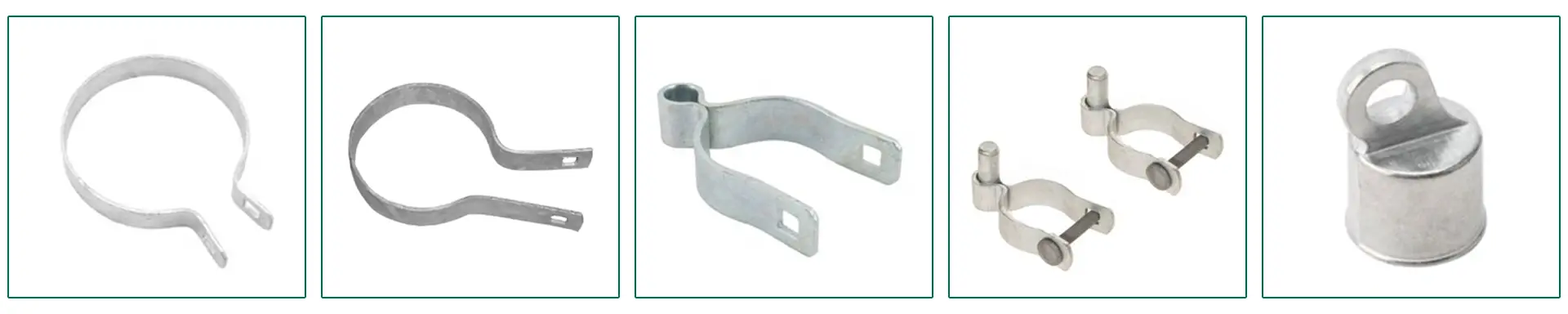
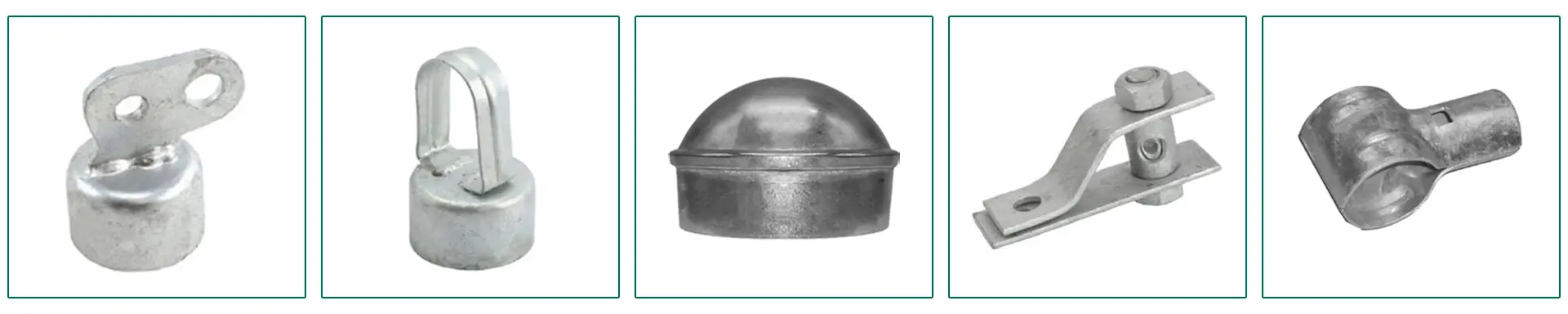
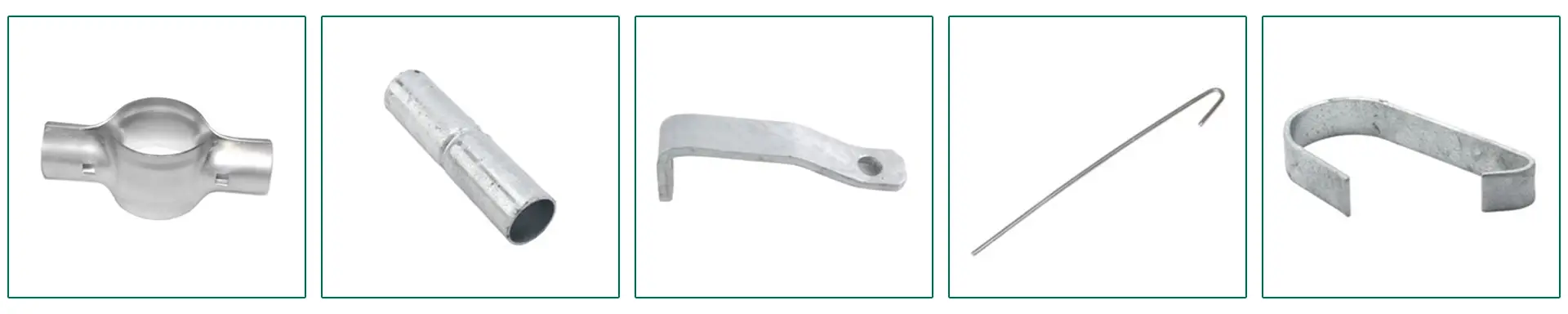
Applications of Airport Fence
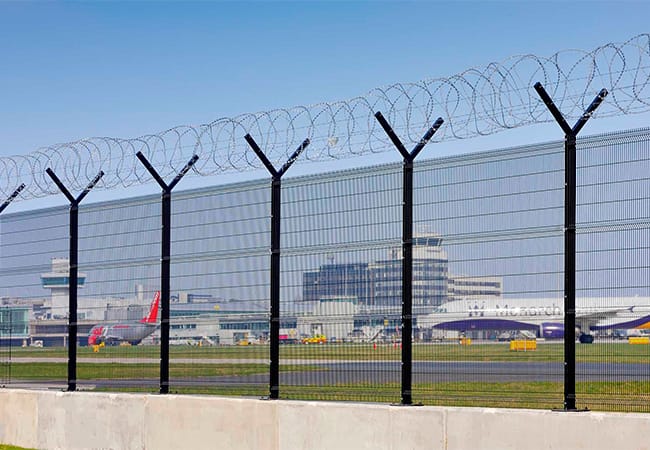
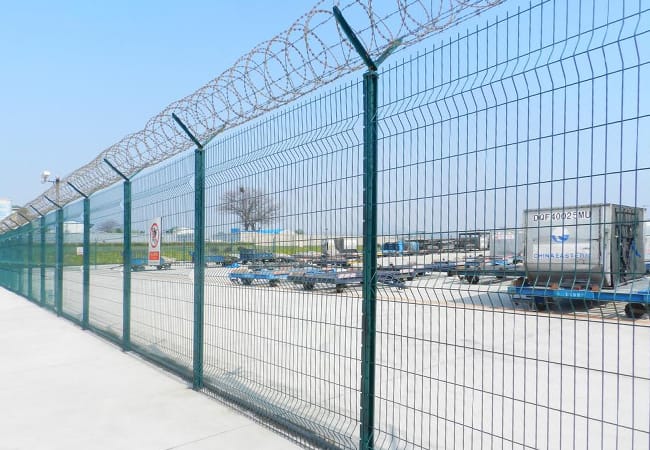
Heavy-duty security fence with concertina wire for industrial sites. Prevents unauthorized access while maintaining a clean, professional appearance.
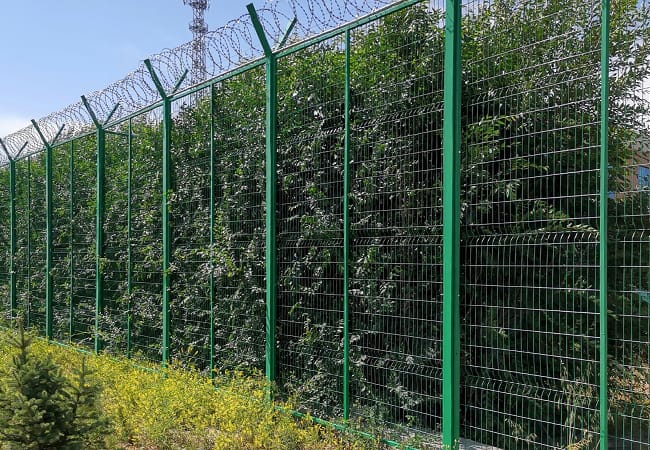
Rigid welded mesh fence with Y-posts and razor wire, ideal for airport cargo and operational areas. Provides reliable anti-intrusion protection.
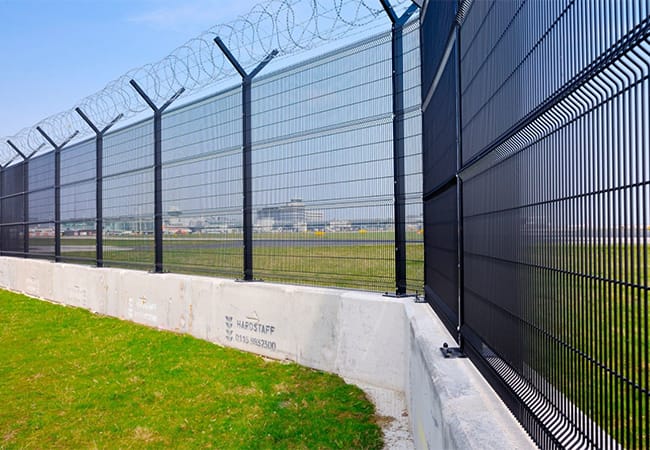
Black powder-coated high-security fence with anti-climb design, suitable for airports, military bases, and other sensitive high-risk areas.
Anti-climbing & secure, provides safe protection for campus.
Detailed Installation Process for Airport Fence
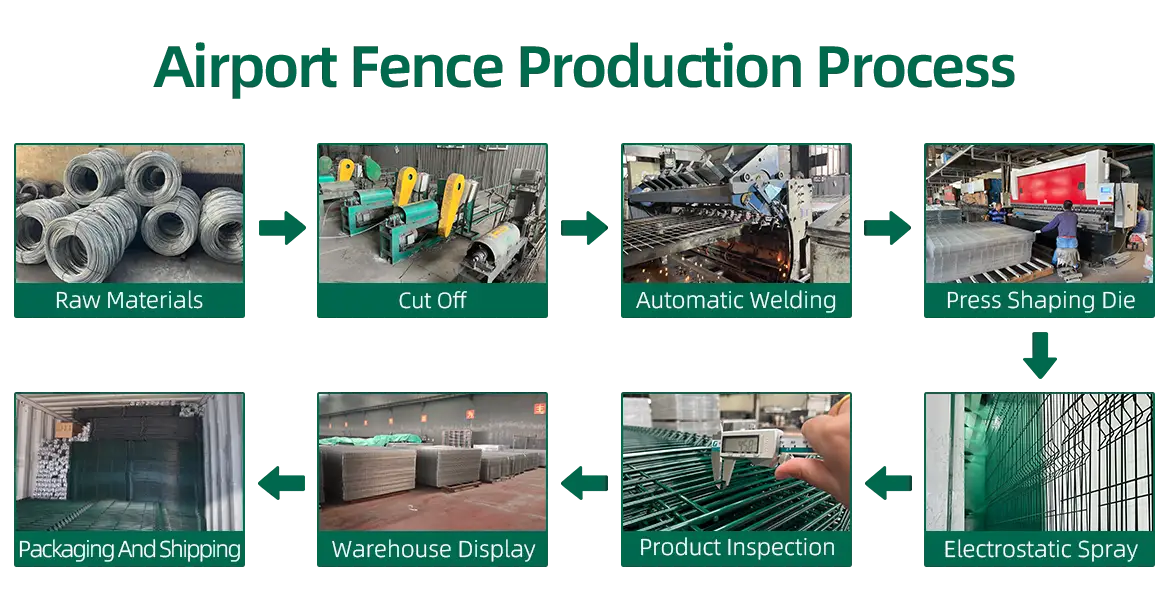
The installation of airport fence requires strict adherence to operational standards and detailed steps to ensure the overall stability, safety and aesthetic appearance of the fence. Below is the expanded and detailed installation process, with in-depth explanations of each step, key points and precautions:
1. Site Preparation & Line Marking
Before starting the installation, thorough site preparation is the foundation to ensure the smooth progress of subsequent operations. First, clear the entire construction area, remove all obstacles such as stones, weeds, garbage and sundries that may affect the installation, and clean the ground to avoid interference with positioning and assembly. Then, use professional measuring tools (such as tape measure, theodolite and ink line) to mark the post positions, installation lines and layout range according to the design drawings and actual airport requirements. The installation ground should be compacted to achieve sufficient bearing capacity, and soft soil areas must be reinforced to prevent post sinking. At the same time, mark the alignment lines to ensure the straightness and verticality of the entire airport fence structure.
2. Post Installation & Fixing
Post installation and fixing are core links affecting the overall stability of the airport fence, and every detail needs to be strictly controlled. First, place the Y-type or rectangular posts accurately along the marked lines and check for any damage or deformation; ensure all posts and connecting parts are intact. Then, fix the posts firmly by concrete pouring, embedded foundation or flange plates according to aviation security standards, ensuring stable and vertical installation. Adjust the verticality and spacing of each post accurately to maintain consistent height and neat arrangement. For long-distance perimeter installation, set positioning posts at both ends first and pull a reference line to ensure overall straightness, which greatly enhances structural stability and anti-climb performance.
3. Fence Panel Installation & Connection
After the posts are fully fixed, fence panel installation and connection can be carried out. First, lift the heavy-duty high-security welded mesh panels to the installation position between two adjacent posts. Then, connect the panels to the posts using high-strength anti-theft bolts and special clamps, ensuring tight and firm connections. Adjust the levelness and verticality of each panel to keep the whole fence in a straight and tidy line. Install adjacent panels in sequence to form an integrated airport perimeter security system. Ensure no gaps or loose connections between panels and posts, which guarantees the fence’s anti-intrusion and anti-cut performance.
4. Barbed Wire Installation & Reinforcement
Barbed wire installation and reinforcement directly affect the structural integrity and security level of the airport fence. After panel installation, install razor wire or barbed wire on the top of Y-type posts to enhance anti-climbing effect. Tighten all connecting fasteners, angle braces and security accessories evenly to ensure reliable locking. Reinforce key positions such as corners, gates and expansion joints to improve overall strength and anti-vandal capacity. Check each connection point carefully to avoid missing or loose fasteners. Double-check all components to ensure stable and durable installation for long-term high-security use.
5. Straightness & Stability Check
After the installation of posts, fence panels and barbed wire, a comprehensive straightness and stability check is required to ensure that the installation quality meets the standards. First, use a level and plumb line to check the verticality of posts and the straightness of panels: verticality error should not exceed 5mm per meter, and horizontal alignment should be consistent with the design. Then, check the overall structural stability: gently push the fence to ensure no obvious shaking, displacement or loose connections. Check the tightness of all fasteners and the integrity of the mesh structure. If any problems are found (such as skewing, loose connections, uneven panels), adjust and reinforce them immediately to ensure aviation security and structural durability.
6. Site Cleaning & Final Acceptance
The final step of the installation process is site cleaning and acceptance, which ensures the aesthetic appearance of the fence and confirms that the installation is up to standard. First, remove excess debris, bolts, packaging and installation tools from the construction site, and clean the surface of the airport fence to maintain a neat appearance. Then, carry out comprehensive acceptance according to aviation safety standards and design drawings: check the fence height, spacing, straightness, verticality and connection firmness; check for mesh damage, rust, or loose components; verify anti-climb, anti-cut and overall anti-intrusion performance. After the acceptance is qualified, the installation work is officially completed. If unqualified items are found, they should be rectified immediately until they meet the acceptance standards.
Note
During the entire installation process, construction personnel should wear protective equipment (such as safety helmets, gloves and safety shoes) to ensure construction safety. In addition, pay attention to the protection of the airport fence surface during installation to avoid damage to the surface treatment layer (such as galvanizing, PVC coating) which may affect the corrosion resistance and service life of the fence. Construction warning signs should be set up within the airport operation area to ensure flight safety and on-site construction safety.
Why Choose BDFENCE for Airport Fence?
1. Airport‑Grade Materials & Dual Coating
We use high‑tensile low‑carbon steel with hot‑dip galvanizing (ISO 1461) + optional PVC coating. Withstands jet blast, de‑icing chemicals, and coastal airport environments – 25+ years rust‑free.
2. Three Fence Types – One Airport Solution
We offer 3D Airport Fence (rigid V‑shape, 50‑100mm mesh, 4.5‑6.0mm wire), Chain Link Airport Fence (flexible diamond mesh, 2.5‑4.5mm wire, roll lengths up to 30m), and 358 Airport Fence (ultra‑dense 76.2×12.7mm, anti‑cut certified). Choose by threat level and budget.
3. Y‑Type Post System – Integrated Top Security
Our Y‑posts include built‑in barbed wire arms – no extra brackets. Available in 60/80/100mm square tube, 2.0‑3.0mm thickness. Standard for ICAO‑compliant airport perimeters.
4. Full Customisation – Height, Mesh, Colour
Panel heights 1800‑3000mm, lengths 2000‑3000mm. Mesh openings from 50×50mm to 100×100mm (3D/Chain Link) or 76.2×12.7mm (358). RAL colours: green, grey, black, white. Tailored for landside and airside zones.
5. Fast, Welding‑Free Installation – Night‑Shift Ready
Pre‑welded panels + bolt‑on brackets – no on‑site welding. Install during runway downtime. Reduce labour by 40%.
6. Global Airport Security Experience
Supplied Heathrow, LAX, DXB, Changi, Frankfurt and more. Full documentation (ISO, CE, ICAO compliance) ready for tenders.
📌 In short: Anti‑climb mesh + Y‑type posts + dual coating + ICAO options = BDFENCE, your reliable airport fence partner.