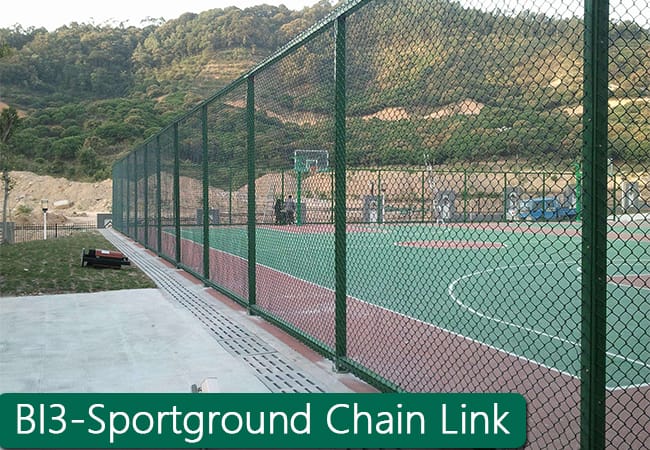



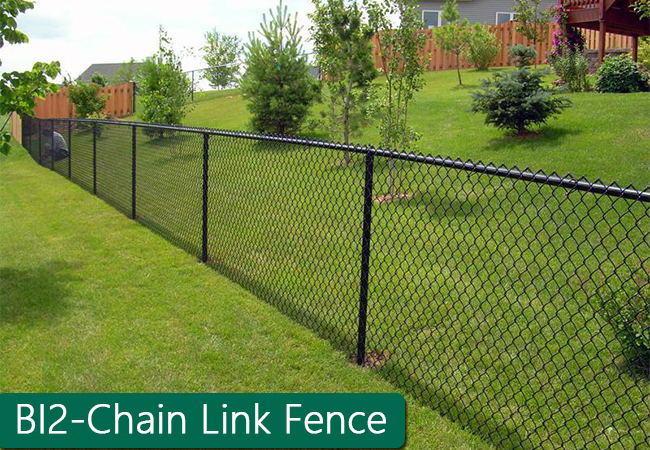
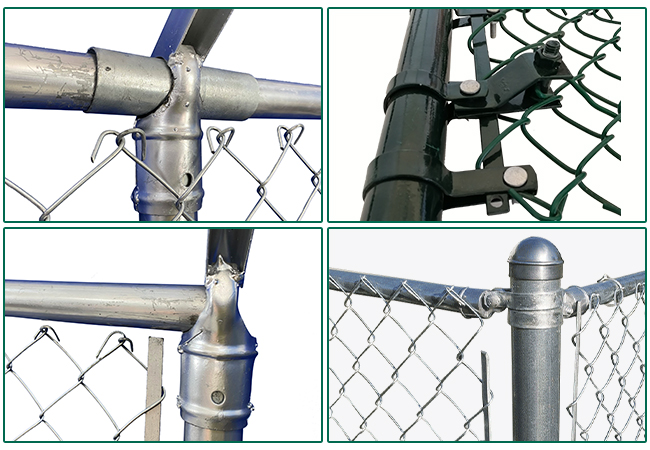
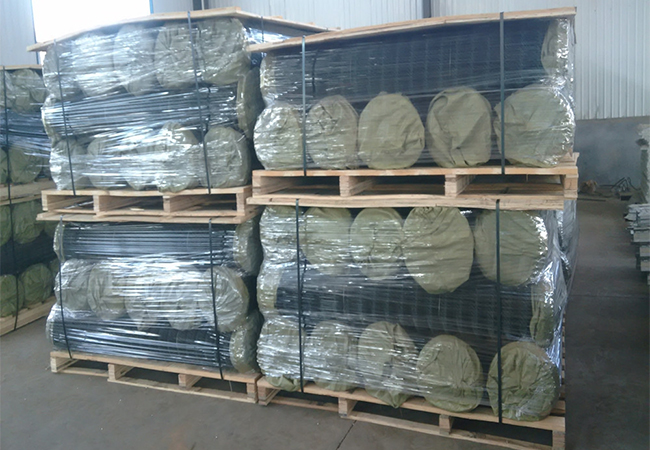
Chain Link Fence Core Advantages
1. High Tensile & Impact Resistance
Flexible diamond woven structure absorbs impact – withstands pressure, no permanent deformation.
2. Versatile & Modular
Rolled mesh, line posts, tension wires, and top rails – any perimeter shape or length.
3. All‑Weather Corrosion Protection
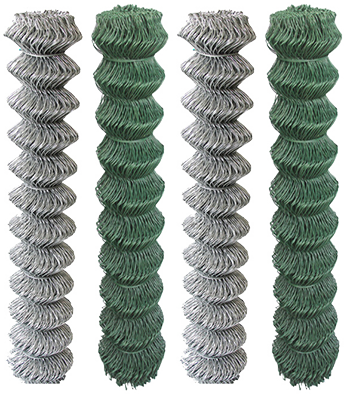
Hot-dip galvanized, PVC coated, or galvanized + PVC – rust‑proof, UV‑resistant.
4. Fast, Welding‑Free Installation
Rolls unfold quickly. Use tension bars, bands, and clips – no on‑site welding.
Product Details– BDFENCE
Chain Link Fence Specifications
| Parameter | Specifications |
|---|---|
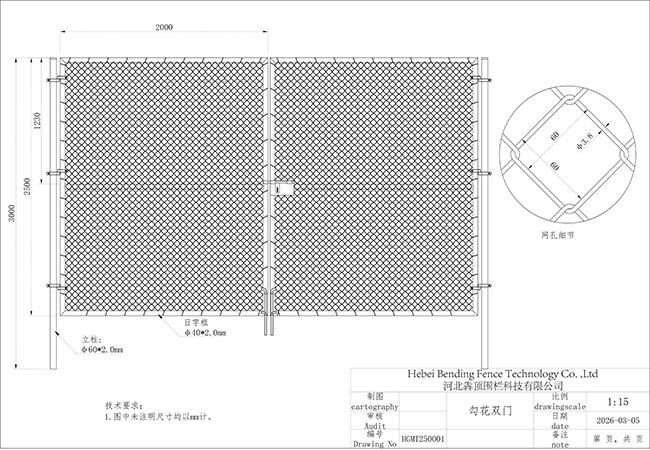
| Wire Diameter | 2.5mm / 3.0mm / 3.5mm / 4.0mm / 4.5mm |
| Mesh Size | 40×40mm / 50×50mm / 60×60mm / 75×75mm / 100×100mm |
| Roll Height | 1.2m / 1.5m / 1.8m / 2.0m / 2.4m / 2.8m / 3.0m |
| Roll Length | 9m / 10m / 15m / 18m / 20m / 25m / 30m |
| Rail | φ32mm / φ40mm / φ48mm |
Recommended Round Post
| Parameter | Recommended Specification |
|---|---|
| Size | φ40 mm / φ48 mm / φ60 mm / φ75 mm |
| Thickness | 1.5 mm / 1.8 mm / 2.0 mm / 2.5 mm |
| Fence Height | 1.2 m / 1.5 m / 1.8 m / 2.0 m / 2.4 m / 2.8 m / 3.0 m |
| Base | 1.25 m / 1.55 m / 1.85 m / 2.05 m / 2.45 m / 2.85 m / 3.05 m |
| Normal Post | 1.6 m / 2.0 m / 2.3 m / 2.5 m / 3.0 m / 3.5 m / 3.7 m |
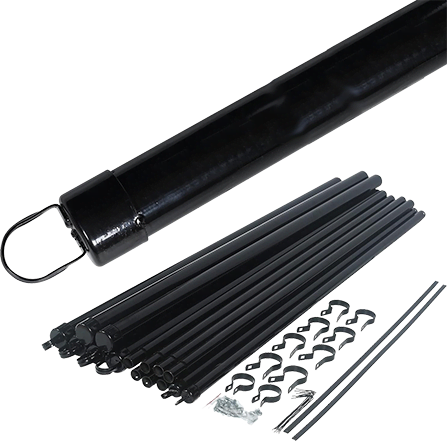
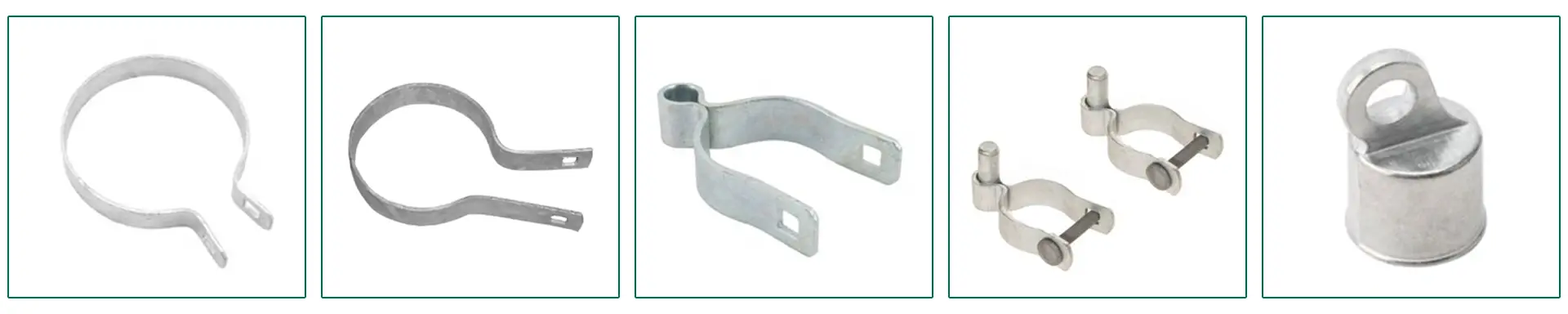
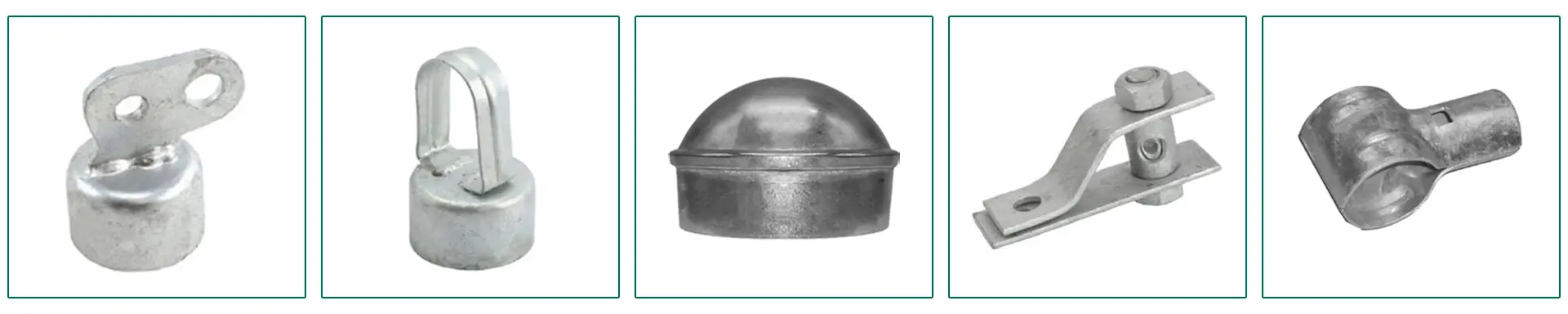
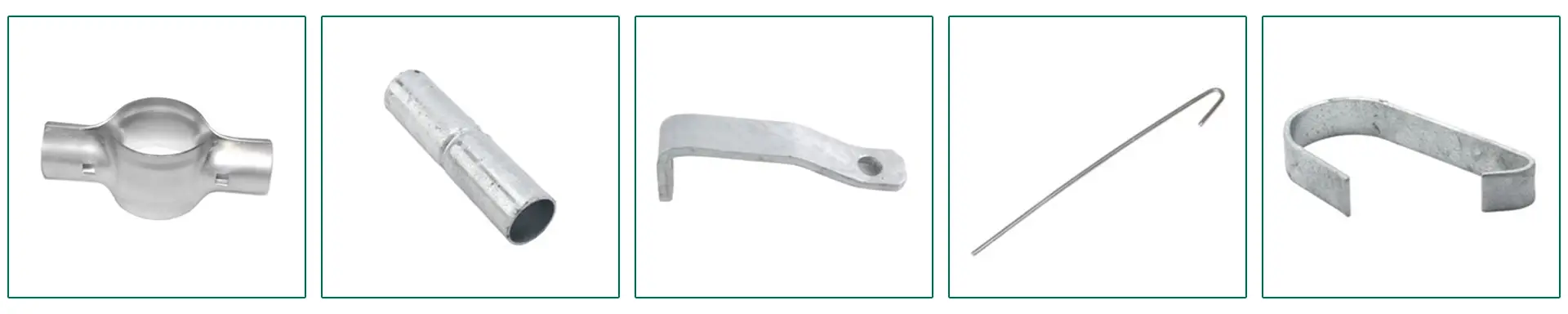
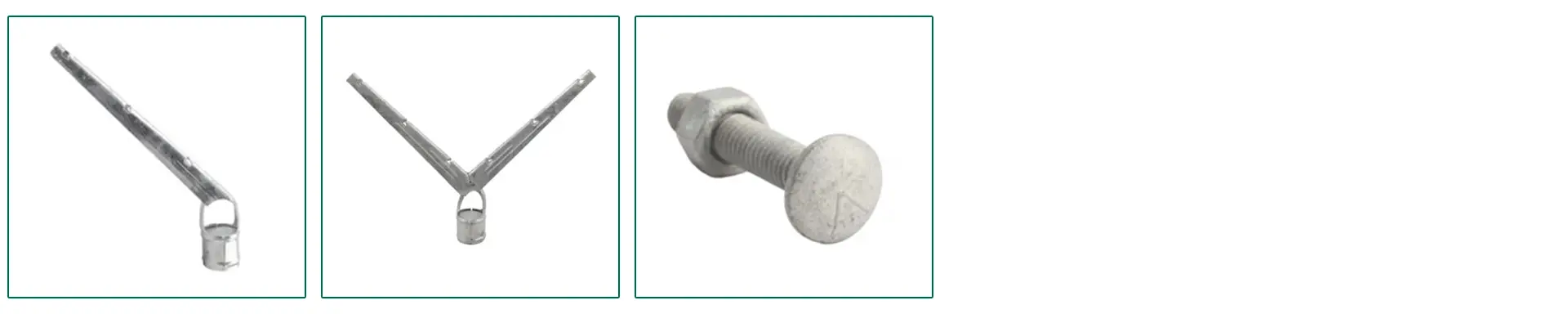
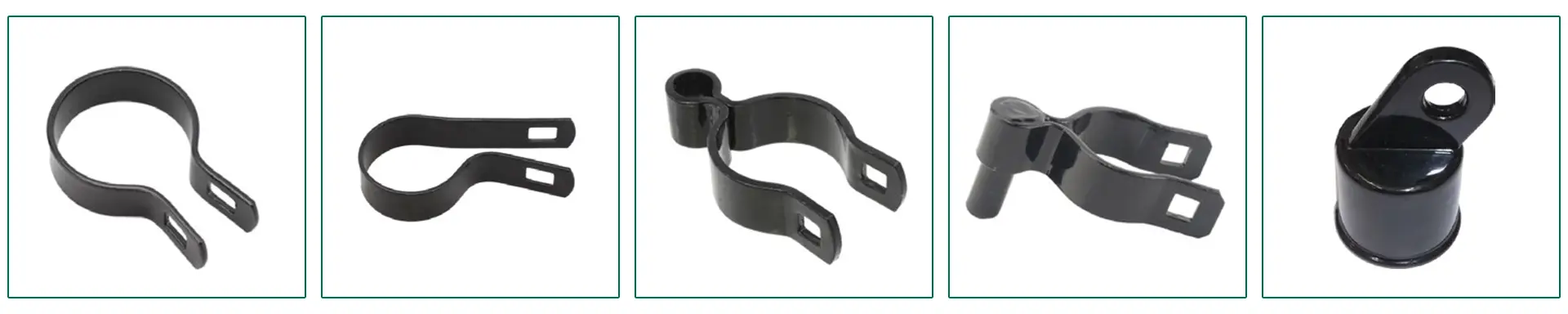
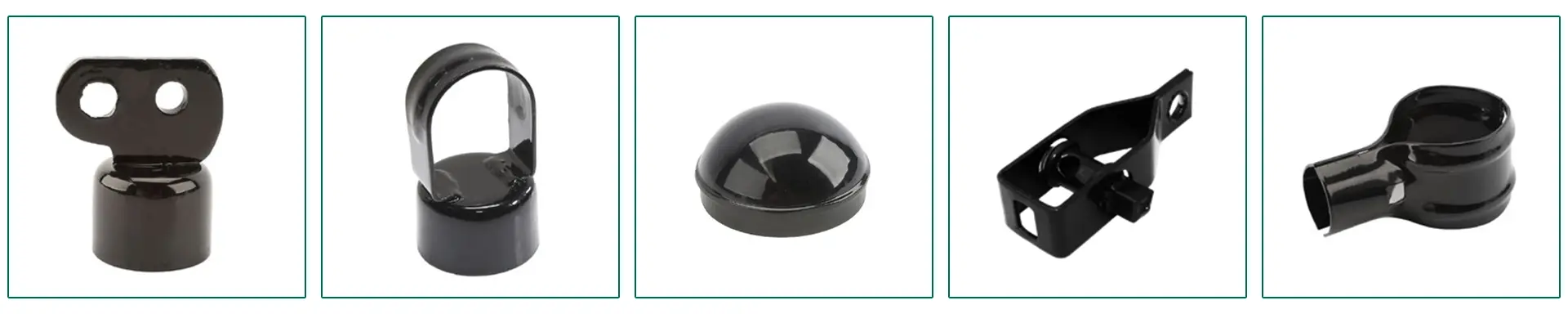
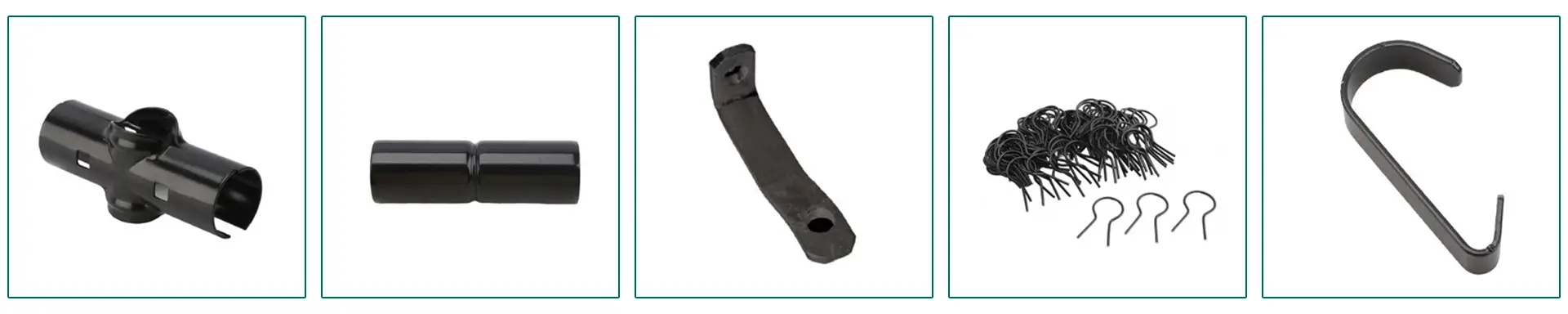
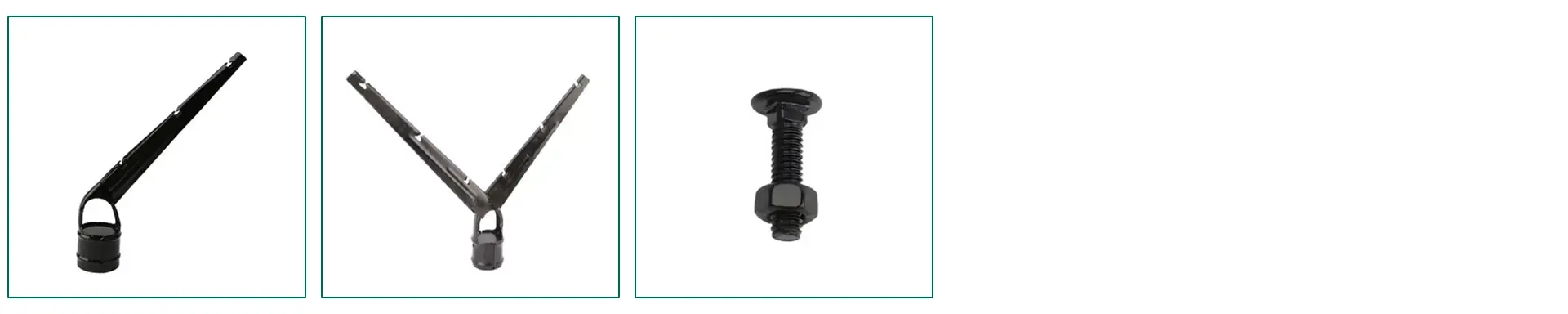
Special Accessories
- Galvanized Fittings
- Powder Coating Fittings
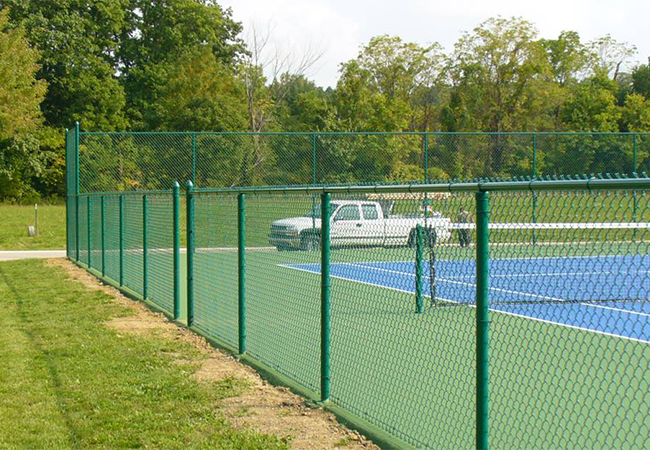
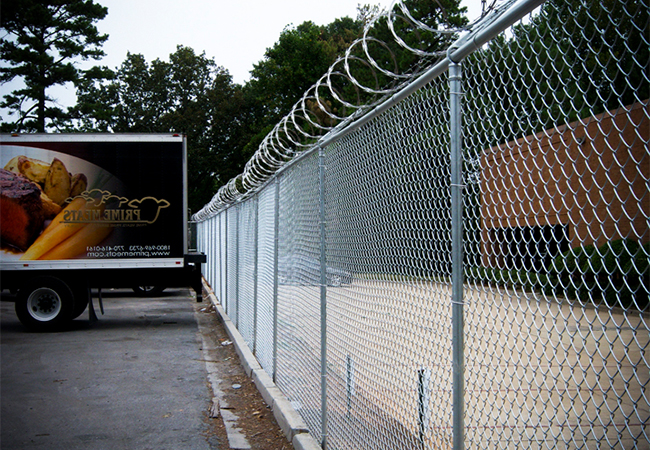
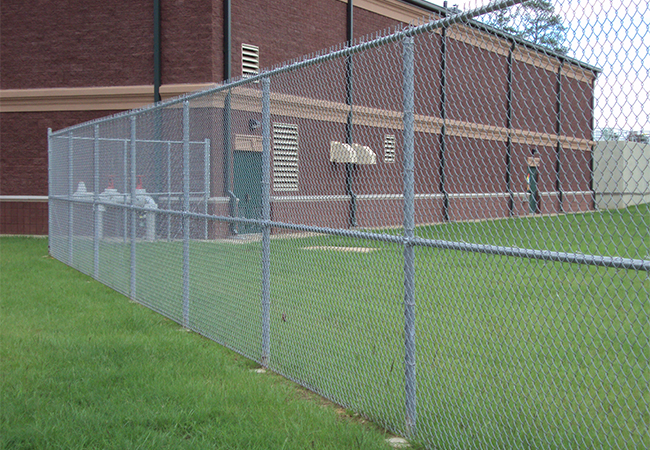
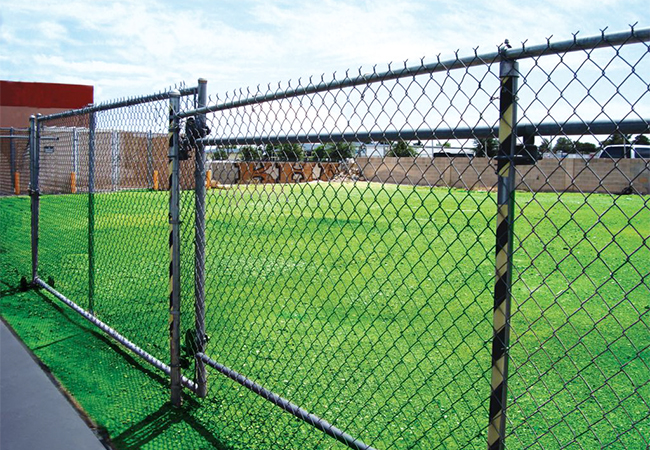
Applications of Chain Link Fence
Detailed Installation Process for Chain Link Fence
The installation of chain link fence requires strict adherence to operational standards and detailed steps to ensure the overall stability, safety and aesthetic appearance of the fence. Below is the expanded and detailed installation process, with in-depth explanations of each step, key points and precautions:
1. Site Preparation & Foundation Leveling
Before starting the installation, thorough site preparation is the foundation to ensure the smooth progress of subsequent operations. First, clear the entire construction area, remove all obstacles such as stones, weeds, garbage and sundries that may affect the installation, and clean the ground to avoid interference with positioning and assembly. Then, use a level to check the flatness of the installation ground; if there are local uneven areas, level them with compacted gravel or sand to ensure that the fence posts and mesh rolls can be placed stably and evenly. Next, according to the design drawings and actual installation requirements, use professional measuring tools (such as tape measure, theodolite and ink line) to mark the layout range and installation position of each post. The foundation should be compacted with a compactor to achieve sufficient bearing capacity, and a layer of gravel cushion can be laid to improve stability. At the same time, mark the alignment lines to ensure the straightness and verticality of the entire chain link fence structure.
2. Post Placement & Fixing
Post placement and fixing are core links affecting the overall stability of the chain link fence, and every detail needs to be strictly controlled. First, place the posts accurately along the marked lines, keeping equal spacing between each post as designed. For embedded installation, dig holes of proper depth, place the posts vertically and fix them with concrete to ensure firmness. For surface-mounted installation, use expansion bolts to secure posts to the hard ground firmly. Align the posts accurately along the marked lines, and install end posts, corner posts and line posts properly to form an integrated unit. Check the verticality and alignment of each post to avoid skewing during mesh installation.
3. Mesh Installation & Tensioning
After the posts are fully fixed, chain link mesh installation can be carried out. First, unfold the chain link mesh roll carefully and hang it on the posts, starting from the end post or corner post. During installation, stretch the mesh flat and keep it tight to avoid sagging or looseness, ensuring uniform diamond mesh openings. Use tension bands, bolts and hog rings to connect the mesh with posts and rails firmly, and adjust the tension evenly to maintain structural stability. For long-distance fencing, install the mesh in sequence to keep the whole fence flat and consistent. Ensure the mesh surface is smooth and not distorted, which guarantees the fence’s stability and aesthetic effect.
4. Rail & Accessory Installation
Rail and accessory installation directly affect the structural integrity and service life of the chain link fence. First, install top rails and bottom rails between posts to enhance overall strength, fixing them with rail caps and bolts. Install tension bars, brace bands and other standard accessories to strengthen mesh tension and connection. Pay special attention to tightening all connectors to prevent loosening or displacement. Double-check all connection points to ensure no gaps or loose components, which provides reliable protection for long-term use.
5. Alignment & Stability Check
After the installation of posts and mesh are completed, a comprehensive alignment and stability check is required to ensure that the installation quality meets the standards. First, use a level and plumb line to check the verticality of the posts and the flatness of the mesh: verticality error should not exceed 5mm per meter, and horizontal alignment should be consistent with the design. Then, check the overall straightness and structural stability: gently push the fence to ensure no obvious shaking or displacement. Check the tightness of all connections and the tension of the mesh. If any problems are found (such as skewing, loose connections, sagging mesh), adjust and reinforce them immediately to ensure structural safety and durability.
6. Site Cleaning & Final Acceptance
The final step of the installation process is site cleaning and acceptance, which ensures the aesthetic appearance of the fence and confirms that the installation is up to standard. First, remove excess debris, scraps and installation waste from the construction site, and clean the surface of the chain link fence to maintain a neat appearance. Then, carry out comprehensive acceptance according to the design drawings and installation standards: check the fence dimensions, alignment, verticality, mesh tension and connection firmness; check for surface damage, rust, or loose components; verify overall stability and protection performance. After the acceptance is qualified, the installation work is officially completed. If unqualified items are found, they should be rectified immediately until they meet the acceptance standards.
Note
During the entire installation process, construction personnel should wear protective equipment (such as safety helmets, gloves and safety shoes) to ensure construction safety. In addition, pay attention to the protection of the chain link mesh surface during installation to avoid damage to the surface treatment layer (such as galvanizing, PVC coating) which may affect the corrosion resistance and service life of the fence.
Why Choose BDFENCE for Chain Link Fence?
1. Premium Low‑Carbon Steel & Multi‑Layer Coating
We use Q195/Q235 steel wire with electro‑galvanizing, hot‑dip galvanizing (ISO 1461), Galfan, or PVC coating. Rust‑proof, UV‑resistant, weather‑proof – 25+ years service life.
2. Full Range of Mesh & Roll Specifications
Wire diameters 2.5–4.5mm, mesh openings 40–100mm, roll heights 1.2–3.0m, roll lengths 9–30m. Choose knuckled (smooth, safe) or twist (high security) edge – tailored for residential, commercial, agricultural, and industrial projects.
3. Complete Round Post System – Export Standard
We supply full round post systems: line posts (48/60/76/89mm OD), terminal posts, top rails, post caps, tension bars, tension bands, brace bands, rail ends, tie wires, and barbed arms. All fittings are hot‑dip galvanized or PVC coated – match your fence finish.
4. Fast, Welding‑Free Installation
Rolled mesh + clamp/bracket connection – no on‑site welding. Unfold, stretch, clip – save 40% labor time.
5. Factory Direct – Quality & Price
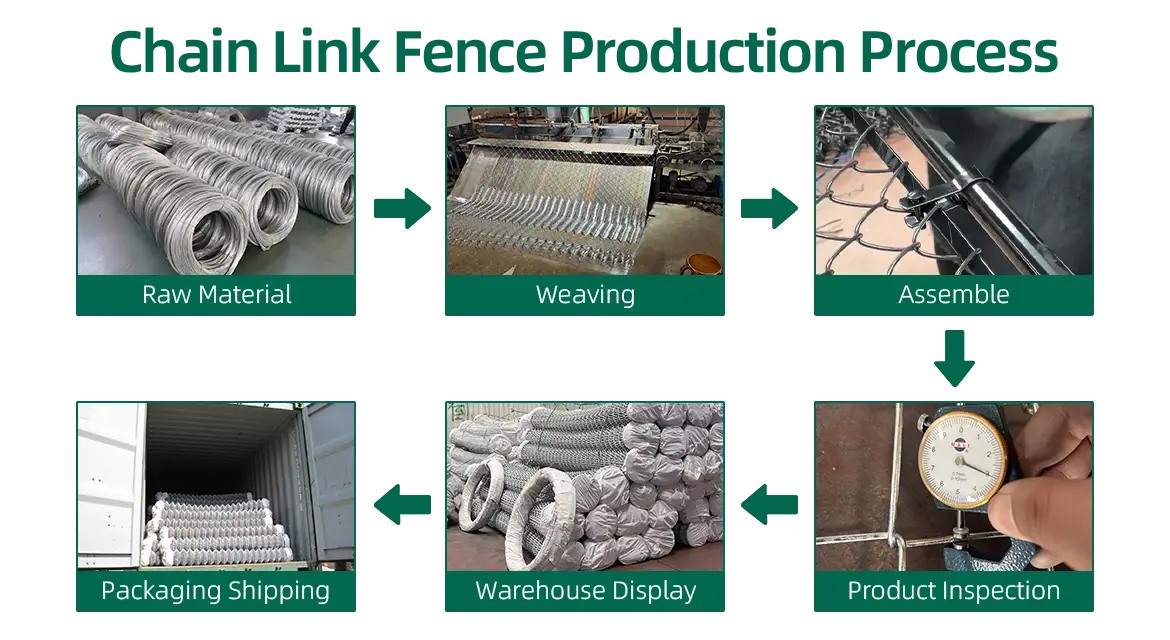
In‑house wire drawing, galvanizing, weaving, roll forming, post fabrication, and accessories stamping. Strict quality control, fast lead time (10‑15 days), competitive pricing.
6. Global Chain Link Export Experience
Supplied ranches, schools, industrial yards, airports, and residential estates across USA, Australia, UK, South Africa, Canada, UAE, Germany and more. Full documentation (ISO, CE, SGS, ASTM) ready for tender.
📌 In short: Flexible diamond mesh + full coating protection + complete round post system + roll format convenience = BDFENCE, your trusted chain link fence partner.