


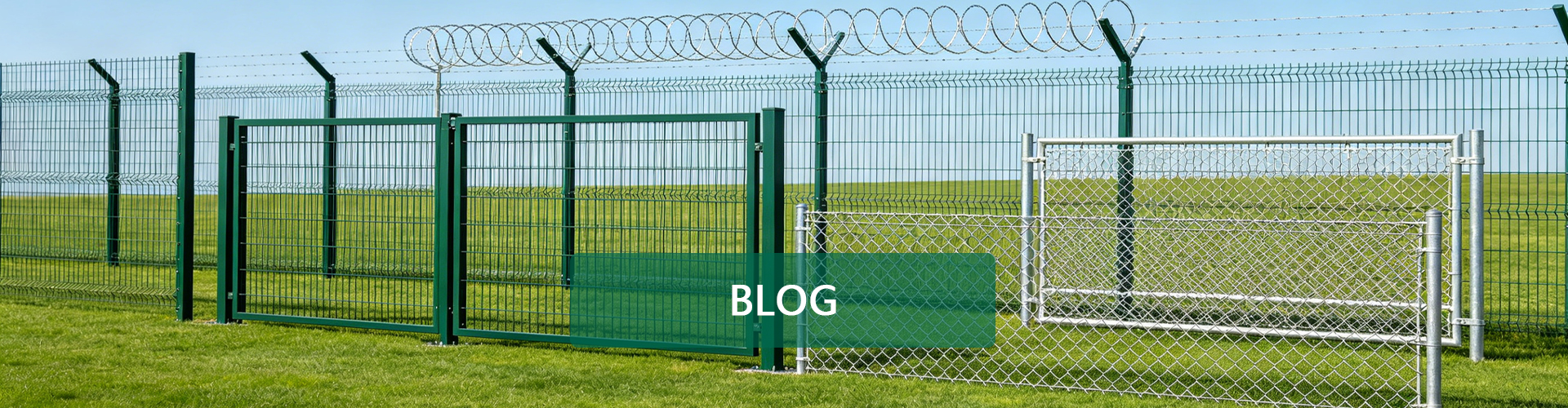
When a buyer asks for an Industrial Fence, the first message is almost always about price, height, mesh size, post size, or how many days we need for production. This is normal. These points are easy to compare on a quotation sheet.
But in real outdoor projects, one thing should not be left until the end. That is surface treatment.
A fence used around a factory, logistics yard, sports facility, commercial site, or high-security perimeter will not stay in a clean showroom. It sits outside. It gets rain, sunlight, dust, wet air, scratches during installation, sometimes salt air, sometimes chemical exposure. If the surface is not handled well, rust will come earlier than the buyer expects. At first it may only be a small brown mark near a weld or cut edge. Later it spreads. Then posts, panels, wire, and fittings all start looking tired.
For a short fence line, maybe the repair cost is still acceptable. For a long Industrial Fence project, that is different. Once rust starts on many sections, the maintenance work becomes annoying and expensive.
BD FENCE deals with this kind of project quite often. The company supplies metal fencing systems for industrial, commercial, public, and temporary-use applications. Its product range covers chain link systems, tubular fences, sports ground fences, palisade security fences, BRC fences, expandable barriers, and wire mesh products. BD FENCE has a factory area of about 15,000 square meters, electrostatic coating lines, PE coating lines, production equipment, and quality control from raw material to packing. For contractors, distributors, and project owners, this matters because one fence project may need more than one product type, not just one simple panel.
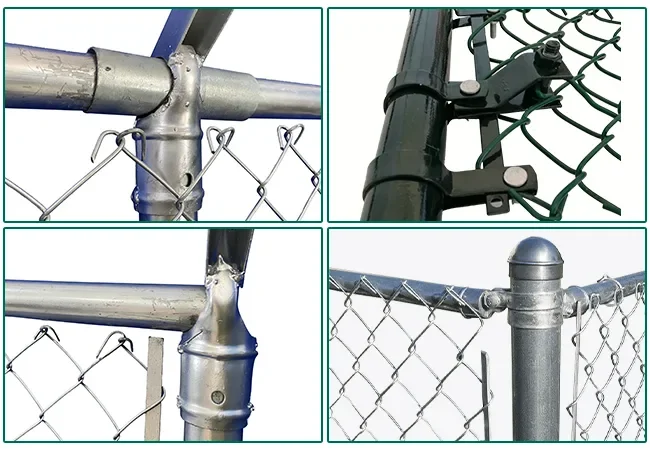
Powder coating is not only for color
Some buyers think powder coating is mainly about appearance. Green, black, grey, white, or another RAL color. Yes, color is part of it, but that is not the main point.
The main job of powder coating is to cover the steel surface. It helps keep moisture, air, dust, and daily outdoor dirt away from the metal. Once the steel is less exposed, rust has less chance to start quickly.
In fence projects, corrosion does not always begin in the middle of a clean panel. It often starts in small places. Welded joints. Cut edges. Scratched spots. Bottom areas where water stays after rain. Corners where dust and moisture sit together. These places are easy to miss when checking a product photo, but they are exactly the places that show problems after installation.
For an Industrial Fence, rust is not just about whether the fence looks nice or not. The fence may protect equipment, storage yards, worker areas, gates, road edges, or public walkways. If the steel becomes weak, the fence cannot do its job properly. Replacing posts or panels later is usually more trouble than choosing a better surface treatment from the start.
How powder coating works on the fence surface
Powder coating is done through electrostatic spraying and heat curing. The powder sticks to the metal surface first, then the coated part goes through heating. After curing, the surface becomes a firm coating layer.
Compared with simple wet paint, a good powder coated finish normally gives better coverage and better adhesion. It also feels more even when the process is controlled properly. For outdoor fences, this is useful because the fence has to stay outside year after year.
Of course, powder coating is not a magic answer by itself. The steel material, welding quality, galvanizing, cleaning before coating, curing temperature, packing, and installation all affect the final result. If the surface is not cleaned well before coating, the coating may still fail early. If the fence is scratched badly during loading or installation, rust can still start from that point.
So when we talk about powder coating, we should not only talk about the final color. The full process matters.
Galvanizing and powder coating work better as a set
For many metal fence systems, zinc protection is done first. Then powder coating or another coated finish is added outside. This layered method is common because both layers have their own use.
Galvanizing helps protect the steel base. Powder coating gives color and adds another outside barrier. When both are done properly, the fence has better resistance against rain, wet air, and normal outdoor wear.
This matters more for coastal areas, humid places, dusty yards, and sites with heavy traffic. Some buyers only compare the lowest price at first. But after one or two years, the cheaper surface treatment may cost more in repair, repainting, and replacement. For long fence lines, the difference is not small.
So when checking a fence quotation, surface treatment should not be treated like a small note at the bottom. It is part of the fence cost. It also decides how the fence looks after use, not just how it looks before loading.
Chain Link Fence for large and open areas
For many Industrial Fence projects, Chain Link Fence is still one of the easiest products to recommend first. It is not a fancy product. But many real projects do not need fancy. They need something that covers long distance, ships well, installs quickly, and keeps the cost under control.
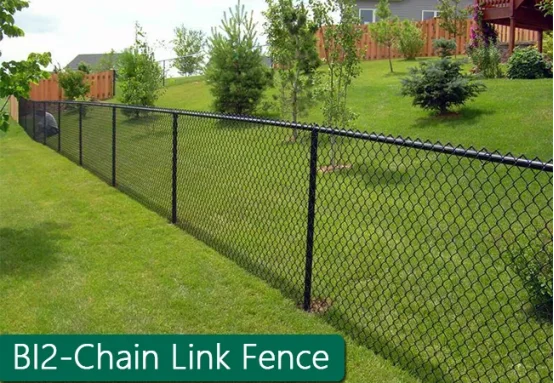
Chain Link Fence has a diamond mesh structure. It gives clear visibility and some flexibility. Compared with many rigid panel fences, it can absorb impact better. Since it comes in rolls, it is also easier to use for long boundaries.
Factories, warehouses, schools, parks, agricultural fields, sports courts, construction areas, and general perimeter control projects often use Chain Link Fence. It is a very common fence type because it solves basic site control without making the project too complicated.
BD FENCE can make Chain Link Fence with wire diameters including 2.5 mm, 3.0 mm, 3.5 mm, 4.0 mm, and 4.5 mm. Common mesh openings include 40 × 40 mm, 50 × 50 mm, 60 × 60 mm, 75 × 75 mm, and 100 × 100 mm. Roll heights can range from 1.2 m to 3.0 m. These sizes are enough for many normal site layouts.
The advantage of Chain Link Fence is balance. Cost is easier to control. Installation is not too difficult. Visibility is good. It can also be upgraded when the site needs more security. Buyers can add top rails, single arms, Y arms, gates, barbed wire, razor wire, or privacy slats. The same basic fence can be used in a simple boundary project or a stronger perimeter project.
That is why many buyers still keep Chain Link Fence in their first option list.
Steel Tubular Fence, Palisade Fence, and BRC fence
Not every project wants a rolled mesh fence. Some sites need a more fixed look. Some entrances need to look cleaner. Some areas need stronger protection. In those cases, Steel Tubular Fence, Palisade Fence, and BRC fence are more common choices.
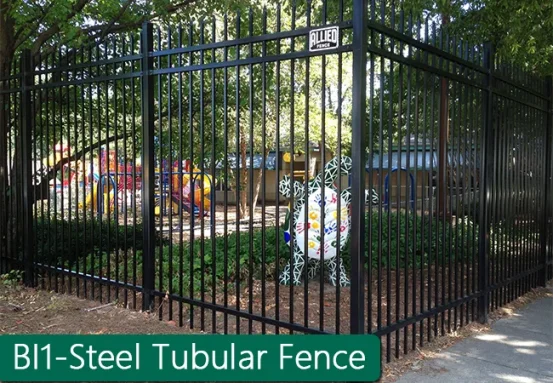
Steel Tubular Fence uses welded tubular structures. It looks more rigid and more formal. It is often used around factories, roads, schools, stadiums, parks, commercial areas, and industrial entrances. If the fence is close to a main gate or public road, buyers often care about appearance as well as strength. Steel Tubular Fence fits that kind of situation better than a simple chain link line.
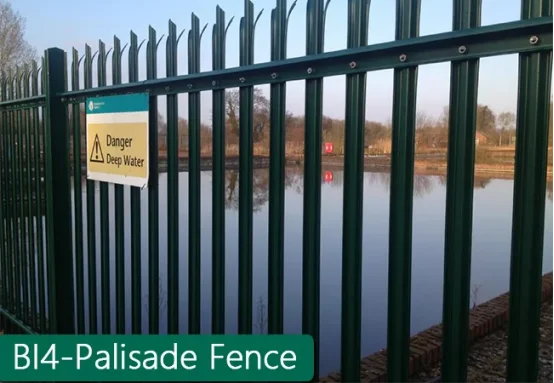
Palisade Fence is for stronger perimeter protection. Its rigid pales and anti-climb shape make it more suitable for power stations, airports, industrial parks, warehouses, factories, and security-sensitive sites. This fence also gives a clear warning from far away. People can see that the boundary is not just for decoration.
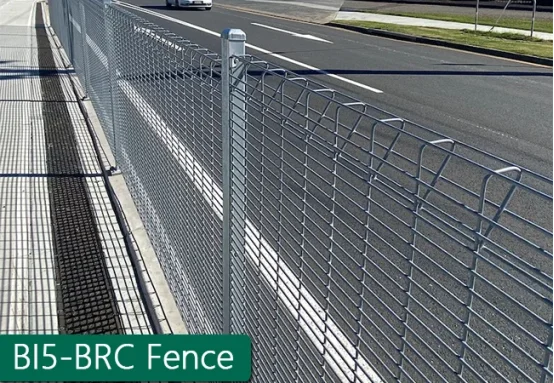
BRC fence has another use. It is often chosen for places that need a safer look and smoother edges. The rolled top and bottom design improves rigidity and reduces sharp exposed points. Parks, schools, playgrounds, residential surroundings, light industrial areas, and road isolation projects can use BRC fence. It does not look as aggressive as Palisade Fence, but with the right surface treatment, it still performs well outdoors.
Sportground Chain Link Fence, Expandable Fence, and Crimpep Wire Mesh
Sportground Chain Link Fence is mainly used for sports areas. Tennis courts, basketball courts, football fields, playgrounds, stadiums, and sports parks need a fence that keeps visibility open. Players, coaches, and people outside the court should still see through the fence. At the same time, the fence must handle ball impact and daily use.
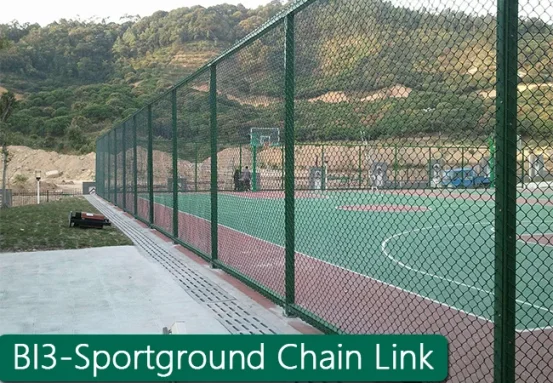
The open mesh and flexible wire structure make Sportground Chain Link Fence a good fit for these places. It is simple, but it works.
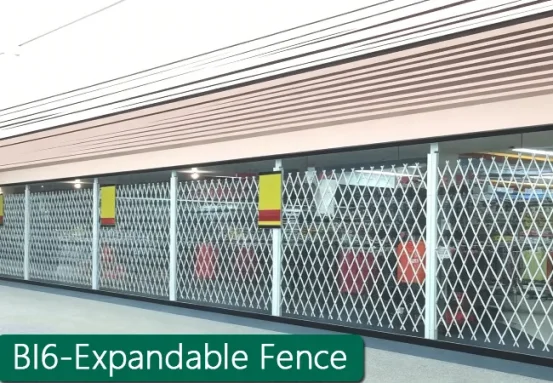
Expandable Fence is not for the same type of job. It is used more for temporary control. Road work, warehouse zones, event control, mall guidance, construction areas, and temporary isolation can all use it. The scissor-style structure makes it easy to open, close, move, and store. For temporary use, saving labor and storage space is often more important than making a heavy permanent barrier.
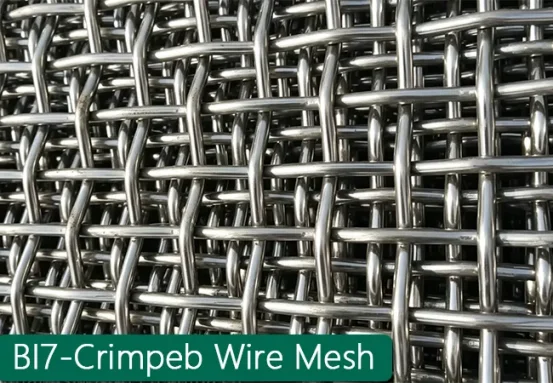
Crimpep Wire Mesh is another product with a more industrial use. It is used for screening, filtering, mining, quarry separation, industrial protection, and mechanical sieving. Its crimped woven structure helps keep mesh openings stable and improves load-bearing performance. In rough working places, surface treatment still matters because the mesh may face dust, moisture, and frequent handling.
Choosing the fence by the real site
A fence should be chosen by the site, not only by the product picture.
If the buyer only needs basic boundary control, Chain Link Fence is often enough. It gives coverage, visibility, and flexible installation at a reasonable cost.
If the fence needs to look cleaner and stronger, Steel Tubular Fence is a better option. It is more suitable near entrances, roads, office areas, and places where appearance matters.
If the area needs higher security, Palisade Fence makes more sense. It is harder to climb and harder to damage.
If the project is for public areas, schools, parks, and light industrial spaces, BRC fence is easier to accept because it looks safer and softer.
For sports facilities, Sportground Chain Link Fence is usually the better match. It keeps visibility clear and handles ball impact.
For temporary control, Expandable Fence saves time. For screening or industrial processing, Crimpep Wire Mesh is more useful than a standard perimeter fence.
The environment should also be checked before confirming the order. Is the project near the sea? Is the air humid? Is the fence close to chemicals? Will trucks, workers, or tools touch it often? Is there a lot of dust? These details affect the surface treatment.
In a dry, low-risk place, standard galvanized or coated finishes may be enough. In humid, coastal, dusty, or heavy-use places, stronger coating protection is worth paying attention to. Powder coating and other coated finishes can reduce rust, keep the fence looking better, and lower maintenance pressure later.
Budget and installation speed should be checked honestly too. If the buyer needs to close a large area quickly, chain link fencing is easier to transport and install. If the front entrance needs a better look, Steel Tubular Fence or BRC fence can be used there. If only some parts of the site need stronger security, Palisade Fence can be used in those sections instead of the whole perimeter.
In real projects, using several fence types together is normal. A factory may use Chain Link Fence along the long boundary, Steel Tubular Fence near the main gate, Palisade Fence around dangerous zones, and BRC fence near public walkways. This is often more reasonable than forcing one product to cover every area.
Conclusion
Powder coating helps an Industrial Fence stay in better condition outdoors. It protects the steel surface, slows rust, and reduces later maintenance work. It is not only about color. For a fence that will face rain, sun, dust, scratches, and long-term outdoor use, the coating should be checked before the order is confirmed.
For many wide-area projects, Chain Link Fence is still a very useful starting choice. It balances cost, visibility, installation speed, and upgrade options. For stronger structure, Steel Tubular Fence or Palisade Fence may be better. For public areas, BRC fence and Sportground Chain Link Fence fit better with safety and appearance needs. For temporary control or industrial screening, Expandable Fence and Crimpep Wire Mesh solve more specific problems.
BD FENCE can support these project needs with production capacity, coating lines, product options, and customized service. For overseas buyers, the simple way is this: look at the site first, then choose the fence and surface treatment. Do not leave coating as the last small detail.
FAQ
Q1: Do all Industrial Fence projects need powder coating?
A1: Not every project needs the same surface treatment. If the fence is used in a dry indoor area, the requirement may be lower. But for outdoor Industrial Fence projects, powder coating is often worth checking. Rain, sunlight, dust, and small scratches all affect the steel after long use. A powder coated finish gives the fence one more protection layer.
Q2: Why is Chain Link Fence still used so much for large sites?
A2: Chain Link Fence is easy to understand and easy to use. It covers long boundaries without making the budget too high. It is also easier to ship and install than many rigid systems. For factories, warehouses, schools, farms, sports areas, and construction sites, this is already enough for many buyers.
Q3: Should I choose Chain Link Fence or Steel Tubular Fence?
A3: It depends on the part of the site. Chain Link Fence is better for long perimeter lines and cost control. Steel Tubular Fence is better near gates, roads, office areas, or places where the fence needs to look cleaner and stronger. Many projects use both, because one fence type does not always fit every area.
Q4: Where is Palisade Fence more useful?
A4: Palisade Fence is more useful for places that need stronger security, such as power stations, airports, warehouses, factories, and industrial parks. Its rigid pales and anti-climb shape make it harder to climb or damage. For a normal park or school garden, it may look too heavy. For a high-risk site, it makes more sense.
Q5: Can one project use several fence types from BD FENCE?
A5: Yes. This happens quite often. BD FENCE can supply Chain Link Fence, Steel Tubular Fence, Palisade Fence, BRC fence, Sportground Chain Link Fence, Expandable Fence, and Crimpep Wire Mesh. A buyer can use different products in different areas, instead of using one fence type for the whole site.
Q6: What should buyers check before confirming the coating?
A6: Check the site first. Is it wet, coastal, dusty, or close to chemicals? Will the fence be touched by trucks, workers, balls, tools, or moving goods? If the site is tough, a stronger surface treatment is better. For many outdoor projects, galvanizing plus powder coating is safer than a very basic finish.