


3D Fence
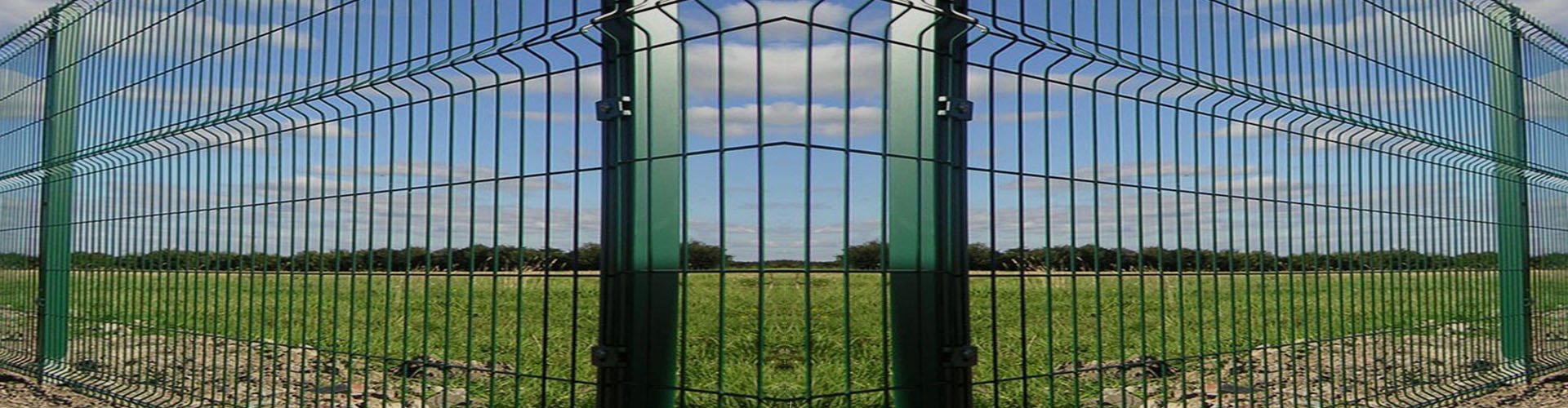
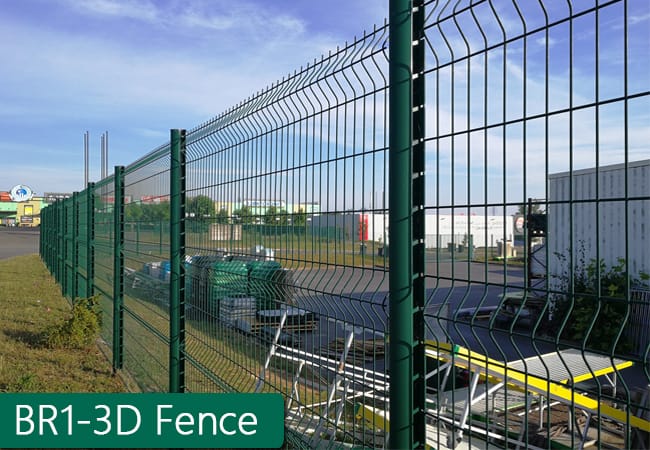
3D Fence is a high-performance welded mesh fencing with V-shaped bends, delivering great rigidity, anti-climb security and a modern look. Made of quality low-carbon steel wire with firm welded joints, its 3D bent structure enhances impact resistance and prevents sagging.
It features hot-dip galvanized, powder coated or PVC/PE coated finishes for excellent corrosion, rust and UV resistance, suitable for harsh outdoor use. Modular panels and standard posts enable fast, welding-free installation, saving labor and time.
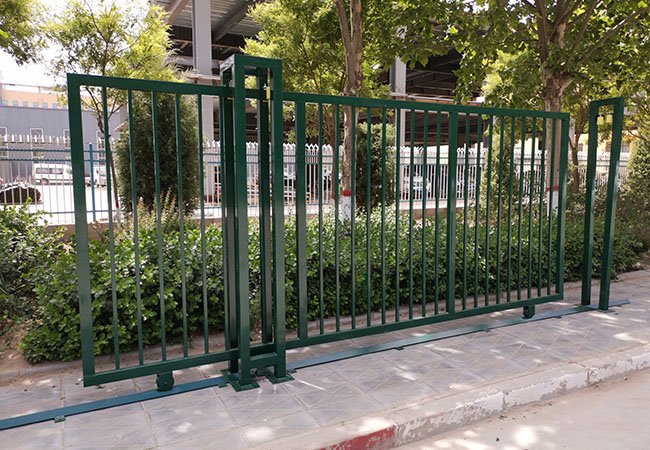
Stylish, practical and cost-effective, it is widely used in residential areas, factories, warehouses, schools, parks, roads, railways and construction sites for various perimeter protection.
Product Details– BDFENCE
What is a 3D Fence?
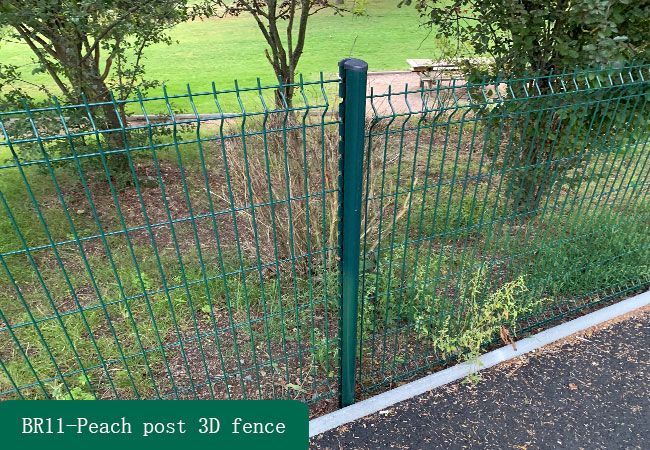
Triangular Bending Fence, also widely known as Peach Post Fence or Curved Wire Mesh Fence, is a high-security, decorative, and easy-to-install perimeter fencing system characterized by its distinctive V-shaped (triangular) bends on the mesh panel and specialized peach-shaped (oval) steel posts, offering an optimal blend of security, aesthetics, and durability.
3D Bending Fence Specifications
Height: 830 mm / 1030 mm / 1230 mm / 1530 mm / 1830 mm / 2030 mm / 2230 mm / 2430 mm
Width: 2.0 m / 2.2 m / 2.5 m / 3.0 m
Line Wire: 4.0 mm / 4.5 mm / 5.0 mm / 6.0 mm
Cross Wire: 4.0 mm / 4.5 mm / 5.0 mm / 6.0 mm
Mesh Opening: 50 × 100 mm, 50 × 200 mm, 55 × 200 mm, 75 × 150 mm, 100 × 300 mm
Post:
- Peach: 50 × 70 mm, 70 × 100 mm
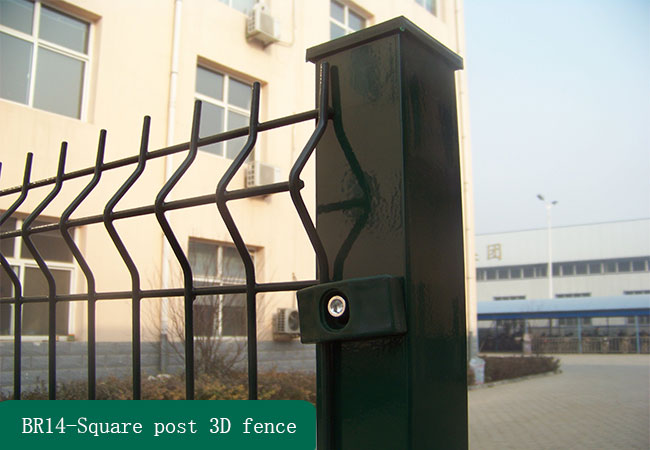
- Square: 40 × 40 mm, 50 × 50 mm, 60 × 60 mm
- Rectangular: 30 × 50 mm, 40 × 60 mm, 60 × 80 mm
- Round: 48 mm / 60 mm / 75 mm
- I Shape: 44 × 70 mm, 50 × 100 mm
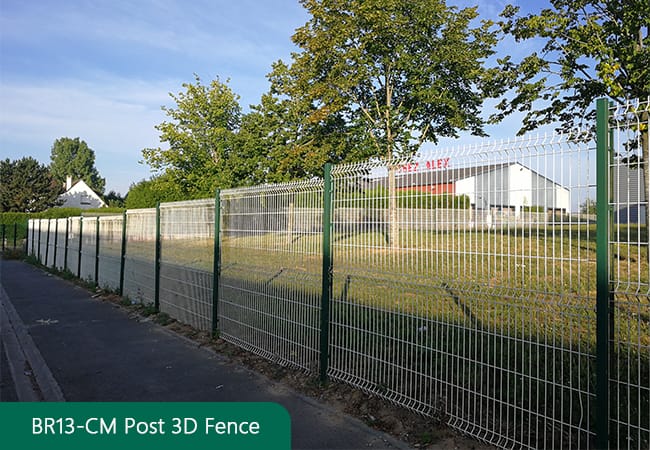
- CM post: 55 × 65 mm, 65 × 95 mm
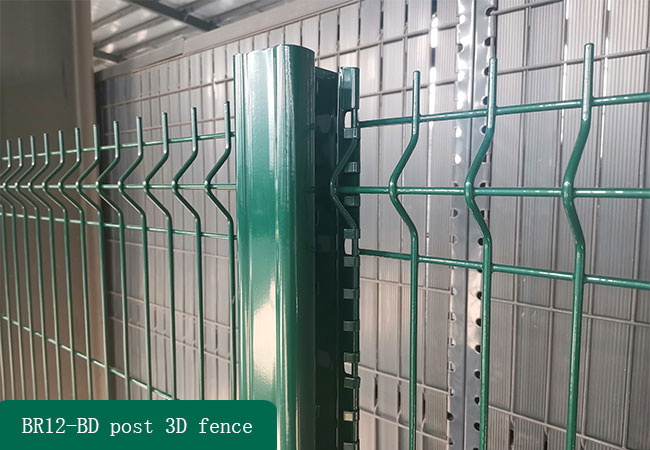
- BD post: 60 × 80 mm
Post Cap: Metal & Plastic Caps
Various structures available for 3D fence
Introduction to Product Categories & Detailed Item Overview
 Peach Post 3D Fence
- BD Post 3D Fence
- CM Post 3D Fence
- Square Post 3D Fence
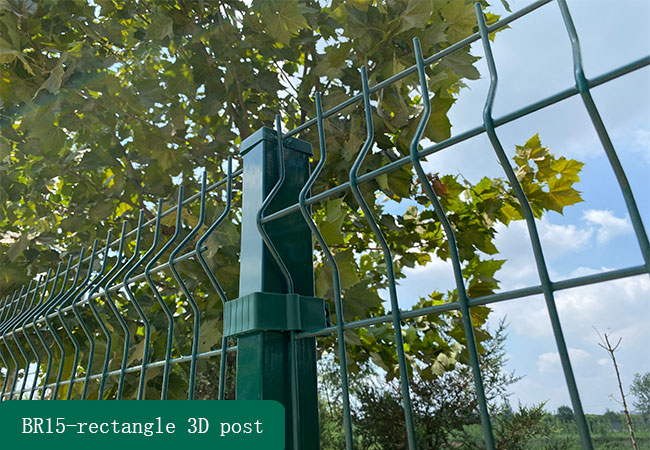
- Rectangle Post 3D Fence
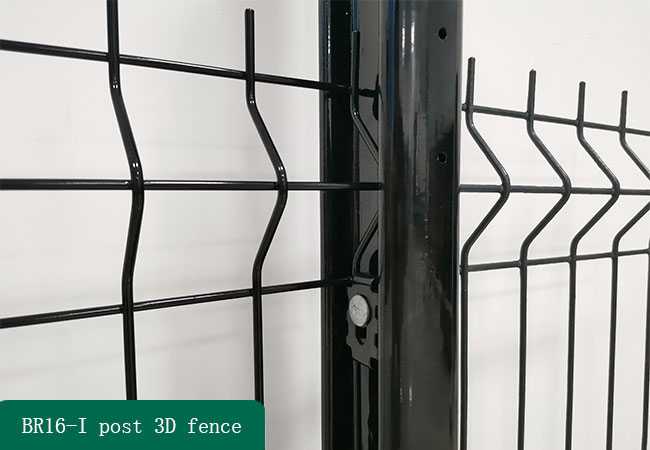
- I Post 3D Fence
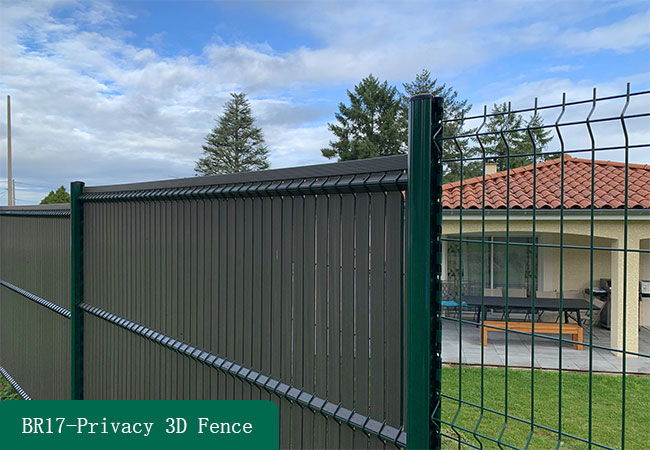
- Privacy 3D Fence
Full-Service Industrial Chain
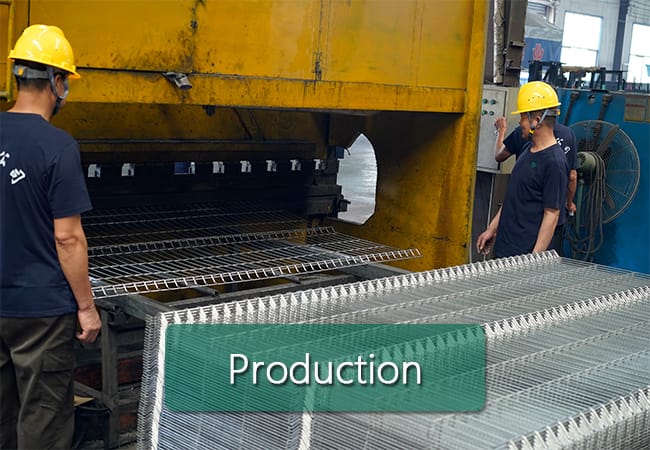
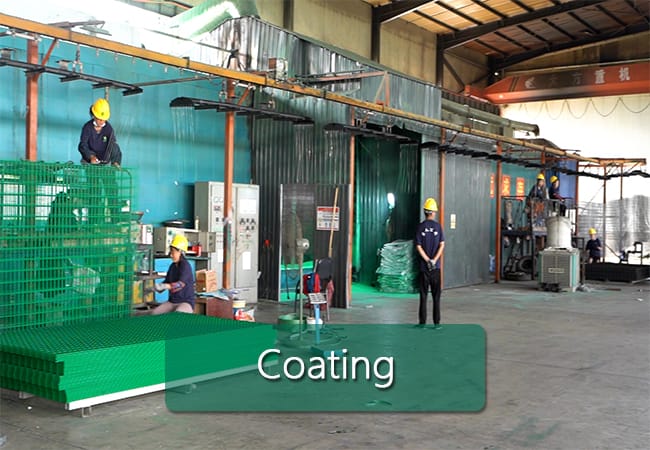
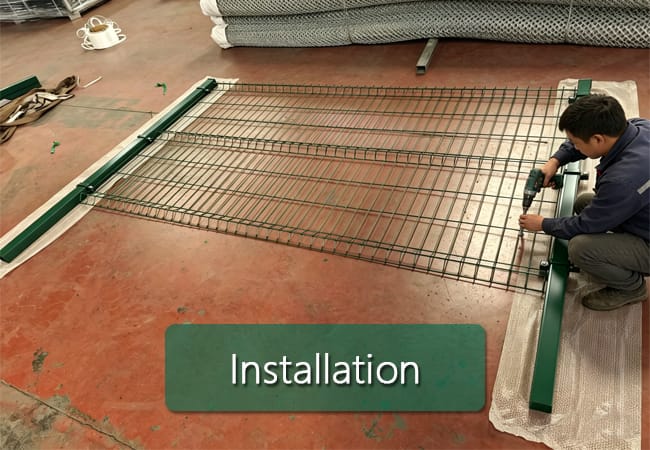
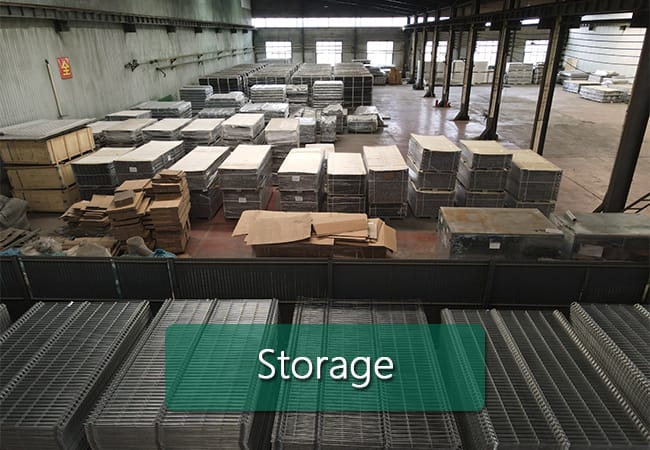
We provide a complete industrial chain covering production, coating, on-site installation and standardized warehousing services.
Applications of 3D fence
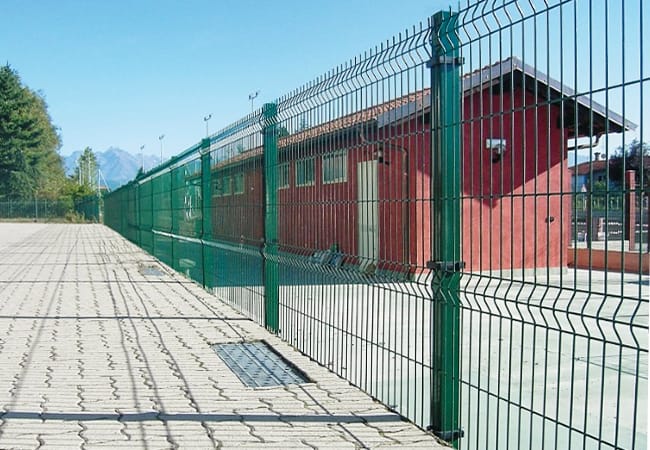
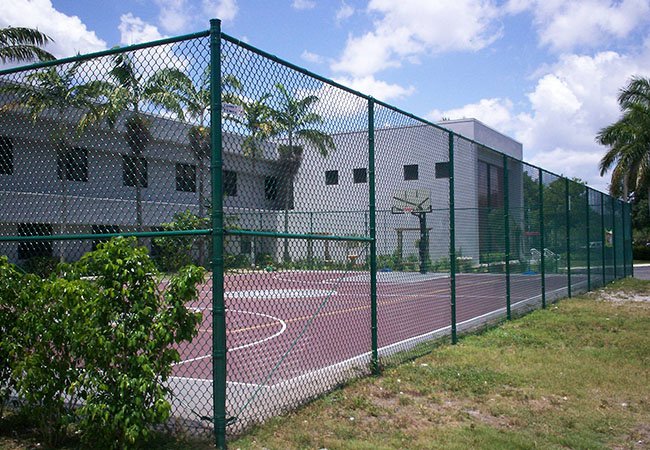
Safe & durable, beautiful appearance, perfect for home fencing.
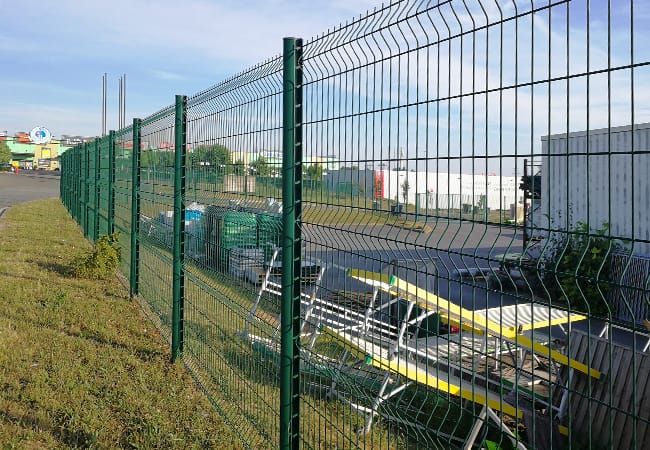
High strength & anti-corrosion, ideal for factory & warehouse protection.
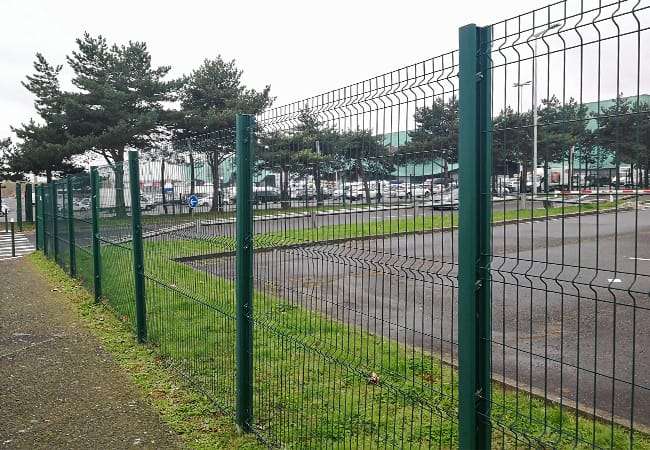
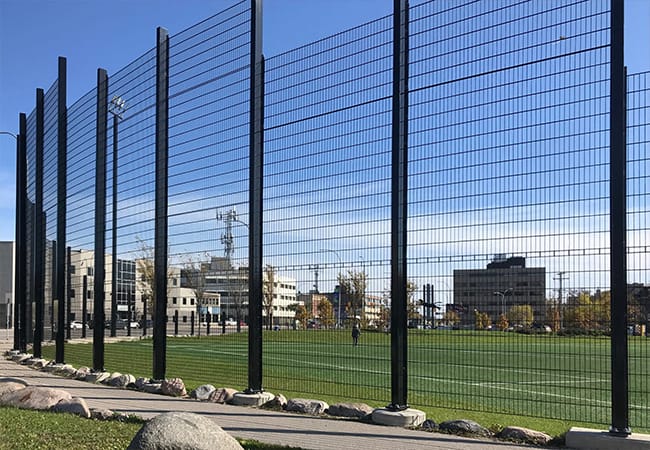
Environmentally friendly & decorative, blends well with landscape.
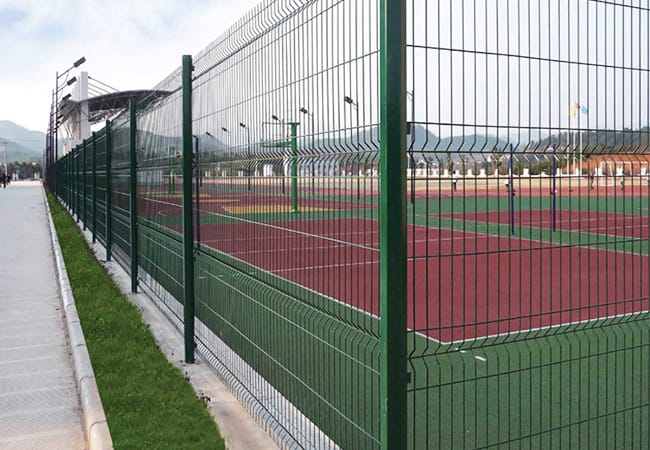
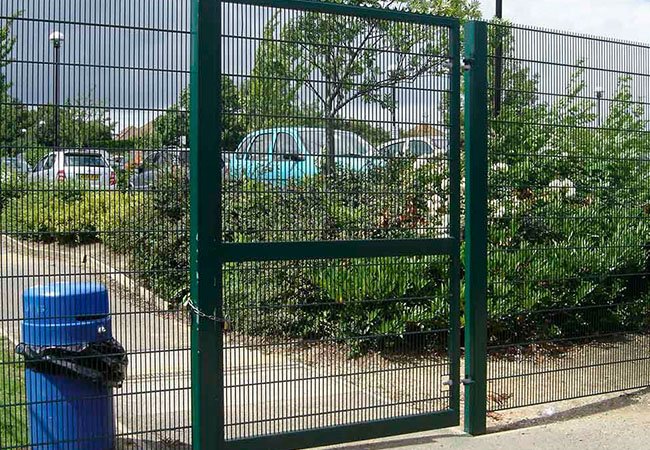
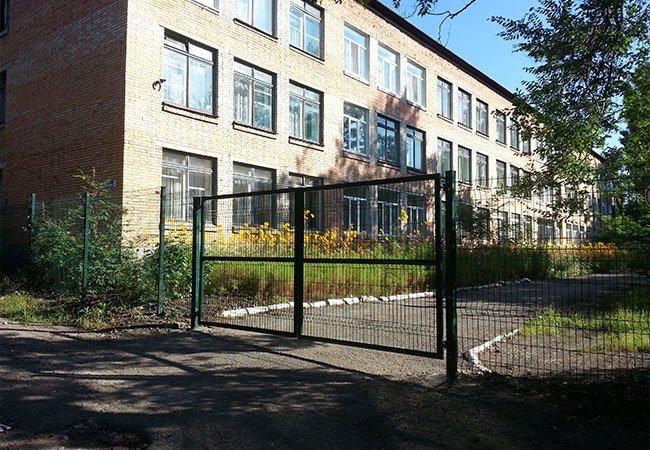
Anti-climbing & secure, provides safe protection for campus.
Production Process
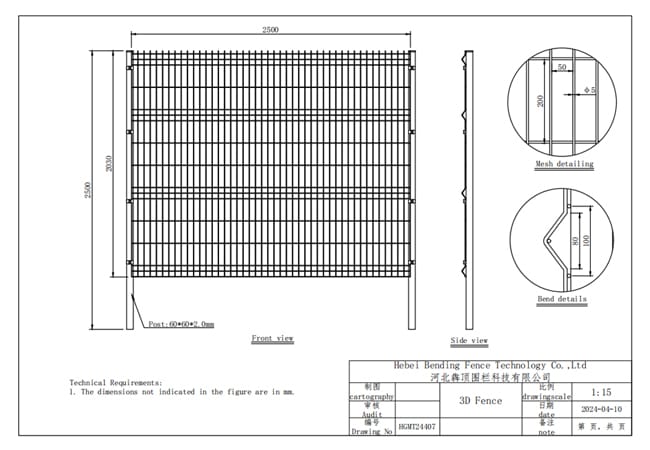
30+ years metal fence design experience, 30+ technical team; modular & scene-specific customization
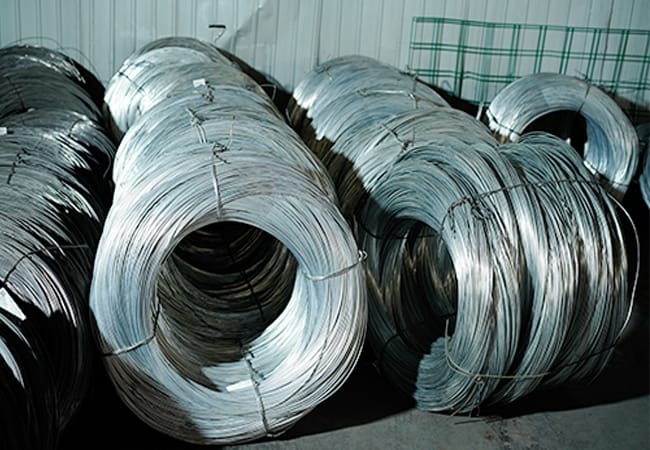
We select high-quality steel with strict testing, ensuring durability, corrosion resistance and stable performance for all fence products.
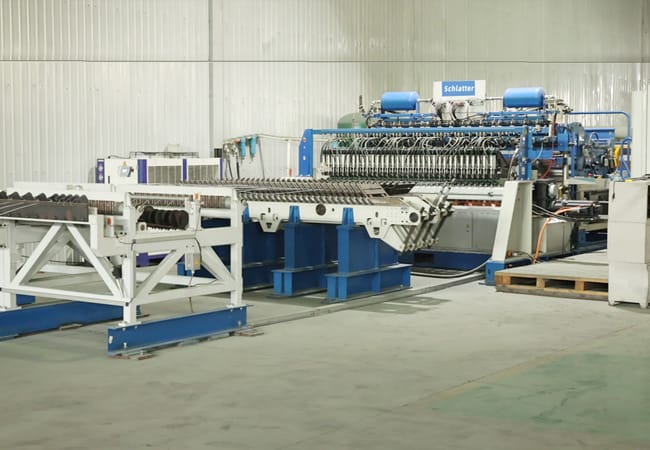
We adopt precise and solid welding technology, ensuring firm connection, smooth surface and high structural stability for fences.
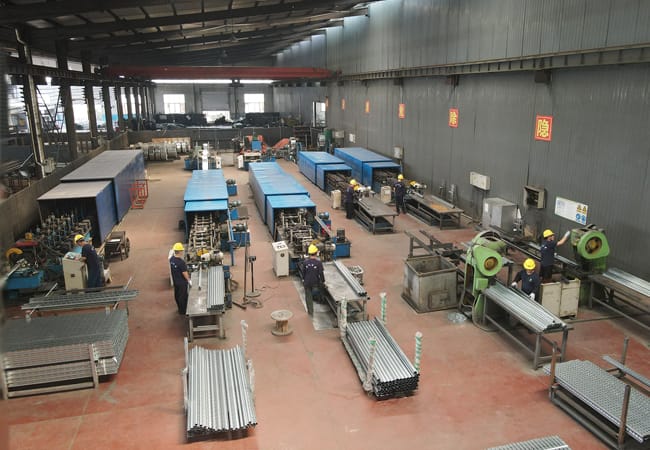
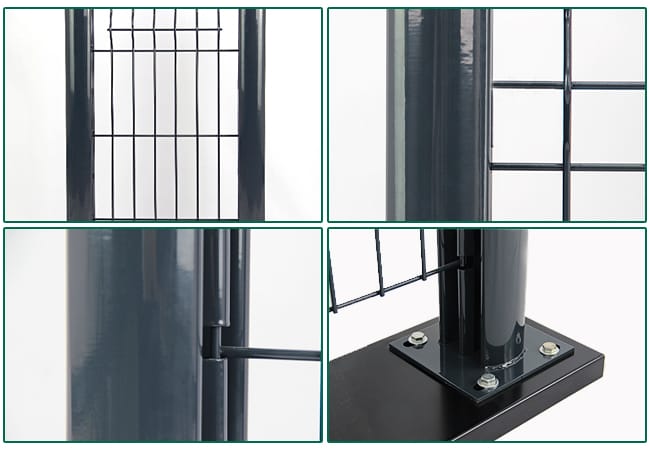
Our fence posts are sturdy, load-bearing, anti-corrosion and precisely sized for easy installation and long service life.
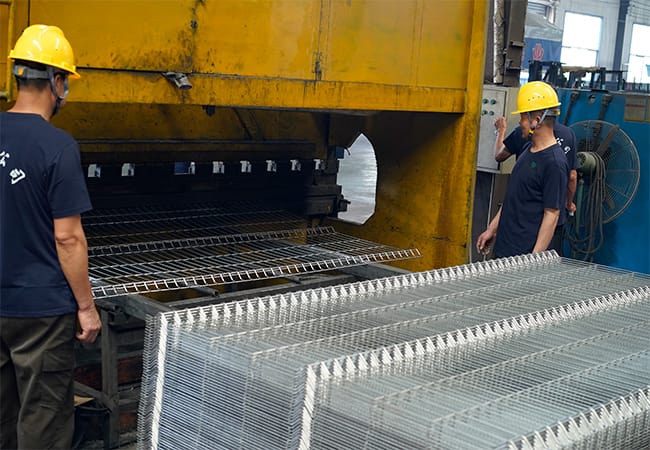
Adopts professional bending technology for accurate shaping, stable structure and smooth radian to meet various installation needs.
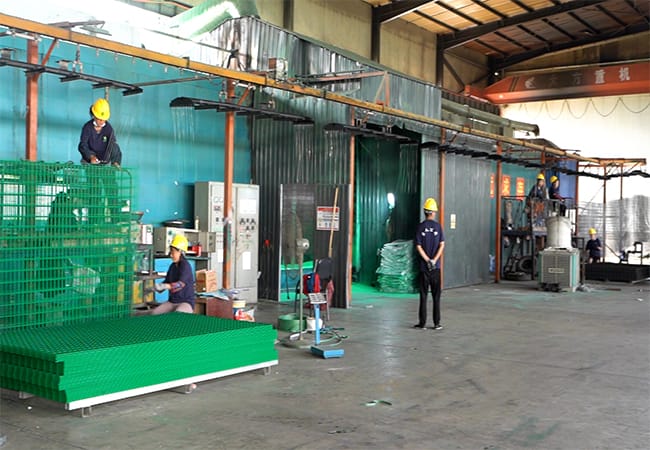
Professional surface treatment ensures excellent corrosion resistance, weatherability and long-lasting finish for fences.
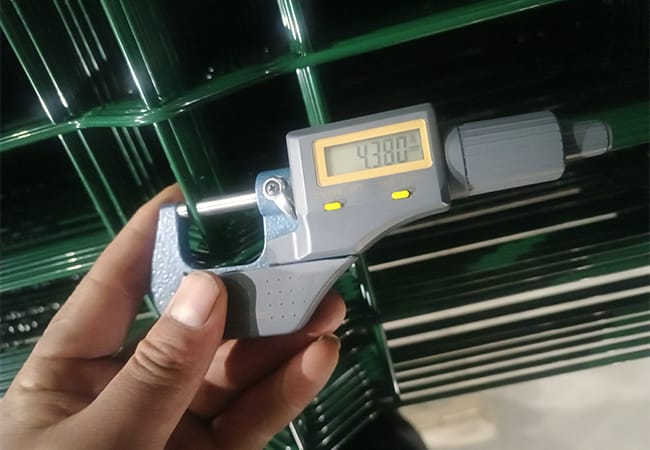
Strict quality inspection at each process ensures fence quality meets standards, with no defects and stable performance.
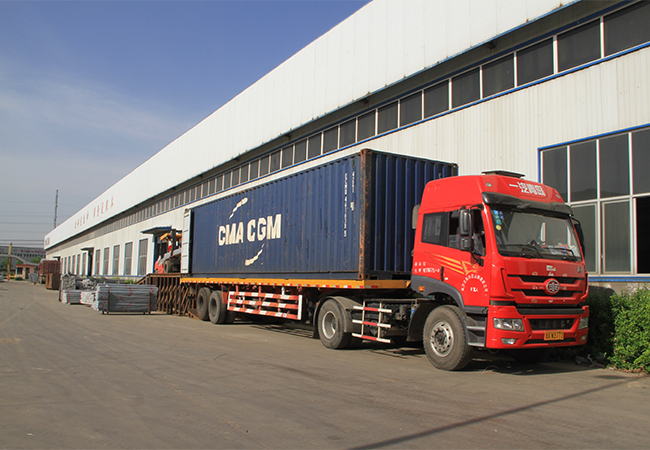
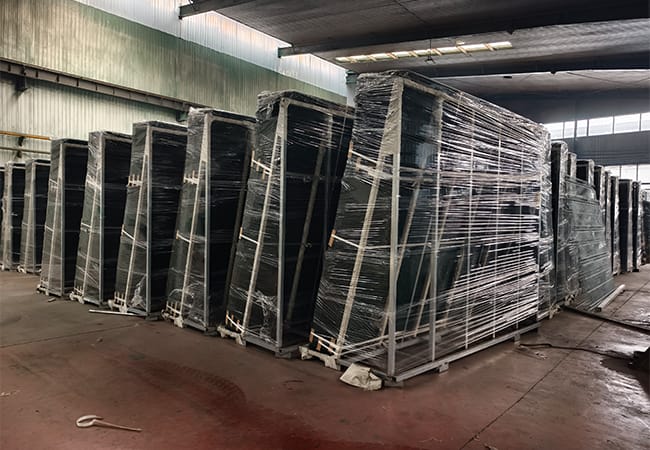
Standardized packaging protects products well; safe and efficient shipping ensures on-time delivery to global customers.
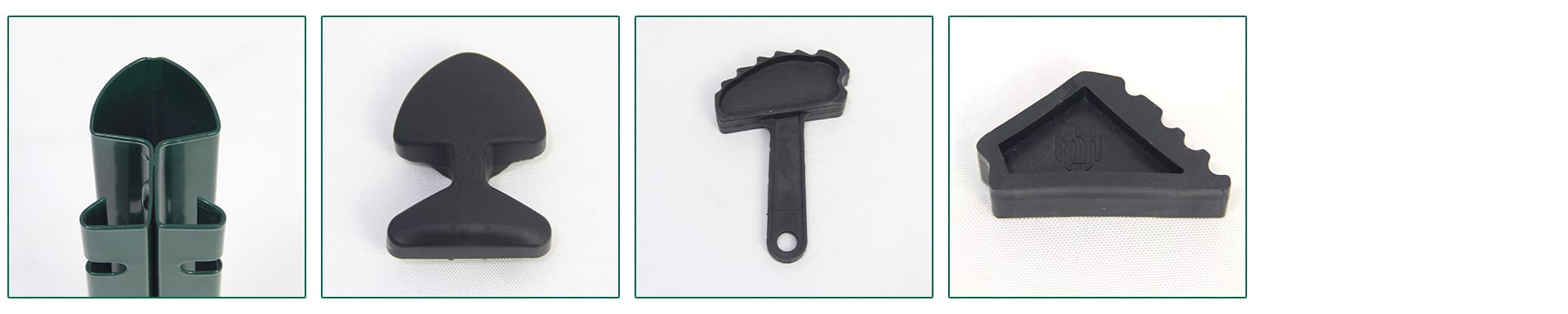
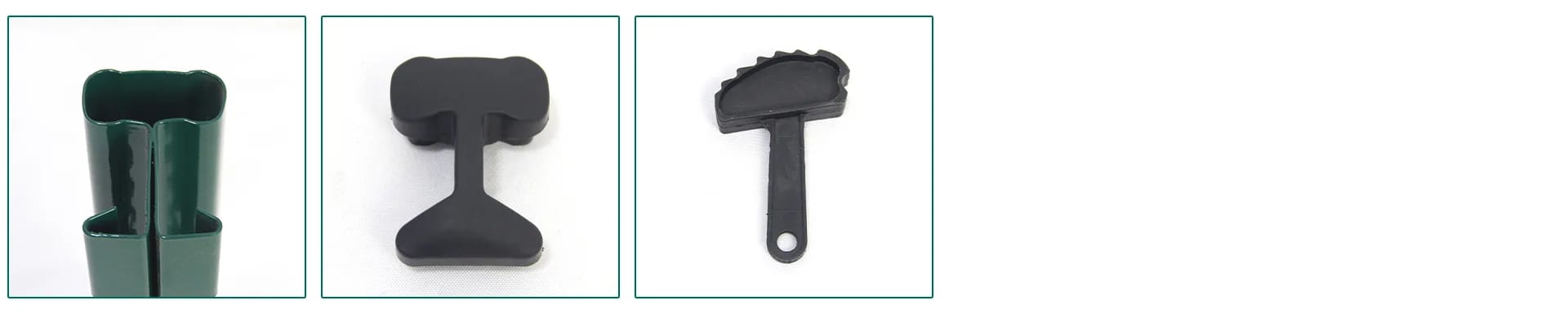
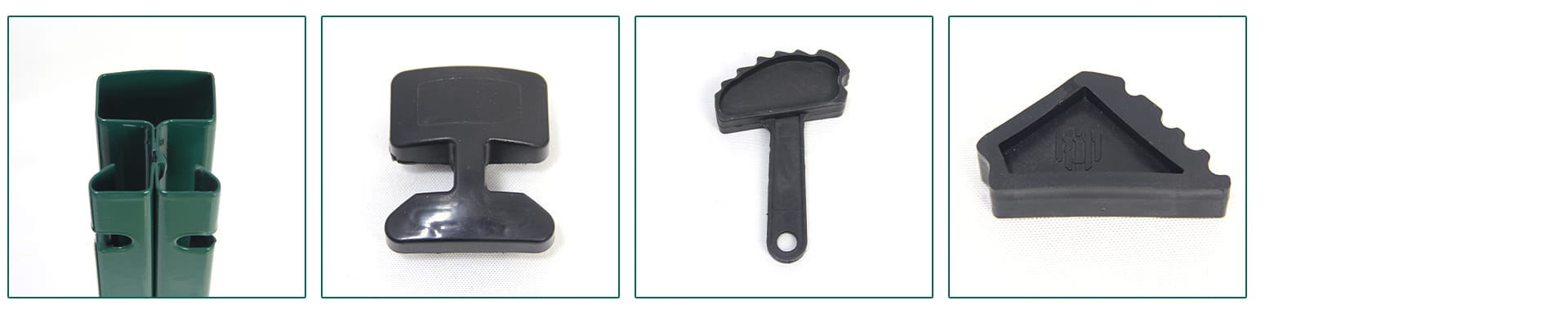
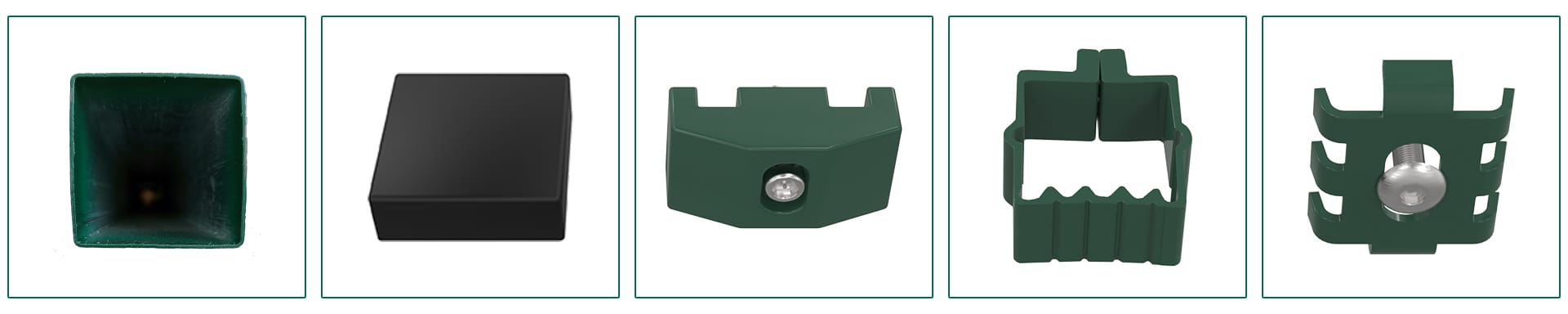
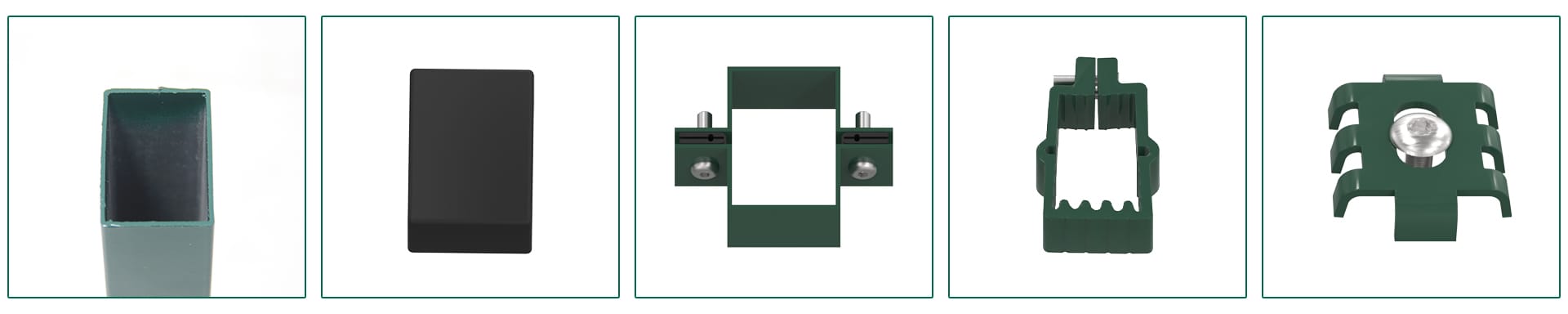
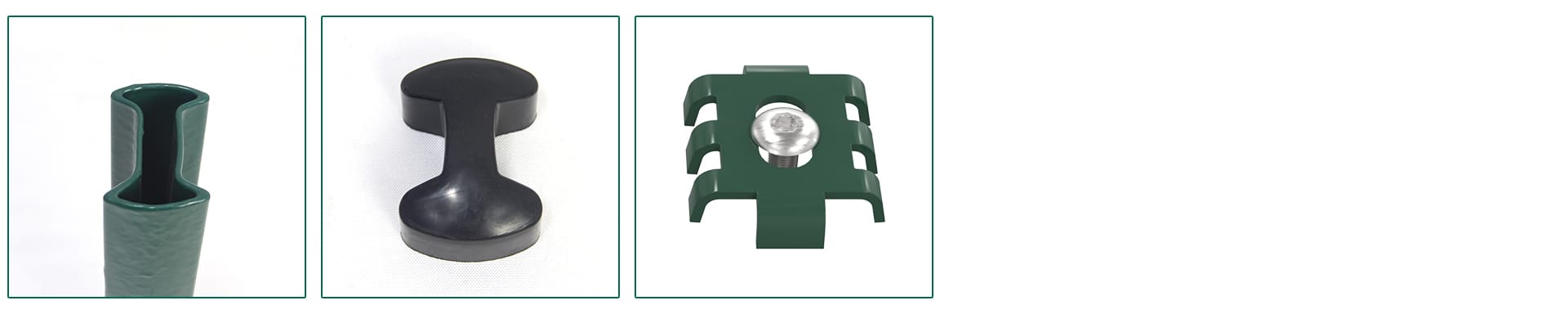
Special Accessories
- Peach Post
- BD Post
- CM Post
- Square Post
- Rectangle Post
- I Post
Related Product

Detailed Installation Process for 3D Fence
The installation of bending fence requires strict adherence to operational standards and detailed steps to ensure the overall stability, safety and aesthetic appearance of the fence. Below is the expanded and detailed installation process, with in-depth explanations of each step, key points and precautions:
1. Site Preparation & Marking
Before starting the installation, thorough site preparation is the foundation to ensure the smooth progress of subsequent operations. First, clear the entire construction area, remove all obstacles such as stones, weeds, garbage and sundries that may affect the installation, and clean the ground to avoid interference with positioning and drilling. Then, use a level to check the flatness of the installation ground; if there are local uneven areas, level them with fine soil or concrete to ensure that the fence can be installed vertically and stably. Next, according to the design drawings and actual installation requirements, use professional measuring tools (such as tape measure, theodolite and ink line) to mark the installation positions of each fence post and bending fence panel. The spacing between posts should be strictly in line with the design specifications (usually 2-3 meters, which can be adjusted according to the fence height and load-bearing requirements), and the marking lines should be straight and clear to ensure that the overall layout of the fence is neat and consistent. At the same time, mark the depth of the post holes on the ground according to the height of the posts (generally, the buried depth of the posts is 1/3-1/4 of the total height, ensuring sufficient stability to resist wind and external impact).
2. Post Installation
Post installation is the core link affecting the overall stability of the bending fence, and every detail needs to be strictly controlled. First, use an electric drill or excavator to dig holes at the marked positions; the diameter of the holes should be 1.5-2 times the diameter of the posts to leave enough space for pouring concrete and ensuring the firmness of the posts. After digging the holes, clean the soil and debris at the bottom of the holes to avoid uneven stress on the posts. Then, place the fence posts vertically into the holes, and use a plumb line to check the verticality of the posts (both front and back, left and right directions should be perpendicular to the ground, with an error not exceeding 3mm), and use wooden stakes or temporary supports to fix the posts to prevent them from tilting during concrete pouring. Next, pour high-strength concrete (cement, sand and gravel ratio is usually 1:2:3) into the holes, and continuously tamp the concrete with a tamper during the pouring process to eliminate air bubbles and ensure that the concrete is closely combined with the posts and the hole wall. After pouring, smooth the surface of the concrete and make it slightly higher than the ground to prevent water accumulation from eroding the posts. Finally, let the concrete fully solidify; the solidification time is not less than 24 hours (the solidification time should be appropriately extended in low temperature or humid environment) to ensure that the posts are firmly fixed in the ground and cannot be shaken.
3. Fence Panel Positioning
After the concrete of the posts is completely solidified, the positioning of the bending fence panel can be carried out. First, check the pre-drilled holes on the posts and the fence panel to ensure that the hole positions are accurate, the hole diameter matches the fasteners, and there is no deformation or blockage. Then, use a crane or manual lifting tool to lift the bending fence panel (pay attention to protecting the surface of the panel to avoid scratches or damage to the bending radian), and align the pre-drilled holes on the panel with the mounting holes on the two adjacent posts. During the alignment process, adjust the height and position of the panel: the bottom of the panel should be 5-10cm above the ground to prevent water accumulation and corrosion, and the bending radian of the panel should be smooth and consistent with the design requirements, without obvious wrinkles or deformation. At the same time, ensure that the gap between adjacent panels is uniform (usually 2-5mm) to avoid uneven stress caused by thermal expansion and contraction. After adjusting to the correct position, use temporary fixing clips to fix the panel and the posts temporarily to prevent the panel from shifting during the fastening process.
4. Fastening with Special Accessories
The fastening of special accessories directly affects the connection firmness between the fence panel and the posts, and is an important guarantee for the service life of the fence. First, select matching special accessories according to the model of the fence, including screws, nuts, washers, brackets and fixing clips (preferably anti-rust and anti-loosening accessories to improve corrosion resistance and stability). Then, pass the screws through the pre-drilled holes of the panel and the posts, and install washers and nuts in sequence; when tightening, use a torque wrench to control the torque (usually 30-50N·m) to ensure that the screws are tightened evenly, without over-tightening (to avoid damaging the panel or posts) or under-tightening (to avoid looseness). For the bending part of the fence panel, special curved brackets should be used to fix it, ensuring that the bending part is closely attached to the posts and the stress is uniform. After fastening all the accessories, check each connection point again to confirm that there is no looseness, and the accessories are installed in place, without missing or misplaced parts.
5. Level & Integrity Check
After the installation of the fence panel and accessories is completed, a comprehensive level and integrity check is required to ensure that the installation quality meets the standards. First, use a level and plumb line to check the levelness of the fence panel and the verticality of the posts again: the levelness error of the panel should not exceed 2mm per meter, and the verticality error of the posts should not exceed 3mm in total. Then, check the overall alignment of the fence: the entire fence should be straight, the bending radian of each panel should be consistent, and there should be no obvious skew or unevenness. At the same time, check the connection firmness of each part: gently shake the fence panel and posts to ensure that there is no obvious shaking, and the screws and accessories are not loose. If any problems are found (such as skew, looseness, uneven gap), adjust them in time: if the posts are skewed, you can chisel the concrete around the posts, adjust the verticality and re-pour the concrete; if the panel is uneven, adjust the position of the fasteners or add gaskets to ensure the flatness. In addition, check the bending part of the panel to ensure that there is no deformation, and the radian is smooth and in line with the design requirements.
6. Cleaning & Acceptance
The final step of the installation process is cleaning and acceptance, which ensures the aesthetic appearance of the fence and confirms that the installation is up to standard. First, use a clean cloth or air compressor to remove dust, debris, concrete residues and fingerprints on the surface of the fence posts, panels and accessories, especially the bending part and connection points, to avoid affecting the surface finish and corrosion resistance. If there are scratches or stains on the surface of the fence, use professional cleaning agents to clean them (avoid using corrosive cleaning agents to prevent damage to the surface treatment layer). Then, carry out a comprehensive acceptance according to the design drawings and installation standards: check the installation position, spacing, verticality, levelness and connection firmness of the fence; check whether the surface of the fence is intact, without scratches, deformation, rust or other defects; check whether the special accessories are complete and installed in place. After the acceptance is qualified, the installation work is officially completed. If unqualified items are found, they should be rectified in time until they meet the acceptance standards.
Note
During the entire installation process, construction personnel should wear protective equipment (such as safety helmets, gloves and safety shoes) to ensure construction safety. In addition, pay attention to the protection of the fence surface during installation to avoid damage to the surface treatment layer (such as galvanizing, spraying) which may affect the corrosion resistance and service life of the fence.
3D Fence by Hebei Bending Fence Technology
Hebei Bending Fence Technology Co., Ltd., located in Anping—the renowned “China Wire Mesh Hometown” of Hebei Province, is a professional manufacturer and exporter of high-quality metal fencing solutions with over 30 years of industry expertise. Our 3D Fence is a flagship high-performance welded mesh fencing system, engineered with distinctive V‑shaped bends to deliver exceptional structural rigidity, anti‑climb security and a sleek modern aesthetic.
Crafted from premium low‑carbon steel wires via fully automatic precision welding, our 3D Fence features firm, stable joints and zero welding defects. The unique 3D bent design significantly boosts impact resistance, effectively preventing panel sagging and deformation even under heavy external force. We offer three durable surface treatments—hot‑dip galvanizing, powder coating and PVC/PE coating—ensuring outstanding corrosion, rust and UV resistance for long‑lasting performance in harsh outdoor environments, with a service life of up to 15+ years.
Detailed Installation Process for 3D Fence
Its main applications cover a wide range of fields with high requirements for safety, durability and appearance.
In residential areas, it is widely used for vilas, apartments, residential communities, private courtyards and community boundaries, providing
reliable safety protection while maintaining an elegant and neat visual effect.
In commercial & industrialfields, it serves as ideal fencing for factories, workshops,warehouses, power plants,locistics parks,industridl zones
and eguipment areas, with strong anti-climbing and anti-damage performance to ensure safe and orderly operation of the site.
For public infrastructure,it is suitable for roads, railways, airports,pots, wharves, bridges and transportation faclities, effectively isolatina
dangerous areas, quiding traffic and preventing accidental intrusion.
In landscaping and public places, including parks, gardens,schools, scenic spots, green belts and stadiums, it perfectly combines protection
function with landscape desian, making the environment more bequtiful and orderly.
In construction and renovation projects,it can be used as temporary site enclosures,construction perimeter isolation, renovation barriers and
temporary safety fencing, featuring convenient installation, strong stability and reusability.
Core Advantages
Superior Security: Anti-climb, anti-theft and anti-vandal 3D bent mesh design with tight mesh spacing and high rigidity, effectively blocking unauthorized intrusion and ensuring perimeter safety.
Long-Lasting Durability: Weatherproof, UV-resistant and rust-proof with premium surface treatment, stable performance under extreme sun, rain, snow and temperature changes for long service life.
Modern Aesthetics: Neat three-dimensional profile with unique 3D curved design, blends seamlessly with residential, industrial and public landscapes, enhancing overall visual appeal.
Cost-Effective: Modular 3D fence panels and standard posts enable fast, welding-free installation, cutting labor and time costs; minimal daily maintenance further reduces long-term expenses.
Excellent Flexibility: Adapts smoothly to sloped, uneven or irregular terrain, maintaining structural integrity and perfect appearance without complex on-site modifications.
High Structural Strength: Reinforced 3D mesh structure provides outstanding impact resistance and load-bearing capacity, superior to traditional flat wire fences in stability and reliability.