


A South African fencing quotation may describe a 2.4 m high steel fence with vertical members, horizontal rails and galvanized posts. That description still leaves one important question unanswered: is the supplier offering a tubular picket fence or a traditional steel palisade system?
The difference is not just appearance. A tubular fence normally uses hollow square or round steel tubes as its vertical pickets. Palisade fencing uses formed steel pales, often with pointed tops, connected to horizontal rails. Their material dimensions, connections and manufacturing methods are different.
This distinction matters when a contractor prepares a bill of quantities or compares offers from manufacturers. A price for 19 mm hollow steel pickets cannot be compared directly with a quotation for 40 mm angle-steel pales.
Both systems have a place in the South African fencing market. The right choice depends on the property’s requirements, the architectural design and the technical specification. Here is what buyers should examine before choosing between them.
First, Understand What You Are Buying
Steel Tubular Fence: Hollow sections form the vertical pickets
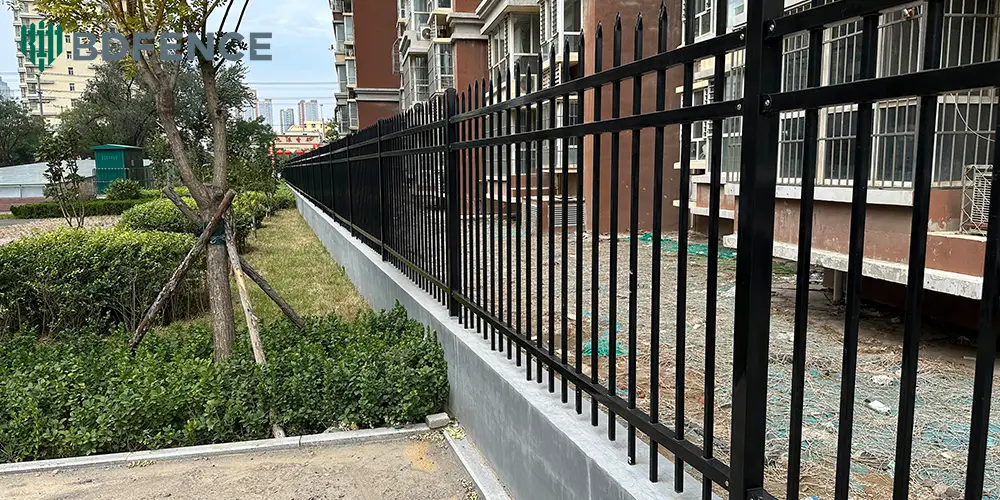
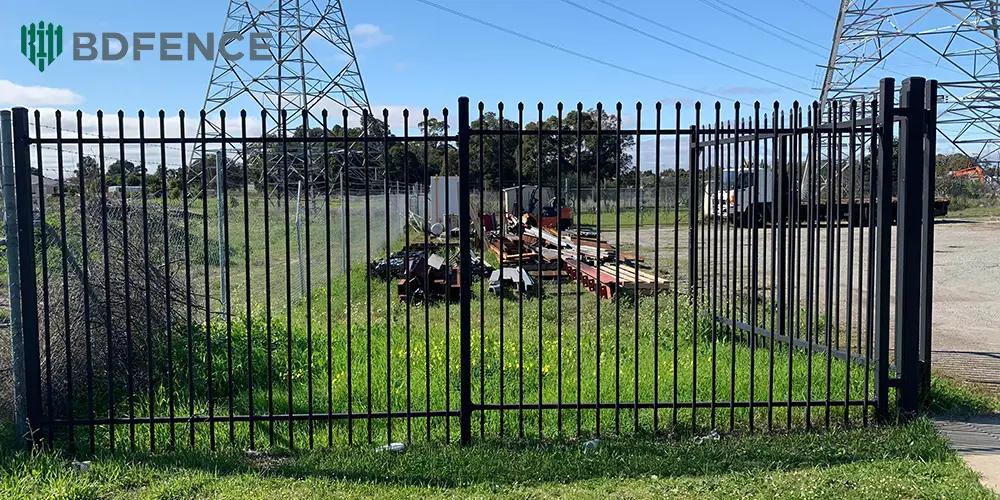
A Steel Tubular Fence uses hollow steel sections as its vertical members. These can have square or round cross-sections, with horizontal rails connecting the pickets into a welded panel.
BDFENCE offers square pickets in 16 × 16 mm and 19 × 19 mm configurations, together with round pickets in Ø16 mm and Ø19 mm options.
The panel design can also include two, three or four horizontal rails. Buyers can select different top styles, including flat top, spear top, bending top and aluminum top.
This construction gives the fence a regular tubular appearance. It can suit commercial properties, residential developments, schools and industrial facilities where the project needs a defined boundary with an open visual design.
For the full product range, see the BDFENCE Steel Tubular Fence page.
Palisade Fence: Formed steel pales create the boundary
A traditional steel palisade fence uses individual vertical pales connected to horizontal rails. The pales may have W-shaped, D-shaped or angle-steel profiles, depending on the manufacturer and project specification.
Many palisade designs also use pointed or specially formed pale tops. These features create a different appearance from the square and round tubular pickets used in conventional tubular fencing.
BDFENCE’s published Palisade Fence range includes W-profile pales, D-profile pales and angle-steel rail configurations. Its listed pale thickness options range from 2.0 mm to 3.0 mm.
Post arrangements can include H-beam posts or square steel posts, depending on the selected system.
In South Africa, palisade fencing is a familiar product category in industrial, municipal and infrastructure procurement. However, the word palisade does not establish one universal pale dimension or construction method. The approved drawing remains the deciding document.
View the BDFENCE Palisade Fence range for its available configurations.
The Structural Difference Is More Important Than the Product Name
One way to understand the two systems is to look at their individual steel components.
| Component | Steel Tubular Fence | Palisade Fence |
|---|---|---|
| Vertical Members | Hollow square or round steel tubes | Formed W, D or angle-steel pales |
| Horizontal Members | Square tubular rails | Angle-steel or other specified rails |
| Typical Connection | Welded pickets and rails | Welded or bolted pale and rail assembly |
| Top Design | Flat, spear, bending or aluminum top | Pointed or specified pale-head profile |
| Post Arrangement | Square tubular posts | Square or H-section posts, depending on design |
| Visual Character | Regular tubular picket pattern | Distinctive vertical pale profile |
| Specification Focus | Tube dimensions and wall thickness | Pale profile, thickness and spacing |
There is no automatic strength advantage simply because one system uses a particular shape. The complete design, steel grade, member thickness, connections, post spacing and foundations all influence the finished structure.
A tubular fence with thin pickets should not be compared with a heavy-duty palisade panel without considering the material quantities and structural requirements.
What South African Project Specifications Tell Buyers
South African public procurement documents often describe palisade fencing through individual component dimensions rather than using a general product name alone.
One public-sector steel palisade specification provides a useful example. It describes a 3 m wide by 2.4 m high panel with:
- 50 × 50 × 5 mm mild-steel horizontal rails.
- 40 × 40 × 3 mm angle-steel vertical pales.
- Double-pointed pale tops.
- Maximum 150 mm centre-to-centre pale spacing.
- Maximum 120 mm clear spacing between pales.
This is one documented specification, not a universal South African palisade standard. Other projects may require different pale profiles, rail dimensions, finishes and connections.
The important lesson for a tubular fence buyer is that product descriptions must identify the actual steel section.
For example, 19 × 19 mm hollow steel pickets are not equivalent to 40 × 40 × 3 mm angle-steel pales. Even if both products have vertical members and horizontal rails, their cross-sections and material quantities differ.
If a tender specifies palisade fencing, a tubular fence should be submitted as an alternative only when the project authority permits a technical substitution.
Where Does Steel Tubular Fence Fit in the South African Market?
The choice often becomes clearer when the property itself is considered.
Commercial buildings and office developments
Commercial properties frequently need a boundary that looks consistent with the surrounding architecture. A tubular picket system can provide an open appearance while defining parking areas, building entrances and service boundaries.
Square pickets create a more angular pattern, while round pickets provide a different visual finish. The developer can select the profile and top design according to the architectural drawings.
Schools and educational facilities
School boundaries need to account for students, staff, visitors and service vehicles. The design may require a combination of fixed fence panels, pedestrian gates and vehicle access.
For these applications, the picket spacing, finished height, top profile and gate hardware should be reviewed together.
A sharp spear-top arrangement is not automatically appropriate for every school location. The project designer should consider the intended use and relevant safety requirements.
Residential estates and community properties
Residential developments often have several different boundary zones. The main entrance may use a more decorative fence arrangement, while internal boundaries separate parking areas, landscaped spaces and shared facilities.
A tubular fence allows the designer to maintain a consistent vertical picket pattern across these areas.
Gate appearance also matters. Pedestrian gates and vehicle gates can use matching tubular infill so the entrance does not look like a separate product from the surrounding fence.
Factories and industrial properties
Industrial sites may require a different specification from a decorative commercial boundary.
Here, buyers should pay particular attention to picket dimensions, wall thickness, rail construction, post sections and the connection system.
A palisade system may be preferred where the tender specifically calls for formed pales and a particular anti-climb design. A tubular system may suit projects that require hollow steel pickets and a different architectural appearance.
The project requirements, not the product label, should determine the final selection.
Comparing the Actual Specifications Before Requesting Prices
Product photographs can make two vertical steel fencing systems look similar. A technical comparison reveals much more.
BDFENCE publishes the following Steel Tubular Fence options:
| Specification | Available Options |
|---|---|
| Square Pickets | 16 × 16 mm / 19 × 19 mm |
| Round Pickets | Ø16 mm / Ø19 mm |
| Picket Wall Thickness | 0.8–1.5 mm, depending on profile |
| Horizontal Rails | 25 × 25 mm / 40 × 40 mm / 45 × 45 mm |
| Rail Quantity | 2 / 3 / 4 rails |
| Picket Spacing | 100 / 110 / 120 mm |
| Panel Height | 1,200–2,400 mm |
| Panel Width | 1,500–3,000 mm |
| Post Sections | 50 × 50 / 60 × 60 / 80 × 80 mm |
These are published product options. The selected combination needs to match the actual panel drawing and project requirements.
For palisade fencing, the buyer instead needs to specify the pale profile, pale thickness, pale width, pale spacing, rail section and post arrangement.
That is why the two quotations should have separate technical schedules. Comparing them using only height and panel width can hide substantial differences in material and construction.
Four Details That Often Get Missed in a Fence RFQ
1. Picket spacing is not always the clear opening
A specification stating 100 mm spacing may refer to the distance between picket centres or the clear gap between the tubes.
These are different measurements. With a 19 mm picket, a 100 mm centre-to-centre spacing produces a different opening from a 100 mm clear-gap requirement.
Ask the manufacturer to show the measurement convention on the panel drawing.
2. Outside tube dimensions do not describe wall thickness
A 19 × 19 mm hollow picket can have different wall thicknesses. The outside dimensions may remain identical while the steel content changes.
The same applies to horizontal rails and supporting posts.
For this reason, the purchase schedule should state the outside dimensions and wall thickness separately.
See the Steel Tubular Fence Tube Size and Wall Thickness Guide for more detail.
3. Panel width is not automatically post spacing
A 2,400 mm panel does not necessarily require 2,400 mm between post centres.
The connection arrangement affects the final installation module. Brackets, clamps and panel edge details all influence the required post positions.
If the civil drawing already establishes the post locations, provide those measurements to the manufacturer instead of assuming that panel width and post spacing are identical.
The Steel Tubular Fence Panel Size Guide explains this distinction in more detail.
4. Gate construction must match the selected fence system
A vehicle gate needs more than the same picket appearance as the fixed panels.
Its frame, supporting posts, hinges or sliding hardware, locking components and clear opening must suit the intended operation.
For commercial and industrial projects, list pedestrian and vehicle gates separately in the BOQ. This allows the supplier to identify the correct frame construction and supporting components.
Galvanizing and Powder Coating for Outdoor Use
Both tubular and palisade fencing can use protective surface treatments. The appropriate system depends on the project specification and the surrounding environment.
BDFENCE lists hot-dip galvanized steel with powder coating as a finish option for its tubular fence range.
For South African projects, the buyer should consider whether the fence will be installed in a coastal location, an industrial area or an inland environment with different exposure conditions.
The coating requirements should cover the complete steel package:
- Vertical pickets or pales.
- Horizontal rails.
- Line, corner and terminal posts.
- Gate frames.
- Brackets and exposed fittings.
Color selection is a separate decision from corrosion protection. A black, grey or green finish does not establish the zinc coating, surface preparation or powder-coating thickness.
If the tender requires a particular SANS specification, coating mass or inspection document, include it in the RFQ and obtain confirmation before production.
What Should a South African Buyer Include in the RFQ?
A useful quotation request should allow the manufacturer to identify the exact product without guessing what the buyer means by steel security fencing.
For Steel Tubular Fence, provide:
- Square or round picket profile.
- Outside dimensions and wall thickness.
- Required picket spacing and measurement method.
- Number and dimensions of horizontal rails.
- Panel height and width.
- Post profile, dimensions and wall thickness.
- Flat-top, spear-top or other specified finish.
- Galvanizing and powder-coating requirements.
- Pedestrian and vehicle gate schedule.
- Site layout, quantities and delivery destination.
If the tender calls for palisade fencing, provide the pale profile and thickness, rail details, post arrangement and the relevant drawings instead.
Where a tubular system is proposed as an alternative to a palisade specification, identify the differences clearly and obtain written approval before manufacturing.
How BDFENCE Can Support Your South African Project
BDFENCE supplies steel fencing systems for overseas contractors, distributors, developers and industrial project buyers.
Its Steel Tubular Fence range includes square and round hollow pickets, different rail configurations, supporting posts and matching gate options.
For a South African project, BDFENCE can review the required panel dimensions, picket spacing, tube wall thickness, post arrangement and surface treatment against the supplied drawings.
If your project is actually specified as palisade fencing, the BDFENCE Palisade Fence range provides a separate product reference.
For a tubular fence enquiry, send the site layout, BOQ or technical specification through Contact BDFENCE.
Frequently Asked Questions
Is Steel Tubular Fence the same as palisade fencing in South Africa?
No. In this article, Steel Tubular Fence refers to panels using hollow square or round steel pickets. Palisade fencing generally uses formed steel pales, such as W-profile, D-profile or angle-steel sections. The two products have different construction details.
Which is better for a commercial property: tubular or palisade fencing?
Neither is automatically better. Tubular fencing may suit projects that prioritize a regular hollow-picket appearance, while palisade may suit projects that specify formed pales and a particular security design. The approved project requirements should determine the selection.
Can Steel Tubular Fence replace palisade fencing in a tender?
Only when the project authority accepts the alternative. The buyer should submit the tubular picket dimensions, wall thickness, rail configuration, post details and other relevant information for technical approval.
What picket sizes does BDFENCE offer?
BDFENCE publishes 16 × 16 mm and 19 × 19 mm square pickets, together with Ø16 mm and Ø19 mm round pickets. The corresponding wall thickness and available combinations should be confirmed before ordering.
Can tubular fence panels include matching gates?
Yes. Matching pedestrian and vehicle gates can be included in the supply scope. Their frames, posts, hinges, locking hardware and opening dimensions should be specified separately.
What information is needed for a Steel Tubular Fence quotation?
Provide the panel height and width, picket profile, wall thickness, spacing, rail configuration, post dimensions, surface treatment, gate schedule, quantities and delivery destination.
Contact BDFENCE
Hebei Bendin Industrial Technology Co., Ltd. (BDFENCE)
Looking for Steel Tubular Fence panels for a commercial, residential or industrial project in South Africa? Send your drawings, BOQ or technical specifications for a quotation based on your required pickets, rails, posts and gates.
WhatsApp: +86 18703287372
Email: info@bd-fence.com
Website: https://bd-fence.com/
Inquiry: Contact BDFENCE