


When buyers request a quotation for 358 security fencing, they often start with one number: 76.2 × 12.7 mm. It is an important part of the specification, but it tells the manufacturer very little about the complete order.
Consider two suppliers offering the same mesh opening. One quotes a 4.0 mm wire configuration with square posts and security clamp bars. The other offers a different wire combination, lighter posts and a basic fixing system. Both quotations may say 358 Fence, yet the products and supply costs are not the same.
This is where buyers need to look beyond the mesh. Panel dimensions, wire construction, post thickness, connection details, surface treatment and export packing all affect the finished product.
For importers, fencing distributors and industrial project contractors, these details are worth checking before production starts. BDFENCE 358 Fence offers different panel and supporting component configurations for high-security applications. The right combination depends on the project requirements, not simply the standard product name.
What Does a Complete 358 Fence Specification Include?
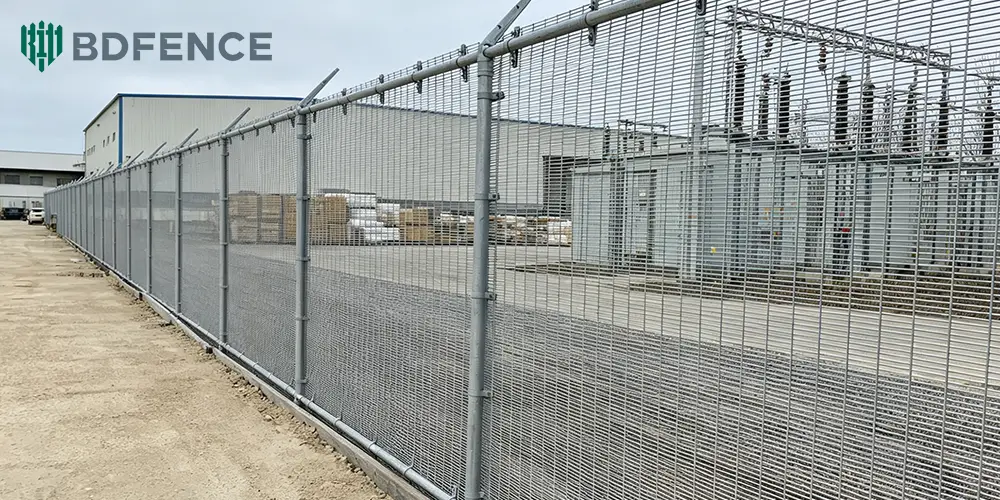
A 358 fence is a welded steel mesh system. The panel uses closely spaced horizontal and vertical wires, joined at their intersections. Its narrow openings limit conventional hand and foot holds while allowing people to see through the boundary.
However, the panel is only one part of the system. A complete order may also include:
- 358 welded mesh panels.
- Steel posts and supporting sections.
- Clamp bars, brackets and fixing plates.
- Anti-tamper bolts, nuts and washers.
- Pedestrian and vehicle gates.
- Top extensions or other specified security accessories.
- Protective coatings and export packing.
These components need to work together. A correctly manufactured panel can still create installation problems if the post profile does not match the fixing system or the gate opening does not match the site drawing.
For this reason, buyers should request a complete technical schedule rather than approve a quotation based on mesh dimensions alone.
Wire Configuration: What Changes Beyond the Mesh Opening?
Horizontal and vertical wires need separate specifications
Many buyers describe 358 fencing as 76.2 × 12.7 mm mesh with 4 mm wire. That is a common reference, but manufacturers may offer different wire combinations for different projects.
For example, BDFENCE’s published Airport 358 product range lists the following line-wire and cross-wire options:
| Wire Configuration | What Buyers Should Confirm |
|---|---|
| 4.0 × 3.0 mm | Which direction uses the 4.0 mm wire? |
| 4.0 × 4.0 mm | Are both wire directions specified at 4.0 mm? |
| 4.5 × 3.0 mm | Does the drawing match the required wire arrangement? |
| 4.5 × 4.5 mm | Are the panel weight and supporting components suitable? |
These are published product options, not interchangeable specifications for every 358 project.
Why does the difference matter? A thicker wire uses more steel. Consequently, it changes panel weight, material consumption and the quotation.
For a large perimeter order, even a small difference in wire diameter can affect the total shipment weight. It may also change the handling requirements during production, packing and installation.
Before approving a quotation, ask the supplier to identify the horizontal and vertical wire diameters separately. The drawing should also show the mesh orientation and the required tolerances.
Check the steel diameter before coating
There is another detail that often gets overlooked when comparing galvanized and powder-coated panels.
Does the quoted wire diameter refer to the bare steel wire or the finished coated wire?
Those measurements can differ because the protective layer adds material to the outside of the wire. Therefore, the purchase specification should define which measurement the supplier must meet.
If the tender requires a particular steel wire diameter, do not accept a finished coated diameter as an automatic substitute. Ask the manufacturer to clarify the material specification before production.
Panel Height, Width and Construction Details
Mesh size may remain the same across several products, but panel dimensions can vary considerably.
BDFENCE’s published Airport 358 range, for example, lists panel lengths of 2.0 m, 2.2 m, 2.4 m and 3.0 m. Its listed panel heights include 1,800 mm, 2,000 mm, 2,200 mm, 2,400 mm, 2,800 mm and 3,000 mm.
These options provide a useful reference when preparing a project enquiry. However, the buyer still needs to confirm which dimensions are available for the selected product configuration.
Panel construction also deserves attention. Some 358 configurations include bends or other forming details. If the project specifies a particular panel profile, ask the supplier to show the number and position of bends on the manufacturing drawing.
Consider a warehouse boundary with several different fence heights. A standard panel may suit the main perimeter, while a taller section may be required around a restricted area.
In that situation, the contractor should not simply increase the panel height and retain every other component without review. The post length, connection arrangement and foundation requirements may also change.
Panel dimensions should therefore be checked against the site layout before the manufacturer calculates the final quantities.
Post Selection: The Outside Dimensions Are Not Enough
Posts support the mesh panels and connect individual fence sections into one perimeter. Their specification affects the installation and the overall structure.
358 systems may use square posts, H-section posts or other project-specific steel sections. Each option has a different connection arrangement.
When comparing post specifications, check four details:
- Profile: Square, rectangular or H-section.
- Outside dimensions: The actual width and depth of the post.
- Wall thickness: The specified thickness of the steel section.
- Length: The required length for the panel height and installation method.
A post measuring 80 × 80 mm does not fully describe the product if its wall thickness remains unspecified. Two posts can have the same outside dimensions but use different amounts of steel.
Post spacing matters as well. A nominal panel width does not automatically equal the required distance between post centres. The fixing system and panel edge arrangement determine the actual setting-out dimensions.
Before ordering, request the post drawing together with the panel connection detail. The installation contractor can then use the approved dimensions when preparing the foundations.
For additional information, see the 358 Fence Post Size Guide.
Fixing Systems: How Will the Panel Connect to the Post?
A 358 panel needs a suitable connection system. Depending on the product design, manufacturers may use clamp bars, steel plates, brackets, H-post slots or anti-tamper fasteners.
These arrangements can look similar in product photographs, but their installation details differ.
For example, a system using a full-length clamp bar needs compatible fixing positions and fasteners. A post with an integrated slot uses a different connection method.
The buyer should also consider which side of the fence exposes the fixing hardware. If the project requires tamper-resistant connections, the approved design should identify the required bolts, nuts and fixing arrangement.
One question worth asking is whether the supplier includes all the hardware needed for each panel. A quotation may include the mesh and posts but exclude some brackets, washers or security fasteners.
For bulk orders, list the fixing components separately in the BOQ. This makes it easier to compare offers and reduces the risk of missing accessories when the shipment reaches the site.
Surface Treatment and Corrosion Protection
A 358 fence usually operates outdoors, so the surface treatment needs careful consideration.
Galvanized steel uses a zinc coating to protect the underlying steel. Powder coating adds a coloured finish and another protective layer. Some projects specify both treatments as part of the required system.
However, the coating choice should reflect the actual environment. A fence near the coast may face different exposure from one installed at an inland industrial facility.
Buyers should check the following details:
- Whether the steel wire is galvanized before or after welding.
- The specified zinc coating requirements.
- Whether the panels receive an additional powder-coated finish.
- The required coating colour or RAL reference.
- How the manufacturer treats cut edges and exposed steel surfaces.
- Whether posts, fixing bars and gates receive compatible protection.
Colour alone does not establish corrosion resistance. Two green or black panels can have different surface preparation and coating specifications.
Ask the supplier for the relevant coating details and inspection records where the project requires them. Also, make sure the supporting components meet the same agreed requirements.
Gates and Additional Security Components
A 358 perimeter rarely consists of mesh panels alone. Most commercial and industrial projects also need access points.
Pedestrian gates, double-leaf vehicle gates and sliding gates can use matching 358 mesh infill. However, each gate needs its own frame dimensions, support posts, hinges or operating hardware and locking arrangement.
For higher-security applications, the project may also specify Y-shaped or L-shaped extensions, barbed wire or concertina razor wire.
These components should not be treated as standard inclusions. The buyer needs to confirm the required configuration, the supporting structure and any applicable site safety or local approval requirements.
For example, a project may request 358 panels with Y-post extensions. The manufacturer needs to know the required extension arrangement before finalizing the post dimensions and connection details.
Keep the gate schedule and security accessory list alongside the main panel drawing. This gives the supplier a clearer picture of the complete perimeter system.
How Should Buyers Check Quality Before Production?
Many problems with fencing orders start before the factory begins production. A buyer may approve the height and mesh size but overlook the post thickness, fixing details or coating requirements.
Later, the shipment arrives and the contractor discovers that some accessories are missing or the post dimensions do not match the approved installation drawing.
A few checks at the quotation stage can prevent much of this confusion.
Before releasing a bulk order, review these items:
| Inspection Item | What to Check |
|---|---|
| Mesh dimensions | Opening, orientation and tolerances |
| Wire configuration | Horizontal and vertical steel diameters |
| Panel construction | Height, width, bends and edge details |
| Welds | Visible weld consistency and agreed inspection requirements |
| Posts | Profile, outside dimensions, wall thickness and length |
| Fixings | Compatibility, quantities and specified fasteners |
| Coating | Surface condition and required coating documentation |
| Accessories | Gates, brackets, caps and other listed components |
For a custom order, request the manufacturing drawing before production. If the project requires a sample or first-article inspection, agree on the dimensions and acceptance criteria in advance.
After production, the buyer can compare the inspection records with the approved specification. This provides a clearer basis for discussing any discrepancy.
Export Packing: Protect the Fence Before It Reaches the Site
Large 358 fence panels require careful handling during loading and international transport. A good coating cannot prevent damage if the panels move against each other or the packing fails.
For this reason, export packing should form part of the original quotation.
Depending on the order, buyers can discuss options such as:
- Metal pallets for panel handling.
- Wooden pallets for selected components.
- Bulk loading arrangements where suitable.
- Carton packing for smaller accessories and fasteners.
- Moisture-resistant wrapping for transport protection.
Different components may need different packing methods. Large mesh panels, steel posts and small fixing accessories should not all be treated as identical cargo.
Ask the supplier how the shipment will identify panel sizes, post types and accessory packages. Clear labels and a matching packing list make receiving and installation easier.
For international orders, also confirm the loading arrangement, container requirements, shipping terms and delivery destination before finalizing the commercial offer.
What Information Should You Send for a 358 Fence Quotation?
A product name and estimated perimeter length can start an enquiry. However, a drawing or BOQ gives the manufacturer a much better basis for preparing a complete quotation.
For a commercial or industrial project, prepare the following information where available:
- Project location and intended application.
- Total perimeter length and site layout.
- Required fence height and panel width.
- Mesh opening and horizontal and vertical wire diameters.
- Post profiles, wall thickness and installation method.
- Fixing system and security fastener requirements.
- Surface treatment and colour.
- Pedestrian and vehicle gate dimensions.
- Additional security components, if required.
- Estimated quantities and delivery destination.
If some details remain undecided, mark them as provisional. The manufacturer can review the available information and prepare an initial budget quotation based on stated assumptions.
Before production, however, the buyer should confirm the final drawings, material schedule and supply scope. This avoids turning an early estimate into an incorrect manufacturing instruction.
Why Work with BDFENCE?
BDFENCE is a China-based metal fencing manufacturer with more than 30 years of industry experience. The company supplies fencing products to overseas contractors, distributors and project buyers.
Its published 358 product range includes welded mesh panels, square and H-section posts, security fixing systems and options for pedestrian and vehicle gates.
For project orders, BDFENCE can review the buyer’s drawings, BOQ and technical requirements to establish the requested manufacturing scope.
Custom panel dimensions, post configurations, surface finishes and related accessories should be identified in the enquiry. The team can then review the requested arrangement against the available product options.
For buyers comparing different 358 configurations, the existing 358 Fence mesh size and wire diameter guide provides additional background on the basic product dimensions.
If you are preparing a bulk order or a project-specific enquiry, send your drawings and BOQ through Contact BDFENCE.
FAQ
Is mesh size enough to define a 358 fence specification?
No. Buyers should also confirm wire diameters, panel dimensions, post profiles, wall thickness, fixing systems and surface treatment. Gates and additional security components may also form part of the order.
Can 358 fence panels use different wire diameters?
Yes. BDFENCE publishes several line-wire and cross-wire combinations. The buyer should identify the required configuration in the technical drawing rather than rely on a general 358 description.
Why do 358 fence quotations differ between manufacturers?
Suppliers may quote different wire combinations, panel sizes, post sections, fixing hardware, coatings or packing methods. Compare the complete technical and commercial scope before selecting an offer.
Can BDFENCE supply posts and gates with 358 mesh panels?
BDFENCE’s published 358 product range includes supporting posts, security fixing systems and pedestrian and vehicle gate options. The required configuration should be confirmed against the project drawings.
What documents should I request before approving production?
Request the approved panel and post drawings, fixing details, material schedule, surface treatment requirements and agreed inspection records. For export orders, also confirm the packing list and loading arrangement.
Contact BDFENCE
Hebei Bendin Industrial Technology Co., Ltd. (BDFENCE)
Looking for 358 security fencing for an industrial or commercial project? Send your drawings, BOQ or technical specification for a quotation covering the required mesh panels, posts, fixings and gates.
Phone: +86 18703182863
WhatsApp: +86 18703287372
Email: info@bd-fence.com
Website: https://bd-fence.com/
Inquiry: Contact BDFENCE