


A quotation for Clear View fencing arrives at your desk. The panel height looks right, the colour matches the project, and the price is lower than the other offers. Then you notice that the mesh opening is different from the one shown in the tender.
Would you still compare the prices?
Not yet. In South Africa, Clear View Fencing is a broad product category rather than one fixed mesh specification. A panel with a 76 × 25 mm opening is not the same as the narrow mesh commonly used for 358 security fencing. Both may appear in a supplier’s product range, but they do not automatically meet the same project requirements.
For warehouse owners, industrial contractors and fencing distributors, the useful question is not simply which panel costs less. It is which specification matches the approved design, what components the quotation includes, and whether the manufacturer can supply the complete package.
This guide focuses on those decisions. It covers the mesh dimensions, wire combinations, panel sizes, posts, coatings and purchasing details that matter when sourcing 358 Fence for commercial and industrial sites in South Africa.
Key Takeaways
- Clear View Fencing can refer to different mesh openings. Always check the actual dimensions before approving a quotation.
- A common 358 mesh specification uses nominal 76.2 × 12.7 mm spacing and approximately 4 mm wire, but the drawing must define the measurement method.
- Panel height, wire configuration and post design need to work together. A heavier mesh does not remove the need for a suitable support system.
- Coating requirements should reflect the actual site environment, especially where coastal exposure or industrial conditions affect corrosion risk.
- Compare the full supply package, including posts, fixings, gates and shipping terms, rather than looking at the panel price alone.
First, Check What the Supplier Means by Clear View Fencing
The name sounds straightforward, but the specifications behind it can differ.
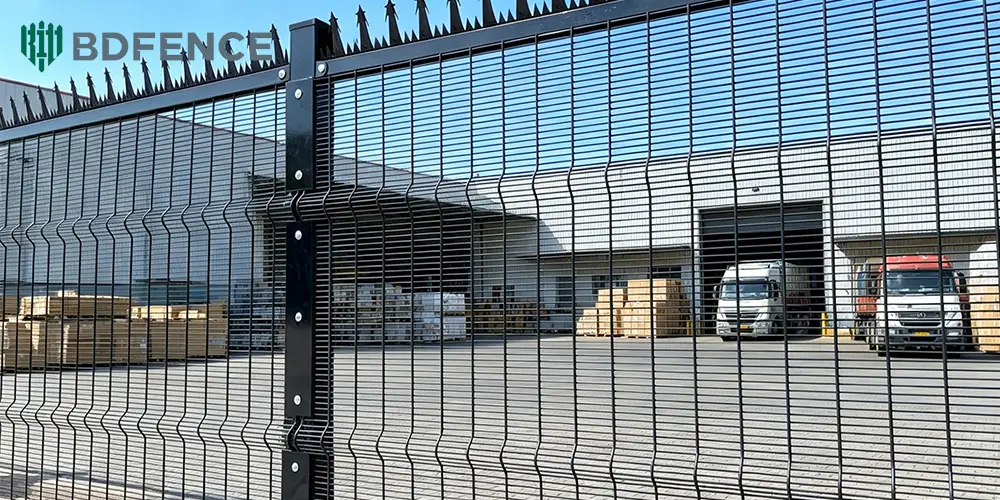
South African suppliers offer Clear View panels with several mesh openings, including approximately 76 × 50 mm, 76 × 25 mm and 76 × 12.7 mm. The narrow opening is commonly associated with 358 fencing, while the wider openings describe different welded mesh configurations.
For a warehouse perimeter, that distinction matters. The project may require an open boundary with a clear view into the site, or it may call for a more restrictive mesh as part of a defined security design. The product name alone does not tell you which one the project needs.
Take the approved drawing and compare it with the supplier’s technical sheet. Check the opening in both directions, the wire diameter and the panel dimensions. If one supplier offers a different aperture, record it as a proposed alternative rather than treating it as an equivalent product.
There is also a difference between a security-related product description and a tested performance rating. Narrow mesh openings make conventional footholds and handholds difficult to use, but the complete fence’s performance also depends on its posts, fixings, gates and installation.
For this reason, a high-security requirement should come from the project’s approved specification. A supplier’s use of the words “Clear View” or “358” cannot replace that requirement.
Read the 358 Mesh Dimensions Carefully
What does 358 actually mean?
The designation comes from the traditional imperial description of the mesh: approximately three inches by half an inch, with an eight-gauge wire reference. A common metric specification uses nominal 76.2 × 12.7 mm spacing and approximately 4 mm steel wire.
However, the measurement convention deserves attention.
If 12.7 mm refers to the distance between adjacent wire centres, the clear gap between the surfaces of two nominal 4 mm wires will be smaller. If a supplier instead defines 12.7 mm as the clear opening, the geometry changes.
That difference can create a disagreement between the buyer and the manufacturer, even when both believe they are following the same specification. A dimensioned drawing should identify the wire direction, the aperture measurement and the required tolerances.
Wire diameter needs the same clarity. Ask whether the quoted figure refers to the bare steel core or the finished coated wire. A coating can change the overall diameter, so the two measurements should not be used interchangeably.
If the tender calls for 4 mm steel wire, write that requirement explicitly. Do not rely on a general description such as “heavy-duty 358 mesh.”
Why the wire combination affects the quotation
Two 358 panels can share the same mesh opening but use different wire diameters. That changes the amount of steel in the panel, its weight and its material cost.
BDFENCE lists several wire combinations for its 358 product range, including 4.0 × 3.0 mm, 4.0 × 4.0 mm, 4.5 × 3.0 mm and 4.5 × 4.5 mm. The product drawing should confirm which figure applies to each wire direction.
These options are not automatically interchangeable. If the consultant specifies one configuration, a supplier offering another should identify the difference clearly.
For example, a quotation with a larger wire diameter may cost more because it uses more steel. That does not automatically mean the more expensive panel is the correct choice. The project requirements should determine the configuration before the buyer compares the commercial offers.
Likewise, choosing the heaviest available panel does not guarantee a suitable fence system. Post dimensions, connections, foundations and installation conditions still need review.
For more detail on the product dimensions, see the 358 Fence mesh size and wire diameter guide.
Panel Height and Width: Check the Layout Before Ordering
A warehouse perimeter may use one standard panel size for most of its length. However, gates, corners and changes in ground level can create sections that need different dimensions.
BDFENCE lists panel heights of 1,800, 2,000, 2,200, 2,400, 2,800 and 3,000 mm, together with panel lengths of 2.0, 2.2, 2.4 and 3.0 m. These are published product options, not a recommendation that every combination suits every site.
Consider a contractor estimating a straight fence run of 120 m using nominal 2.4 m-wide panels. Dividing 120 by 2.4 gives 50 nominal panel widths. That calculation is useful for a first estimate, but it does not establish the final order quantity.
The contractor still needs to account for the gate openings, corners, terminal posts and any short closing panels. The panel width must also match the selected fixing arrangement and actual post-centre dimensions.
Before ordering, mark the fence runs and gate positions on the latest site layout. Then compare that layout with the panel schedule and post connection drawing.
Where the fence crosses a slope, drainage channel or retaining wall, the design team should decide how to handle the transition. Custom panels or stepped installation may be appropriate, depending on the approved design.
It is better to identify those sections before production than to ask the installation crew to cut finished panels on site and deal with any resulting coating damage.
Choose the Post and Fixing System with the Panel
The panel is only one part of a 358 fence. Posts and connections determine how the mesh attaches to the supporting structure and how the finished fence follows the site layout.
BDFENCE lists square, I-section and H-section post options for its 358 product range. Each type has its own dimensions and thickness options, so the buyer should confirm the intended post against the selected panel and connection detail.
Some systems use brackets or clips; others use clamp bars and specified security fasteners. These parts should match the post profile, panel edge and required fixing arrangement.
Do not assume that a nominal 2.4 m panel automatically requires posts at exactly 2.4 m centres. The effective spacing depends on the panel dimensions and connection system.
For an industrial site, the responsible engineer also needs to establish the foundation requirements. Fence height, wind exposure, ground conditions and the selected post arrangement can all affect the structural design.
Posts embedded in concrete and posts mounted on base plates need different installation details. Gate supports may also need a separate design because they carry loads from the gate assembly.
Before approving the material schedule, compare the panel drawing, post detail and fixing arrangement as one system. BDFENCE also provides a 358 Fence post size guide for buyers reviewing supporting components.
Coating Selection for South African Conditions
A fence installed near the coast may face different corrosion exposure from one in an inland industrial area. The coating specification should reflect the actual location rather than assume that one finish suits every part of South Africa.
Galvanizing provides a zinc coating to protect steel against corrosion. Powder coating adds a coloured finish and another protective layer. Some projects specify a combined system, depending on their requirements.
For a coastal site, salt exposure may be an important consideration. At an inland facility, the project team may need to consider local industrial pollutants, drainage conditions and maintenance practices.
The buyer should specify the required protective system and any applicable acceptance criteria. Colour alone does not define the level of corrosion protection.
The same review should cover the whole fence package. Posts, brackets, clamp bars, bolts, gate frames and other exposed components need to meet the project’s finish requirements as well.
Ask the supplier to identify the proposed treatment for each component group. If the contract specifies coating thickness, testing or inspection records, include those requirements in the enquiry.
Field modifications also need attention. If the installer drills a new hole or cuts a coated component, the approved procedure should explain whether the change is permitted and how the team must repair the finish.
What Should a South African Buyer Compare in the Quotation?
Two suppliers can quote for what appears to be the same 358 fence while including different components. One offer may cover mesh panels only; another may include posts, fixings and gates.
Before comparing the totals, check the technical scope.
| Item | What to Confirm |
|---|---|
| Mesh panels | Opening, wire configuration, height, width and tolerances |
| Posts | Profile, thickness, length and installation method |
| Fixings | Clips, clamp bars, fasteners and connection details |
| Gates | Clear opening, frame, support posts and specified hardware |
| Coating | Protective system, colour and acceptance requirements |
| Special sections | Corner panels, custom widths and wall connections |
| Packing | Component identification and protection during transport |
| Delivery | Shipping terms, destination and stated exclusions |
Once the technical specifications match, compare the commercial terms. For imported fencing, the total purchasing cost may include international freight, customs clearance, local transport and other charges, depending on the agreed delivery terms.
A lower factory price may not produce a lower delivered cost if the quotation excludes important components or uses a different specification.
For distributors, repeat-order consistency may matter as much as the initial price. For project contractors, the approved BOQ, delivery schedule and complete supply scope may carry more weight.
What to Send BDFENCE for a Useful Quotation
A short product description can start a discussion, but a technical drawing or bill of quantities gives the manufacturer a much clearer basis for pricing.
For a South African warehouse or industrial site, prepare the following information where available:
- Site layout with fence runs, corners and gate openings.
- Required mesh aperture and wire configuration.
- Panel height and width.
- Post type and fixing requirements.
- Coating system and colour.
- Gate dimensions and required hardware.
- Panel quantities and any custom sections.
- Delivery destination and requested shipping terms.
If the design is still developing, mark provisional dimensions clearly. The manufacturer can use stated assumptions for an initial budget estimate, but the final production order should follow confirmed drawings and specifications.
It is also worth checking the drawing revision before releasing the order. A moved gate or revised fence height can affect several panels, posts and fixing components.
Discuss Your 358 Fence Requirements with BDFENCE
BDFENCE is a China-based metal fencing manufacturer supplying overseas contractors, distributors and project buyers. The company has more than 30 years of experience in metal fence manufacturing.
For South African commercial and industrial enquiries, BDFENCE can review the requested 358 mesh panels, posts, fixings and related components against the information provided.
If your project requires a particular wire configuration, panel height, post system or coating, identify those details in the enquiry. This gives the team a clearer basis for reviewing the requested supply scope and preparing a quotation.
Structural design, site-specific foundation approval and any required independent security certification remain the responsibility of the relevant project professionals unless the contract explicitly includes those services.
If you are sourcing 358 Clear View fencing for a warehouse, distribution centre or industrial site, send your drawings, BOQ or technical specification through Contact BDFENCE.
FAQ
Is all Clear View fencing in South Africa the same as 358 mesh?
No. Clear View fencing can use several mesh openings. Conventional 358 mesh is associated with narrow nominal spacing of approximately 76.2 × 12.7 mm. Always check the actual drawing and wire specification.
What wire diameter should I choose for 358 fencing?
The required diameter depends on the approved specification and available product configuration. Confirm the steel wire dimensions, measurement convention and coating requirements before comparing quotations.
Which post system should I use for a 358 fence?
The suitable post depends on the panel dimensions, fixing arrangement, fence height and site conditions. The post and connection details should match the approved drawings and structural design.
What coating is suitable for a South African industrial site?
The required coating depends on the actual environmental exposure and project specification. Confirm the protective system for panels, posts, gates and exposed fittings.
What information is needed for a 358 fence quotation?
Provide the site layout, mesh specification, panel dimensions, post details, fixing system, gate schedule, coating requirements, quantities and delivery destination.
Contact BDFENCE
Hebei Bendin Industrial Technology Co., Ltd. (BDFENCE)
Need 358 Clear View fencing for a warehouse or industrial project? Send your drawing, BOQ or technical specification for a quotation based on your required panels, posts, fixings and gates.
Phone: +86 18703182863
WhatsApp: +86 18703287372
Email: info@bd-fence.com
Website: https://bd-fence.com/
Inquiry: Contact BDFENCE