


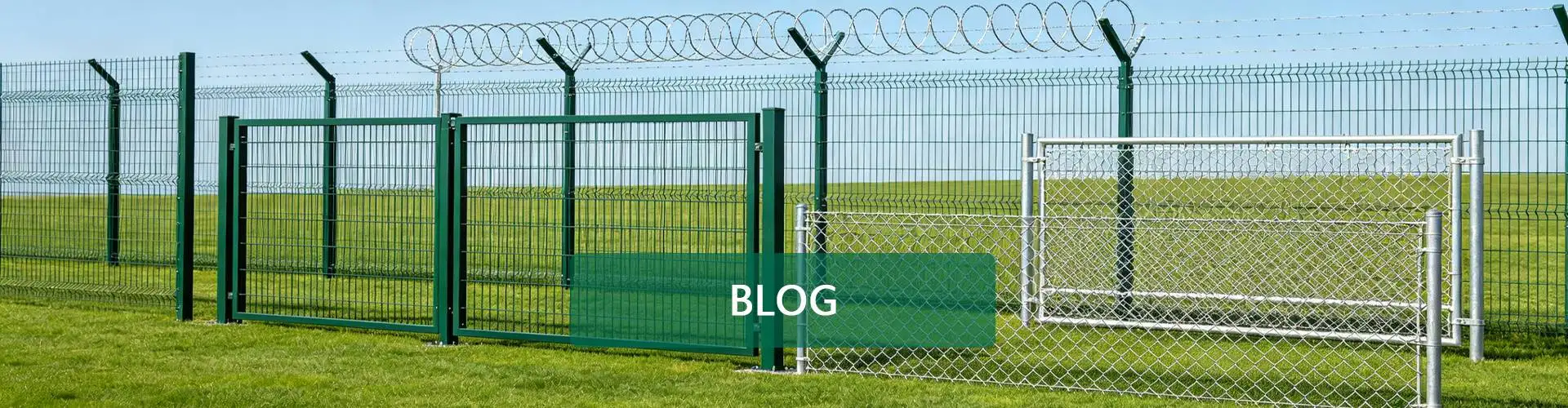
Choosing the height of a 358 Fence is not simply a matter of making the perimeter taller.
Fence height affects how difficult the boundary is to climb, but it also changes the post length, panel weight, fixing system, gate design, foundation requirements, and overall project cost.
Therefore, the correct question is not:
“What is the highest 358 Fence available?”
A better question is:
“What level of perimeter control does this site actually need?”
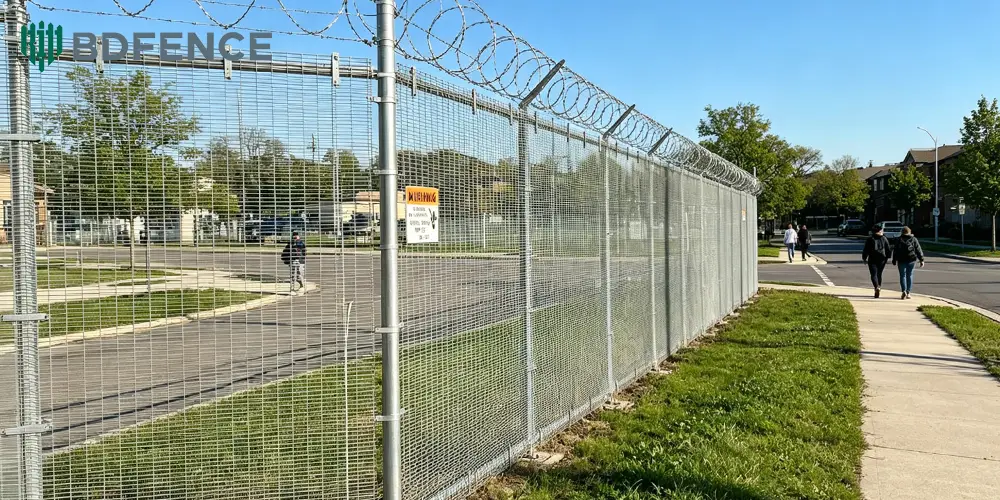
Start with the Security Function, Not the Fence Height
Two projects can both use 358 Fence and still require very different heights.
A commercial warehouse may need a controlled perimeter around valuable goods, while a prison or critical infrastructure site may need a much more difficult physical barrier.
Before choosing the height, buyers should consider:
- What the site is protecting
- How easy the perimeter is to access
- Whether the site is monitored
- Whether climbing resistance is a priority
- Whether top security will be added
- How many gates are required
- Whether local or project standards specify a minimum height
Common 358 Fence Heights
358 Security Fence can be produced in several heights according to project requirements.
Common project directions include:
| Fence Height | Typical Security Direction |
|---|---|
| 1.8–2.0 m | Controlled commercial or lower-risk security perimeter |
| 2.1–2.4 m | Industrial, utility, data center and higher-control perimeter |
| 2.7–3.0 m | High-security and restricted facilities |
| 3.0 m+ | Specialized high-security systems where required by design |
These ranges are general project directions only. The final height should follow the approved security design and local requirements.
Why 2.0m Can Be Enough for Some Projects
A 2.0m 358 Fence can provide a clear physical boundary while keeping the system relatively manageable in weight and installation.
It may suit projects such as:
- Commercial properties
- Warehouses
- Business parks
- Internal controlled zones
- Lower-risk industrial boundaries
In these environments, the narrow 358 mesh already provides stronger anti-climb characteristics than many conventional welded mesh systems.
Therefore, the project may not gain enough value from moving immediately to a 3.0m fence.
Why 2.4m Is a Common Security Height
A 2.4m-high 358 Fence is often considered for projects where the perimeter needs more physical presence than a standard commercial boundary.
Typical applications can include:
- Data centers
- Solar power plants
- Utility facilities
- Industrial compounds
- Controlled infrastructure sites
- Secure storage areas
At this height, the fence creates a more substantial barrier while remaining practical for many welded-panel systems.
However, the taller panel also places more demand on the post and fixing system.
When 3.0m Starts to Make Sense
A 3.0m 358 Fence is generally associated with more demanding perimeter-security applications.
Examples may include:
- Prisons and correctional facilities
- Critical infrastructure
- Restricted government facilities
- High-security industrial sites
- Other controlled-access compounds
At this level, buyers should stop thinking of the fence as only a taller panel.
The supporting structure becomes a larger part of the design.
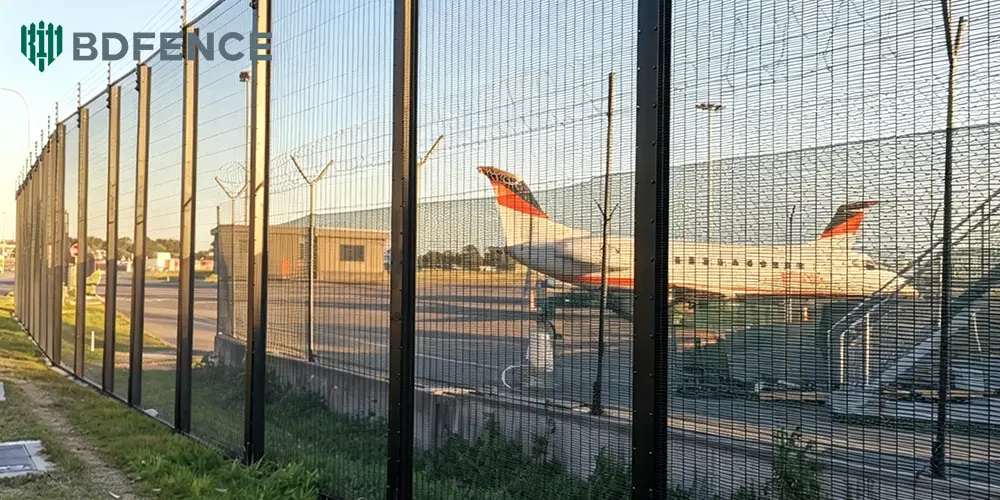
Height Changes the Post Requirement
The post is one of the first components affected when fence height increases.
A taller panel increases the load on the supporting structure.
Therefore, the project may need to review:
- Post section size
- Post wall thickness
- Total post length
- Post spacing
- Foundation depth
- Base plate or embedded installation
A 3.0m panel installed on a post system designed for a lower fence may create an unbalanced perimeter.
The Number of Fixing Points Can Also Change
Taller panels often require more attention to panel-to-post connections.
Depending on the system, 358 Fence can use:
- Full-length fixing bars
- Security clamps
- Steel plates
- Anti-tamper bolts
- Security nuts
As fence height increases, the fixing arrangement should be reviewed together with the panel and post.
The goal is to keep the connection system consistent from the bottom of the panel to the top.
Gate Height Should Follow the Security Logic
A high perimeter with a significantly lower gate can create an obvious inconsistency.
Therefore, pedestrian and vehicle gates should normally be designed around the same security intent as the surrounding fence.
Gate design should consider:
- Finished gate height
- 358 mesh infill
- Gate frame section
- Gate post size
- Hinges
- Locking hardware
- Top security if required
This becomes especially important for wide vehicle entrances.
Should You Add Razor Wire or Other Top Security?
Height and top security are related, but they are not the same thing.
A project may use a relatively tall 358 Fence without any additional topping.
Another project may specify top extensions with barbed wire or razor wire where permitted and required by the security design.
Therefore, buyers should treat these as separate questions:
- How tall should the main welded mesh barrier be?
- Does the project require an additional top security layer?
Simply adding razor wire does not automatically compensate for an inadequate fence height or weak post system.
Does a Taller Fence Always Mean Better Security?
Not automatically.
A taller fence can increase the physical difficulty of crossing the perimeter, but complete security also depends on:
- Mesh geometry
- Wire diameter
- Panel rigidity
- Post strength
- Fixing system
- Gate construction
- Foundation design
- Surveillance and access control
A well-designed 2.4m system may provide better overall perimeter performance than a poorly supported 3.0m fence.
What Height Works for a Data Center?
Data centers usually require controlled perimeter access around valuable and critical infrastructure.
A 2.4m 358 Fence is commonly considered as a starting point for this type of project, while higher configurations may be specified where the security design requires them.
Buyers should also review:
- CCTV sightlines
- Gate access
- Post strength
- Anti-tamper fixings
- Additional perimeter security requirements
The final height should follow the approved data center security standard.
What Height Works for a Solar Power Plant?
Solar power plants often need long perimeter runs around large outdoor sites.
A 2.4m 358 Fence can provide a useful balance between anti-climb performance, visibility, and project practicality.
However, total perimeter length matters because increasing height across several kilometers can significantly increase:
- Panel weight
- Post size
- Steel consumption
- Shipping weight
- Installation cost
Therefore, height should be selected according to actual security requirements rather than simply choosing the tallest available option.
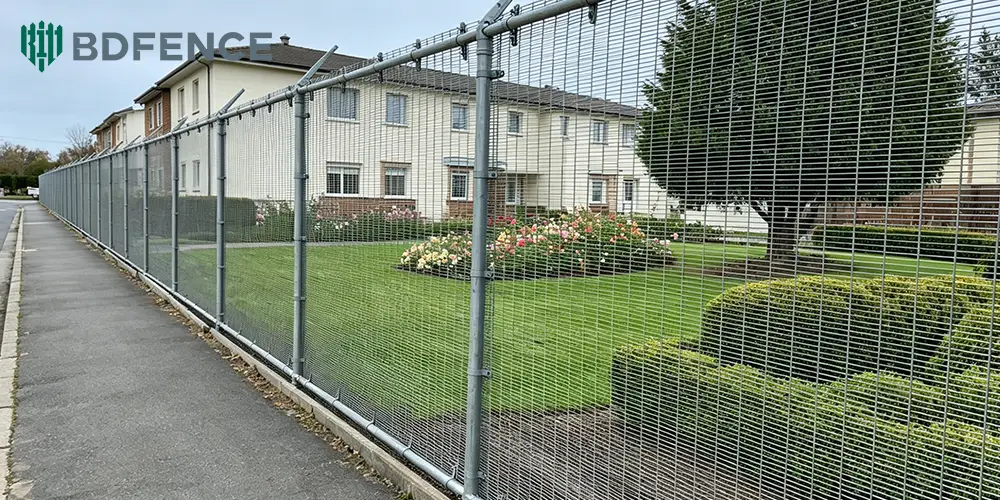
What Height Works for a Prison?
Correctional facilities generally require a more demanding perimeter strategy.
A 3.0m or higher 358 Fence may be considered depending on the approved correctional security design.
The project may also include:
- Additional top security
- Multiple fence lines
- Specialized gates
- Security detection systems
- Clear zones between perimeter layers
Therefore, prison fence height should never be selected from a generic commercial fence guide alone.
What Height Works for Industrial Facilities?
Industrial sites can vary greatly in security requirements.
A standard manufacturing plant may need a different perimeter from a chemical facility, power site, or critical equipment compound.
Possible directions include:
| Industrial Area | Possible Height Direction |
|---|---|
| General Commercial Boundary | 1.8–2.0 m |
| Main Industrial Perimeter | 2.1–2.4 m |
| Restricted Equipment Area | 2.4 m or higher |
| Critical Facility Zone | Project-specific high-security design |
One Site Can Use More Than One Fence Height
Large sites do not always need the same security level everywhere.
For example, an industrial campus may contain:
- Main external perimeter
- Critical equipment zone
- Parking area
- Internal service boundary
- High-risk restricted compound
If the security design allows it, different fence heights can be used for different zones.
This can help the project spend more on high-risk areas instead of applying the heaviest specification to every meter of fence.
How Height Affects 358 Fence Price
Increasing fence height adds more welded mesh and usually requires longer or stronger supporting components.
That can affect:
- Panel steel weight
- Post length
- Post section
- Number of fixings
- Gate size
- Coating area
- Packing volume
- Shipping weight
Therefore, a 3.0m fence is not simply a 2.4m fence with an extra 600 mm of mesh.
The complete system cost should be recalculated.
How Height Affects Shipping
Large welded panels need careful export planning.
As the height increases, buyers should consider:
- Panel bundle dimensions
- Bundle weight
- Container loading
- Forklift handling
- Site unloading
For large international projects, shipping efficiency can become part of the specification decision.
Do Not Choose Height from a Competitor’s Project Photo
A 3.0m fence may look impressive in a project image, but that does not mean your site needs the same configuration.
The correct height depends on risk, regulations, site use, perimeter length, and security design.
Copying another project’s fence height can lead to:
- Unnecessary steel cost
- Heavier posts
- Larger foundations
- Higher shipping cost
- More difficult installation
Therefore, use project requirements rather than appearance as the starting point.
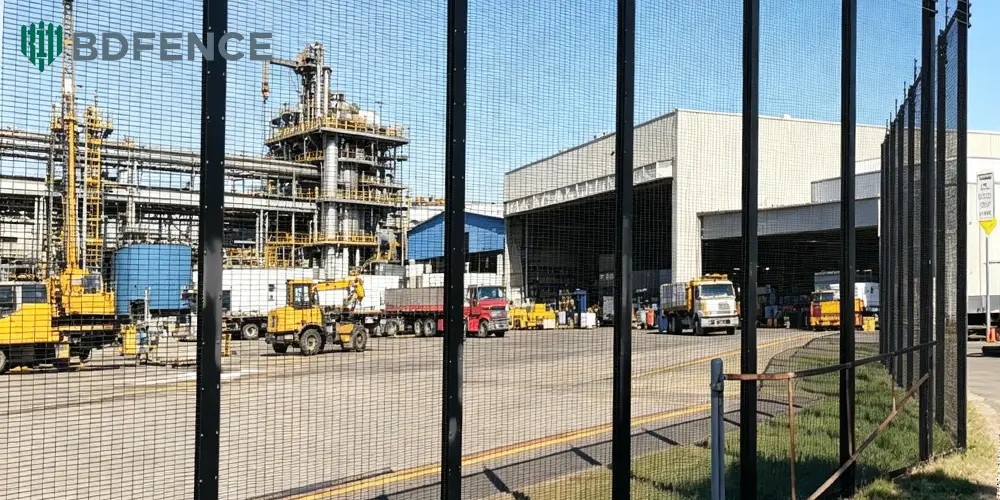
A Practical Security-Level Selection Guide
| Security Requirement | Possible 358 Fence Direction |
|---|---|
| Controlled Commercial Boundary | About 1.8–2.0 m |
| Industrial / Utility Perimeter | About 2.1–2.4 m |
| Critical Infrastructure | 2.4 m or higher depending on design |
| High-Security Restricted Facility | 2.7–3.0 m or project-specific |
| Correctional / Specialized Security | Project-specific high-security system |
These values are selection guidance only and should not replace local standards, engineering requirements, or approved security specifications.
What Should Buyers Compare in a 358 Fence Quote?
If you compare two quotations based only on fence height, you may miss major specification differences.
Check:
- Finished fence height
- Panel width
- Mesh opening
- Wire diameter
- Post size
- Post wall thickness
- Post length
- Post spacing
- Fixing system
- Surface treatment
- Gate height
- Gate frame specification
- Top security system if required
Only after these details match does a price comparison become reliable.
What Information Should You Send BDFENCE?
If the required fence height is not yet confirmed, send BDFENCE the available project information.
Useful details include:
- Project country
- Project sector
- Site security level
- Total perimeter length
- Preferred fence height
- Mesh specification
- Wire diameter
- Post requirements
- Surface treatment
- Top security requirement
- Pedestrian gate sizes and quantities
- Vehicle gate sizes and quantities
- BOQ or security drawings
- Destination port
BDFENCE can then review the fence height together with panels, posts, gates, and fixing requirements rather than treating height as an isolated specification.
How BDFENCE Supplies 358 Security Fence Systems
Hebei Bendin Industrial Technology Co., Ltd. (BDFENCE) manufactures 358 Security Fence systems for data centers, solar power plants, utilities, industrial facilities, prisons, infrastructure sites, and other controlled-access projects.
Our project supply can include:
- 358 welded mesh panels in different heights
- Different wire diameter options
- Customized steel posts
- Security fixing systems
- Anti-tamper fasteners
- Top extensions
- Pedestrian security gates
- Vehicle security gates
- Surface treatment options
- Installation accessories
Project buyers can send BOQ documents, security layouts, perimeter drawings, and gate schedules directly to BDFENCE for review and quotation.
Final Answer: What Height 358 Fence Do You Need?
Use the required security level to select the height.
Around 1.8–2.0 m may be enough for some controlled commercial boundaries.
Around 2.1–2.4 m is often considered for industrial, utility, renewable energy, and other higher-control sites.
Around 2.7–3.0 m or more may be required for high-security and specialized facilities.
However, the correct fence height should never be selected alone.
Panel height, wire diameter, posts, foundations, security fixings, gates, surveillance, and any additional top system should all support the same perimeter-security objective.
Contact BDFENCE
Hebei Bendin Industrial Technology Co., Ltd. (BDFENCE)
Phone:
+86 18703182863
WhatsApp:
+86 18703287372
Email:
info@bd-fence.com
Website:
https://bd-fence.com/
FAQ
What is the standard height of 358 Fence?
There is no single standard height for every project. Common configurations can range from around 1.8 m to 3.0 m or more depending on the security requirement.
Is 2.4m high 358 Fence good for high-security projects?
A 2.4m configuration is often considered for data centers, utilities, solar plants, industrial compounds, and other controlled sites. Higher-risk facilities may require taller or more complex systems.
When should I use 3m high 358 Fence?
A 3.0m configuration may be suitable where the approved design calls for a more substantial physical barrier, such as some correctional, critical infrastructure, or restricted facilities.
Does a taller 358 Fence need stronger posts?
Usually, the support system should be reviewed as fence height increases. Post size, wall thickness, length, spacing, foundations, and fixing points may all need to change.
Should razor wire be added to a 358 Fence?
Only where it is permitted and required by the approved security design. Top security should be treated as an additional layer rather than a substitute for a properly designed main fence.
Can one project use different 358 Fence heights?
Yes, if the approved security plan allows it. Large facilities may use different heights for main perimeters, internal zones, and higher-risk areas.
Can BDFENCE manufacture 2.0m, 2.4m and 3.0m 358 Fence?
BDFENCE can manufacture 358 Security Fence in different heights according to the confirmed mesh, wire diameter, post system, fixing method, and project requirements.
Can I send a security drawing for height recommendation?
Yes. BDFENCE can review perimeter drawings, BOQ documents, gate schedules, security requirements, and project information before preparing a quotation.