


A Steel Tubular Fence is often selected for commercial properties, industrial facilities and public projects where appearance and perimeter protection both matter. However, a good fence design involves more than choosing a panel style. The dimensions, post positions and fixing arrangements must work together.
When reviewing a Tubular Steel Fence Design, contractors and project buyers should pay attention to the details that affect manufacturing and installation. A drawing that only shows the overall fence height and length is rarely enough for a customized order.
01. Start with the Panel Layout
The panel layout determines how the fence will be divided into individual sections.
For a straight boundary, standard panel widths may be suitable. However, commercial properties often have corners, entrances and short sections beside existing buildings.
Before production, confirm:
- Overall fence height
- Panel width and quantity
- Horizontal rail arrangement
- Vertical picket spacing
- Corner and end positions
- Gate openings
- Customized panel dimensions
The distance between supporting posts should also match the selected panel and fixing system.
For distributors purchasing standard products, consistent panel dimensions can simplify stock management. Project contractors, on the other hand, should follow the approved site drawing.
02. Select the Right Tubular Structure
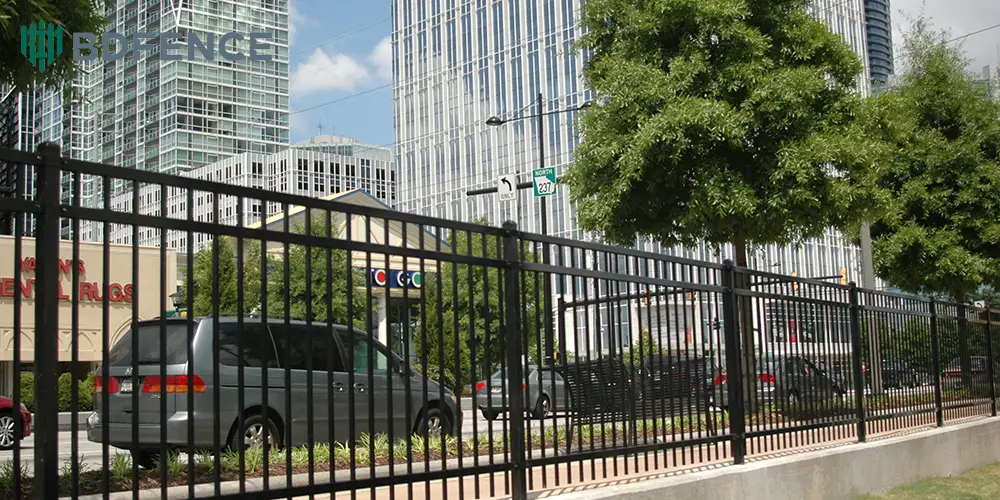
Steel tubular fencing commonly uses vertical pickets connected by horizontal rails.
The actual tube dimensions depend on the selected product design and project requirements.
| Component | Specification to Confirm |
|---|---|
| Vertical pickets | Tube profile and dimensions |
| Horizontal rails | Profile and wall thickness |
| Picket spacing | Clear distance between pickets |
| Panel frame | Overall construction |
| Fence posts | Profile and wall thickness |
| Fixing brackets | Connection compatibility |
Picket spacing is particularly important for projects involving schools and public facilities.
The design should follow the applicable safety requirements rather than relying on appearance alone.
03. Post Positioning Affects the Entire Installation
A panel may have the correct dimensions but still fail to fit if the supporting posts are incorrectly positioned.
For this reason, the post schedule should be prepared alongside the panel drawing.
Different positions may require different post arrangements:
- Line posts for straight sections
- Corner posts where the fence changes direction
- Terminal posts at fence ends
- Gate posts for entrance assemblies
The installation method also matters.
Embedded posts and base-plated posts require different fabrication and fixing details. Confirm the selected arrangement before manufacturing begins.
04. Choose a Suitable Surface Treatment
The required finish depends on the installation environment and project specification.
Two common options are:
Hot-Dip Galvanizing
A zinc coating helps protect steel against corrosion. Buyers should confirm the required coating specification.
Powder Coating
Powder coating provides a finished appearance and allows different colour choices.
For some outdoor projects, buyers may specify powder coating over galvanized steel.
The coating requirements should cover panels, posts and accessories. Matching the colour alone does not guarantee consistent corrosion protection.
05. What Should a Tubular Steel Fence Drawing Include?
A useful manufacturing drawing should provide enough information for the factory to produce the correct components.
| Drawing Information | Required Details |
|---|---|
| Fence elevation | Overall height and panel arrangement |
| Panel dimensions | Width, height and quantities |
| Tube specifications | Profiles and wall thicknesses |
| Picket arrangement | Spacing and top design |
| Post layout | Line, corner and gate-post positions |
| Connection details | Brackets and fixing methods |
| Surface treatment | Galvanized or powder-coated finish |
| Gate details | Opening dimensions and hardware |
For customized orders, buyers should submit the latest approved drawing rather than relying on measurements from an early quotation.
06. Preparing a Tubular Fence RFQ
When requesting prices from manufacturers, include the information needed to define the complete supply scope.
A practical RFQ should contain:
- Required fence height and panel width.
- Picket and rail dimensions.
- Tube wall thickness.
- Picket spacing.
- Post dimensions and installation method.
- Surface treatment and colour.
- Gate quantities and dimensions.
- Required accessories.
- Total order quantity.
- Delivery destination.
If the project has several panel designs, list each configuration separately.
This makes it easier to compare quotations and reduces misunderstandings during production.
07. Steel Tubular Fence Manufacturing from BDFENCE
BDFENCE supplies Steel Tubular Fence products for overseas distributors, wholesalers, construction contractors and commercial project buyers.
Our product range includes different panel configurations, tubular posts and surface treatment options.
For projects requiring customized dimensions, buyers can send their drawings or product specifications for review.
You can also explore our complete fencing product range for other commercial and industrial applications.
Request a Tubular Steel Fence Quotation
Planning a commercial fencing project or looking for a manufacturer for bulk orders?
Send BDFENCE your panel drawings, required tube dimensions, post specifications and estimated quantity.
Request a Steel Tubular Fence Quotation
BDFENCE — Hebei Bendin Industrial Technology Co., Ltd.
Website: bd-fence.com
WhatsApp: +86 18703287372
Email: info@bd-fence.com
Frequently Asked Questions
1. Can tubular steel fence panels be customized?
Yes. Panel height, width, picket spacing, rail arrangement and surface treatment can be discussed according to project requirements.
2. What information should a tubular steel fence drawing include?
It should identify panel dimensions, tube specifications, post positions, fixing arrangements, gate openings and surface treatment.
3. Can steel tubular fence posts be supplied with panels?
Yes. Buyers can request matching posts, brackets and fixing accessories as part of the same supply package.
4. Which surface treatment is suitable for outdoor tubular fencing?
Galvanizing and powder coating are common options. The final choice should reflect the project environment and corrosion protection requirements.
5. What information is needed for a bulk quotation?
Provide the panel drawing, tube dimensions, wall thickness, post requirements, finish, quantity and delivery destination.