


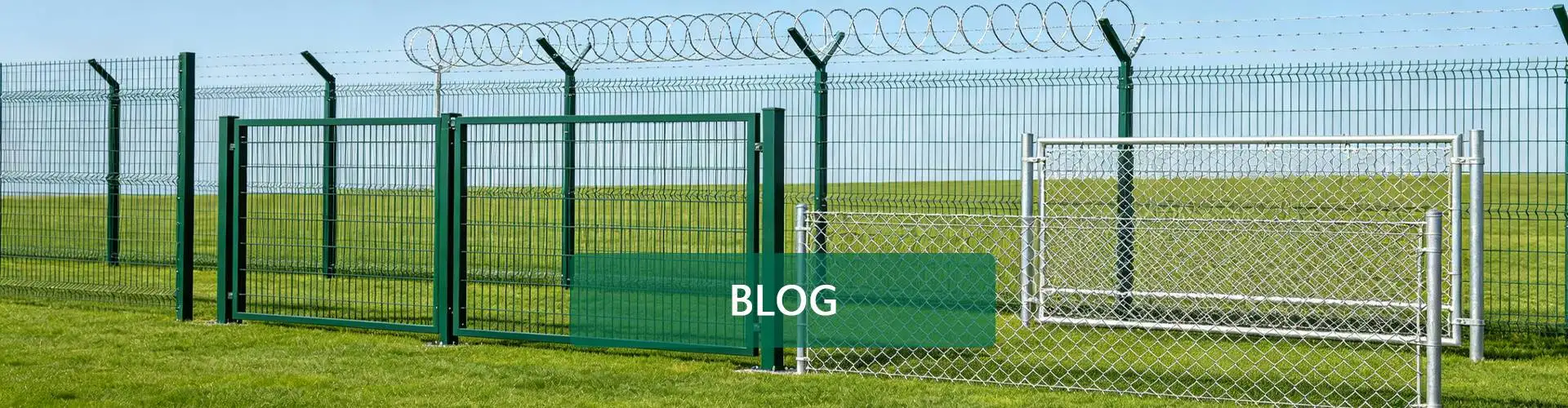
Most steel tubular fence quotations begin with a few basic measurements: panel height, panel width, tube size and quantity.
That is usually enough to start a conversation with a manufacturer. It is rarely enough to finish one.
The trouble often appears in places that receive little attention on the original drawing. A gate opening is slightly wider than expected. A corner doesn’t meet at 90 degrees. The last panel in a fence run is too short for the standard design.
None of these issues is unusual. But when the panels are coming from an overseas supplier, finding them after production can mean extra fabrication work, missing fittings or delays on site.
For contractors and distributors buying steel tubular fence panels, there is a simple lesson here: check how the fence finishes, not just how it starts.
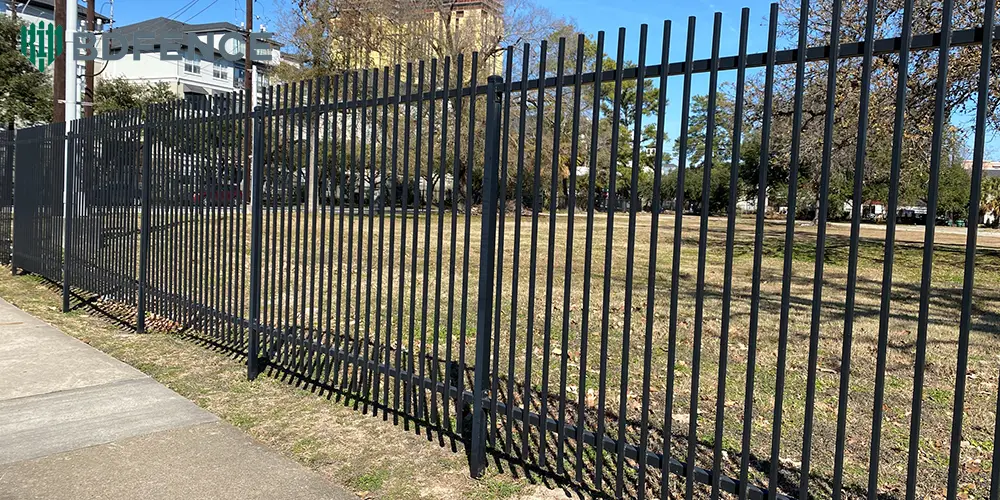
The Last Panel Is Often the Awkward One
Consider a straight boundary that measures 43 metres.
The contractor wants to use panels with a nominal width of 2.4 metres. On paper, the calculation is easy. Seventeen full panels cover 40.8 metres, leaving 2.2 metres.
But those figures don’t account for posts, brackets or installation clearances. Depending on the connection design, the actual spacing between posts may differ from the panel’s overall width.
Now imagine the same fence has a pedestrian entrance halfway along the boundary.
Suddenly, the panel arrangement needs another look.
One option is to make a shorter panel. Another is to adjust the panel layout so the remaining space is distributed more evenly. Neither approach is necessarily wrong.
What matters is that someone makes the decision before manufacturing begins.
For a contractor, a shortened panel is not simply a standard panel with a smaller number written on the invoice. The picket spacing may need adjustment. The rail ends must match the connection system. The finished appearance should also remain consistent with the rest of the fence.
These details are easy to overlook when the RFQ only states the total fence length.
Gates Deserve Their Own Drawing
A steel tubular fence gate might look almost identical to the adjacent panels. It still needs separate consideration.
Take a 4-metre vehicle entrance.
Does the customer want one sliding gate or two swing leaves? Is four metres the clear opening, or the overall width between the outer faces of the gate posts?
These questions affect more than the price.
A swing gate needs hinges, adequate support and enough room to open. A sliding gate requires a different operating arrangement. If automation is involved, the gate design must also suit the selected equipment.
There is another issue that sometimes disappears from early quotations: gate hardware.
A supplier might quote the steel frame and infill but not the hinges, lock, stops or other operating components. The contractor may assume those parts are included.
The quotation can look perfectly reasonable until the materials arrive.
For this reason, I would treat every gate as a separate item on the purchasing schedule.
The drawing should show the opening dimensions, gate type, post requirements and hardware scope.
It doesn’t need to be unnecessarily complicated. It just needs to leave fewer questions for the people who will manufacture and install it.
A Corner Is Not Always Just Another Post
Straight fence runs are relatively predictable. Corners can be less forgiving.
A standard rectangular site may have four simple corners. Commercial developments often have more complicated boundaries.
A fence might turn around a building, follow a service road or meet an existing wall at an angle.
If the supplier prices everything using standard line posts and brackets, the contractor could end up with connections that don’t suit the actual layout.
This is where a marked-up site drawing becomes valuable.
Show the changes in direction. Identify any unusual angles. Mark the sections that connect to walls or existing structures.
And if the corner details haven’t been finalized, say so.
A manufacturer can discuss the available connection arrangements before production. That is a much better time to resolve the issue than when the installer is standing on site with a panel that doesn’t fit.
Don’t Forget What Happens Below the Fence
Ground levels can cause just as many problems as corners.
Steel tubular panels are rigid. They cannot simply bend to follow the ground.
On a sloping boundary, the contractor generally needs to consider stepped panels or a suitable raked arrangement.
Both can work, depending on the fence design and site conditions.
The problem is that a fence which looks continuous in plan view may have noticeable gaps underneath when installed on a slope.
For commercial premises, this can affect appearance and boundary control. For schools or public facilities, ground clearance and opening sizes may also need to meet specific safety requirements.
If the site has significant level changes, send elevations or survey information with the enquiry.
A total length and a few photographs may not tell the manufacturer enough.
The Finish Should Match Across the Whole Order
Black steel tubular fencing is popular for commercial and industrial properties because it can give the boundary a clean, consistent appearance.
But ordering everything in black doesn’t automatically mean the materials will have the same protective finish.
Panels, posts, brackets and gates may pass through different manufacturing processes. They may also come from different production batches.
Before approving the order, confirm the coating requirements for every component.
If the project calls for galvanizing followed by powder coating, those requirements should appear clearly in the specification.
The buyer should also establish how the supplier will protect cut edges, welded joints and other areas that may require special treatment.
This matters even more for outdoor projects exposed to moisture or coastal conditions.
A fence can look good when it leaves the factory. The real test is how the complete system performs after installation.
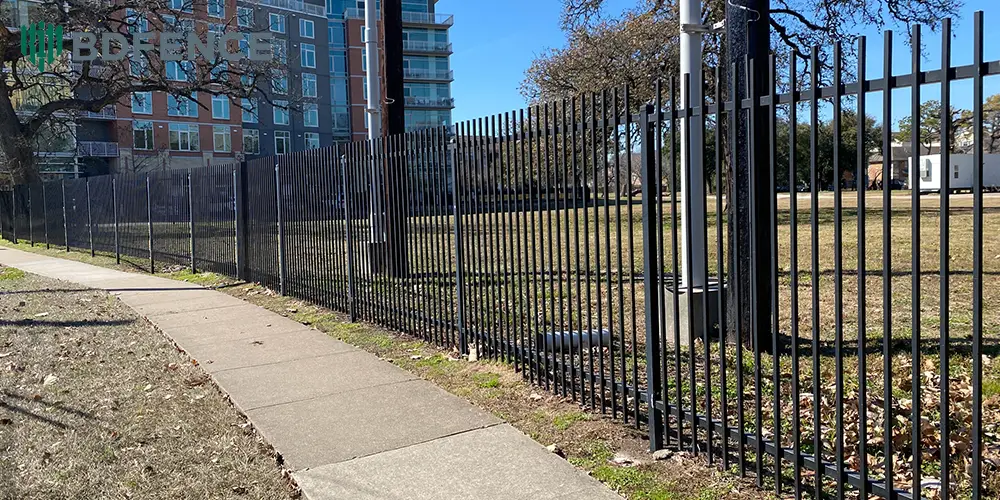
What I Would Put in the RFQ
For a small, straightforward order, an email with a few dimensions may be enough to obtain a preliminary price.
For a commercial project with several corners, gates and non-standard panels, it is worth sending a little more information.
The most useful items are a site layout, panel schedule and gate details.
You should also make the supply boundaries clear. Will the manufacturer provide posts and brackets? Are gate hinges included? Who is responsible for anchor bolts or installation materials?
There is no benefit in asking three manufacturers for quotations if each one is pricing a different scope.
A clear RFQ gives you a better basis for comparison. It also makes it easier to identify missing items before placing an order.
For importers and distributors, there is an additional consideration.
If the fencing is intended for regular stock rather than one project, standardization becomes more important. Consistent post connections, panel dimensions and spare fittings can make repeat purchasing and local distribution easier.
In that situation, I’d rather settle on a manageable range of compatible products than offer dozens of variations without a clear reason.
Before the Panels Go Into Production
There is one check worth making, even when everyone seems happy with the quotation.
Ask for a final panel schedule based on the approved drawing.
It should distinguish standard panels from shortened panels, show the correct post types and identify the gate assemblies.
Then compare it with the purchase order.
This isn’t paperwork for its own sake. Once a batch of tubular fence panels has been welded and coated, changing their dimensions is no longer a simple adjustment.
A few unresolved measurements can turn into expensive rework.
That is why the drawing review matters.
Steel Tubular Fence Supply from BDFENCE
BDFENCE supplies steel tubular fencing for overseas distributors, commercial fencing contractors and project buyers.
We can discuss panel dimensions, rail and picket configurations, post arrangements, coating options and matching components according to your requirements.
For a standard distribution order, send us the sizes, quantities and finishes you need.
For a project order, a drawing is far more helpful. It gives us a chance to review the requested components and clarify any non-standard sections before preparing the final quotation.
If you are comparing different perimeter systems, you can also explore our fencing product range.
Have a tubular fencing project to quote?
Send your panel schedule, gate drawings or BOQ to BDFENCE. Tell us where the products are going and which items you want included.
We can review the specifications and discuss the available supply options.
BDFENCE – Hebei Bendin Industrial Technology Co., Ltd.
Website: bd-fence.com
WhatsApp: +86 18703287372
Email: info@bd-fence.com