


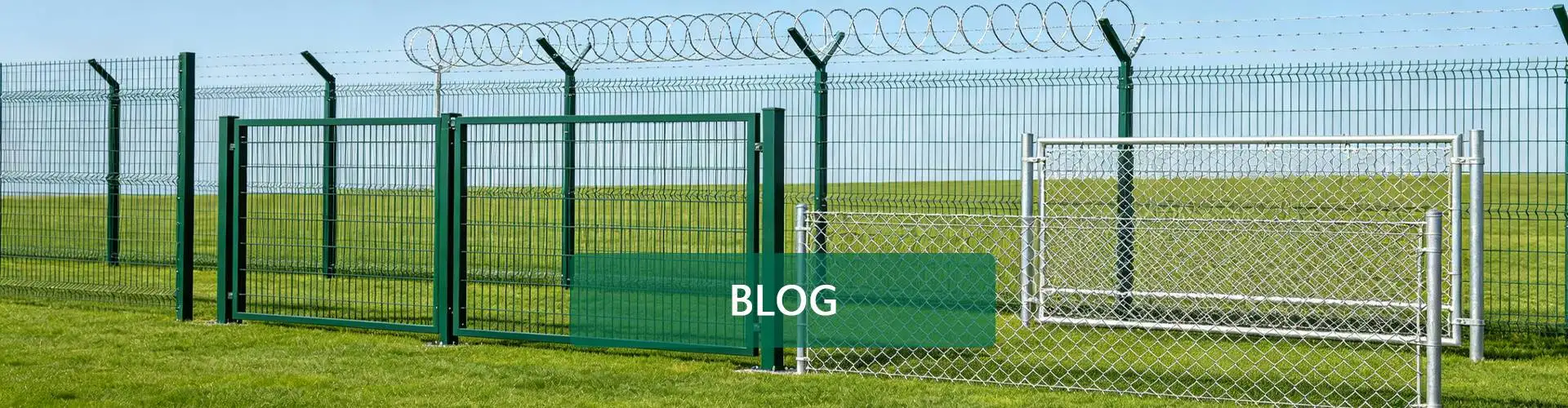

The equipment yard was not an empty site waiting for a new fence. It already had a boundary, a vehicle entrance and several areas where machinery moved in and out during the working day.
That makes a fence replacement a different job from fencing a newly cleared property.
In this Malaysian industrial yard scenario, the proposed upgrade uses steel tubular fence panels to replace selected sections of the existing perimeter. The intention is to create a more consistent boundary while keeping the yard accessible to delivery vehicles and maintenance staff.
The purchasing challenge is not finding a suitable panel design. It is working out what can stay, what must change and what the overseas manufacturer needs to know before quoting the materials.
The Existing Fence Was Only Half the Story
A contractor can measure the total boundary length in one site visit. Deciding how to divide that boundary into workable fence sections takes more thought.
The yard has several practical constraints in this example. One side follows an existing concrete edge. Another runs beside an access road. There is also a wide vehicle entrance, where the new fence must connect neatly with the gate arrangement.
The existing posts create the first question.
Can the contractor reuse them?
It would certainly reduce demolition work if the posts were suitable. But matching a new steel tubular panel to an old post is not simply a matter of finding a bracket that fits.
The contractor needs to know whether the posts have adequate structural capacity, whether their spacing suits the new panels and whether the foundations remain in acceptable condition.
Without those checks, keeping the old posts could create more work than replacing them.
For the preliminary material plan, the more practical approach is to identify which sections need new posts and which require further site inspection. That gives the supplier a clearer scope without making assumptions about the existing structure.
Choosing a Panel That Makes Sense for the Yard
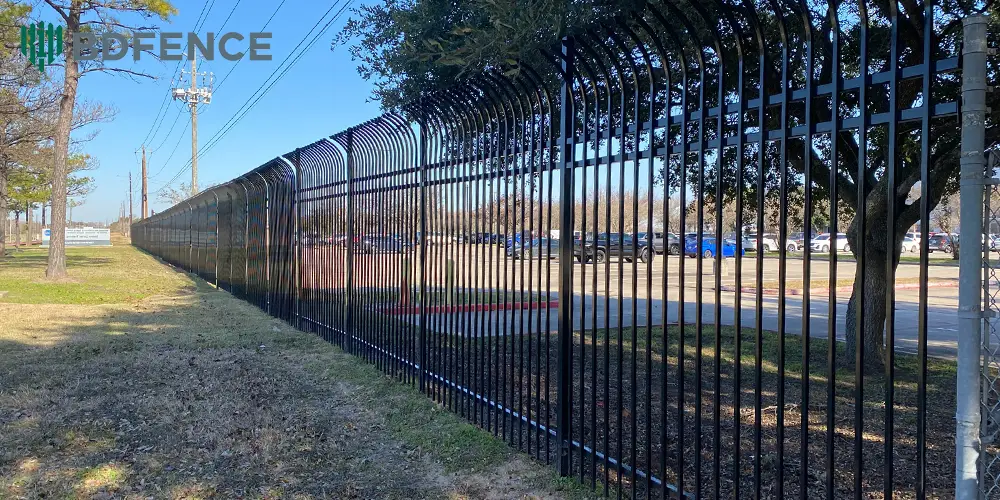
An industrial equipment yard does not necessarily need an elaborate decorative fence. The boundary should look presentable, permit visibility and fit the working environment.
A vertical steel picket arrangement is one option.
For this application, a preliminary specification could use 1,800 mm high panels with a nominal width of 2,400 mm. BDFENCE offers these sizes within its tubular fencing range.
The actual rail arrangement, picket dimensions, spacing and tube wall thickness would still need approval.
There is a reason not to finalize every dimension immediately.
The site’s entrance, corners and existing concrete structures may leave spaces that do not match standard panel widths. Ordering identical panels for every section could leave the installer dealing with awkward gaps.
Instead, the contractor can separate the materials into standard panels and special sections after completing the detailed measurements.
That small distinction makes the purchasing schedule much clearer.
What Happens at the Vehicle Entrance?
The vehicle entrance deserves its own attention.
A delivery truck needs enough room to turn into the yard. Maintenance vehicles may also use the entrance throughout the day, so the gate arrangement cannot interfere with normal operations.
For this application, the project team would first check the available entrance width and the space on either side.
Only then should it decide whether to retain the existing gate, modify the entrance or introduce a matching tubular steel gate.
If the project requires a new gate, the supplier needs a separate drawing. The frame, gate posts, hinges, locks and operating clearances all affect the final design.
There is little point in supplying a neat row of new fence panels if the gate cannot operate properly beside them.
The same issue applies to pedestrian access. A smaller entrance may need its own gate, latch and supporting post arrangement rather than relying on the vehicle entrance.
Coating Requirements for the Malaysian Climate
Malaysia’s humid climate makes the surface treatment worth discussing early.
A powder-coated black fence may suit the visual requirements of the industrial yard. However, the colour tells the buyer very little about the underlying corrosion protection.
For this application, the purchasing team could evaluate galvanized steel with a compatible powder-coated finish.
The coating specification should cover the panels and posts, not just the visible pickets. Gate frames, brackets and fasteners need attention as well.
Before confirming the finish, the buyer should ask about the coating process and the applicable inspection requirements.
Where the contractor cuts or modifies components on site, it also needs a suitable method to repair damaged protective coatings.
These details are less interesting than choosing a panel design, but they matter once the fence has spent several years outdoors.
Building a Material List That the Factory Can Actually Use
The initial site measurement gives the contractor an estimated fence length. It doesn’t yet provide a final order quantity.
For this application, the procurement schedule would separate the following items:
| Material | What Still Needs Confirmation |
|---|---|
| Standard tubular fence panels | Approved height, width and quantity |
| Special-width panels | Dimensions from the final site survey |
| New line posts | Size, wall thickness and installation method |
| Corner and terminal posts | Location and connection details |
| Gate assemblies | Clear opening, design and hardware |
| Brackets and fasteners | Compatibility and quantities |
| Protective finish | Coating requirements for each component |
The contractor would also need to distinguish items that BDFENCE supplies from work completed locally.
Concrete foundations, demolition, underground service checks and installation labour may sit outside the manufacturer’s supply scope.
Keeping those responsibilities clear makes the quotation more useful.
It also helps avoid comparing a panel-only offer against another supplier’s complete material package.
The Detail That Should Be Settled Before Production
For this kind of replacement job, the most important document is often the final site measurement rather than the first quotation.
Once the contractor confirms which posts will remain, the panel arrangement can change.
A section that appeared to need four standard panels may require three standard panels and one special-width panel. An entrance adjustment may change the quantity again.
So the sensible sequence is to agree on the fence design, inspect the existing structures, confirm the final dimensions and approve the manufacturing schedule.
The factory then has a defined set of components to produce.
Without that sequence, a contractor risks ordering materials that match the original sketch but not the actual site.
What This Application Shows
Steel tubular fencing can work well for an industrial yard, but a successful replacement depends on more than the panel design.
The real decisions sit at the interfaces: new panels meeting old structures, fence sections connecting to gates and standard components fitting irregular boundary dimensions.
For a Malaysian contractor sourcing from China, clear drawings and a reliable material schedule make those decisions easier to manage.
This example does not assume that every existing post needs replacement or that one panel specification will suit every industrial yard. The contractor must make those decisions from the actual site conditions and project requirements.
Discuss Your Industrial Steel Tubular Fence Project with BDFENCE
BDFENCE supplies steel tubular fencing for importers, distributors and engineering contractors.
Our product range includes different panel heights, widths, picket arrangements, post sizes and surface treatment options. You can review the available configurations on our Steel Tubular Fence product page.
For a replacement project, send us the existing site layout together with the proposed new fence dimensions.
It helps to identify any posts you intend to reuse, unusual boundary sections and gate arrangements that need to remain operational.
For distributors purchasing regular stock rather than materials for one project, we can discuss standard panel configurations and compatible accessories.
BDFENCE also offers other metal fencing products for different industrial and commercial applications.
Have a Steel Tubular Fence RFQ?
Send your drawings, panel requirements or material schedule. Our team can review the requested specifications and discuss the available supply options.
Hebei Bendin Industrial Technology Co., Ltd. — BDFENCE
Website: bd-fence.com
WhatsApp: +86 18703287372
Email: info@bd-fence.com