


A steel fence may look simple after installation. However, the final result depends on many details that buyers need to confirm before production begins.
For overseas contractors and project buyers, installing a fence is not only a construction task. It is also a purchasing decision. The panels, posts, fixing method and foundation design must work together as one system.
When customers contact BDFENCE for a fencing project, we usually start with the available drawings, BOQ or technical specifications. These documents help confirm how the fence should be manufactured and installed.
This guide explains the main points buyers should review before ordering a complete Steel Tubular Fence system, including panels, posts, foundations, gates and fixing details.
The Installation Process Starts Before the Fence Arrives
Many buyers think fence installation begins when the panels arrive at the construction site.
In reality, the installation process starts much earlier.
Before manufacturing, the supplier needs to understand how the fence will fit into the project layout.
Important questions include:
- What is the finished fence height?
- What is the panel width?
- Where will the posts be installed?
- Will the posts be embedded into concrete or fixed with base plates?
- Are there pedestrian or vehicle gates?
- Does the ground level change?
These details affect the final production drawings. A simple request such as “2-meter-high steel fence for 500 meters” does not provide enough information for accurate manufacturing.
A complete fence quotation should match the actual installation conditions, not only the general appearance of the product.
Panels and Posts Must Be Designed Together
A fence panel and a fence post are not independent products.
They work together through the connection system.
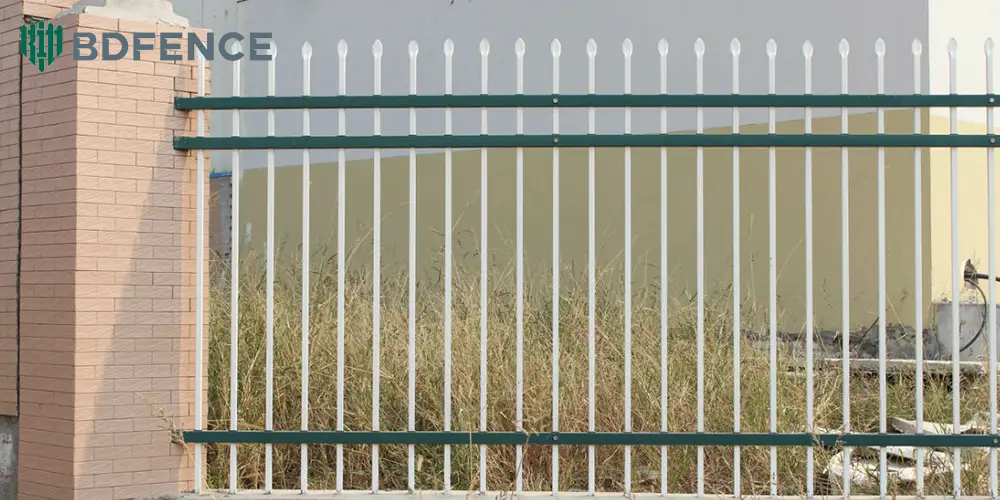
A tubular fence panel normally includes vertical pickets, horizontal rails and fixing points. The posts must be positioned according to these panel dimensions.
One common misunderstanding is assuming that panel width and post spacing are always the same.
They are not always identical.
The final post center distance depends on:
- panel dimensions;
- post section;
- connection method;
- brackets or fixing components;
- installation requirements.
If the foundation contractor installs posts before confirming the final fence drawing, the panels may not fit correctly during installation.
For large commercial projects, confirming the panel and post relationship before production can reduce adjustment work on site.
Choosing the Correct Steel Tubular Fence Posts
The post is one of the most important parts of a tubular steel fence system.
It transfers loads from the fence panels into the ground or supporting structure.
However, post selection should not depend only on fence height.
A 1.8-meter fence and a 2.4-meter fence may require different post specifications. The correct choice can also depend on:
- site location;
- wind exposure;
- panel width;
- ground conditions;
- gate positions;
- foundation design.
For example, a fence installed in an open industrial area may experience different conditions compared with a protected commercial property.
This is why professional suppliers usually review project information before confirming post sizes.
A larger steel tube does not automatically mean a better fence. The post must match the complete fence design.
Steel Tubular Fence Foundation Options
The foundation connects the fence structure with the ground.
The correct foundation method depends on the project requirements and approved design.
Embedded Fence Posts
Many permanent fence projects use embedded posts installed into concrete foundations.
This method provides a direct connection between the steel post and the ground.
The required embedment depth depends on factors such as fence height, soil conditions and engineering requirements.
Base Plate Mounted Posts
Some commercial projects use posts with base plates fixed onto existing concrete structures.
This method can be suitable where the site already has prepared foundations or specific architectural requirements.
The post design, base plate size and anchor arrangement should match the approved drawings.
Custom Foundation Requirements
Large infrastructure projects may have their own foundation specifications prepared by engineers.
In these situations, the fence manufacturer should produce posts according to the approved technical documents.
The supplier should not replace the project engineer’s foundation design with a general recommendation.
Why Foundation Details Should Be Confirmed Early
Changing the installation method after production can create unnecessary problems.
For example, a project may originally plan to use embedded posts. Later, the contractor changes to a surface-mounted system.
The panels may remain similar, but the post length, connection details and manufacturing requirements can change.
Early communication between the fence supplier, contractor, civil team and project engineer helps avoid these issues.
A few technical confirmations before production can save additional work during installation.
Panel Alignment Affects the Final Appearance
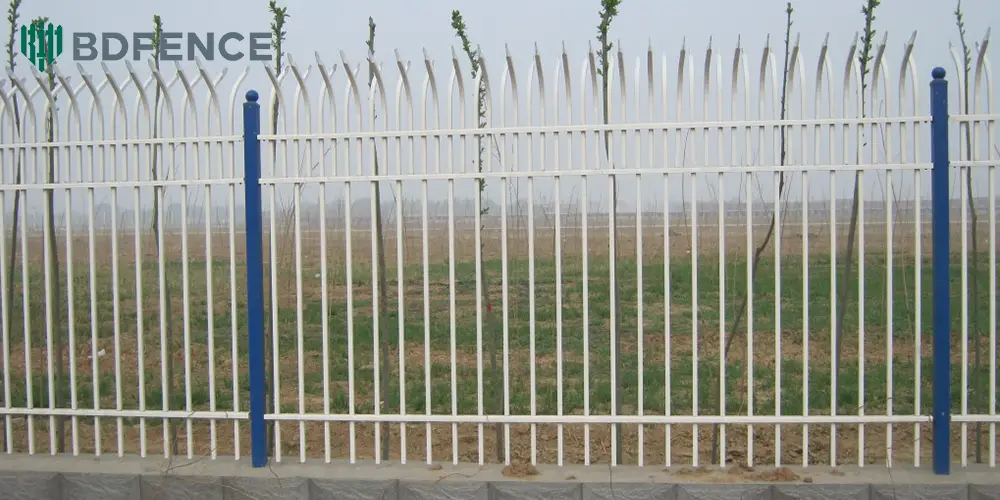
For long fence projects, the first installed panels are especially important.
If the first posts are not aligned correctly, the problem can continue along the entire fence line.
Installers usually need to check:
- post position;
- vertical alignment;
- panel level;
- fixing points;
- ground clearance.
Unlike flexible mesh fencing, rigid tubular panels cannot simply stretch to correct incorrect spacing.
Accurate setting-out before installation helps maintain a consistent fence line.
Fixing Systems and Installation Requirements
Different tubular fence designs may use different fixing methods.
Common options include:
- welded connections;
- metal brackets;
- bolted connections;
- special fixing components.
The fixing method affects installation time, maintenance and compatibility between panels and posts.
When comparing supplier quotations, buyers should confirm whether fixing components are included.
A quotation that only includes “panels and posts” may not represent a complete installation package.
Important questions include:
- Are brackets included?
- Are bolts included?
- Are gate fittings included?
- Are special connection parts included?
Corners, Gates and Special Sections Need Extra Planning
A straight fence line is usually the easiest part of a project.
However, real construction sites rarely contain only straight sections.
Corners, gates, walls and changes in ground level all affect the fence layout.
Corner Sections
A corner changes the direction of the fence.
The post arrangement and panel connection must follow the approved project drawing.
Using the same installation method from a straight fence section may not always work at a corner.
Gate Areas
A gate is not simply a wider fence panel.
A vehicle gate normally includes:
- gate frame;
- support posts;
- hinges or sliding hardware;
- locking components.
The gate should be designed together with the surrounding fence system.
If gate information is missing from the quotation, the final project cost may not represent the complete installation requirement.
Closing Panels
The final section beside a building, wall or entrance often does not match a standard panel width.
In these areas, a custom panel may be required.
A practical approach is to keep most fence panels standardized and use custom sections only where the project requires them.
This helps both manufacturing and installation.
Installing Steel Tubular Fence on Uneven Ground
A site drawing does not always show every condition on the ground.
A fence line may cross areas with different elevations, slopes or finished ground levels.
Because tubular fence panels are rigid structures, they cannot simply follow the ground like flexible mesh.
The project may require:
- stepped fence sections;
- adjusted post heights;
- custom panel dimensions.
The correct solution depends on the approved installation design.
If the supplier does not receive slope information before production, special panels and posts cannot be prepared correctly.
What Should Be Included in a Complete Fence Package?
A complete quotation should clearly explain the supply scope.
Different suppliers may use different definitions of a “complete fence system”.
| Component | Information to Confirm |
|---|---|
| Fence Panels | Height, width, picket design, rails and finish |
| Steel Posts | Section size, wall thickness, length and coating |
| Fixings | Brackets, bolts or connection system |
| Gates | Opening size, frame design and hardware |
| Foundation Method | Embedded posts or base plate installation |
| Special Sections | Corners, slopes and closing panels |
| Packing | Component identification and shipment arrangement |
This information helps overseas buyers compare quotations more accurately.
Two suppliers may quote the same fence length but include different materials.
The lower price is not always the lower-cost solution if important components are missing.
How BDFENCE Supports Steel Tubular Fence Projects
When customers contact BDFENCE for tubular fence projects, we usually start with the documents they already have.
These documents may include:
- project drawings;
- BOQ;
- technical specifications;
- fence schedules;
- gate details.
Based on the available information, we can review:
- panel requirements;
- post specifications;
- fixing systems;
- gate requirements;
- special sections.
For international projects, clear communication before production is important.
The goal is not only to manufacture fence panels.
The goal is to supply a complete fence system that matches the customer’s project requirements.
Send Your Steel Tubular Fence Drawing or BOQ
If you are preparing a commercial, industrial or infrastructure fence project, send your existing documents to Contact BDFENCE.
Useful information includes:
- fence height;
- total fence length;
- panel dimensions;
- post requirements;
- gate openings;
- surface finish;
- installation method;
- destination country.
Even if the specification is not complete, the available drawings can help start the quotation process.
A clear quotation starts with a clear understanding of the project.
Why Choose BDFENCE?
BDFENCE manufactures metal fencing products for international contractors, distributors and project buyers.
Our team has more than 30 years of experience in metal fence manufacturing.
The factory covers approximately 15,000㎡ with more than 190 employees and over 80 machines.
We supply different fencing systems, including Steel Tubular Fence, 358 Fence and Chain Link Fence.
For Steel Tubular Fence projects, we work according to customer drawings, specifications and confirmed requirements.
FAQ
What information is needed before installing Steel Tubular Fence?
The project should confirm fence height, panel dimensions, post layout, fixing method, gates and foundation requirements before installation.
Are Steel Tubular Fence panels and posts interchangeable?
Not always. Panels and posts should match the approved connection system and installation design.
What foundation is required for Steel Tubular Fence posts?
The foundation depends on the project design, fence height, soil conditions, post type and mounting method.
Can Steel Tubular Fence be installed on uneven ground?
Yes. However, the project needs an approved layout, such as stepped panels or adjusted sections.
Does BDFENCE supply gates with Steel Tubular Fence?
Yes. Gates can be supplied according to the required opening size, design and project specification.
Can BDFENCE quote from an existing fence drawing?
Yes. Customers can send drawings, BOQ or technical specifications for quotation review.
Contact BDFENCE
Hebei Bendin Industrial Technology Co., Ltd. (BDFENCE)
Have an existing fence drawing, BOQ or technical specification? Share it with our team for a quotation based on your project requirements.
Phone:
+86 18703182863
WhatsApp:
+86 18703287372
Email:
info@bd-fence.com
Website:
https://bd-fence.com/
Inquiry:
Contact BDFENCE