


A request for an industrial fence often begins with a few lines in a bill of quantities: fence height, total length, steel posts and surface finish. For an early budget, that may be enough. For manufacturing, it usually is not.
The missing details tend to appear around the edges of the project. A gate opening takes up part of the perimeter. A short section beside a building does not fit a standard panel. The post dimensions are listed, but the wall thickness is missing. Two suppliers receive the same request and return different prices because they have made different assumptions.
For overseas buyers sourcing Steel Tubular Fence, the useful question is not simply which panel to choose. It is how to define the complete system clearly enough that the quotation, factory drawing and installation layout all refer to the same product.
This guide looks at that process from the purchasing side, with particular attention to the specifications that affect fabrication, material quantities and the final supply scope.
Before Choosing a Panel, Look at the Perimeter
A factory may be able to produce a standard tubular fence panel in a particular height and width. The challenge is determining how many standard panels the project can actually use.
Take an industrial site with a straight boundary, a vehicle entrance, several corners and a wall at one end. Most of the fence may follow a repeated panel layout. The entrance and wall connection, however, can leave spaces that do not match the standard width.
If the purchasing team divides the total fence length by the nominal panel width and orders that number of panels, the result may not match the site. The calculation has ignored the gate opening, corner arrangement and closing sections.
A site layout is therefore the best starting point. Mark the perimeter runs, entrances, corners and connections to existing structures. Identify the areas where standard panels can be repeated and those that need separate dimensions.
This does not require the purchasing team to design the entire fence independently. It simply gives the manufacturer enough information to calculate quantities against the actual layout instead of making assumptions from a total length.
The Panel Specification Needs More Than a Height
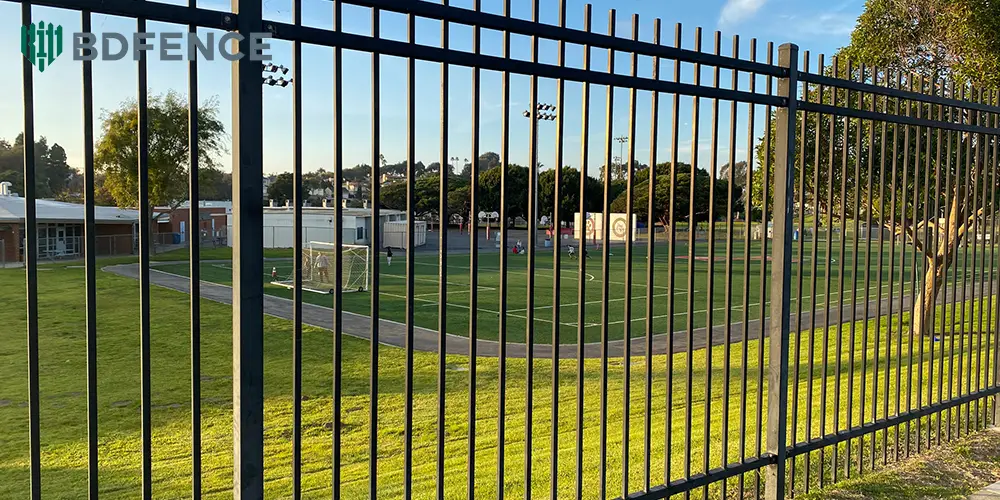
Two tubular fence panels can have the same height and width but use different steel sections and picket arrangements. They may look similar in a photograph, yet the material content and finished product are different.
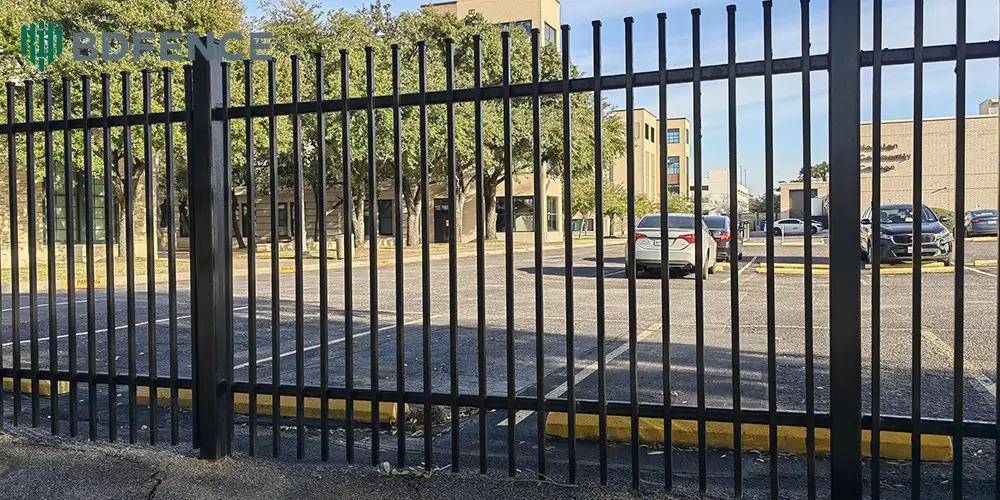
A useful panel specification identifies the overall dimensions, vertical picket profile, horizontal rails and spacing between pickets. It should also state the outside dimensions and wall thickness of the relevant steel tubes.
Wall thickness is easy to miss when a quotation lists only the tube’s outside size. A 40 mm square tube, for example, is not fully specified until the required wall thickness is also defined. Two tubes with the same outside dimensions can contain different amounts of steel.
The same issue applies to the rails. Their dimensions and positions should be shown on the drawing rather than left to the factory to interpret from a product image.
For projects with structural requirements, the responsible designer should establish the necessary member specifications. The manufacturer can then quote and fabricate to those confirmed dimensions. A general description such as “heavy-duty industrial fence” is not a substitute for a technical specification.
Picket Spacing Can Change the Price Without Changing the Panel Size
Consider two panels, both 2,000 mm high and 2,500 mm wide. One has more closely spaced pickets; the other has wider gaps. Their outside dimensions match, but the amount of steel and the visual density can differ.
That difference matters when a purchasing team compares offers. If one supplier assumes a different picket spacing, the lower quotation may simply describe a different panel.
The specification should define the required spacing or provide a dimensioned elevation drawing. It should also make clear whether the dimension refers to the clear gap between pickets or another measurement, such as their center-to-center distance.
For a large order, this detail should be settled before the production drawing is approved. Otherwise, the buyer may receive panels that fit the perimeter but do not match the design originally specified.
Posts Must Match Both the Panel and the Installation Method
The posts connect the fence panels to the supporting structure. Their specification cannot be finalized independently of the panel layout and the way the fence will be installed.
One important decision is whether the posts will be embedded in concrete or mounted on base plates. An embedded post needs a total length that accounts for the exposed portion and the approved embedment. A base plate-mounted post requires a different fabrication arrangement and a suitable supporting structure and anchor system.
Changing the installation method after the posts have been manufactured can mean that the original components no longer fit the project.
Post spacing deserves the same attention. The nominal width of a panel does not automatically establish the distance between post centers. The fixing method, post profile and required clearances determine the final setting-out dimensions.
Before production, compare the panel schedule, post drawing and foundation layout. The project engineer should approve the structural foundation design, while the manufacturer should use the confirmed dimensions for the fence components.
Where Standard Panels Stop Working
Most industrial fence orders contain repeated panels. The less predictable parts are usually concentrated around gates, corners, buildings and changes in ground level.
A narrow closing section may be needed beside a gate post. A corner can require a different post orientation or connection. A panel meeting an existing wall may need a special fixing detail.
These sections can account for only a small part of the total order, but leaving them out of the material schedule can create problems during installation. The contractor may have to modify coated steel on site or arrange additional components after the main shipment has arrived.
The practical approach is to mark special sections on the layout and list them separately. Standard panels can then be calculated as one group, with custom sections and gate-adjacent panels identified by their actual dimensions.
This also makes the quotation easier to review. The buyer can see whether the supplier has priced a complete perimeter or only the repeated panel runs.
Gate Openings Should Be Priced as Part of the System
An industrial fence gate is not simply a panel that can be removed from the fence line. A vehicle gate needs a defined opening, a frame, support posts and suitable operating hardware.
The gate specification should state the clear opening, finished height, frame dimensions and required hardware. If automated operation is planned, the relevant requirements should be coordinated with the gate-system supplier and the responsible electrical or access-control team.
The posts supporting a gate may have different structural requirements from ordinary line posts. Their dimensions and foundations should follow the approved design rather than being copied automatically from the standard fence schedule.
There is also a commercial point to settle. One supplier may quote gate leaves only, while another includes the posts, hinges, locking components and related fittings. Both prices may appear under the same general description.
List gates separately in the bill of quantities and state what the supplier is expected to provide. This prevents a low headline price from hiding a smaller supply scope.
Choose the Surface Finish for the Actual Site
The coating specification should reflect the environment where the fence will be installed. A sheltered inland factory site may face different corrosion conditions from a coastal property or a facility exposed to industrial contaminants.
Depending on the project requirements, the finish may involve galvanizing, powder coating or a specified combination of protective treatments. The purchase documents should identify the required system and any applicable standard, color or acceptance criteria.
Do not define the finish for the panels and leave the remaining steelwork unspecified. Posts, rails, gates and exposed fixing components are part of the same outdoor assembly.
If a project requires a particular color, state it in the RFQ. Likewise, if the technical specification defines coating thickness or inspection requirements, include those details rather than relying on a broad description such as “weather-resistant finish.”
A clear finish specification allows suppliers to price the same requirement and reduces the risk of discovering differences after delivery.
How to Compare Quotations Without Comparing Different Products
A price difference does not automatically mean that one manufacturer is more competitive than another. The suppliers may have interpreted the specification differently or included different components.
Before comparing offers, check the technical and commercial details side by side.
| Item | What to Compare |
|---|---|
| Panel dimensions | Height, width, picket spacing and rail arrangement |
| Steel sections | Outside dimensions and wall thickness |
| Posts | Section, length, spacing and installation method |
| Connections | Brackets, bolts and panel-to-post fixing details |
| Gates | Opening dimensions, frame, hardware and support posts |
| Surface treatment | Coating system, color and acceptance requirements |
| Special sections | Corner pieces, closing panels and wall connections |
| Supply scope | Included components, exclusions and packing |
Once the technical scope matches, the buyer can compare the commercial terms, including delivery basis, lead time, payment terms and shipping arrangements.
A lower price can be a genuine advantage when the products are equivalent. The important thing is to establish that equivalence before using the unit price to make the decision.
What to Send the Factory Before Requesting a Quotation
A manufacturer can work more efficiently from a clear drawing package than from a long email describing the fence in general terms.
For an industrial tubular fence order, useful documents and information include:
- the site layout and total perimeter length;
- panel height, width and picket spacing;
- tube dimensions and wall thicknesses;
- post specifications and installation method;
- gate locations and opening dimensions;
- surface treatment requirements;
- special corner or closing sections;
- estimated quantities and delivery destination.
If the project is still at the budget stage, some dimensions may remain provisional. Identify them clearly so the supplier can distinguish an initial estimate from an approved manufacturing specification.
Before releasing the order, check that the latest drawing, BOQ and quotation describe the same system. If the gate location or panel layout changes, review the affected quantities rather than assuming the original schedule remains correct.
Working with BDFENCE on an Industrial Fence Order
BDFENCE is a China-based metal fencing manufacturer supplying overseas contractors, distributors and project buyers. Our team has more than 30 years of experience in metal fence manufacturing.
For an industrial facility enquiry, the site layout, panel drawing, post schedule, gate details and BOQ provide a useful starting point. These documents help establish the manufacturing scope and identify which dimensions still need confirmation.
BDFENCE can review the specified panels, posts, gates and related components against the information provided. Where a material requirement or dimension is unclear, it should be confirmed before the affected item enters production.
Structural design and foundation approval remain the responsibility of the project’s qualified professionals. The manufacturer’s role is to supply components that match the confirmed drawings and specifications.
If you are preparing an industrial fence order, send your drawing, BOQ or technical specification through Contact BDFENCE to request a quotation based on your project requirements.
FAQ
What should an industrial steel tubular fence specification include?
It should define panel dimensions, picket spacing, tube sizes, post requirements, connection details, surface treatment, gates and any special sections.
How do tube dimensions affect the quotation?
Outside dimensions and wall thickness determine important parts of the manufactured component. Buyers should specify both where required rather than relying on a general description of the tube.
Should industrial fence posts be embedded or base plate mounted?
The suitable arrangement depends on the approved project design and supporting structure. The foundation and connection details should be confirmed before post fabrication.
Can tubular fence panels be made to custom dimensions?
Custom panels can be reviewed against the project drawings and manufacturing requirements. Identify nonstandard sections before production so they can be included in the material schedule.
What surface finish should be used for an industrial fence?
The finish should follow the project’s environmental conditions and technical specification. Confirm the required protective system for panels, posts, gates and exposed fittings.
What documents help obtain an accurate quotation?
A site layout, panel drawing, BOQ, post schedule, gate dimensions and coating requirements help the supplier understand the requested supply scope.
Contact BDFENCE
Hebei Bendin Industrial Technology Co., Ltd. (BDFENCE)
Have an industrial fence drawing, BOQ or technical specification? Share it with our team for a quotation based on your required panels, posts, gates and finish.
Phone: +86 18703182863
WhatsApp: +86 18703287372
Email: info@bd-fence.com
Website: https://bd-fence.com/
Inquiry: Contact BDFENCE