


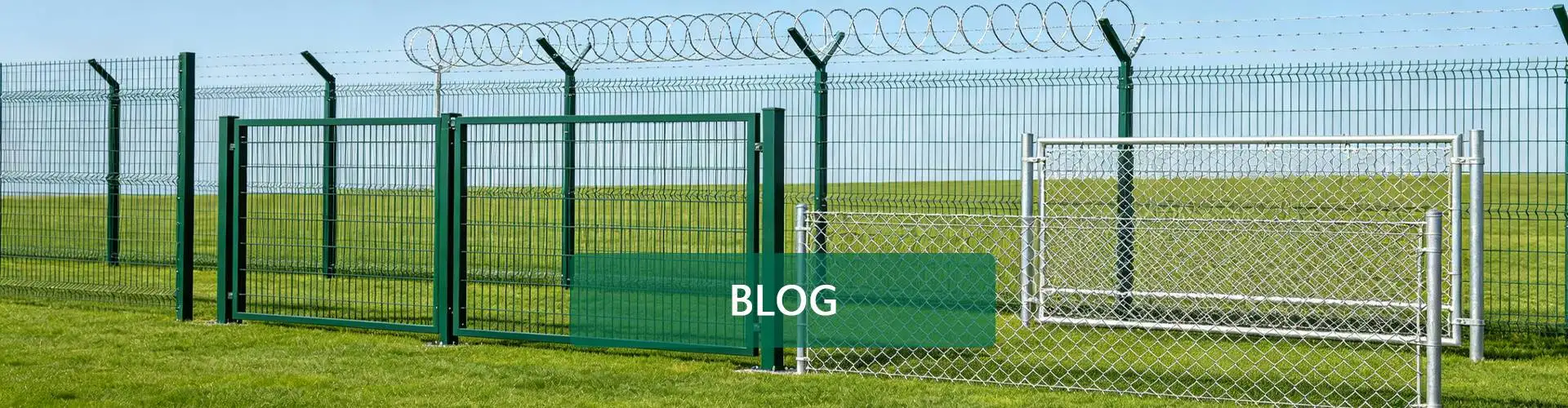

The main entrance of a commercial development needs to look welcoming, but the parking area and service yard still require a clearly defined boundary. Using the same fence design everywhere might seem convenient. However, a panel that suits the entrance may not be the most practical choice beside a loading area or a pedestrian route.
For this illustrative project in South Africa, the proposed boundary uses steel picket fencing around a commercial property, with separate access points for vehicles and pedestrians. The design needs to balance appearance, access and the physical requirements of the site.
The product falls within the Steel Tubular Fence category. Its final configuration would depend on the approved panel drawing, tube dimensions, picket spacing, post arrangement and surface finish.
This is an engineering application example, not a record of a completed BDFENCE installation. The following sections explain the decisions a contractor and purchasing team would need to resolve before placing an order.
Key Takeaways
- Choose the fence design according to the purpose of each boundary, not appearance alone.
- Confirm picket spacing, tube dimensions and wall thickness before comparing supplier quotations.
- Flat-top and spear-top panels create different visual effects and may suit different areas.
- Coordinate the fence panels with vehicle gates, pedestrian entrances and post positions.
- Select the surface finish according to the site’s environmental exposure and project requirements.
- Use one approved drawing and material schedule to coordinate manufacturing, delivery and installation.
Start with the Entrance, Then Follow the Boundary
Should the entrance use the same fence as the parking area?
Imagine approaching the proposed commercial property from the main road. The entrance sits beside landscaped planting, while the fence continues towards employee parking and a service yard.
The entrance is a prominent part of the development. A decorative picket profile may suit the architecture, but the boundary beside the service yard may need a simpler arrangement that is easier to repeat across a long run.
There is no need to assume that every section must use a different product. In fact, too many panel variations can complicate the material schedule and make future replacement less straightforward.
A practical approach is to identify the main fence design first, then mark the locations that genuinely require a different height, top profile or access arrangement. The site plan should show these sections before the contractor calculates the panel quantities.
This also helps the purchasing team separate standard panels from special sections beside buildings, corners and gates.
Where do the vehicle and pedestrian gates go?
A commercial property may need a vehicle entrance for deliveries and a separate pedestrian gate for staff and visitors. Those openings interrupt the regular fence line, so they need their own dimensions and component schedules.
For each gate, the drawing should identify the clear opening, frame arrangement, hinges or operating hardware, locking components and supporting posts. If the project includes access-control equipment, the relevant interfaces should also be coordinated.
The panels beside a gate deserve attention too. A gate located near a corner may leave a short gap that cannot use the standard panel width. If the contractor discovers this after the posts have been installed, the team may need to revise the layout or request a custom panel.
For this proposed development, the gate schedule would be prepared alongside the fence layout rather than added after the panel quantities have been calculated.
Choosing the Picket Profile
Flat top or spear top?
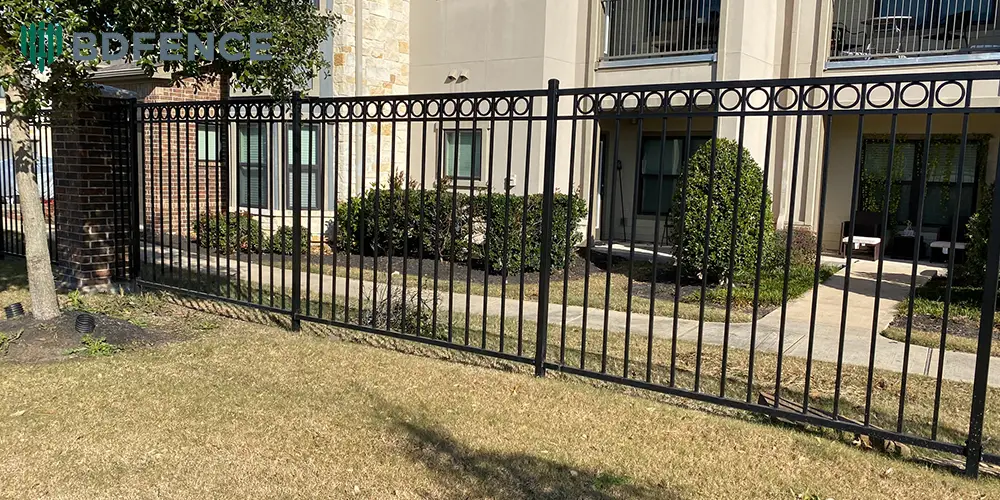
The top profile changes the character of a steel picket fence. Flat-top panels create a clean, regular outline, while spear-top panels give the boundary a more traditional appearance.
For a modern commercial building, flat-top fencing may complement simple architectural lines and landscaped frontage. A spear-top design may suit a formal entrance or a property that needs a more pronounced boundary appearance.
However, the decision should consider more than style. The intended use of the area, pedestrian safety and applicable project requirements also matter. A decorative top should not be treated as proof of a particular security performance.
Before production, the developer should approve the actual panel drawing. It needs to show the top profile, overall height, picket arrangement, horizontal rails and connection details.
A catalogue photograph helps communicate the desired appearance, but it cannot replace the dimensions needed for manufacturing.
Check the Tube Dimensions Before Approving the Price
Two steel picket panels can look similar in a photograph and still use different material specifications.
One supplier might quote square-tube pickets measuring 16 × 16 mm, while another offers 19 × 19 mm pickets. Wall thickness can also differ, even when both products use the same outside dimensions.
Those differences affect the amount of steel used and the panel weight. They can also affect the price, so a lower quotation does not automatically mean the supplier has manufactured the same product more efficiently.
For the proposed commercial development, the panel specification should identify the picket profile, outside dimensions, required wall thickness and spacing. The horizontal rails need their own dimensions as well.
If the project requires a particular tube size, the buyer should state it directly. A general description such as “heavy-duty steel picket fence” leaves too much room for interpretation.
When two suppliers return quotations, compare the drawings rather than relying on their product descriptions. If the tube dimensions or wall thickness differ, ask the suppliers to explain the difference before selecting an offer.
How Many Rails Does the Panel Need?
The number of horizontal rails changes the panel construction and the amount of steel used. A two-rail panel does not have the same arrangement as a three- or four-rail design.
For a commercial property, the selected configuration should follow the approved design and the requirements of the fence system. It should not be chosen only because one option has a lower initial price.
The rail arrangement also needs to match the panel height and picket layout. The manufacturing drawing should show the position of each rail and how the vertical members connect to the frame.
For a large order, it is worth approving one representative panel drawing before the factory produces the full quantity. That gives the buyer and manufacturer a common reference for the remaining panels.
Posts and Connections Must Match the Panel
The fence panel is only one part of the installation. Posts support the fence line, while brackets or other specified fixings connect the panels to the supporting structure.
For this commercial property, the post schedule would identify the post profile, length, required wall thickness and installation method. Corner posts and gate-support posts may have different requirements from ordinary line posts.
Panel width also needs careful interpretation. A nominal 2.4 m-wide panel does not automatically mean the posts should stand exactly 2.4 m apart from centre to centre. The selected fixing arrangement can affect the final setting-out dimensions.
Before foundations are installed, the contractor should compare the panel drawing, post connection detail and site layout. All three documents need to describe the same arrangement.
If the fence meets an existing wall or follows a change in ground level, the drawing should identify the transition. A standard panel may not fit every short section, and cutting a finished panel on site can damage its protective coating.
The foundation design must also follow the approved project requirements. Fence height, ground conditions, wind exposure and the supporting structure can all affect the required arrangement.
Choosing a Finish for a South African Commercial Property
The appropriate coating depends on the actual location and the project’s technical requirements. A commercial property near the coast may face different corrosion exposure from one in an inland area.
Galvanizing provides a zinc coating that protects steel against corrosion. Powder coating adds a coloured finish and another protective layer. Some projects specify a combination of treatments, depending on the required performance and applicable standards.
Colour is often important for commercial developments. The fence may need to match the entrance gates, exterior metalwork or architectural colour scheme. However, a colour sample alone does not define the protective system.
The buyer should specify the required finish and any applicable coating standards or acceptance criteria. Posts, rails, gate frames, brackets and exposed fasteners should also be included in the review.
For this proposed development, the coating schedule would cover the complete fence package rather than only the visible panels. This makes the supplier’s responsibilities easier to understand and compare.
What Should the Quotation Include?
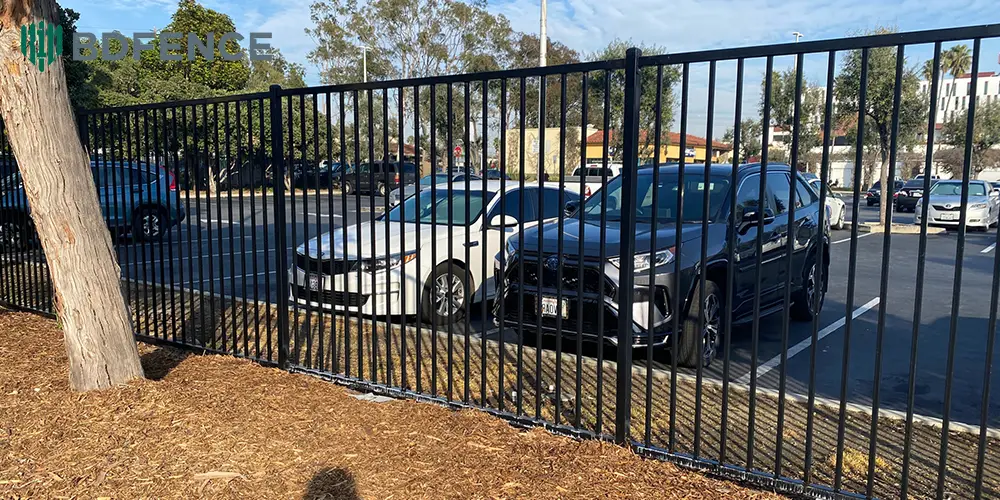
A commercial fence quotation needs to identify the actual components supplied. A price for panels alone is different from a quotation covering panels, posts, gates and fixing accessories.
| Supply Item | Details to Confirm |
|---|---|
| Steel Picket Panels | Height, width, top profile, picket spacing and tube dimensions |
| Horizontal Rails | Rail quantity, profile and dimensions |
| Posts | Profile, length, wall thickness and installation method |
| Fixings | Brackets, bolts and panel connection details |
| Vehicle Gates | Clear opening, frame, support posts and specified hardware |
| Pedestrian Gates | Opening dimensions, hinges, latch and frame |
| Special Sections | Corner panels, short closing panels and wall connections |
| Surface Treatment | Required coating system and colour |
| Packing and Delivery | Component identification, packing method and shipping terms |
Consider two quotations for the same commercial property. One includes only the standard panels, while the other includes posts, gates and fixing accessories. The second price may be higher because it covers more of the required supply.
Before comparing totals, align the specifications and quantities. For imported fencing, also check the agreed shipping terms, freight, customs clearance and local transport costs where applicable.
The objective is to compare equivalent offers, not simply choose the lowest number on the quotation summary.
What to Check Before Production Starts
Before releasing the order, the contractor should confirm that the site layout, panel drawing, gate schedule and bill of quantities refer to the same approved revision.
A change to the entrance position can affect adjacent panel widths and post quantities. Similarly, a revised fence height may change the supporting structure.
The buyer should also agree which product drawings, inspection records and packing documents the supplier must provide. If the contract requires specific quality checks, state those requirements before production begins.
For a large commercial development, clear component labels help the receiving team identify standard panels, special sections, posts and gate parts. This becomes particularly useful when the order contains several panel configurations.
If the design still contains provisional dimensions, identify them clearly. A preliminary quotation can use stated assumptions, but the final manufacturing order should follow confirmed specifications.
How BDFENCE Can Support a Steel Picket Fence Order
BDFENCE is a China-based metal fencing manufacturer supplying overseas contractors, distributors and project buyers. The company has more than 30 years of experience in metal fence manufacturing.
For a South African commercial development, useful enquiry documents include the site layout, panel specification, post details, gate schedule and bill of quantities. These help establish the requested panel configuration and the complete supply scope.
BDFENCE can review the specified steel tubular fence panels, posts, gates and related components against the information provided. If the project requires several panel styles or custom dimensions, identify them separately in the schedule.
Structural design, foundation approval and site-specific safety requirements remain the responsibility of the project’s qualified professionals unless the contract explicitly includes those services.
If you are sourcing steel picket fencing for a commercial property, send your drawings, BOQ or technical specification through Contact BDFENCE to request a quotation.
FAQ
What is steel picket fencing used for?
Steel picket fencing can define boundaries around commercial properties, office buildings, parking areas and other sites. The appropriate configuration depends on the intended use and approved design.
Is flat-top or spear-top fencing better for a commercial property?
Both styles can suit commercial applications. Flat top creates a simpler outline, while spear top produces a more traditional appearance. The choice should reflect the architecture, safety requirements and project specification.
What should I check when comparing tubular fence quotations?
Compare panel dimensions, tube sizes, wall thickness, picket spacing, rails, posts, gates, fixings and surface treatment. Confirm that each quotation covers the same supply scope.
Can steel picket fence panels be customized?
Custom panel dimensions and configurations can be reviewed against the project drawings and manufacturing requirements. Identify special widths, different heights and gate-adjacent sections before production.
What information is needed for a factory quotation?
Provide the site layout, panel specification, post details, gate schedule, coating requirements, quantities and delivery destination.
Contact BDFENCE
Hebei Bendin Industrial Technology Co., Ltd. (BDFENCE)
Planning a commercial fencing project in South Africa? Send your drawings, BOQ or technical specification for a quotation based on your required steel picket panels, posts, gates and finish.
Phone: +86 18703182863
WhatsApp: +86 18703287372
Email: info@bd-fence.com
Website: https://bd-fence.com/
Inquiry: Contact BDFENCE