


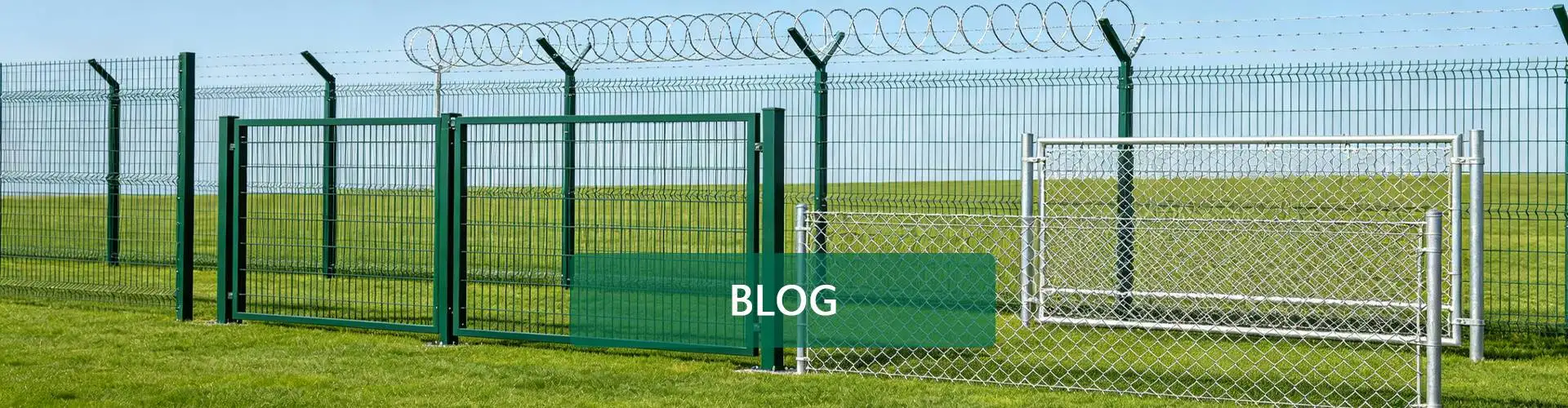
When choosing a steel picket fence, most buyers look at the panel height, colour and overall appearance first. However, there is another detail that deserves attention: the shape of the vertical pickets.
Some steel tubular fences use square hollow sections, while others use round steel tubes. Both options can produce a neat, rigid-looking fence panel, but they do not create exactly the same appearance or connection details.
For a commercial development, a square picket may suit the architectural design. A round picket can provide a different visual finish for a residential boundary, public building or landscaped area. The choice also affects how the manufacturer prepares the connections between pickets and horizontal rails.
So, which one should you choose?
The answer depends on the fence design, tube dimensions, wall thickness, picket spacing and installation requirements. This guide compares both options and explains what buyers should check before ordering Steel Tubular Fence panels.
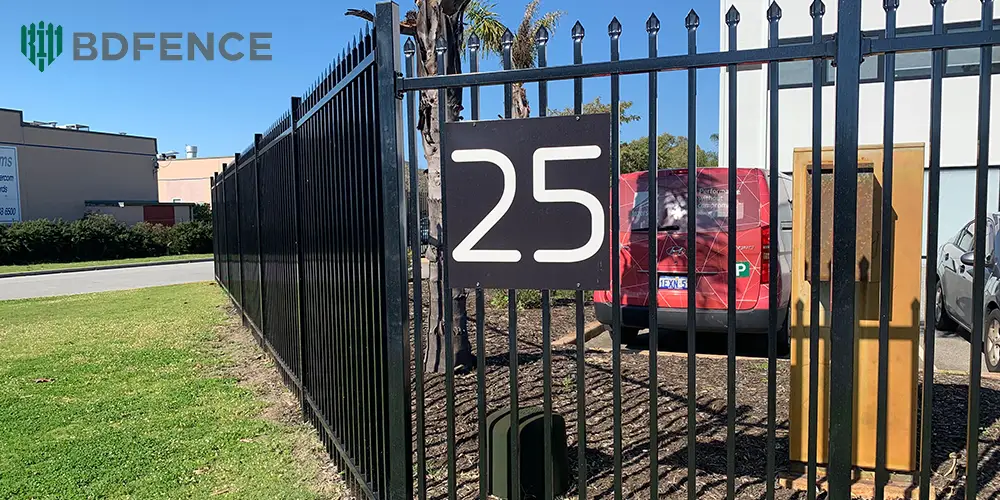
What Is the Difference Between Square and Round Pickets?
A steel tubular fence normally consists of vertical pickets, horizontal rails and supporting posts. The pickets form the visible pattern of the panel, while the rails connect and support them.
The main difference between square and round pickets is their cross-sectional shape.
A square tube has four flat sides and a hollow interior. A round tube has a circular outside profile. Both use hollow steel sections, but their dimensions and wall thicknesses need separate specifications.
For example, a 16 × 16 mm square tube and a Ø16 mm round tube do not contain the same amount of steel simply because both have a nominal dimension of 16 mm.
There is also a difference between the pickets and the posts. A fence can use round vertical pickets with square supporting posts. The two components do not need to share the same profile.
For buyers, this distinction is important because a product quotation should identify the shape and dimensions of each component separately.
Square Tube Pickets: A Clean and Regular Fence Appearance
Why do many commercial projects use square pickets?
Square tube pickets create a regular pattern with flat surfaces facing different directions. This gives the fence a structured appearance, which often suits modern commercial buildings, factory entrances and industrial boundaries.
The flat faces also provide convenient surfaces for positioning and aligning connections with horizontal rails. During fabrication, the manufacturer can use the panel drawing and production fixtures to maintain consistent spacing and alignment.
For a long fence line, consistency matters. If the pickets do not follow the same spacing or alignment, the finished boundary can look uneven even when every panel has the correct overall dimensions.
Square tubes also offer clear dimension references. Buyers can specify the outside width, outside depth and wall thickness directly in the drawing.
Common square tube options
BDFENCE lists several square picket configurations for its steel tubular fence range.
| Square Picket | Published Wall Thickness Options |
|---|---|
| 16 × 16 mm | 1.0 mm / 1.2 mm |
| 19 × 19 mm | 1.2 mm / 1.5 mm |
These options give buyers room to select different panel configurations. However, the appropriate size depends on fence height, panel width, picket spacing and the intended application.
A decorative boundary does not automatically need the same tube configuration as an industrial entrance. The project specification should determine the final choice.
Round Tube Pickets: A Different Profile for Tubular Fencing
Where does round tubing fit?
Round pickets create a softer visual pattern than square sections. Their curved surfaces can suit projects where the designer prefers a less angular fence appearance.
They can also work well with certain architectural styles and landscape designs. For example, a commercial property may use round pickets around a landscaped frontage while keeping square posts and horizontal rails in the supporting structure.
However, round tubing requires its own connection detail. Unlike square pickets, round tubes do not provide flat faces for direct alignment against a flat rail surface.
The manufacturer therefore needs to consider the joint geometry, picket position and welding arrangement when preparing the panel. A good drawing should show how each round picket meets the horizontal rail.
Common round tube options
BDFENCE publishes the following round picket configurations:
| Round Picket | Published Wall Thickness |
|---|---|
| Ø16 mm | 0.8 mm |
| Ø19 mm | 0.9 mm |
These are published product options, not direct structural equivalents to the square tubes listed above.
For example, a 16 × 16 × 1.0 mm square tube and a Ø16 × 0.8 mm round tube have different nominal steel cross-sectional areas. Therefore, buyers should compare the actual tube specifications rather than assume that the two products use equal amounts of steel.
The same principle applies when comparing round and square tubes in larger sizes. Outside dimensions alone do not establish the weight or performance of a hollow steel section.
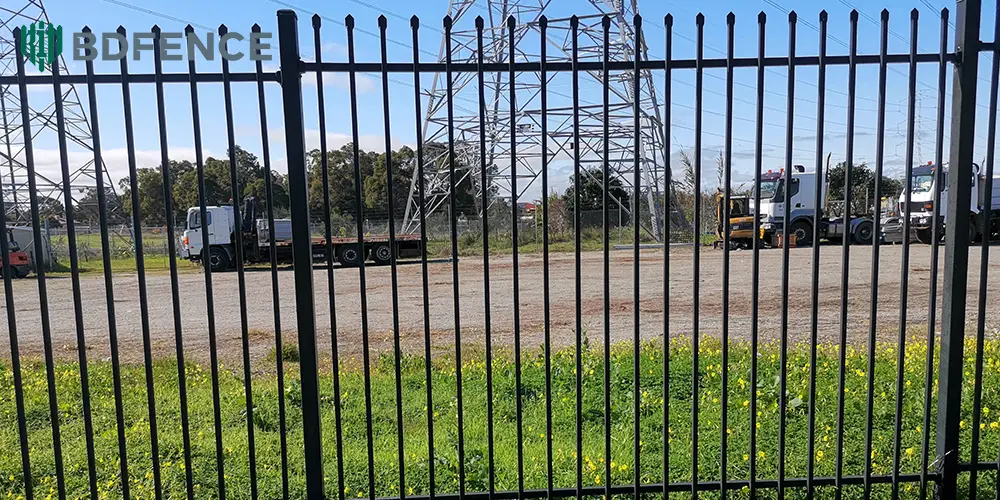
Square vs Round Tube: Which One Should You Choose?
There is no universal winner. Both profiles can suit steel picket fencing, but the project may favor one over the other.
| Comparison | Square Tube | Round Tube |
|---|---|---|
| Cross-section | Four flat sides | Circular profile |
| Visual appearance | Regular and angular | Softer and rounded |
| Rail connection | Flat surfaces can simplify alignment | Joint geometry needs attention to the curved surface |
| Dimension description | Width × depth × wall thickness | Outside diameter × wall thickness |
| Design preference | Modern commercial and industrial styles | Projects seeking a rounded picket appearance |
| Specification check | Outside dimensions and wall thickness | Outside diameter and wall thickness |
For a commercial development, square pickets may be the more suitable starting point when the design calls for straight lines and a regular panel pattern.
By contrast, round pickets are worth considering when the appearance of the vertical members is an important part of the architectural design.
Still, appearance should not be the only deciding factor. The tube size, wall thickness, spacing and connection quality determine whether the selected configuration suits the project.
Does Square Tube Always Provide More Strength?
This is a common question when buyers compare the two profiles. However, it would be misleading to say that square tubing is always stronger than round tubing.
The cross-sectional shape is only one part of the engineering calculation. Steel grade, outside dimensions, wall thickness, member length, connection details and loading conditions also influence performance.
Consider two tubes with a nominal outside dimension of 16 mm. A square tube measuring 16 × 16 × 1.0 mm and a round tube measuring Ø16 × 0.8 mm have different wall thicknesses and different steel cross-sectional areas.
That difference affects material weight, but it does not establish the load capacity of the complete fence panel.
For a taller commercial fence, the designer should also consider picket spacing, panel width, horizontal rails and post support. The selected configuration needs to work as a complete system.
Therefore, do not select square or round tubing based on shape alone. Ask the supplier for the actual dimensions and wall thickness, then compare them against the project requirements.
Picket Spacing Changes the Panel Design
Tube shape is only one part of the panel specification. Picket spacing also affects the finished appearance and the amount of steel used.
BDFENCE lists picket spacing options of 100 mm, 110 mm and 120 mm for its steel tubular fence range.
Closer spacing places more vertical members inside a panel. As a result, the manufacturer uses more tube material and completes more connections during fabrication.
Wider spacing reduces the number of pickets, but the final arrangement must still meet the project’s design and safety requirements.
There is one measurement detail worth clarifying before production: does the spacing refer to the distance between picket centres or the clear gap between adjacent tubes?
Those measurements are different. For example, a 16 mm picket with a 100 mm centre-to-centre spacing leaves a smaller clear gap than a 100 mm clear-opening specification.
Ask the manufacturer to show the measurement on the panel drawing. This avoids confusion when the contractor checks the finished panels.
Horizontal Rails and Posts Must Match the Pickets
A steel tubular fence is not made from vertical pickets alone. The horizontal rails and supporting posts also contribute to the panel structure.
BDFENCE lists several rail options, including 25 × 25 mm, 40 × 40 mm and 45 × 45 mm square tubes. Its published configurations also include two-rail, three-rail and four-rail panels.
The post range includes 50 × 50 mm, 60 × 60 mm and 80 × 80 mm square sections, with different wall thickness options.
These components should be selected according to the panel height, width, picket arrangement and site requirements.
For example, a 2.4 m-high fence may need a different rail and post arrangement from a 1.2 m decorative boundary. Taller panels also increase the demands on the supporting structure.
Gate frames need separate attention. A vehicle gate moves repeatedly and carries its own weight, hinges, locking components and infill. Therefore, the gate frame should not automatically use the same tube dimensions as the ordinary fence rails.
Before production, compare the picket drawing, rail arrangement, post details and gate schedule. All of these parts need to fit the same approved design.
Surface Treatment: Protect Both Square and Round Tubes
The tube profile does not determine corrosion resistance. Square and round steel pickets both need a suitable protective finish for outdoor use.
Hot-dip galvanizing provides a zinc coating to protect the steel. Powder coating adds a coloured finish and another protective layer. BDFENCE’s published steel tubular fence range identifies hot-dip galvanizing combined with powder coating as a product finish option.
However, buyers should not rely on the colour alone. The surface preparation, coating process and specified acceptance requirements also matter.
For a coastal property, salt exposure may require particular attention. An inland commercial site may face different environmental conditions.
Ask the manufacturer to clarify the coating system for the pickets, rails, posts and gates. Also, confirm how the factory treats weld areas and any exposed steel surfaces.
If the project requires a particular coating thickness or standard, include it in the purchase specification. This gives suppliers a clear basis for preparing their quotations.
How Should Buyers Check Quality Before Ordering?
Many purchasing problems start when the buyer checks only the panel height and total price. The tube profile, wall thickness, picket spacing and connection details may receive less attention.
Later, the panels arrive and the contractor discovers that the delivered configuration does not match the approved drawing.
A few checks before production can prevent much of this confusion.
| Inspection Item | What to Check |
|---|---|
| Picket profile | Square or round section and actual dimensions |
| Wall thickness | Specified steel thickness for each tube |
| Picket spacing | Clear gap or centre-to-centre measurement |
| Horizontal rails | Profile, dimensions and number of rails |
| Weld connections | Joint consistency and agreed inspection requirements |
| Posts | Section size, thickness, length and installation method |
| Surface treatment | Galvanizing, powder coating and surface condition |
| Gates and fittings | Frame dimensions, brackets, hinges and locking components |
For a custom order, request a dimensioned panel drawing before manufacturing begins. If the project uses round pickets, pay particular attention to the connection between the curved picket surface and the horizontal rail.
A sample panel can also help the buyer review appearance, spacing and finish before releasing a large order, provided the sample matches the agreed production specification.
Export Packing and Component Identification
After production, the manufacturer needs to prepare the panels for international transport. Square and round picket panels may have different contact points when stacked, so the packing arrangement should protect the finished coating.
For export orders, buyers can discuss metal pallets, wooden pallets, protective wrapping and separate cartons for smaller accessories.
Each package should identify the relevant panel type, dimensions and quantity. If an order contains both square and round pickets, clear labels help the receiving team distinguish the two configurations.
The packing list should also match the approved material schedule. Posts, rails, brackets and gate components need clear references so the installation contractor can locate them without sorting through the entire shipment.
Before finalizing the order, confirm the loading method, shipping terms and delivery destination with the supplier.
When Should You Choose Square or Round Tube?
For most projects, the decision becomes easier once the designer has established the required appearance and technical specification.
Square pickets are worth considering when the project needs a regular panel pattern, flat connection surfaces and a clean architectural outline. They can suit commercial buildings, factory entrances, school boundaries and industrial properties.
Round pickets provide another appearance option for projects that prefer circular vertical members. They may suit certain residential, public and landscaped boundaries where the rounded profile matches the design.
However, neither profile automatically offers better security or longer service life. The steel specification, manufacturing quality, coating and installation determine the performance of the completed fence.
For a mixed property, the buyer may even consider using different tubular panel configurations in separate areas. The important point is to keep the product schedule clear and ensure that the selected components remain compatible.
How BDFENCE Can Support Your Steel Tubular Fence Order
BDFENCE is a China-based metal fencing manufacturer supplying overseas contractors, distributors and project buyers.
Its published steel tubular fence range includes square and round pickets, several rail configurations, different panel heights and widths, and matching square post options.
For a project enquiry, send the site layout, required panel dimensions, picket profile, wall thickness, spacing and surface treatment. If the project also includes gates, provide their dimensions and operating requirements.
BDFENCE can review the requested product configuration against the available manufacturing options. The final panel drawing should identify the tube dimensions, rail connections, post arrangement and coating requirements before production.
For more information about tube dimensions and wall thickness, see the Steel Tubular Fence Tube Size and Wall Thickness Guide.
If you are comparing square and round tubular fencing for a commercial or industrial project, send your technical requirements through Contact BDFENCE to request a quotation.
FAQ
Is square tube stronger than round tube for steel picket fencing?
Not automatically. Strength depends on the tube dimensions, wall thickness, steel grade, connection details and loading conditions. Compare the complete specifications rather than relying on the cross-sectional shape alone.
What square and round picket sizes does BDFENCE offer?
BDFENCE publishes square picket options of 16 × 16 mm and 19 × 19 mm, as well as round options of Ø16 mm and Ø19 mm. The corresponding wall thicknesses should be confirmed against the product drawing.
Does round tubing cost less than square tubing?
Not necessarily. Material weight, wall thickness, tube dimensions, fabrication and coating all affect the final price. Request quotations based on the same panel dimensions and project requirements.
Can square and round pickets use the same horizontal rails?
They may use the same general rail size, but the picket-to-rail connection details can differ. The manufacturer should confirm the joint design and panel drawing before production.
Which picket spacing should I choose?
BDFENCE lists 100 mm, 110 mm and 120 mm spacing options. The suitable spacing depends on the project design and applicable safety requirements. Confirm whether the measurement refers to the clear gap or centre-to-centre distance.
Contact BDFENCE
Hebei Bendin Industrial Technology Co., Ltd. (BDFENCE)
Looking for square or round steel tubular fencing? Send your drawings, BOQ or technical requirements for a quotation based on your preferred picket profile, panel dimensions, rails, posts and surface finish.
WhatsApp: +86 18703287372
Email: info@bd-fence.com
Website: https://bd-fence.com/
Inquiry: Contact BDFENCE