


A buyer sent us two steel fence specifications for comparison.
The first drawing showed 40 × 40 mm square tubes. The second used 50 × 30 mm rectangular tubes. Both suppliers offered a similar fence height and panel width, but their prices were different.
The buyer wanted to know whether the rectangular tube was a cheaper substitute for the square one.
It was a fair question. However, we could not answer it from those two dimensions alone. We still needed the wall thickness, the position of each tube in the fence and the rest of the panel design.
This is a common issue when buying steel tubular fencing from overseas suppliers. A quotation may look complete because it includes a panel size and a price per meter. Yet small differences in the steel sections can change both the cost and the finished fence.
The Difference Starts with the Tube Shape
A square hollow section, often called SHS, has equal outside dimensions on all four sides.
A rectangular hollow section, or RHS, has two different outside dimensions.
For example, a 40 × 40 mm tube is square. A 50 × 30 mm tube is rectangular.
Both are common steel profiles. Both can work in fence panels, posts and gates, depending on the design.
The important difference is not simply how they look.
A square tube has the same basic bending properties about its two main section axes. With a rectangular tube, those properties differ. Turning the rectangular tube changes how it resists bending in a given direction.
That difference can matter in a horizontal fence rail or a gate frame.
However, it does not make one shape better for every job.
Why We Ask Where the Tube Will Be Used
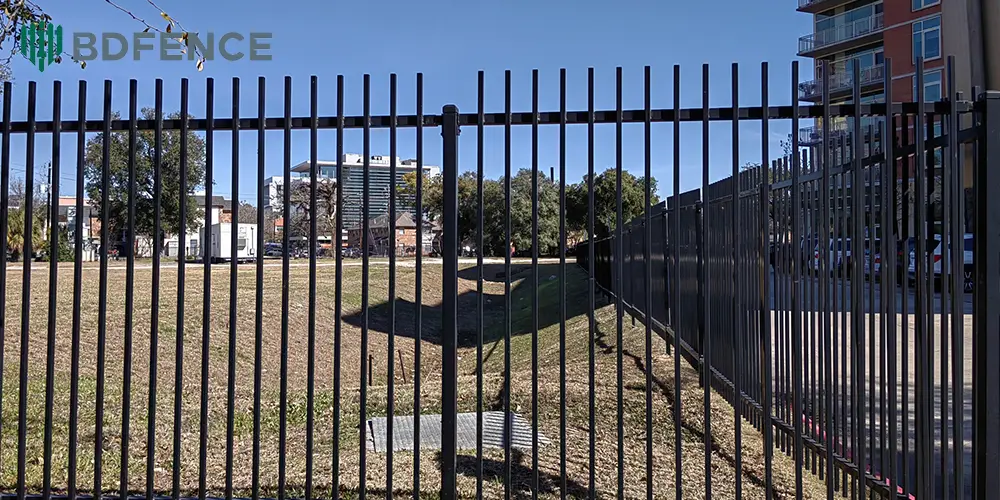
When we review a steel tubular fence drawing, we look at the pickets, rails and posts separately.
A picket is not doing the same job as a horizontal rail. Likewise, a post has different loads and connections from the tubes inside the panel.
For pickets, buyers often pay close attention to appearance and spacing.
Square pickets give a regular look from different viewing directions. This makes them a common choice for commercial buildings, schools and property boundaries.
Rectangular pickets create a different appearance. Depending on their orientation, they may look wider from the front and narrower from the side.
That can be useful when the architect wants a particular visual effect.
For horizontal rails, the discussion changes.
Rails connect the pickets and transfer loads toward the supports. Their span and section shape matter, along with wall thickness, steel grade and connections.
A rectangular tube may offer a useful section depth in one direction. On the other hand, a square tube may fit the design just as well.
We would not recommend changing the rail shape without checking the full panel arrangement.
A Larger-Looking Tube Is Not Always Heavier
This is worth checking before accepting a supplier’s claim about material quality.
Consider a 40 × 40 mm square tube and a 50 × 30 mm rectangular tube.
Both have a nominal outside perimeter of 160 mm.
If we give them the same wall thickness and use a simple sharp-corner calculation, their steel cross-sectional areas are equal.
Of course, real tubes have rounded corners and manufacturing tolerances. Actual weights can differ.
Still, this example shows why the outside shape alone tells us very little about material weight.
Now change the wall thickness.
A 40 × 40 × 2.0 mm tube and a 40 × 40 × 1.2 mm tube may look almost identical in a product photograph.
Their steel content is not identical.
The thicker tube uses more steel per meter, assuming the same material and comparable manufacturing details.
That difference affects weight, material cost and section properties.
It is one reason we ask buyers to include wall thickness in their drawings.
What Happens When a Supplier Changes the Rail Size?
Imagine a fence panel with vertical square pickets and two horizontal rails.
The original drawing specifies rectangular rails.
A supplier then offers square rails at a lower price.
Should the buyer accept?
Before answering, check whether the supplier has also changed the rail wall thickness, the rail span or the connection to the post.
A different section may change the panel’s stiffness and load capacity.
The cheaper rail might still meet the project requirements. But the buyer needs a proper comparison, not just a promise that the alternative is strong enough.
For a commercial fence, the approved project design should guide any material change.
We can manufacture to a confirmed specification, but a new tube shape should not automatically replace an engineered section without review.
Steel Fence Posts Need Their Own Specification
Buyers sometimes focus on the panel and leave the posts until the final quotation.
That can cause confusion.
A steel tubular fence post supports the panel system and transfers loads into its mounting or foundation arrangement.
Therefore, the required post section depends on more than the appearance of the pickets.
Fence height matters. So do post spacing, wind exposure, gate locations and the approved support details.
Square hollow sections are common for fence posts. Rectangular sections may also suit certain designs.
However, neither shape guarantees enough strength on its own.
We need the outside dimensions, wall thickness, steel grade and post length to understand the material specification.
The approved structural design should determine whether the selected post is suitable for the site.
A Gate Is Where the Tube Choice Becomes More Noticeable
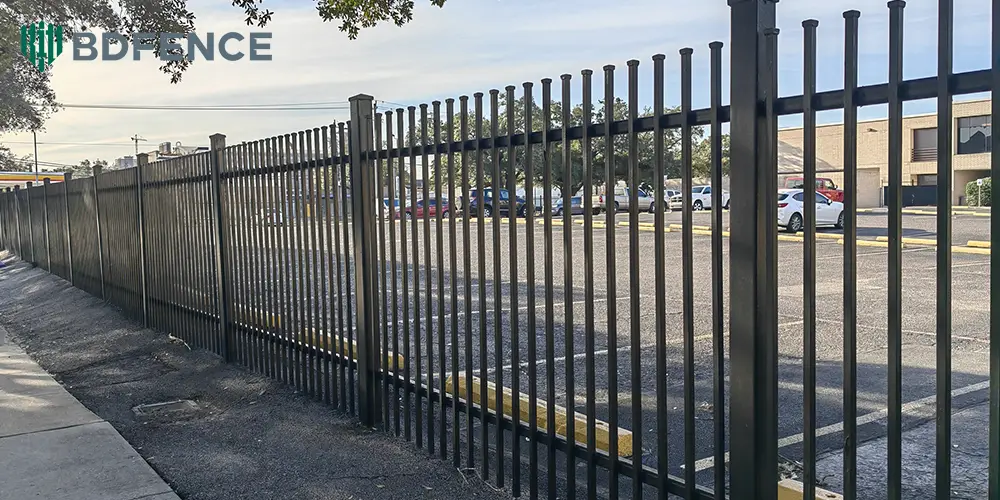
We often see customers use one tube specification for the fence panels and another for the gate frames.
There is a reason for that.
A fixed fence panel sits between its supports. A swing gate moves on its hinges, while a sliding gate uses a different support system.
A wide gate also needs a frame that can maintain its shape during use.
For this reason, the gate frame may need a different tube section from the nearby fence rails.
Rectangular hollow sections can be useful in some gate designs because the designer can choose a deeper section in the direction that matters.
But there is no universal rule that rectangular tubes make better gates.
The opening width, gate weight, frame layout, connections and hardware all affect the choice.
If your project includes large vehicle gates, send the gate drawing with the fence BOQ. A gate price based only on opening width may leave too many details unclear.
Comparing Two Steel Tubular Fence Quotations
Suppose you receive two offers for a 1.8 m high steel tubular fence.
Both suppliers show black panels with vertical pickets. Both use similar product photos.
One offer costs less.
Before making a decision, compare the details below.
| Fence Part | Supplier A | Supplier B |
|---|---|---|
| Pickets | Square tube | Square or rectangular tube |
| Rails | Rectangular tube | Square tube |
| Wall thickness | Check drawing | Check drawing |
| Post section | Check size and thickness | Check size and thickness |
| Picket spacing | Confirm clear gap | Confirm clear gap |
| Surface finish | Confirm coating system | Confirm coating system |
| Gate frame | Separate specification | Separate specification |
| Fixings | Confirm included parts | Confirm included parts |
This table is only a starting point. The actual dimensions and quantities must come from each supplier’s offer.
Also, look at the number of horizontal rails.
One panel may use two rails while another uses three. The picket count may also differ because of the clear spacing.
These changes affect the amount of steel in the finished fence.
A lower price is not necessarily a problem. The supplier may have a more efficient production method or a better material price.
However, you should know whether you are comparing the same product before choosing.
Have Two Fence Quotations You Want to Compare?
You can send both specifications to BDFENCE.
We can quote against your current drawing or BOQ and identify the tube sizes, wall thicknesses and other items that need confirmation.
There is no need to prepare a new document.
Phone: +86 18703182863
WhatsApp: +86 18703287372
Email: info@bd-fence.com
Don’t Forget the Finish
The choice between square and rectangular tubes is only one part of a steel fence order.
Outdoor fencing also needs a suitable surface finish.
Depending on the project, the specification may call for galvanizing, powder coating or a combined coating system.
The coating method should match the intended environment and the buyer’s requirements.
For example, a fence near the coast may face more severe corrosion conditions than one in a sheltered inland location.
However, tube shape alone does not decide corrosion resistance.
The steel preparation, coating specification, weld details, drainage, installation conditions and maintenance all matter.
We recommend confirming the finish before production rather than treating it as a color choice at the end.
The Detail Buyers Sometimes Miss: Tube Orientation
A drawing may show a 60 × 40 mm rectangular rail.
That tells us the outside dimensions, but it does not always show which side faces the expected load direction.
For a rectangular hollow section, orientation can affect bending performance.
This matters when the rail forms part of a design that relies on a particular section direction.
If the drawing includes a section view, the orientation is usually easier to understand.
Otherwise, we may need to confirm it before production.
A short clarification at the quotation stage is much easier than finding a mismatch after the panels arrive.
Custom Fence Panels: Keep the Drawing Clear
Some buyers need standard fence panels for a long boundary. Others have different heights, short closing sections or special gate openings.
In either case, clear tube specifications make the order easier to manage.
For example, a drawing can show:
- 25 × 25 mm square pickets
- 50 × 30 mm rectangular rails
- Specified rail and picket wall thicknesses
- 60 × 60 mm square posts
- Required panel height and width
- Clear spacing between pickets
These sizes are only an example of how to describe a fence, not a recommended design for every project.
Actual tube sizes should follow the buyer’s project requirements.
If you have several panel types, give each type a simple reference number. That helps us connect the drawing, production list and packing details.
It also makes it easier for your receiving team to identify different sections when the shipment arrives.
What BDFENCE Needs to Prepare a Useful Quotation
A short inquiry is fine when a project is still in the early stage.
You might only know the fence height, total length and preferred appearance.
We can start a discussion from that information.
However, a detailed price needs more.
The most useful documents are an existing fence drawing, BOQ or tube specification.
If you have them, include the picket sizes, rail sizes, wall thicknesses, post details and gate schedule.
We also need to know the required finish and delivery destination.
For projects with an approved design, we can prepare our offer around the specified materials.
If some details remain open, we can list them for confirmation.
That way, the buyer knows what the quotation includes.
Working with a Steel Tubular Fence Manufacturer in China
BDFENCE is the metal fencing brand of Hebei Bendin Industrial Technology Co., Ltd.
Our team has more than 30 years of metal fence manufacturing experience. The factory covers about 15,000㎡ and has more than 190 employees and over 80 machines.
We supply steel fencing products to international buyers, including contractors, distributors and project purchasing teams.
For steel tubular fencing, we can discuss different picket, rail and post sections based on the customer’s drawings and confirmed requirements.
Some projects use square tubes throughout the panel. Others combine square pickets with rectangular rails.
We do not need to force every customer into the same design.
The better approach is to understand the fence that the project actually requires and prepare a clear supply quotation.
So, Which Tube Should You Choose?
If appearance is your main concern, compare how the two shapes look in the finished fence.
If you are choosing rails or frame members, pay more attention to section direction, wall thickness, span and the approved design.
For posts and gates, consider the loads and connections rather than the tube shape alone.
And if you are buying from two different factories, compare the full material schedule.
A 40 × 40 mm square tube and a 50 × 30 mm rectangular tube may both be suitable for fencing. However, they are not automatically equal substitutes in every position.
The best choice is the one that meets your project specification at a reasonable total cost.
FAQ
Is square tube better than rectangular tube for steel fencing?
Neither shape is always better. Square tubes have equal outside dimensions in both directions, while rectangular tubes have different section depths. The right choice depends on the fence design and intended use.
Which tube is stronger for a steel fence rail?
You need to compare the actual section properties, wall thickness, steel grade, orientation and span. A rectangular tube can offer greater bending stiffness in one direction, but that does not make every rectangular tube stronger than every square tube.
Are square steel tubes cheaper than rectangular tubes?
Not always. Material weight, wall thickness, grade, order quantity and manufacturing costs affect the price. Ask suppliers to quote the same specification before comparing costs.
Can I use square pickets with rectangular rails?
Yes. Many steel tubular fence designs combine different hollow sections. The approved design should confirm the sizes and connections.
What tube size should I use for a steel fence post?
There is no single post size for every fence. Height, spacing, exposure, loads and mounting details affect the choice. Follow the approved project design.
Can BDFENCE manufacture steel tubular fencing from my drawing?
Yes. Send your current drawing, BOQ or technical specification. We can review the available details and prepare a quotation based on the confirmed requirements.
Contact BDFENCE
Hebei Bendin Industrial Technology Co., Ltd. (BDFENCE)
Phone: +86 18703182863
WhatsApp: +86 18703287372
Email: info@bd-fence.com
Website: https://bd-fence.com/