


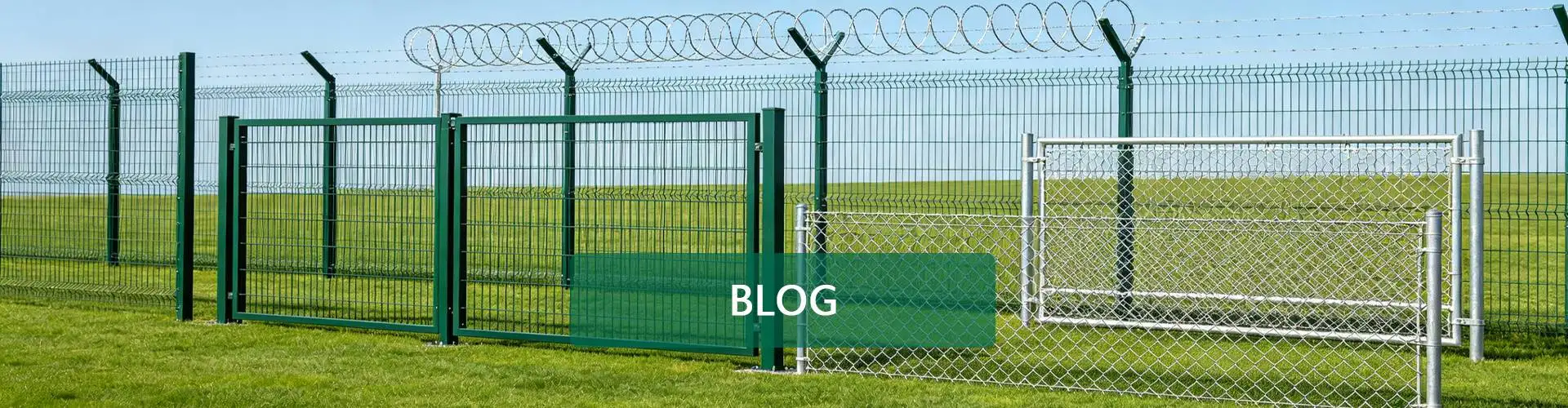
Steel fencing performs well outdoors, but coastal air and high humidity can place much more pressure on the protective finish than a dry inland environment.
Salt, moisture, condensation, standing water, damaged coating, and exposed steel details can all accelerate corrosion if the fence system is not specified correctly.
For buyers, the goal should not be to ask only:
“Will galvanized steel rust?”
A better question is:
“How should the complete Steel Tubular Fence system be protected so that the weakest points do not fail first?”
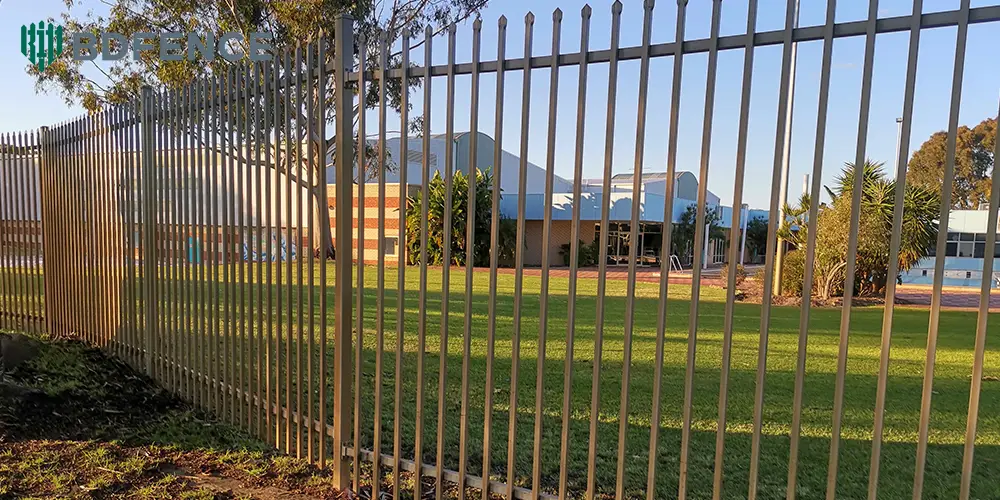
Rust Usually Starts at the Weakest Detail
A fence rarely corrodes at exactly the same speed everywhere.
Some areas stay in good condition for years, while other parts begin to show deterioration much earlier.
Common vulnerable points include:
- Post bases
- Welded joints
- Cut edges
- Gate hinges
- Fasteners
- Damaged coating
- Low points where water collects
For coastal and humid environments, these areas deserve more attention than the center of a well-protected panel.
Why Coastal Air Is More Aggressive
Coastal environments contain salt-bearing moisture.
This can remain on exposed steel surfaces and increase corrosion pressure.
The closer the fence is to the sea, the more important it becomes to consider:
- Salt exposure
- Wind direction
- Rain frequency
- Humidity
- Surface drying conditions
A fence installed beside the coast should not automatically use the same finish as a similar fence installed far inland.
High Humidity Creates a Different Problem
Even without direct salt exposure, high humidity can keep steel surfaces damp for longer periods.
Moisture may also collect around:
- Post bases
- Horizontal surfaces
- Gate hardware
- Bracket connections
- Internal tube openings
This means drainage and detailing are just as important as the coating itself.
Start with the Right Galvanizing System
Galvanizing adds a zinc-based protective layer to steel.
For outdoor Steel Tubular Fence, this creates a practical first line of defense against corrosion.
However, buyers should not treat the word “galvanized” as a complete specification.
The project should confirm:
- Galvanizing method
- Applicable coating requirement
- Whether fabrication occurs before or after galvanizing
- How welded areas are protected
- How cut edges are handled
Why Hot-Dip Galvanizing Is Often Considered for Harsh Environments
Hot-dip galvanizing is commonly considered for outdoor fabricated steel where stronger corrosion protection is required.
For Steel Tubular Fence, this can be especially useful on:
- Coastal properties
- Industrial sites
- Ports and marine-adjacent areas
- Humid climates
- Long-term infrastructure projects
The main advantage is that the protective treatment is applied to the fabricated steel component rather than relying only on a decorative outer surface.
Galvanized + Powder Coated Can Provide Two Layers of Protection
Some projects need both corrosion protection and an architectural appearance.
In these cases, galvanized steel can be combined with powder coating.
This system can provide:
- Base zinc protection
- Colored outer finish
- Additional barrier against moisture
- Better architectural integration
This is often considered for commercial, residential, and public-facing coastal projects.
Do Not Rely on Powder Coating Alone Without Checking the Base Protection
Powder coating can provide a strong finished surface, but the long-term result depends on what sits underneath it.
If deep scratches expose untreated steel, corrosion can begin locally.
For harsh environments, buyers should ask:
- What is the base steel treatment?
- Is the steel galvanized first?
- How are welds prepared?
- How are damaged areas repaired?
- What coating specification is required?
Post Bases Need Special Protection
The post base is one of the most common weak points in outdoor fencing.
It may be exposed to:
- Standing water
- Wet concrete
- Soil moisture
- Landscape irrigation
- Road splash
- Salt accumulation
In humid and coastal environments, poor drainage around the post base can shorten the service life of the system.
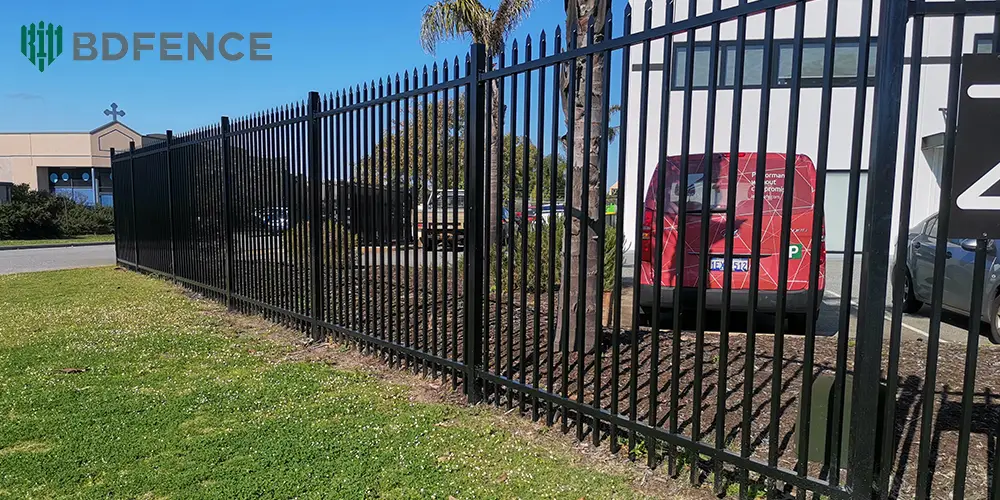
Good Drainage Can Prevent a Large Amount of Corrosion
Even a well-protected steel fence can suffer if water remains trapped around it.
Projects should therefore consider:
- Site grading
- Drainage around foundations
- Water flow near gate posts
- Landscape irrigation
- Concrete detailing
Keeping water from collecting around steel is one of the simplest ways to reduce corrosion pressure.
Welds Need the Same Protection as the Rest of the Fence
Steel Tubular Fence is a fabricated product.
Pickets are welded to rails, and gate frames contain additional welded joints.
These areas must be protected as part of the complete finish system.
A visually attractive flat surface does not guarantee that welded areas received equivalent protection.
Cut Edges Can Become Local Weak Points
Fence components may be cut during fabrication or modified during installation.
If a cut exposes bare steel, that area may become more vulnerable in coastal or humid conditions.
For this reason, site modifications should be controlled and repaired using an approved protection method.
Gate Hinges and Moving Parts Need More Frequent Inspection
Gates experience more movement than fixed fence panels.
That repeated motion can create wear around:
- Hinges
- Locks
- Stops
- Guide components
- Gate posts
In coastal environments, these areas should be inspected more frequently because movement and corrosion exposure can occur at the same time.
Fasteners Should Match the Corrosion Strategy
A fence may have excellent panels and posts but still develop problems around poorly protected fasteners.
Buyers should review:
- Bolts
- Nuts
- Washers
- Brackets
- Gate hardware
These small components remain exposed to the same environment as the rest of the fence.
They should not be treated as an afterthought.
Do Not Mix Protection Levels Without a Reason
A common project mistake is using heavily protected fence panels with lighter-protection posts or gate components.
That can cause the perimeter to age unevenly.
The better approach is to coordinate corrosion protection across:
- Fence panels
- Posts
- Gate frames
- Gate posts
- Brackets
- Fasteners
This makes the complete system more consistent.
How Surface Damage Should Be Managed
Transport and installation can create scratches or impact damage.
Minor superficial marks may not create an immediate problem, but deeper damage should be inspected.
In aggressive environments, exposed steel should not be left untreated for long periods.
A maintenance plan should include local repair of damaged protective areas.
Why Coastal Projects Need More Frequent Inspection
A dry inland fence may require relatively little maintenance.
A coastal fence should normally receive more attention.
Useful inspection areas include:
- Post bases
- Welded joints
- Gate hinges
- Gate posts
- Fasteners
- Scratched areas
- Low points where moisture remains
Cleaning Can Help in Salt-Exposed Locations
In some coastal projects, salt deposits can build up on the fence surface.
Where appropriate, periodic cleaning can help reduce accumulated contamination.
The maintenance method should follow the approved coating system and project requirements.
Harsh cleaning methods should be avoided if they could damage the protective surface.
Do Thicker Tubes Prevent Rust?
Thicker steel does not prevent corrosion.
Wall thickness mainly affects structural strength and steel content.
Corrosion protection depends more on:
- Surface treatment
- Environmental exposure
- Drainage
- Coating damage
- Maintenance
A thick tube with weak corrosion protection can still deteriorate.
How the Environment Should Change the Specification
| Environment | Main Concern | Specification Direction |
|---|---|---|
| Dry Inland | Normal weather exposure | Standard outdoor corrosion protection may be sufficient |
| Humid Inland | Long moisture exposure | Stronger attention to drainage and finish |
| Coastal | Salt and moisture | Stronger corrosion-protection system |
| Industrial Coastal | Salt + industrial contamination | Project-specific high-protection system |
Which Finish Works Best Near the Coast?
There is no single finish that is best for every coastal project.
The correct choice depends on:
- Distance from the sea
- Salt exposure
- Humidity
- Industrial contamination
- Required color
- Maintenance expectations
- Project service-life target
For many demanding projects, hot-dip galvanizing or galvanized + powder-coated systems may be considered.
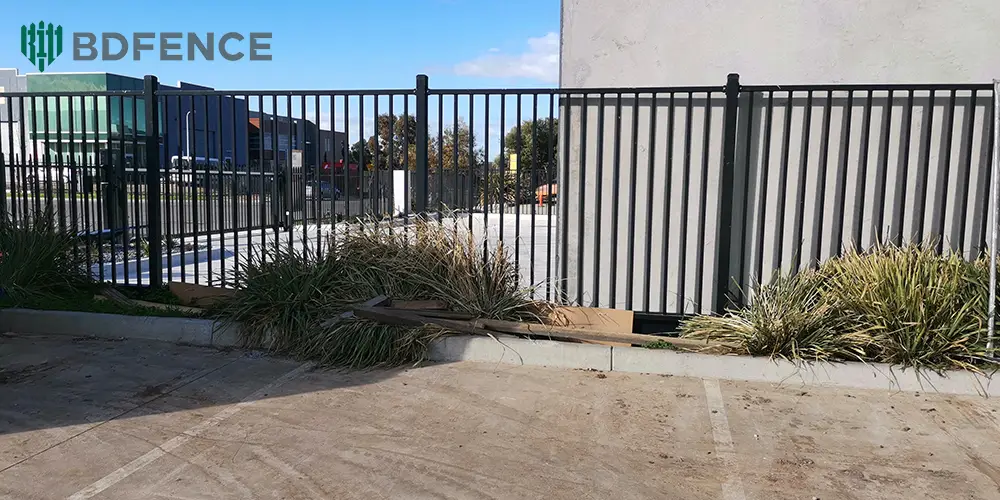
How to Protect Gates in Coastal Environments
Gates deserve separate attention because they combine structure, movement, and hardware.
A coastal gate specification should review:
- Frame protection
- Gate post protection
- Hinge protection
- Locking hardware
- Drainage
- Surface damage from use
The gate should follow the same or stronger corrosion-protection logic as the main fence.
What Should Be Checked During Installation?
Many corrosion problems begin during installation rather than production.
The installer should avoid:
- Unnecessary grinding
- Leaving cut steel unprotected
- Damaging powder coating with tools
- Creating water traps around posts
- Mixing unsuitable fasteners
Good installation helps preserve the factory-applied protection system.
A Practical Rust-Prevention Checklist
- Match the finish to the project environment
- Use suitable galvanizing where required
- Consider galvanized + powder coating for harsher or visible projects
- Protect welded and cut areas
- Use compatible posts, gates, brackets and fasteners
- Design proper drainage around post bases
- Reduce installation damage
- Inspect gates and moving hardware regularly
- Repair damaged areas early
- Clean salt deposits where the maintenance plan requires it
How Buyers Should Compare Coastal Fence Quotations
| Quotation Item | What to Confirm |
|---|---|
| Fence Panels | Tube size, wall thickness and surface treatment |
| Posts | Section size, wall thickness and corrosion protection |
| Gate Frames | Tube specification and finish |
| Gate Posts | Structural size and corrosion protection |
| Fasteners | Outdoor and corrosion-protection specification |
| Powder Coating | Color and coating requirement |
| Galvanizing | Required method and project specification |
Two fences can look similar in a quotation photo while using very different protection systems.
What Should You Send BDFENCE for a Coastal Fence Quote?
For a more accurate quotation, provide:
- Project country
- Project environment
- Distance from the coast if relevant
- Humidity or exposure information
- Total fence length
- Fence height
- Panel width
- Picket size and wall thickness
- Rail size and wall thickness
- Post size and wall thickness
- Required galvanizing system
- Powder-coated color if required
- Gate dimensions and quantities
- Project drawings or BOQ
- Destination port
If the corrosion-protection system has not yet been finalized, BDFENCE can review the project environment and available technical requirements before preparing the quotation.
How BDFENCE Supplies Steel Tubular Fence for Coastal Projects
Hebei Bendin Industrial Technology Co., Ltd. (BDFENCE) manufactures Steel Tubular Fence and Steel Picket Fence systems for coastal properties, commercial developments, industrial plants, logistics centers, residential communities, and infrastructure projects.
Our project supply can include:
- Galvanized Steel Tubular Fence
- Hot-dip galvanized components
- Galvanized + powder-coated fence systems
- Customized picket and rail sizes
- Steel posts
- Pedestrian gates
- Vehicle gates
- Sliding gates
- Brackets and fasteners
- Custom RAL colors
Project buyers can send BOQ documents, fence drawings, corrosion-protection requirements, gate schedules, and site information directly to BDFENCE for review and quotation.
Final Answer: How Do You Prevent Rust on Steel Fencing?
The most effective strategy is to protect the complete fence system rather than focusing only on the visible panel surface.
For coastal and humid environments, buyers should pay particular attention to galvanizing, powder coating, post bases, welded joints, cut edges, gates, fasteners, and drainage.
Hot-dip galvanizing can provide strong base protection for outdoor steel, while a galvanized + powder-coated system can add both corrosion resistance and architectural color where required.
Most importantly, damaged areas should be repaired early and high-risk locations such as post bases and gate hardware should be inspected regularly.
A durable coastal fence is the result of good material selection, good detailing, good installation, and consistent maintenance.
Contact BDFENCE
Hebei Bendin Industrial Technology Co., Ltd. (BDFENCE)
Phone:
+86 18703182863
WhatsApp:
+86 18703287372
Email:
info@bd-fence.com
Website:
https://bd-fence.com/
FAQ
What is the best way to prevent rust on steel fencing near the coast?
Use a corrosion-protection system suited to the coastal environment, protect posts and gates consistently, control drainage, reduce coating damage, and inspect vulnerable areas regularly.
Is galvanized Steel Tubular Fence suitable for coastal areas?
It can be suitable when the galvanizing specification matches the project environment and the posts, gates, brackets, fasteners, and other exposed components receive compatible protection.
Is powder coating enough to prevent rust?
Powder coating provides an outer protective layer, but long-term performance depends on the substrate preparation and base protection. In harsh environments, galvanized + powder-coated systems may be considered.
Why do fence posts rust near the ground?
Post bases can remain exposed to water, wet concrete, soil moisture, irrigation, road splash, and salt accumulation. Good drainage and suitable corrosion protection help reduce this risk.
How can I protect welded areas from corrosion?
The completed fabricated fence should receive a protection system that covers welded joints as part of the overall finish specification.
Do coastal fences need more maintenance?
They often require more frequent inspection because salt and moisture can increase corrosion pressure, especially around damaged coating, gates, post bases, and fasteners.
Can Steel Tubular Fence be hot-dip galvanized and powder coated?
Yes. Where the project requires both stronger corrosion protection and a specific color, a compatible galvanized and powder-coated system can be specified.
Can BDFENCE review a coastal fence specification?
Yes. BDFENCE can review project environment, fence drawings, BOQ documents, tube sizes, gate schedules, and corrosion-protection requirements before preparing a quotation.