


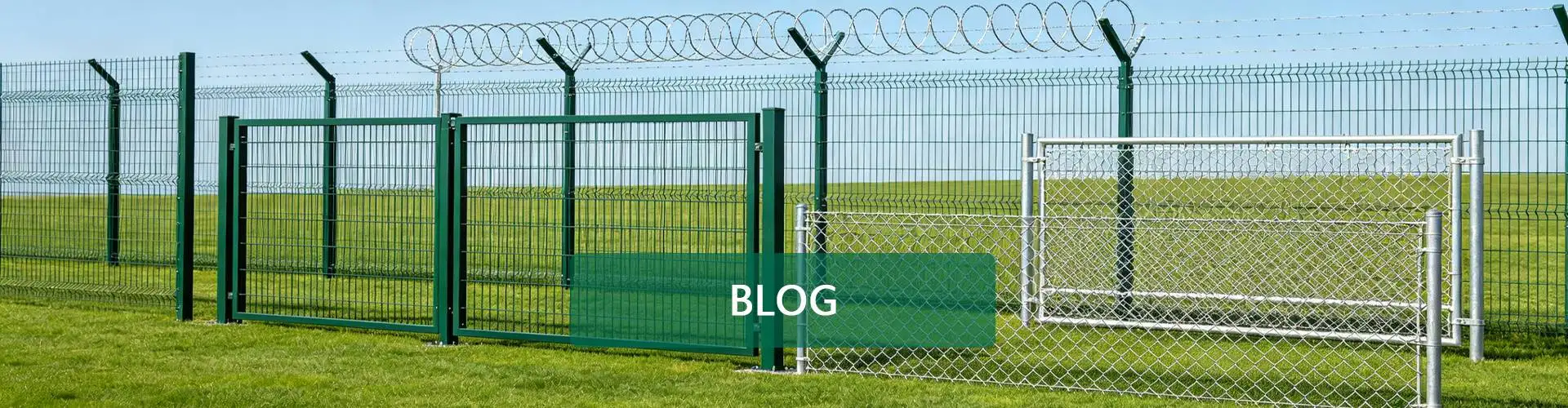
Military bases, defense facilities, ammunition storage areas, communication stations, and other restricted government sites require perimeter protection systems designed for a significantly higher security level than ordinary commercial fencing.
A military fence protection system is not simply a fence installed around a property boundary. It is a coordinated perimeter security solution combining 358 Security Fence panels, heavy-duty posts, security gates, anti-tamper fence fittings, optional security wire, and electronic monitoring systems.
Among different perimeter fencing options, 358 Fence is widely considered for high-security applications because its narrow welded mesh structure provides strong anti-climb characteristics while maintaining visibility for security monitoring.
This guide explains how a 358 Fence military protection system can be configured, which components and fence fittings should be considered, and what government contractors, security integrators, and project procurement teams should evaluate when sourcing a complete high-security fencing system.
Hebei Bendin Industrial Technology Co., Ltd. (BDFENCE) manufactures customized 358 Security Fence systems and related components for high-security, industrial, and infrastructure projects.
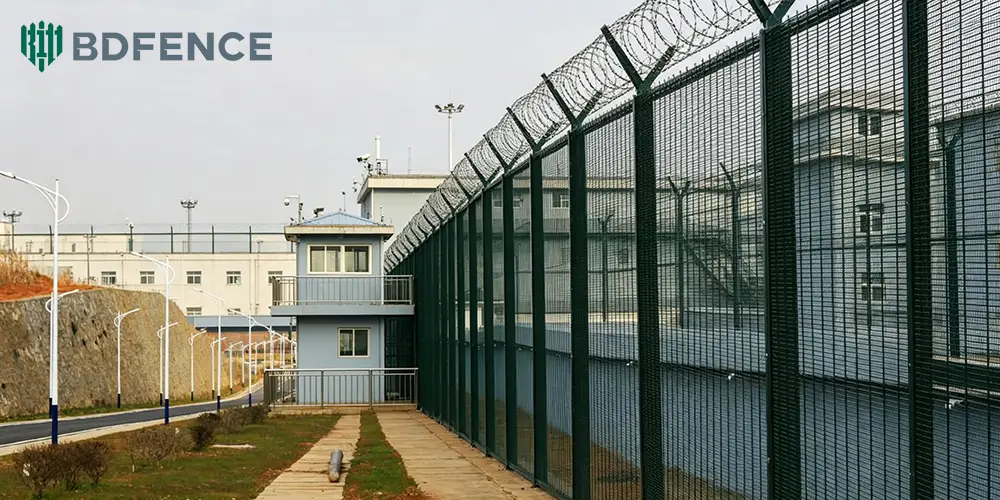
What Is a Military Fence Protection System?
A military fence protection system is a physical perimeter barrier designed to control access and increase protection around sensitive or restricted facilities.
Depending on the project security requirements, the complete system may include:
- 358 Security Fence panels
- Heavy-duty steel posts
- Security fence fittings
- Anti-tamper bolts and clamps
- Pedestrian security gates
- Vehicle security gates
- Anti-climb extensions
- Barbed wire or razor wire systems where permitted and specified
- CCTV integration
- Intrusion detection systems
- Controlled access systems
The final configuration should be determined by the project specification, required security level, local regulations, site conditions, and security risk assessment.
Where Are Military Fence Protection Systems Used?
High-security fencing systems can be specified for a wide range of defense and government applications.
Typical applications include:
- Military bases
- Defense facilities
- Ammunition storage areas
- Military warehouses
- Communication facilities
- Equipment storage compounds
- Restricted government facilities
- Military airfields
- Training facilities
- Critical infrastructure
Each application can require a different combination of fence height, panel configuration, posts, gates, fence fittings, and additional security measures.
Why 358 Fence Is Suitable for Military Perimeter Protection
358 Security Fence is designed around a narrow welded mesh configuration.
A typical 358 mesh uses an opening of approximately:
76.2 × 12.7 mm
with wire specifications selected according to project requirements.
The small mesh opening makes the barrier difficult to climb because there is limited space for conventional hand and footholds.
Strong Anti-Climb Characteristics
For restricted facilities, delaying unauthorized perimeter penetration is an important part of physical security.
The narrow mesh structure provides:
- Limited handholds
- Limited footholds
- Difficult climbing conditions
- Strong visual deterrence
When combined with appropriate fence height and security toppings, the perimeter can be configured for higher-security applications.
Difficult to Cut with Common Hand Tools
The narrow mesh spacing makes it more difficult to position conventional cutting tools around individual wires compared with fencing systems using larger openings.
However, buyers should avoid treating any physical fence as an impenetrable standalone security system.
For sensitive military applications, the fence should normally form one layer within a broader security strategy.
Excellent Visibility
A high-security perimeter should not unnecessarily block observation.
The welded mesh structure provides useful visibility for:
- Security personnel
- Patrol teams
- CCTV systems
- Perimeter inspections
This allows the physical barrier to work together with electronic monitoring systems.
Strong Welded Structure
358 Fence panels use a rigid welded mesh construction.
When correctly specified and installed with suitable posts and security fence fittings, the system provides a stable physical barrier for long-term perimeter applications.
Typical 358 Fence Specifications for High-Security Projects
The exact specification should always follow the project drawings, tender documents, security requirements, and relevant standards.
A typical configuration may include:
| Component | Typical Project Consideration |
|---|---|
| Fence Type | 358 Security Fence |
| Mesh Opening | 76.2 × 12.7 mm |
| Wire Diameter | Selected according to security specification |
| Fence Height | Customized according to project requirements |
| Panel Width | Customized / project specified |
| Posts | Heavy-duty steel posts |
| Fixing System | Security clamps and anti-tamper fittings |
| Surface Treatment | Galvanized / Galvanized + Powder Coated |
| Gates | Pedestrian and Vehicle Security Gates |
| Additional Protection | Project dependent |
For government and defense procurement, specifications should not be changed purely to reduce purchase price without confirming the effect on security performance and project compliance.
Fence Fittings Are a Critical Part of the Military Fence System
One area buyers sometimes overlook is fence fittings.
High-quality 358 panels cannot provide their intended performance if they are connected using weak, incompatible, or easily removable fittings.
The complete fence system depends on the relationship between:
Panel + Post + Fence Fittings + Foundation + Gate
For this reason, fence fittings should be evaluated as part of the security system rather than treated as minor accessories.
What Fence Fittings Are Used with 358 Security Fence?
The exact fittings depend on the post design and installation method.
Common components can include:
- Security clamps
- Steel fixing plates
- Anti-tamper bolts
- Security nuts
- Post brackets
- Panel connectors
- Post caps
- Gate fittings
- Base plates where required
- Extension arms where specified
Security Clamps
Clamps connect the 358 Fence panel to the steel post.
For high-security applications, they should provide:
- Strong panel retention
- Reliable load transfer
- Consistent installation
- Compatibility with security fasteners
Anti-Tamper Bolts
Standard easily removable fasteners may not be appropriate for sensitive perimeter applications.
Anti-tamper bolts and security nuts can help reduce unauthorized removal of fence components.
Steel Fixing Plates
Depending on the fence system design, continuous or individual steel fixing plates can be used to secure panels against posts.
The fixing method should match:
- Panel dimensions
- Post dimensions
- Fence height
- Security requirements
- Wind and structural requirements
Post Caps
Post caps protect the open ends of steel posts and contribute to a finished installation.
They should be selected to match the post profile and outdoor environment.
Gate Fittings
Security gates require their own heavy-duty fittings, which may include:
- Hinges
- Locking components
- Drop bolts
- Gate stops
- Guide components
- Security fasteners
Gate fittings should be selected according to gate size, operating frequency, access requirements, and project security level.
Why Fence Fittings Quality Matters
For large military or government projects, fittings may represent a relatively small percentage of total procurement cost, but they can have a significant effect on installation and security performance.
Poor-quality fittings can result in:
- Loose panels
- Difficult installation
- Premature corrosion
- Panel movement
- Maintenance problems
- Reduced resistance to tampering
Professional buyers should therefore confirm fittings during the initial specification and quotation stage.
Heavy-Duty Steel Post System
The posts transfer loads from the fence panels into the foundation.
Post specifications should be determined according to:
- Fence height
- Panel size
- Site conditions
- Wind loading
- Foundation design
- Security requirements
A complete project may require different posts for different locations.
These can include:
- Intermediate posts
- Corner posts
- Terminal posts
- Reinforced posts
- Gate posts
Corner, terminal, and gate positions can experience different loads from standard straight sections and may therefore require reinforced configurations.
Foundation Design for High-Security Fence Systems
Even a strong fence panel and post system can perform poorly if the foundations are unsuitable.
Foundation design depends on:
- Soil conditions
- Fence height
- Post dimensions
- Wind conditions
- Security requirements
- Local engineering requirements
Installation contractors should follow approved structural drawings and local engineering requirements rather than relying on a single universal foundation size.
Military Security Gate Systems
Access points are among the most important areas of any protected perimeter.
A complete military fence system may require:
- Pedestrian gates
- Vehicle swing gates
- Sliding gates
- Emergency access gates
- Controlled access gates
Gate specifications should be coordinated with the surrounding 358 Fence system.
Pedestrian Security Gates
Pedestrian gates can be configured for:
- Authorized personnel
- Security patrols
- Maintenance access
- Controlled entry points
The gate frame, infill, hinges, locking components, and fence fittings should provide a security level consistent with the adjacent perimeter.
Vehicle Security Gates
Vehicle entrances may require larger and heavier gate structures.
Important considerations include:
- Opening width
- Gate height
- Structural strength
- Gate posts
- Operating frequency
- Locking system
- Access control integration
Where vehicle attack resistance is required, specialist vehicle barriers may be needed in addition to the fence and gate system.
Additional Security Toppings
Depending on the facility and applicable regulations, 358 Fence may be combined with additional perimeter security components.
Possible configurations can include:
- Barbed wire
- Razor wire
- Security extensions
- Anti-climb toppings
These should only be specified where permitted and required by the project design.
The supporting posts and fence fittings must also be designed for the additional components.
Integration with Electronic Security Systems
Modern military perimeter protection usually relies on layered security.
The physical fence may work alongside:
- CCTV
- Perimeter lighting
- Intrusion detection
- Alarm systems
- Access control
- Security patrols
CCTV Monitoring
The visibility provided by 358 welded mesh can support camera observation along the perimeter.
Camera positions should be planned according to:
- Fence layout
- Gate locations
- Site geometry
- Lighting
- Potential blind spots
Intrusion Detection
Where required, perimeter detection technology can provide an additional security layer.
The physical fence then functions both as a barrier and as part of a monitored perimeter.
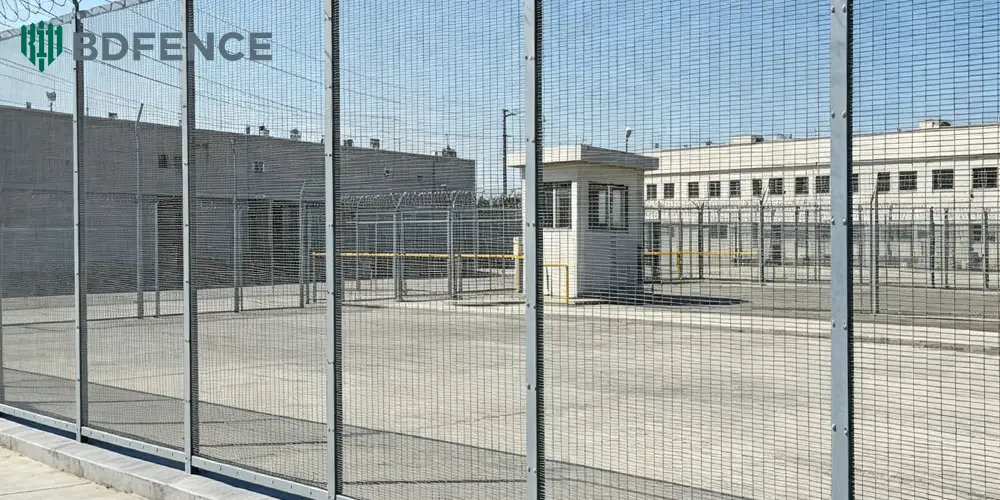
How to Design a 358 Fence System for a Military Project
For government and defense procurement, fence selection should begin with the complete project requirement rather than a standard product catalog.
Step 1: Review Security Requirements
Confirm:
- Required security level
- Fence height
- Perimeter length
- Restricted zones
- Access points
- Additional security requirements
Step 2: Review Site Conditions
Evaluate:
- Terrain
- Soil
- Slopes
- Existing structures
- Drainage
- Installation access
Step 3: Confirm Fence Panel Specifications
Confirm:
- Mesh opening
- Wire diameter
- Panel height
- Panel width
- Surface treatment
Step 4: Confirm Posts and Foundations
Post and foundation design should reflect the structural and site requirements.
Step 5: Specify Fence Fittings
The procurement specification should clearly identify:
- Clamp type
- Fixing plate
- Bolt type
- Security nut
- Post cap
- Required gate fittings
This helps prevent suppliers from quoting different accessory grades while presenting apparently similar fence prices.
Step 6: Plan Gates and Controlled Access
Gate quantities and dimensions should be confirmed early because they affect:
- Post requirements
- Foundations
- Access control
- Installation planning
Step 7: Coordinate Additional Security Systems
If the project includes CCTV, alarms, detection systems, or security wire, interfaces should be considered before installation.
Procurement Considerations for Government and Military Contractors
Large defense projects require a more structured supplier evaluation than ordinary commercial fence purchases.
Technical Compliance
The supplier should review the project specifications and confirm whether the proposed system complies with the required dimensions, materials, coating, and component configuration.
Manufacturing Capability
Large projects can require thousands of panels and posts.
Buyers should evaluate whether the factory can maintain:
- Consistent mesh dimensions
- Stable welding quality
- Accurate panel dimensions
- Consistent coating
- Compatible fence fittings
Quality Control
Inspection should cover more than the fence panel.
A complete quality plan can include:
- Raw material inspection
- Weld inspection
- Dimension checks
- Coating inspection
- Post inspection
- Fence fittings inspection
- Gate inspection
- Packaging inspection
Traceable Packing
For large projects, organized packaging helps contractors identify components after arrival.
Panels, posts, fittings, and gates should be packaged in a way that supports:
- Quantity checking
- Storage
- Distribution to installation teams
- Site installation
Common Procurement Mistakes
Buying Only the 358 Fence Panels
A high-security fence should be evaluated as a complete system.
Panels without compatible posts and fittings can create installation and performance problems.
Selecting Fence Fittings Based Only on Price
Small savings on clamps, bolts, or fixing plates can create disproportionate installation and maintenance risks.
Ignoring Gate Security
A strong perimeter combined with poorly specified gates can create weak access points.
Using the Same Specification for Every Site
Military projects differ in terrain, climate, threat assessment, and operational requirements.
The final system should follow the specific project design.
Focusing Only on Fence Height
A taller fence is not automatically a better security system.
Panel structure, posts, foundations, fittings, gates, monitoring, and access control all contribute to perimeter performance.
358 Fence Manufacturing and Quality Control
For high-security projects, consistent manufacturing is essential.
Raw Material Control
Before production, manufacturers should inspect:
- Steel wire
- Wire diameter
- Steel posts
- Material dimensions
- Surface condition
Automated Mesh Welding
358 panels require consistent narrow mesh openings and reliable welded intersections.
Production control should focus on:
- Mesh dimensions
- Welding consistency
- Panel dimensions
- Panel flatness
Surface Treatment
Depending on the project environment, finishes can include:
- Galvanized coating
- Powder coating
- Galvanized plus powder-coated systems
The required coating should be specified according to project conditions and expected service life.
Fence Fittings Inspection
Fittings should be checked for:
- Dimensions
- Material
- Coating
- Compatibility
- Fastener type
- Quantity
For bulk projects, complete accessory quantities should be verified before shipment.
Packaging and International Project Delivery
Military and government infrastructure projects may involve large quantities and complex delivery schedules.
Professional export packaging can include:
- Steel pallets for panels
- Bundled posts
- Separate gate packaging
- Labeled fence fittings
- Protected hardware cartons
- Reinforced container loading
Clearly identifying fittings is particularly useful because large projects may contain thousands of small components.
How to Request a 358 Military Fence Quotation
To receive a useful project quotation, buyers should provide as much technical information as possible.
Recommended information includes:
| RFQ Information | Details |
|---|---|
| Application | Military / Defense / Government Facility |
| Total Perimeter | Required fence length |
| Fence Height | Required height |
| Mesh Specification | Required mesh opening |
| Wire Diameter | Required wire size |
| Surface Treatment | Galvanized / Powder Coated |
| Posts | Dimensions and thickness |
| Fence Fittings | Required fixing system |
| Gates | Type, dimensions and quantities |
| Security Topping | If required |
| Drawings | Project drawings if available |
| Destination | Port or project location |
| Schedule | Required delivery period |
For tender projects, technical specifications and BOQ documents can also be provided for manufacturer review.
Why Choose BDFENCE for 358 Security Fence Projects?
BDFENCE manufactures high-security fencing systems for international contractors, industrial buyers, security integrators, and infrastructure projects.
Complete 358 Fence System Supply
BDFENCE can supply:
- 358 Fence panels
- Heavy-duty steel posts
- Fence fittings
- Security clamps
- Anti-tamper fasteners
- Pedestrian gates
- Vehicle gates
- Additional perimeter components according to project requirements
Customized Manufacturing
358 Fence systems can be customized according to:
- Fence height
- Wire diameter
- Panel dimensions
- Post specifications
- Surface treatment
- Gate configuration
- Fence fittings
Bulk Project Production
For large projects, production can be organized according to required quantities, specifications, and shipment schedules.
Quality Control
Inspection can cover panels, posts, gates, coatings, fittings, quantities, and packaging before shipment.
International Project Support
BDFENCE supports international procurement teams with:
- Specification confirmation
- Technical communication
- Production coordination
- Quality inspection
- Export packaging
- Container loading
- Shipping documentation
Conclusion
A reliable military fence protection system requires more than high-security mesh panels.
The performance of the complete perimeter depends on the coordinated design of 358 Fence panels, steel posts, foundations, security gates, fence fittings, and additional monitoring or protection systems.
For government contractors, defense infrastructure projects, and security integrators, evaluating the complete system can reduce procurement risks and improve installation consistency.
Fence fittings deserve particular attention because clamps, fixing plates, anti-tamper bolts, brackets, and gate hardware directly affect how securely the fence components work together.
BDFENCE provides customized 358 Security Fence systems and supporting components for large-scale high-security and infrastructure projects.
Contact BDFENCE for Your 358 Security Fence Project
Hebei Bendin Industrial Technology Co., Ltd. (BDFENCE)
Website: https://bd-fence.com/
Phone: +86 18703182863
WhatsApp: +86 18703287372
Email: info@bd-fence.com
For project quotations, send your fence specifications, perimeter length, required posts, fence fittings, gate requirements, drawings, and destination for evaluation.
FAQ
Why is 358 Fence suitable for military perimeter protection?
358 Fence uses a narrow welded mesh structure that provides strong anti-climb characteristics, good visibility, and a rigid physical barrier. It can also be integrated with gates, security fittings, CCTV, and other perimeter systems.
What fence fittings are required for 358 Security Fence?
Depending on the system design, common fence fittings include security clamps, fixing plates, anti-tamper bolts, security nuts, brackets, post caps, panel connectors, and gate hardware.
Are fence fittings important for high-security projects?
Yes. The fittings connect the panels to the supporting structure. Poor-quality or incompatible fittings can reduce structural reliability and create installation or maintenance problems.
Can 358 Fence be customized for government projects?
Yes. Panel height, wire diameter, posts, coating, gates, fixing systems, and other components can be manufactured according to project specifications and approved drawings.
Can 358 Fence be combined with security wire?
Where project specifications and local regulations allow, 358 Fence can be combined with additional perimeter security components such as barbed wire, razor wire, or security extensions.
Can BDFENCE supply fence fittings together with 358 Fence panels?
Yes. BDFENCE can supply a coordinated system including 358 panels, steel posts, fence fittings, security gates, fixing components, and other specified accessories.
What should contractors provide when requesting a military fence quotation?
Provide the project perimeter, fence height, mesh and wire specifications, post requirements, coating, fence fittings, gate dimensions and quantities, security topping requirements, drawings, destination, and required delivery schedule.