


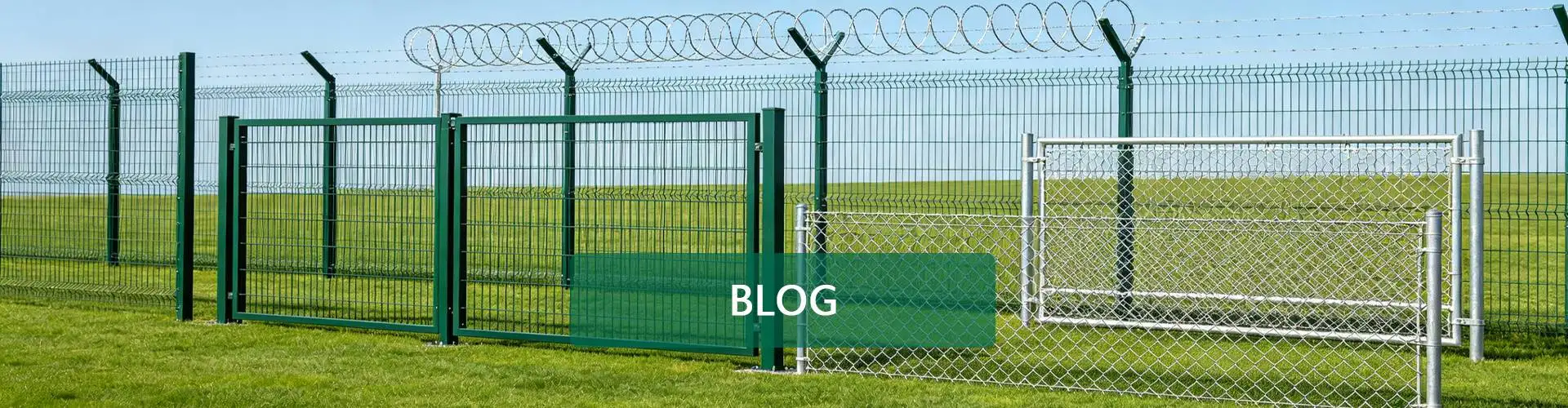
An industrial manufacturing factory in Mexico needed a stronger perimeter fence around production areas, loading zones, employee access points, and service roads.
The project required more than a decorative boundary. The fence had to support daily industrial activity, work with vehicle and pedestrian gates, and maintain a clean appearance around the factory site.
For this project, BDFENCE supplied a heavy-duty Steel Tubular Fence system with welded steel panels, reinforced posts, pedestrian gates, vehicle gates, brackets, fasteners, and installation accessories.
Project Profile
| Project Item | Details |
|---|---|
| Country | Mexico |
| Sector | Industrial Manufacturing |
| Application | Factory Perimeter and Access Control |
| Product | Heavy-Duty Steel Tubular Fence |
| Fence Style | Vertical Welded Steel Picket System |
| Post System | Heavy-Duty Steel Posts |
| Access | Pedestrian and Vehicle Gates |
| Supply Scope | Panels, Posts, Gates, Fittings and Accessories |

The Factory Needed Different Fence Functions in Different Areas
The industrial site included production buildings, truck routes, loading areas, parking zones, and controlled entrances.
Therefore, one fence section did not perform exactly the same job as another.
For example, the main factory perimeter needed to define the site boundary, while vehicle entrances had to handle frequent truck and service traffic.
The project also included areas where employees entered on foot and sections that separated operational zones from public-facing areas.
Because of this, the fence system had to remain visually consistent while adapting to different site functions.
Why Heavy-Duty Steel Tubular Fence Was Selected
The customer wanted a more rigid perimeter than a lightweight decorative fence.
Steel Tubular Fence provided a welded structure with vertical pickets, horizontal rails, and strong steel posts.
This made it suitable for an industrial environment where the fence could be exposed to regular site activity.
The system also allowed BDFENCE to coordinate matching gates and access points with the main fence line.
The Fence Was Designed Around Steel Distribution
A heavy-duty fence does not mean every tube needs to be equally large or thick.
Instead, each component should use steel according to the job it performs.
For this project, the main structural groups included:
- Vertical pickets
- Horizontal rails
- Line posts
- Corner posts
- Gate posts
- Pedestrian gate frames
- Vehicle gate frames
This approach helped create a balanced fence system instead of simply adding unnecessary steel to every component.
The Post System Carried Much of the Structural Work
The factory perimeter included long straight sections and several access points.
Therefore, post size and spacing were important parts of the fence design.
The posts had to support the welded panels and maintain alignment across the site.
Gate posts required even more attention because they carried moving gate frames as well as the connection to the surrounding fence.
For this reason, BDFENCE coordinated the post schedule with the fence and gate layout before production.
Truck Entrances Changed the Gate Requirements
Industrial factories often depend on regular deliveries and material movement.
The vehicle entrances therefore needed wider openings than pedestrian access points.
A wide gate creates different structural demands because the frame carries more weight and places greater load on the hinge side.
The vehicle gate design therefore considered:
- Gate width
- Frame tube size
- Wall thickness
- Internal support
- Gate post strength
- Hinge requirements
- Locking hardware
This prevented the vehicle entrance from being treated like an oversized pedestrian gate.
Pedestrian Gates Needed a Different Balance
Employee and maintenance access required smaller openings.
These gates needed to remain easy to operate while matching the surrounding Steel Tubular Fence.
BDFENCE coordinated the gate infill, frame, posts, hinges, and locking hardware with the main fence design.
As a result, pedestrian entrances remained part of the same perimeter system rather than looking like separate products.
Factory Activity Influenced the Fence Specification
An industrial fence can be exposed to more daily activity than a residential boundary.
Service vehicles, forklifts, maintenance equipment, workers, and delivery operations may all move close to the fence.
Therefore, the customer needed a fence system that felt more substantial around active factory areas.
The heavy-duty tubular steel construction matched this operating environment better than a lighter decorative system.
What BDFENCE Supplied
| Component | Function |
|---|---|
| Steel Tubular Fence Panels | Main factory perimeter |
| Line Posts | Support for standard fence sections |
| Corner Posts | Support at changes in direction |
| Gate Posts | Support for access openings |
| Panel Brackets | Connect fence panels to posts |
| Fasteners | Secure the connection system |
| Pedestrian Gates | Employee and maintenance access |
| Vehicle Gates | Truck and service vehicle access |
Panel Consistency Was Important Across the Factory Perimeter
Long industrial fence lines make production variation easy to see during installation.
If panel width, picket spacing, or rail positions change between batches, installers may face alignment problems on site.
Therefore, BDFENCE checked key panel dimensions during production.
The main control points included:
- Panel height
- Panel width
- Picket spacing
- Picket alignment
- Rail position
- Panel squareness
- Weld condition
Consistent production helped the contractor maintain a cleaner fence line around the factory.
Wall Thickness Was Checked Alongside Tube Size
Tube outside dimensions alone do not show how much steel is actually inside the fence.
Two tubes may have the same outside size but different wall thicknesses.
Therefore, BDFENCE checked both the section size and wall thickness for the required structural components.
This was particularly important for posts and gate frames, where additional steel weight directly influenced rigidity and performance.
The Surface Finish Had to Match Industrial Outdoor Use
The fence would remain outside throughout normal factory operations.
Therefore, the project required a suitable corrosion-protection and finishing system.
The selected finish was coordinated across the main visible components, including:
- Fence panels
- Steel posts
- Pedestrian gates
- Vehicle gates
- Visible brackets
This helped the perimeter age more consistently while maintaining a uniform industrial appearance.
Quality Control Covered More Than the Panels
A complete factory fence depends on the compatibility of many components.
For this reason, BDFENCE checked the main parts as one system before packing.
| Component | Inspection Focus |
|---|---|
| Fence Panels | Dimensions, picket spacing, rails, welds and squareness |
| Line Posts | Section size, wall thickness, length and straightness |
| Gate Posts | Dimensions and gate compatibility |
| Pedestrian Gates | Frame dimensions, hinges and hardware |
| Vehicle Gates | Frame alignment, tube specification and hardware positions |
| Brackets and Fasteners | Type, dimensions and quantity |
| Surface Finish | Visible condition and consistency |
Packaging Followed the Installation Sequence
For an industrial project, good packing should do more than protect the steel during transport.
It should also help the contractor identify materials after delivery.
BDFENCE organized the shipment by component type.
Fence panels were stacked and secured, while posts were bundled separately. Meanwhile, brackets, fasteners, and smaller accessories were packed by category.
Gate components also received separate identification.
This reduced unnecessary sorting before installation began.
Installation Started with the Factory Layout
The contractor first confirmed the complete perimeter line and all access points.
The installation sequence then followed the factory layout:
- Mark the fence route
- Confirm pedestrian and vehicle gate positions
- Mark line and corner post positions
- Install the steel posts
- Complete the required foundations
- Position the Steel Tubular Fence panels
- Connect the panels to the posts
- Install pedestrian gates
- Install vehicle gates
- Check the final alignment and access points
Because panels, posts, gates, and brackets were supplied as one coordinated package, the installer could use a consistent method across the main factory perimeter.
What the Factory Gained from the Completed Fence
| Factory Requirement | Project Result |
|---|---|
| Strong Perimeter | Rigid welded tubular steel system |
| Industrial Appearance | Clean vertical picket design |
| Employee Access | Matching pedestrian gates |
| Truck Access | Heavy-duty vehicle gates |
| Long Fence Runs | Consistent panels and posts |
| Outdoor Use | Project-specified surface protection |
The completed system created a clear boundary around the industrial factory while supporting daily movement of staff and vehicles.
More importantly, the fence was designed around the way the factory actually operated.
Why Heavy-Duty Does Not Mean “Use the Thickest Tube Everywhere”
This project also illustrates an important purchasing principle.
A well-designed heavy-duty Steel Tubular Fence distributes steel where it is needed most.
For example:
- Pickets provide vertical structure
- Rails support the panel span
- Posts carry the fence system
- Gate posts carry concentrated loads
- Gate frames handle repeated movement
Therefore, buyers should compare the complete tube schedule rather than asking only for a “heavy-duty” fence.
What Industrial Buyers Should Compare Between Quotations
Two suppliers can both describe their products as Heavy-Duty Steel Tubular Fence while quoting different amounts of steel.
Before comparing price, check:
- Picket tube size
- Picket wall thickness
- Picket spacing
- Rail tube size
- Rail wall thickness
- Number of rails
- Post size
- Post wall thickness
- Post spacing
- Gate frame specification
- Gate post specification
- Surface treatment
Once these details match, the commercial comparison becomes much more meaningful.
Planning a Steel Tubular Fence Project for an Industrial Factory?
For an accurate project quotation, send BDFENCE the available fence requirements.
Useful information includes:
- Project country
- Factory type
- Total fence length
- Fence height
- Panel width
- Picket size and wall thickness
- Picket spacing
- Rail size and wall thickness
- Post size and wall thickness
- Post spacing
- Pedestrian gate sizes and quantities
- Vehicle gate sizes and quantities
- Surface treatment
- Project drawings or BOQ
- Destination port
If the tube specification is still being reviewed, BDFENCE can evaluate the available project information before preparing the fence proposal.
Why Choose BDFENCE for Industrial Fence Projects?
Hebei Bendin Industrial Technology Co., Ltd. (BDFENCE) manufactures Steel Tubular Fence systems for industrial factories, warehouses, commercial developments, residential communities, infrastructure projects, and other perimeter applications.
Our project supply can include:
- Steel Tubular Fence panels
- Customized picket and rail specifications
- Heavy-duty steel posts
- Gate posts
- Pedestrian gates
- Vehicle gates
- Brackets and fasteners
- Galvanized and powder-coated finish options
Project buyers can send drawings, BOQ documents, tube schedules, gate details, and technical requirements directly to BDFENCE for review and quotation.
Contact BDFENCE
Hebei Bendin Industrial Technology Co., Ltd. (BDFENCE)
Phone:
+86 18703182863
WhatsApp:
+86 18703287372
Email:
info@bd-fence.com
Website:
https://bd-fence.com/
FAQ
Why use Heavy-Duty Steel Tubular Fence around an industrial factory?
Industrial factories may require a rigid perimeter that can support long fence runs, frequent access, vehicle gates, and daily operational activity. Steel Tubular Fence can be configured around these requirements.
What makes a Steel Tubular Fence heavy duty?
Heavy-duty construction depends on the complete tube schedule, including picket size, rail size, wall thickness, post specification, spacing, gate frames, and connection system. The term “heavy duty” alone does not define one fixed specification.
Do industrial vehicle gates need heavier tubes?
Wide vehicle gates often require stronger frame sections and gate posts because the structure carries greater weight and repeated hinge loads.
Can BDFENCE customize tube sizes and wall thickness?
Yes. BDFENCE can customize pickets, rails, posts, gate frames, and wall thickness according to confirmed project drawings and technical requirements.
Can the fence be galvanized and powder coated?
Yes. Surface treatment can be selected according to the project environment, durability requirements, and required appearance.
Can BDFENCE supply the posts, gates, and fittings together?
Yes. BDFENCE can supply fence panels, posts, pedestrian gates, vehicle gates, brackets, fasteners, and other installation accessories as one project package.
Can I send an industrial fence BOQ for quotation?
Yes. Buyers can send BOQ documents, perimeter drawings, tube schedules, gate details, and technical specifications for review and quotation.