


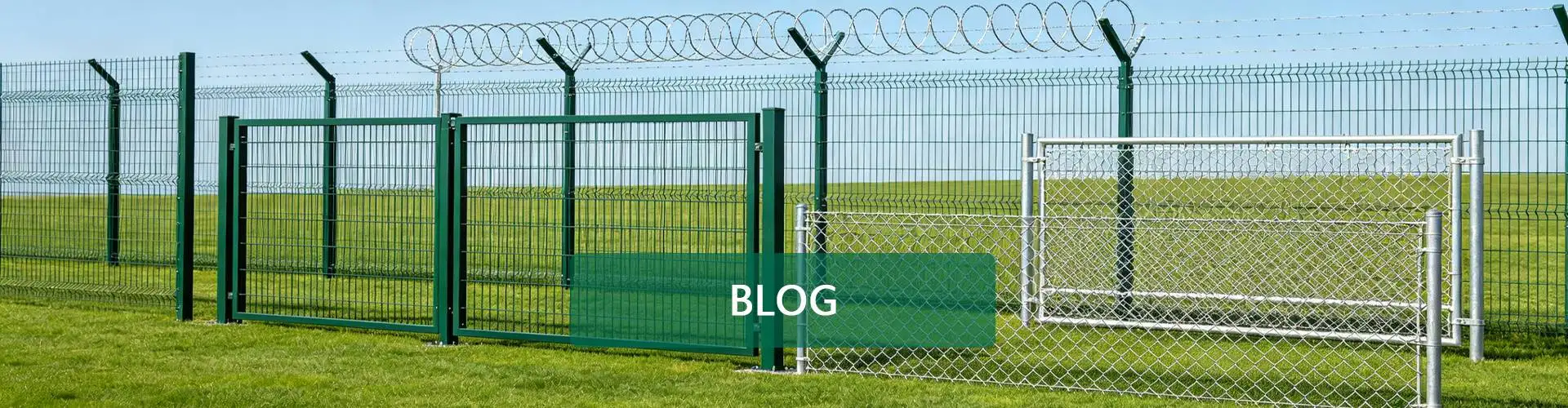

A coastal industrial storage facility in Oman required a perimeter fence around outdoor storage areas, service roads, loading zones, utility sections, and controlled access points.
The project needed a practical fence system for long outdoor perimeter runs, but the coastal environment created an additional concern: corrosion protection.
Salt-bearing air, humidity, road splash, and long-term outdoor exposure meant the fence could not be specified by mesh size and wire diameter alone.
For this project, BDFENCE supplied a Galvanized Chain Link Fence system with galvanized mesh, steel posts, tension components, pedestrian gates, vehicle gates, fittings, and installation accessories.
Project Profile
| Project Item | Details |
|---|---|
| Country | Oman |
| Sector | Industrial Storage |
| Application | Coastal Facility Perimeter |
| Main Product | Galvanized Chain Link Fence |
| Main Requirement | Outdoor Perimeter Control and Corrosion Protection |
| Environment | Coastal and Humid |
| Access | Pedestrian and Vehicle Gates |
| Supply Scope | Mesh, Posts, Gates, Tension Components, Fittings and Accessories |
The Coastal Environment Changed the Fence Specification
The site was located in an environment where salt and humidity could increase corrosion pressure on exposed steel.
Therefore, the project team needed to look beyond the visible Chain Link Mesh.
The complete perimeter included:
- Mesh
- Line posts
- Corner posts
- Terminal posts
- Gate posts
- Gate frames
- Tension components
- Fasteners
If these components use very different protection levels, the fence can age unevenly.
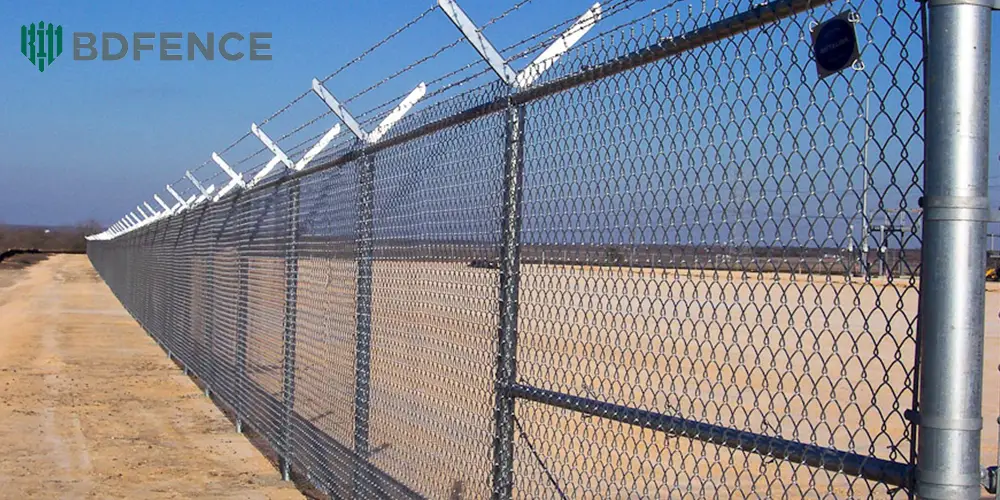
Why Galvanized Chain Link Fence Was Selected
Chain Link Fence provided a practical solution for the long site boundary.
The woven mesh maintained visibility while giving the facility a continuous perimeter around outdoor operational areas.
The galvanized finish added corrosion protection suited to the project’s outdoor environment.
This made the system suitable for a site where function, visibility, and long-term exposure mattered more than decorative appearance.
The Mesh Was Only One Part of the Corrosion Strategy
A common mistake in coastal projects is to focus on galvanized mesh while giving less attention to posts or fittings.
For this project, the corrosion strategy also considered:
- Steel posts
- Gate frames
- Gate posts
- Tension bars
- Brace bands
- Fasteners
- Other exposed fittings
The goal was to create a more consistent system rather than protect only the largest visible component.
Post Bases Needed Extra Attention
The lower part of a fence post can experience different conditions from the upper mesh.
Post bases may be exposed to:
- Standing water
- Wet concrete
- Soil moisture
- Road splash
- Salt accumulation
- Cleaning water
For this reason, drainage and installation details were important around the base of the posts.
A well-protected mesh cannot compensate for poor detailing at the bottom of the support system.
Long Coastal Fence Runs Needed Reliable Tension
The facility included long perimeter sections around storage and service zones.
Chain Link Fence relies on correct mesh tension to maintain alignment.
The project therefore used compatible components such as:
- Tension bars
- Tension bands
- Brace bands
- Wire ties
- Top support components where specified
- Bolts and nuts
- Post caps
These components were treated as part of the complete outdoor system.
Corner and Terminal Posts Had Different Responsibilities
Line posts support normal fence sections.
Corner and terminal posts handle concentrated mesh tension and direction changes.
That made their specification especially important on long perimeter runs.
The project therefore distinguished between:
- Line posts
- Corner posts
- Terminal posts
- Gate posts
This created a better-balanced structure than using one post type throughout the site.
Vehicle Gates Faced Both Movement and Coastal Exposure
The industrial storage facility required wide access for trucks, maintenance vehicles, and deliveries.
Vehicle gates experience more movement than fixed fence sections.
That means the gate area combines:
- Structural load
- Moving hardware
- Repeated daily use
- Outdoor moisture
- Salt exposure
For this reason, gate frames, gate posts, hinges, locks, and other visible hardware needed the same corrosion-protection logic as the main perimeter.
Pedestrian Gates Were Kept Separate from Vehicle Traffic
The facility also needed controlled personnel access.
Separate pedestrian gates allowed staff and visitors to enter without using the main truck entrance.
These gates used matching Chain Link Mesh infill so that the access points remained visually consistent with the surrounding perimeter.
What BDFENCE Supplied
| Component | Project Function |
|---|---|
| Galvanized Chain Link Mesh | Main coastal perimeter |
| Line Posts | Support standard fence runs |
| Corner Posts | Support changes in direction |
| Terminal Posts | Anchor tensioned mesh sections |
| Gate Posts | Support pedestrian and vehicle access |
| Tension Components | Maintain mesh position and stability |
| Pedestrian Gates | Personnel access |
| Vehicle Gates | Truck and service access |
| Fittings and Fasteners | Complete the fence assembly |
Factory Inspection Covered More Than the Mesh
For a coastal project, BDFENCE checked the full component package rather than only the woven mesh.
| Component | Inspection Focus |
|---|---|
| Chain Link Mesh | Mesh opening, wire specification, dimensions and visible finish |
| Steel Posts | Section size, wall thickness, length and surface condition |
| Terminal Components | Compatibility with the tension system |
| Pedestrian Gates | Frame dimensions, alignment and hardware positions |
| Vehicle Gates | Frame structure, gate-post compatibility and hardware |
| Fittings | Type, quantity and visible condition |
Packaging Needed to Protect the Finished Components
Even galvanized steel can be damaged during loading and transport if products move excessively against each other.
BDFENCE therefore organized the shipment by component category.
Mesh rolls were prepared separately, while posts were bundled by type.
Smaller fittings and tension components were packed in identified groups.
Gate components were also separated from standard fence materials.
Installation Started with the Coastal Site Layout
Before the mesh was installed, the contractor confirmed:
- Fence route
- Corner positions
- Terminal points
- Vehicle entrances
- Pedestrian entrances
- Drainage areas
- Changes in ground level
This helped establish the correct post layout before the tensioned mesh was installed.
Typical Installation Sequence
- Confirm the coastal facility perimeter
- Mark corners, terminals and gate openings
- Install line, corner, terminal and gate posts
- Complete the required foundations
- Check drainage around post bases
- Install tension and support components
- Position and tension the Chain Link Mesh
- Secure the mesh to the post system
- Install pedestrian and vehicle gates
- Check alignment, tension and visible surface condition
What the Completed Perimeter Delivered
| Project Requirement | Fence Response |
|---|---|
| Long Site Boundary | Galvanized Chain Link Fence |
| Outdoor Coastal Exposure | Corrosion-protected steel system |
| Visibility | Open woven mesh construction |
| Mesh Stability | Matched post and tension system |
| Personnel Access | Pedestrian gates |
| Truck Access | Vehicle gates |
| System Compatibility | Mesh, posts, gates and fittings supplied together |
Why Coastal Projects Should Not Compare Mesh Price Alone
Two suppliers can quote the same Chain Link Mesh opening and wire diameter while offering very different complete systems.
The differences may appear in:
- Post wall thickness
- Terminal post size
- Gate frame specification
- Corrosion protection
- Fitting quality
- Fastener protection
- Post-base detailing
For a coastal environment, these differences can become more important over time than a small saving on the mesh roll.
The Weakest Component Can Define the Fence Life
A fence does not need every component to corrode before maintenance becomes necessary.
If gate hardware, post bases, or fittings deteriorate earlier than the mesh, the site can face repair work even while most of the fence remains in good condition.
That is why coastal projects should look at the complete protection system rather than one product label.
What Buyers Should Check for a Coastal Chain Link Fence
Before ordering, review:
- Actual wire diameter
- Mesh opening
- Fence height
- Galvanizing requirement
- Line-post specification
- Corner and terminal posts
- Post spacing
- Gate frame protection
- Gate-post protection
- Fitting and fastener protection
- Drainage conditions
- Distance from the coast
This creates a more useful specification than simply requesting “galvanized Chain Link Fence.”
What Should a Coastal Fence RFQ Include?
For a more accurate quotation, send BDFENCE:
- Project country
- Project application
- Distance from the coast if relevant
- Total fence length
- Fence height
- Mesh opening
- Actual wire diameter or gauge standard
- Required galvanizing specification
- Line-post size and wall thickness
- Corner and terminal post requirements
- Post spacing
- Pedestrian gate sizes and quantities
- Vehicle gate sizes and quantities
- Site drawing
- BOQ or fence schedule
- Destination port
If the corrosion-protection system has not yet been finalized, BDFENCE can review the available project environment and technical requirements before preparing the quotation.
Why Choose BDFENCE for Coastal Chain Link Fence Projects?
Hebei Bendin Industrial Technology Co., Ltd. (BDFENCE) manufactures Chain Link Fence systems for coastal facilities, warehouses, industrial plants, logistics yards, solar farms, utility sites, and infrastructure projects.
Our project supply can include:
- Galvanized Chain Link Fence
- PVC-coated Chain Link Fence
- Different mesh openings and wire diameters
- Line, corner, and terminal posts
- Pedestrian gates
- Vehicle gates
- Gate posts
- Tension components
- Fence fittings and accessories
Project buyers can send site layouts, BOQ documents, gate schedules, and corrosion-protection requirements directly to BDFENCE for review and quotation.
Project Takeaway
For this Oman coastal industrial storage facility, the most important decision was not simply choosing galvanized Chain Link Mesh.
The real challenge was making sure the posts, gates, tension components, fittings, and vulnerable areas near the ground followed the same corrosion-protection strategy.
By treating the perimeter as one complete system, the project reduced the risk of the mesh remaining in good condition while smaller components deteriorated earlier.
For buyers planning a coastal fence project, the environment should be included in the RFQ from the beginning.
Contact BDFENCE
Hebei Bendin Industrial Technology Co., Ltd. (BDFENCE)
Phone:
+86 18703182863
WhatsApp:
+86 18703287372
Email:
info@bd-fence.com
Website:
https://bd-fence.com/
FAQ
Is galvanized Chain Link Fence suitable for coastal environments?
Yes, when the corrosion-protection specification matches the site environment and the posts, gates, fittings, and fasteners use compatible protection.
Why does coastal air increase corrosion risk?
Salt-bearing moisture can increase corrosion pressure on exposed steel, especially around damaged surfaces, post bases, gate hardware, and other vulnerable details.
Should the posts be galvanized too?
The mesh, posts, gate frames, fittings, and other exposed steel components should be reviewed as one corrosion-protection system.
Are gate areas more vulnerable in coastal sites?
They can be because gates combine repeated movement, hinges, locks, frame connections, and outdoor exposure. These areas deserve regular inspection.
Can PVC-coated Chain Link Fence be used near the coast?
Yes. PVC-coated mesh can be considered where the confirmed core wire, coating system, posts, fittings, and project specification suit the environment.
Does drainage affect Chain Link Fence corrosion?
Yes. Poor drainage can keep post bases and lower steel components wet for longer periods, increasing corrosion pressure.
Can BDFENCE supply complete coastal Chain Link Fence systems?
Yes. BDFENCE can supply mesh, posts, tension components, pedestrian gates, vehicle gates, fittings, and other project accessories.
Can I send a coastal site BOQ for quotation?
Yes. BDFENCE can review the BOQ, site layout, corrosion-protection requirements, gate schedule, and fence specification before preparing a quotation.