


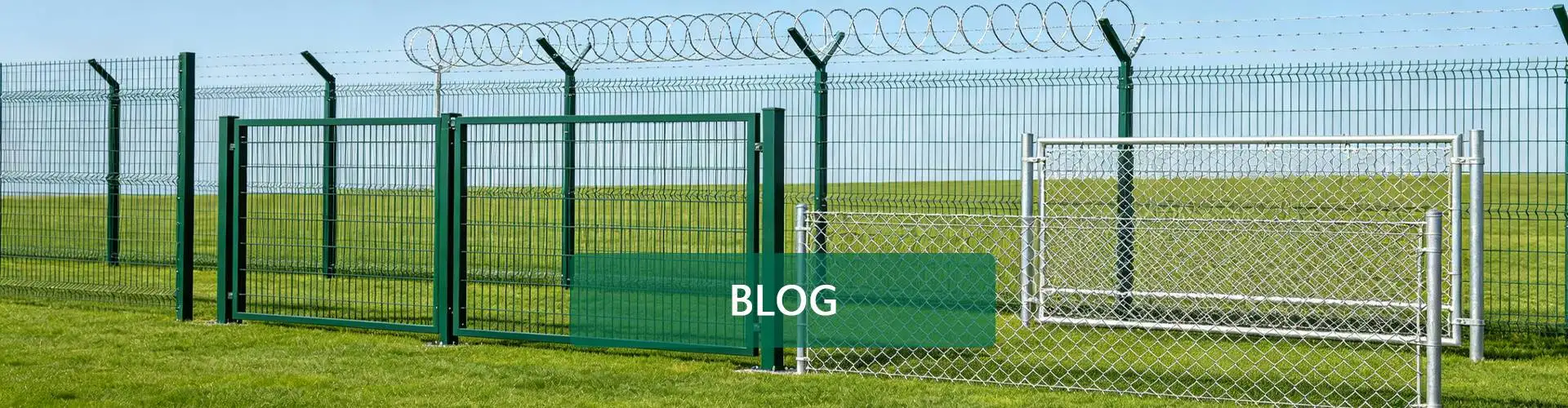
A South African buyer requests a quotation for diamond mesh fencing. Another supplier calls the same product chain link fencing. A third sends a quotation for welded mesh. Are these offers describing the same material?
Not necessarily. Chain link fencing and diamond mesh fencing usually refer to the same type of woven wire mesh. Welded mesh, however, uses a different construction method. That distinction matters when a contractor compares technical specifications or prepares a bill of quantities.
For importers, fencing contractors and industrial project buyers, the product name is only the starting point. Mesh opening, wire diameter, edge finish, coating and supporting components determine what the supplier actually delivers.
This guide explains how South African buyers use these terms, what local project specifications may require, and how to compare quotations for Chain Link Fence without confusing different products.
Key Takeaways
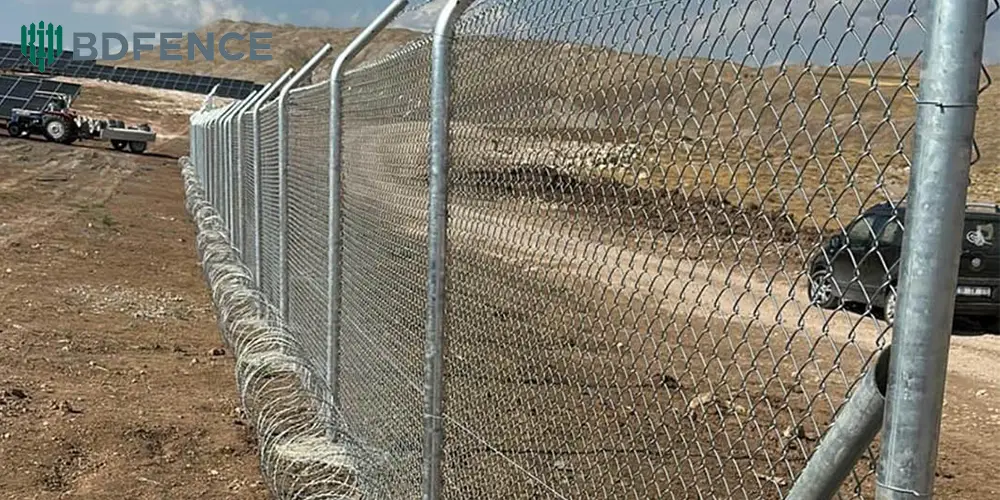
- Chain link fencing and diamond mesh fencing usually describe the same woven wire product in South Africa.
- Welded mesh is different because the wires join at fixed welded intersections.
- Mesh opening, wire diameter, edge finish and galvanizing requirements must be stated separately.
- South African project documents may refer to SANS 1373, but buyers should check the exact requirements in the relevant tender and drawings.
- Compare posts, gates, fittings and delivery scope along with the mesh price.
Chain Link vs Diamond Mesh: Is There a Real Difference?
In most ordinary fencing enquiries, the two terms refer to the same product. Chain link describes the familiar woven fence, while diamond mesh describes the shape of its openings.
Each wire forms a continuous woven pattern with diamond-shaped spaces between adjacent strands. The mesh can flex, which helps it follow changes in ground level when the contractor uses a suitable installation method.
South African technical documents also use the terms together. For example, public-sector specifications describe diamond mesh as chain-link fencing and then define the required wire diameter, mesh size and galvanizing. The technical requirements, rather than the product name alone, determine what the contractor must supply.
So why do buyers sometimes treat the names as different products?
Suppliers may use different names for particular product ranges, finishes or mesh configurations. One catalogue might group several products under Diamond Mesh, while another uses Chain Link Fence as the main category. Neither label tells the buyer enough to approve a purchase.
When requesting a quotation, state the actual dimensions and material requirements. If a tender uses the term diamond mesh, keep that wording in the enquiry, but attach the relevant drawing or specification as well.
Diamond Mesh and Welded Mesh Are Different Products
This is the comparison that matters when a supplier offers an alternative to chain link fencing.
Chain link mesh uses woven wire strands to create continuous diamond-shaped openings. Welded mesh uses separate wires joined at their intersections. As a result, the two products behave differently during handling and installation.
| Feature | Chain Link / Diamond Mesh | Welded Mesh |
|---|---|---|
| Construction | Woven wire strands | Wires joined at welded intersections |
| Opening shape | Diamond-shaped | Usually square or rectangular |
| Flexibility | Flexible and tensioned during installation | More rigid in panel form |
| Supply format | Commonly supplied in rolls | Commonly supplied in panels or sheets |
| Ground adaptation | Can follow gradual changes in ground level when installed correctly | May need stepped panels or other planned transitions |
| Typical applications | Boundaries, enclosures, sports areas and selected industrial uses | Property boundaries, equipment enclosures and specified security systems |
Neither construction is automatically better for every site. The right choice depends on the intended application, required mesh opening, support structure, installation conditions and project specification.
For example, a contractor replacing an existing woven fence may prefer chain link mesh because it matches the original system. A project designed around rigid welded panels may require welded mesh instead.
If a supplier proposes switching from woven mesh to welded panels, treat that change as a product substitution. Check the technical requirements before accepting it.
Mesh Size: What Should South African Buyers Specify?
Mesh size describes the opening formed by the wire. However, suppliers may use different nominal openings for different applications, so buyers should not assume that every chain link product has the same dimensions.
South African specifications provide useful examples. Some public-sector documents specify diamond mesh with a nominal 64 × 64 mm opening and 2.5 mm wire. Other products on the market use openings around 40 mm or 50 mm, with different wire diameters.
These examples do not establish one universal specification for South Africa. The relevant tender, drawing and intended application determine the required product.
Before comparing quotations, confirm three things:
- Mesh opening: State the required dimensions and how the supplier measures them.
- Wire diameter: Specify the required steel wire diameter in millimetres.
- Measurement convention: Make clear whether the stated opening refers to the nominal mesh dimension or another measurement defined by the project.
It is also worth checking the opening against the intended use. A sports facility, animal enclosure and industrial boundary may have different requirements. A mesh suitable for one application should not automatically be assumed suitable for another.
Wire Diameter and Coating Affect the Quotation
Two chain link rolls can have the same height, length and nominal mesh opening but still differ in material weight and cost.
Wire diameter is one reason. A thicker wire contains more steel per unit length, which affects material consumption and the weight of the finished mesh. That can also influence packing and freight costs for imported orders.
Coating adds another variable. Galvanized wire carries a zinc coating to protect the steel against corrosion. PVC-coated mesh adds a polymer layer and may be available in different colours.
However, a product described simply as galvanized does not reveal every detail of its coating specification. The required coating class or mass, applicable standard and acceptance criteria should be confirmed where the project specifies them.
Buyers should also distinguish the steel wire diameter from the finished diameter after coating. These figures are not necessarily identical.
For a project near the coast, corrosion exposure may require particular attention. An inland industrial site can have different environmental conditions. The coating should therefore match the actual location and project requirements rather than rely on a general claim that one finish suits every outdoor application.
When requesting prices, ask suppliers to quote the same mesh opening, wire diameter and protective system. Otherwise, the price comparison may involve different products.
What Does SANS 1373 Mean for a Fencing Enquiry?
South African project specifications may refer to SANS 1373 for diamond mesh or chain link fencing. Public-sector tender documents, for example, can define a nominal mesh size, wire diameter, edge finish and galvanizing requirement alongside that reference.
The important point is that a standard reference does not remove the need to read the project documents.
A tender may specify particular dimensions or finish requirements in addition to naming a standard. Another project may use a different approved configuration. The buyer should identify the exact edition and requirements cited by the contract, then confirm that the proposed product meets them.
Do not assume that a supplier’s general statement that a product complies with SANS 1373 proves compliance with every requirement in the tender. Ask for the relevant technical information or documentation where the contract requires it.
Likewise, avoid copying a wire diameter or mesh size from an unrelated project. A specification that suits one fence does not automatically suit another.
Posts, Tension Wires and Gates Are Part of the System
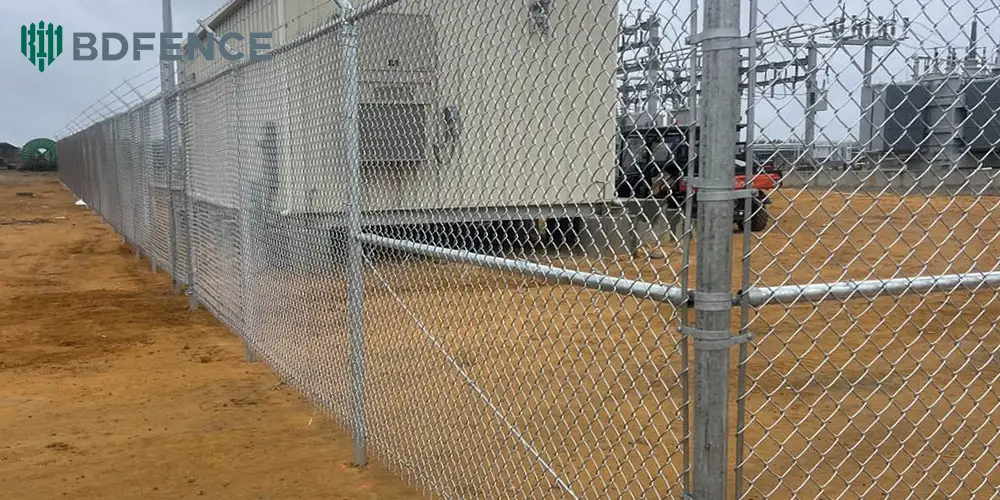
Chain link mesh needs suitable support. The posts, tension components and fittings help hold the fabric in position, so they should appear in the material schedule.
Line posts support the regular fence runs. Terminal posts are used at ends, corners and other locations where the mesh tension terminates or changes. Depending on the design, the system may also include straining wires, tension bars, ties, stays and top rails.
The required components depend on the fence height, layout, ground conditions and installation method. A long straight run does not have the same arrangement as a corner or a vehicle entrance.
Gates also need separate dimensions and hardware requirements. A quotation for mesh rolls alone does not include the full cost of a complete perimeter system.
Before ordering, check whether the supplier includes the posts, fittings, gates and installation accessories. If the contractor plans to source some components locally, list those exclusions clearly.
How to Compare Chain Link Fence Quotes
Imagine two suppliers quoting for the same commercial boundary. Both offer galvanized diamond mesh, but one uses a different wire diameter and excludes the terminal posts.
The first price may look lower. Yet the two offers do not cover the same supply scope.
Use a specification sheet to compare the following items before reviewing the commercial terms.
| Item | What to Confirm |
|---|---|
| Mesh opening | Required dimensions and measurement convention |
| Wire diameter | Steel wire size and applicable tolerances |
| Roll dimensions | Height and length of each roll |
| Edge finish | Knuckled, barbed or another specified finish |
| Surface treatment | Galvanizing or PVC coating and required criteria |
| Posts and fittings | Profiles, lengths, stays, ties and tension components |
| Gates | Opening dimensions, hinges, locking hardware and supports |
| Delivery | Packing, shipping terms, destination and exclusions |
Once the technical offers match, compare the delivery and payment terms. For an overseas order, freight, customs clearance and local transport may affect the final cost, depending on the agreed arrangement.
The goal is not to find the lowest price on the first page of the quotation. It is to identify the supplier offering the required product and supply scope at a competitive total cost.
What to Send a Manufacturer Before Ordering
A product name and estimated fence length can start an enquiry. However, a site layout or bill of quantities gives the manufacturer a clearer basis for preparing a quotation.
For a South African commercial or industrial project, provide the following information where available:
- Fence height and total length.
- Mesh opening and wire diameter.
- Required edge finish and surface treatment.
- Post type and installation method.
- Gate locations and opening dimensions.
- Project standards or tender requirements.
- Quantities, delivery destination and requested shipping terms.
If the design is still under development, mark provisional dimensions clearly. A budget quotation can use stated assumptions, but the final order should follow confirmed specifications and drawings.
Before production begins, check that the quotation, material schedule and latest drawing refer to the same revision. A moved gate or revised fence height can change the quantities and supporting components.
Discuss Your Chain Link Fence Requirements with BDFENCE
BDFENCE is a China-based metal fencing manufacturer supplying overseas contractors, distributors and project buyers. The company has more than 30 years of experience in metal fence manufacturing.
For a South African enquiry, the site layout, mesh specification, wire diameter, post details and bill of quantities help establish the required supply scope.
BDFENCE can review the specified chain link mesh and related components against the information provided. If the project requires a particular coating, edge finish or supporting arrangement, include those requirements in the enquiry.
Where a contract refers to a South African standard, the buyer should identify the applicable project requirements and provide them for review. Compliance claims and any required certification must be confirmed against the actual product and contract.
If you are sourcing diamond mesh fencing for a commercial, industrial or infrastructure project, send your drawings or BOQ through Contact BDFENCE to request a quotation.
FAQ
Is chain link fencing the same as diamond mesh fencing in South Africa?
In ordinary fencing terminology, yes. Both names commonly describe woven wire mesh with diamond-shaped openings. The buyer should still confirm the mesh dimensions, wire diameter and finish.
What mesh size is standard in South Africa?
There is no single opening that suits every application. Some South African specifications use 64 × 64 mm mesh with 2.5 mm wire, while other products use different dimensions. Follow the relevant project specification.
What is the difference between diamond mesh and welded mesh?
Diamond mesh uses woven wire strands, while welded mesh joins wires at their intersections. The two products have different structures and installation characteristics.
Does galvanized chain link fencing comply with SANS 1373 automatically?
No. The product must meet the requirements applicable to the project. Confirm the specified mesh size, wire diameter, edge finish, coating and any required documentation.
What information is needed for a chain link fence quotation?
Provide the fence dimensions, mesh opening, wire diameter, finish, posts, fittings, gates, quantity and delivery destination. A site layout or BOQ helps define the complete supply scope.
Contact BDFENCE
Hebei Bendin Industrial Technology Co., Ltd. (BDFENCE)
Looking for chain link or diamond mesh fencing for a South African project? Send your drawings, BOQ or technical specification for a quotation based on your required mesh, posts, fittings and finish.
Phone: +86 18703182863
WhatsApp: +86 18703287372
Email: info@bd-fence.com
Website: https://bd-fence.com/
Inquiry: Contact BDFENCE