


Choosing the right perimeter fencing system can have a significant impact on project cost, installation efficiency, security, maintenance, and long-term performance.
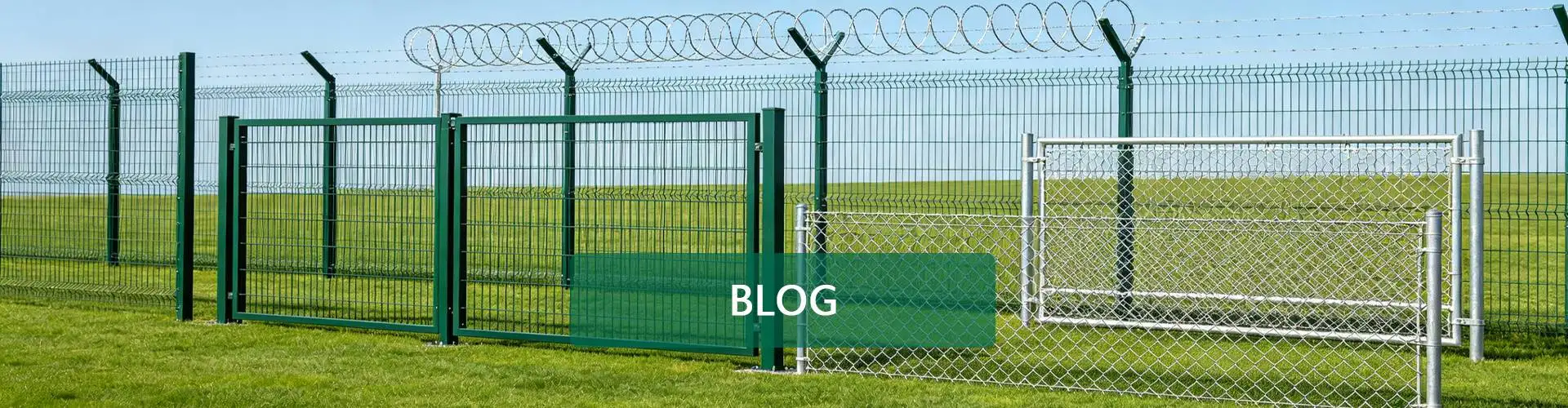
For industrial facilities, logistics centers, warehouses, infrastructure projects, sports facilities, commercial properties, and large perimeter developments, two common options are Chain Link Fence and welded wire fence.
Both systems can provide reliable perimeter protection, but they are designed differently and perform differently under real project conditions.
Chain Link Fence uses flexible woven steel wire mesh, while welded wire fence uses rigid panels created by welding horizontal and vertical wires together.
So which one should you choose?
The answer depends on several factors, including:
- Total perimeter length
- Required security level
- Terrain conditions
- Fence height
- Installation method
- Gate requirements
- Maintenance expectations
- Project budget
This guide compares Chain Link Fence and welded wire fence from a project procurement perspective to help contractors, developers, distributors, and international buyers choose the right system.
Hebei Bendin Industrial Technology Co., Ltd. (BDFENCE) manufactures customized Chain Link Fence systems, steel posts, gates, fence fittings, and complete perimeter fencing packages for international projects.
What Is Chain Link Fence?
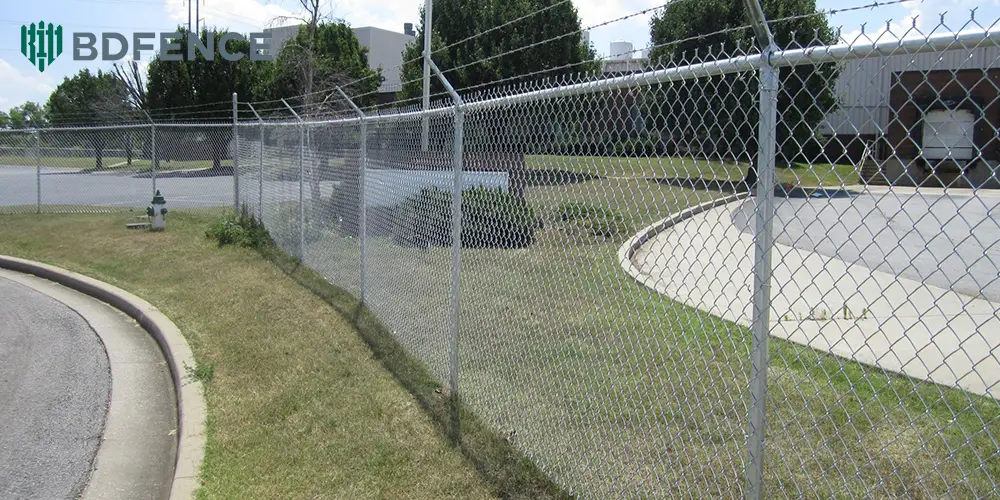
Chain Link Fence is manufactured from steel wire woven into a diamond-shaped mesh.
Depending on the project requirements, the wire can use different corrosion protection systems, including galvanized and PVC-coated finishes.
A complete Chain Link Fence system may include:
- Chain link mesh rolls
- Line posts
- Terminal posts
- Corner posts
- Top rails
- Tension wire
- Tension bars
- Clamps and bands
- Fence fittings
- Pedestrian gates
- Vehicle gates
Because the mesh is flexible and supplied in rolls, Chain Link Fence is particularly suitable for long perimeter boundaries and sites with changing ground conditions.
What Is Welded Wire Fence?
Welded wire fence is manufactured by welding horizontal and vertical steel wires at their intersections to form rigid mesh panels.
Depending on the design, welded mesh panels can include flat panels, reinforced bends, or specialized mesh configurations.
A typical welded wire fencing system includes:
- Welded mesh panels
- Steel posts
- Panel clamps or brackets
- Fasteners
- Post caps
- Pedestrian gates
- Vehicle gates
Because the panels are rigid, welded wire fencing often provides a more structured and uniform appearance than flexible woven mesh.
Chain Link Fence vs Welded Wire Fence: Quick Comparison
| Feature | Chain Link Fence | Welded Wire Fence |
|---|---|---|
| Construction | Woven steel wire mesh | Welded steel wire panel |
| Structure | Flexible | Rigid |
| Typical Supply | Mesh rolls | Individual panels |
| Long Perimeter Economy | Excellent | Good |
| Uneven Terrain Adaptability | Excellent | More planning required |
| Appearance | Functional | More structured |
| Visibility | Excellent | Excellent |
| Installation | Flexible system | Panel-based system |
| Customization | High | High |
| Typical Application | Large perimeter projects | Commercial and industrial projects |
1. Which Fence Is More Economical for Large Projects?
For projects involving several kilometers of perimeter, cost can become one of the most important purchasing considerations.
Chain Link Fence Cost Advantage
Chain Link Fence is often selected for large perimeter projects because its woven mesh structure can provide efficient coverage with relatively straightforward material requirements.
It can be particularly attractive for:
- Industrial facilities
- Logistics centers
- Warehouses
- Railway boundaries
- Utility sites
- Sports facilities
- Large land boundaries
However, the final cost depends heavily on wire diameter, mesh opening, fence height, coating, posts, gates, and fence fittings.
Welded Wire Fence Cost
Welded wire fence can have a higher initial material cost depending on the panel design, wire diameter, reinforcement, post system, and coating specification.
Its rigid panel format can provide additional value when the project prioritizes a structured appearance or specific panel-based security requirements.
Which Is Cheaper?
For very long general-purpose boundaries, Chain Link Fence is often the more economical option.
However, buyers should compare complete systems rather than mesh or panel prices alone.
2. Which Fence Is Better for Uneven Terrain?
Terrain is one of the most important differences between Chain Link Fence and rigid welded mesh panels.
Chain Link Fence on Slopes
Because Chain Link Fence uses flexible woven mesh, it can adapt more easily to gradual changes in ground elevation.
This can make it practical for:
- Sloping industrial sites
- Large rural boundaries
- Infrastructure corridors
- Utility projects
- Irregular perimeter routes
Welded Wire Fence on Slopes
Rigid welded panels require more careful planning where the ground level changes.
Depending on the project design, panels may need to be stepped or otherwise coordinated with the site profile.
Which Is Better for Irregular Ground?
For projects with frequent elevation changes, Chain Link Fence generally provides greater installation flexibility.
3. Which Fence Is Stronger?
This question cannot be answered simply by saying that one product is always stronger than the other.
Fence performance depends on the complete specification.
Chain Link Fence Strength Depends On:
- Wire diameter
- Mesh opening
- Fence height
- Post size
- Post spacing
- Tension system
- Fence fittings
- Foundation design
Welded Wire Fence Strength Depends On:
- Wire diameter
- Mesh opening
- Panel reinforcement
- Panel height
- Post size
- Post spacing
- Connection system
- Foundation design
A heavy-duty Chain Link Fence can provide better performance than a light welded mesh system, while a specialized welded panel can outperform a basic chain link specification.
International buyers should therefore compare equivalent technical specifications rather than product names alone.
4. Which Fence Provides Better Visibility?
Both systems can provide excellent visibility, making them suitable for facilities where security personnel or CCTV systems need to observe areas beyond the perimeter.
Chain Link Fence Visibility
The diamond-shaped open mesh provides clear visibility across long perimeter sections.
This is useful for:
- Industrial security patrols
- Warehouses
- Sports facilities
- Parking areas
- Infrastructure projects
Welded Wire Fence Visibility
Welded mesh panels also maintain open visibility, although the visual effect depends on mesh size and wire configuration.
Which Is Better?
For most general perimeter applications, both systems provide good visibility. The decision should therefore be based on other factors such as security, appearance, terrain, and project cost.
5. Which Fence Looks Better?
Appearance can be important for commercial and public-facing projects.
Chain Link Fence Appearance
Chain Link Fence has a functional and familiar appearance.
PVC-coated Chain Link Fence can provide a more integrated visual finish for landscaped, sports, commercial, and recreational environments.
Welded Wire Fence Appearance
Rigid welded panels generally create straighter visual lines and a more structured appearance.
For commercial developments where visual presentation is important, this may provide an advantage.
Which Is Better for Appearance?
Welded wire fencing generally provides a more structured architectural appearance, while Chain Link Fence is particularly strong where functionality and long-perimeter economy are the main priorities.
6. Galvanized vs PVC-Coated Chain Link Fence
One advantage of Chain Link Fence is the ability to select different surface finishes according to the project environment and appearance requirements.
Galvanized Chain Link Fence
Galvanized Chain Link Fence is commonly used for industrial, infrastructure, logistics, utility, and general perimeter applications.
Its advantages include:
- Corrosion protection
- Functional industrial appearance
- Wide application range
- Suitability for large perimeter projects
PVC-Coated Chain Link Fence
PVC-coated Chain Link Fence adds a polymer coating over the wire system and can provide a different visual finish.
It is commonly considered for:
- Sports facilities
- Schools
- Residential developments
- Commercial areas
- Landscaped boundaries
Buyers should confirm whether the specified wire diameter refers to the steel core or the finished coated diameter when requesting quotations.
7. Which Fence Is Easier to Install?
Installation methods differ significantly because Chain Link Fence uses continuous woven mesh while welded wire fencing uses rigid individual panels.
Chain Link Fence Installation
A typical Chain Link Fence installation includes:
- Fence line layout
- Post positioning
- Foundation preparation
- Post installation
- Top rail or tension system installation
- Mesh unrolling
- Mesh tensioning
- Fence fittings installation
- Gate installation
The continuous mesh structure can be particularly efficient along long and irregular perimeter routes.
Welded Wire Fence Installation
A welded wire fence typically requires each panel to be individually positioned and fixed between posts.
This can provide consistent panel alignment but requires accurate post spacing.
Which Is Easier?
For long boundaries and changing terrain, Chain Link Fence can provide greater flexibility. For repetitive flat sections, welded panel systems can also be installed efficiently when posts and panels are correctly coordinated.
8. Gates and Access Control
Large perimeter projects often include multiple pedestrian, vehicle, maintenance, and emergency access points.
Both Chain Link Fence and welded wire fencing can be integrated with gates.
Chain Link Fence Gates
A complete Chain Link Fence project can include:
- Single pedestrian gates
- Double-leaf vehicle gates
- Maintenance gates
- Customized project gates
Gate frames can use matching chain link mesh infill to maintain visual consistency with the surrounding fence.
Why Gate Planning Matters
Gate requirements should be confirmed before production because they can affect:
- Gate post specifications
- Foundation requirements
- Fence termination points
- Fence fittings
- Installation layout
9. Why Fence Fittings Matter in Chain Link Fence Projects
Chain Link Fence is a complete tensioned fencing system, which means small connection components can have a major impact on installation.
Depending on the design, a project may require:
- Tension bars
- Tension bands
- Brace bands
- Rail ends
- Post caps
- Clamps
- Tie wires
- Bolts and nuts
- Gate hinges
- Gate locking hardware
For large international projects, missing fittings can interrupt installation even when all mesh rolls and posts have already arrived on site.
For this reason, buyers should confirm the complete fence fittings list before production and shipment.
10. Chain Link Fence vs Welded Wire Fence for Industrial Projects
Industrial sites often have long boundaries, service areas, vehicle entrances, storage zones, and different security requirements across the property.
Chain Link Fence can be particularly practical where the project requires:
- Long perimeter coverage
- Good visibility
- Flexible installation
- Multiple gate locations
- Competitive project cost
Welded wire fencing may be preferred around more visible areas or locations where a rigid panel appearance is required.
11. Chain Link Fence vs Welded Wire Fence for Logistics Centers
Logistics centers and warehouses can require several kilometers of fencing around truck yards, storage areas, employee parking, and operational zones.
For these projects, Chain Link Fence can provide an effective balance between perimeter coverage and budget.
Typical applications include:
- Truck yards
- Warehouse boundaries
- Parking areas
- Service roads
- Equipment storage zones
Where the main entrance requires a more architectural appearance, another fence type can be used together with Chain Link Fence as part of a mixed perimeter strategy.
12. Chain Link Fence vs Welded Wire Fence for Sports Facilities
Sports facilities are another major application where buyers frequently compare Chain Link Fence with welded wire fencing.
Chain Link Fence is widely considered for:
- Tennis courts
- Football fields
- Baseball facilities
- Training grounds
- School sports areas
- Multi-purpose sports complexes
Why Chain Link Fence Works Well for Sports Projects
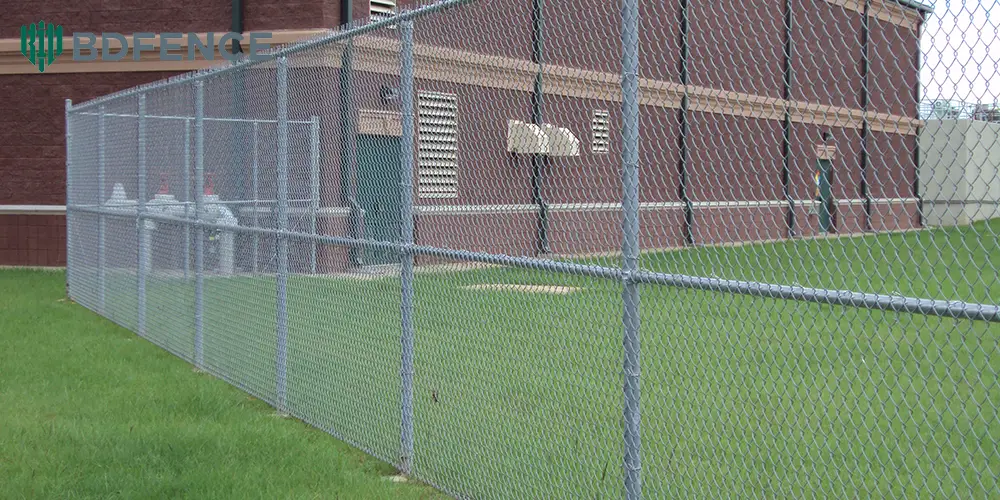
The flexible woven mesh structure provides excellent visibility while allowing tall fence configurations to be manufactured for ball containment and boundary separation.
PVC-coated Chain Link Fence can also provide a more integrated appearance for recreational and landscaped environments.
When Welded Wire Fence May Be Preferred
Welded wire fencing can be suitable where the project requires rigid panels, a structured appearance, or a specific architectural design.
13. Chain Link Fence vs Welded Wire Fence for Infrastructure Projects
Infrastructure projects can involve extremely long perimeter routes, irregular terrain, multiple access points, and demanding logistics.
Typical applications include:
- Railway infrastructure
- Utility facilities
- Water treatment facilities
- Energy projects
- Transportation facilities
- Large industrial developments
Chain Link Fence can offer advantages where long-distance coverage and terrain flexibility are important.
Welded wire fence may be selected where rigid panel construction or a particular security specification is required.
14. Which Fence Is Better for Security?
Security should be evaluated according to the complete fencing system rather than simply choosing between woven and welded mesh.
| Security Factor | Chain Link Fence | Welded Wire Fence |
|---|---|---|
| Boundary Control | Good | Good |
| Visibility | Excellent | Excellent |
| Structural Rigidity | Flexible Mesh | Rigid Panel |
| Anti-Climb Performance | Specification Dependent | Mesh Design Dependent |
| Height Customization | Excellent | Excellent |
| Security Gate Integration | Good | Good |
For ordinary industrial and commercial perimeter protection, either system may be suitable depending on the specification.
For high-security facilities requiring specialized anti-climb performance, buyers should evaluate purpose-designed security fencing rather than assuming that a standard Chain Link Fence or conventional welded wire panel will meet the requirement.
15. Chain Link Fence vs Welded Wire Fence Cost Comparison
For procurement teams, one of the biggest questions is often:
Which fence provides the lower total project cost?
There is no universal answer because both systems can be manufactured in many different specifications.
Chain Link Fence Cost Factors
The price of Chain Link Fence depends on:
- Wire diameter
- Mesh opening
- Fence height
- Roll length
- Galvanizing specification
- PVC coating if required
- Post dimensions
- Post spacing
- Top rail requirements
- Tension system
- Fence fittings
- Gate quantities
Welded Wire Fence Cost Factors
The price of welded wire fencing depends on:
- Wire diameter
- Mesh dimensions
- Panel height
- Panel width
- Panel reinforcement
- Post dimensions
- Connection system
- Surface treatment
- Gate requirements
Which Is More Cost-Effective for Long Perimeters?
For many general-purpose projects involving several kilometers of boundary fencing, Chain Link Fence can provide a strong cost advantage because of its roll-based woven structure and flexible installation.
However, buyers should compare the complete system price rather than only the mesh price.
16. Mesh Price vs Complete Fence System Price
One of the most common mistakes in international Chain Link Fence procurement is comparing a mesh-only quotation with a complete fencing system quotation.
| Quotation Type | Typical Scope |
|---|---|
| Mesh Only | Chain Link Fence rolls |
| Basic System | Mesh + posts + basic fittings |
| Complete Fence System | Mesh + posts + rails/tension system + fence fittings + gates |
| Project Package | Complete system + project packaging + export support |
A mesh-only price may look significantly lower but does not represent the total material cost required to complete the perimeter.
17. Which Fence Requires Less Maintenance?
Maintenance requirements depend primarily on material quality, coating system, environmental exposure, installation quality, and physical damage during service.
Chain Link Fence Maintenance
Typical inspection areas include:
- Mesh tension
- Post alignment
- Fence fittings
- Gate hinges
- Gate locking components
- Surface corrosion
- Local mesh damage
One advantage of Chain Link Fence is that localized mesh sections and individual fittings can often be addressed without replacing an entire long perimeter section.
Welded Wire Fence Maintenance
Inspection typically focuses on:
- Panel condition
- Post alignment
- Panel-to-post connections
- Coating damage
- Gate components
Which Has a Longer Service Life?
Service life should not be determined by fence type alone.
A correctly specified and properly maintained galvanized or coated Chain Link Fence can provide long-term outdoor service, while welded wire fencing can also provide durable performance with an appropriate corrosion protection system.
18. 8 Common Mistakes When Buying Chain Link Fence
Mistake 1: Comparing Only Price Per Meter
A low price per meter can result from a lighter wire, larger mesh opening, smaller posts, fewer fence fittings, or a different coating specification.
Always compare equivalent specifications.
Mistake 2: Not Confirming Wire Diameter
Wire diameter has a significant impact on steel consumption, mesh weight, performance, and price.
For coated products, buyers should also confirm whether the stated diameter refers to the steel core or the finished coated wire.
Mistake 3: Ignoring Mesh Opening
Mesh opening affects steel consumption, appearance, and the functional characteristics of the fence.
A 50 × 50 mm mesh should not be compared directly with a larger mesh specification without considering the difference in material usage.
Mistake 4: Focusing on Mesh but Ignoring Posts
The supporting post system is a major part of the complete fence.
Confirm:
- Post diameter or section
- Wall thickness
- Post length
- Post spacing
- Surface treatment
Mistake 5: Forgetting Fence Fittings
Small accessories can stop installation if they are missing from an international shipment.
The complete fittings list should be confirmed before ordering.
Mistake 6: Treating Gates as a Separate Issue
Gate quantities and dimensions should be confirmed during the fence design stage because they affect posts, fittings, foundations, and material quantities.
Mistake 7: Ignoring Export Packaging
International projects require packaging that supports transportation, unloading, material identification, and site distribution.
Mistake 8: Choosing the Lowest Quotation Without Checking Scope
A cheaper quotation may exclude posts, gates, fittings, packaging, or other necessary components.
Always compare the complete scope of supply.
19. How to Choose the Right Chain Link Fence Specification
Before requesting quotations, buyers should define the main technical requirements of the project.
Fence Height
Select the height according to the intended application, perimeter security requirements, and project design.
Mesh Opening
Common mesh configurations vary according to the application. Buyers should specify the exact required opening rather than simply requesting “standard Chain Link Fence.”
Wire Diameter
The required wire diameter should be clearly stated in the RFQ and BOQ.
Surface Treatment
Confirm whether the project requires:
- Galvanized Chain Link Fence
- PVC-Coated Chain Link Fence
- Another project-specific corrosion protection system
Post System
Define:
- Line posts
- Terminal posts
- Corner posts
- Gate posts
- Post dimensions
- Wall thickness
- Post spacing
Top Rail or Tension System
Depending on the fence design, the system may use top rails, tension wires, brace components, or a combination of these elements.
Gate Requirements
Prepare a gate schedule showing:
- Gate quantity
- Gate width
- Gate height
- Pedestrian or vehicle use
- Single or double leaf configuration
- Locking requirements
20. How to Compare Chain Link Fence Suppliers
Once the technical specification has been established, supplier evaluation should cover more than the quoted price.
Manufacturing Capability
Evaluate whether the supplier can provide:
- Chain link mesh production
- Steel post manufacturing
- Gate fabrication
- Fence fittings
- Customized project specifications
Quality Control
Important inspection items can include:
- Wire diameter
- Mesh opening
- Roll dimensions
- Post dimensions
- Wall thickness
- Surface treatment
- Gate dimensions
- Accessory quantities
Large-Order Capability
For infrastructure, logistics, industrial, and commercial projects, buyers should evaluate whether the supplier can maintain specification consistency across large production quantities.
Customization Capability
Project requirements may include customized:
- Fence heights
- Mesh openings
- Wire diameters
- Post specifications
- Gate dimensions
- Surface treatments
Export Experience
International procurement also requires experience with:
- Export packaging
- Container loading
- Product identification
- Shipping documentation
- International delivery coordination
21. What Should You Send for a Chain Link Fence Quotation?
A detailed RFQ allows the manufacturer to prepare a more accurate technical and commercial proposal.
Whenever possible, provide:
- Total fence length
- Fence height
- Mesh opening
- Wire diameter
- Surface treatment
- Roll dimensions
- Post dimensions
- Post wall thickness
- Post spacing
- Top rail requirements
- Tension wire requirements
- Fence fittings requirements
- Gate schedule
- Project drawings
- BOQ documents
- Destination country or port
What If the Final Specification Is Not Ready?
Buyers at an early project stage can provide the application, approximate perimeter length, required height, project environment, gate requirements, and destination.
The supplier can then discuss available configurations before the final specification is approved.
22. Chain Link Fence vs Welded Wire Fence: Final Selection Guide
| Project Priority | Recommended Direction |
|---|---|
| Very Long Perimeter | Chain Link Fence |
| Uneven or Changing Terrain | Chain Link Fence |
| Large Project Cost Efficiency | Chain Link Fence |
| Rigid Panel Structure | Welded Wire Fence |
| Structured Visual Appearance | Welded Wire Fence |
| Sports Facility | Chain Link Fence Often Preferred |
| Industrial Perimeter | Both Can Be Suitable |
| Logistics Center | Chain Link Fence Often Cost-Effective |
| High-Security Anti-Climb Requirement | Evaluate Specialized Security Fencing |
The correct solution depends on the approved project requirements. Buyers should consider the complete perimeter system rather than selecting a fence based on one feature alone.
Why Choose BDFENCE for Chain Link Fence Projects?
Hebei Bendin Industrial Technology Co., Ltd. (BDFENCE) manufactures customized Chain Link Fence systems for international distributors, contractors, developers, industrial companies, and infrastructure project buyers.
Customized Chain Link Fence Manufacturing
BDFENCE can manufacture according to project requirements for:
- Fence height
- Mesh opening
- Wire diameter
- Roll dimensions
- Surface treatment
- Post specifications
- Gate configurations
Complete Fence System Supply
BDFENCE can provide:
- Galvanized Chain Link Fence
- PVC-Coated Chain Link Fence
- Steel posts
- Top rails
- Tension components
- Fence fittings
- Pedestrian gates
- Vehicle gates
- Installation accessories
Support for Project Drawings and BOQ
International customers can provide drawings, BOQ documents, gate schedules, technical specifications, and other project information for quotation evaluation.
Bulk Production and Export Support
For large international orders, BDFENCE can support:
- Technical specification confirmation
- Production planning
- Quality inspection
- Export packaging
- Container loading
- Shipping documentation
- International shipment coordination
Conclusion: Chain Link Fence or Welded Wire Fence?
Chain Link Fence and welded wire fence are both practical perimeter fencing systems, but each has different strengths.
Chain Link Fence is particularly attractive for long boundaries, uneven terrain, sports facilities, logistics centers, industrial sites, and projects where flexible installation and cost efficiency are important.
Welded wire fencing can provide advantages where rigid panel construction and a more structured appearance are priorities.
For large projects, the best choice should be based on:
- Security requirements
- Perimeter length
- Terrain
- Appearance
- Gate requirements
- Installation conditions
- Project budget
Instead of asking only:
“Which fence is cheaper?”
A better procurement question is:
“Which fencing system provides the right performance and lowest practical total project cost for this site?”
BDFENCE provides customized Chain Link Fence systems, posts, gates, fence fittings, export packaging, and international project support for global buyers.
Contact BDFENCE for Your Chain Link Fence Project
Hebei Bendin Industrial Technology Co., Ltd. (BDFENCE)
Website: https://bd-fence.com/
Phone: +86 18703182863
WhatsApp: +86 18703287372
Email: info@bd-fence.com
FAQ
Is Chain Link Fence cheaper than welded wire fence?
Chain Link Fence can be more economical for long general-purpose perimeters, but the final cost depends on wire diameter, mesh opening, height, posts, coating, gates, fence fittings, and order quantity. Buyers should compare equivalent complete systems.
Which fence is better for uneven ground?
Chain Link Fence generally offers greater flexibility on gradual slopes and irregular terrain because the woven mesh is flexible. Rigid welded panels usually require more planning where ground levels change.
Is Chain Link Fence suitable for industrial projects?
Yes. Chain Link Fence is widely applicable to industrial facilities, warehouses, logistics centers, utility sites, storage areas, and other large perimeter projects.
Is galvanized or PVC-coated Chain Link Fence better?
The right option depends on the project environment and appearance requirements. Galvanized fencing is commonly used for industrial and infrastructure applications, while PVC-coated fencing can provide an additional coated finish for sports, commercial, residential, and landscaped areas.
Can Chain Link Fence be used for sports facilities?
Yes. Chain Link Fence is suitable for many tennis courts, sports fields, training areas, and other recreational facilities because it provides visibility and can be manufactured in taller configurations according to project requirements.
What fence fittings are required for Chain Link Fence?
Depending on the system, fittings may include tension bars, tension bands, brace bands, rail ends, post caps, clamps, tie wires, bolts, nuts, gate hinges, and locking components.
Can BDFENCE supply gates with Chain Link Fence?
Yes. BDFENCE can manufacture pedestrian and vehicle gates together with compatible posts, hinges, locking components, mesh infill, and fence fittings.
Can BDFENCE manufacture according to drawings and BOQ?
Yes. Buyers can provide project drawings, BOQ documents, technical specifications, gate schedules, and destination information for quotation evaluation.
What information should I send for a Chain Link Fence quotation?
Provide the total fence length, height, mesh opening, wire diameter, surface treatment, post specifications, gate requirements, fence fittings requirements, and destination. Drawings and BOQ documents are also helpful for project quotations.