


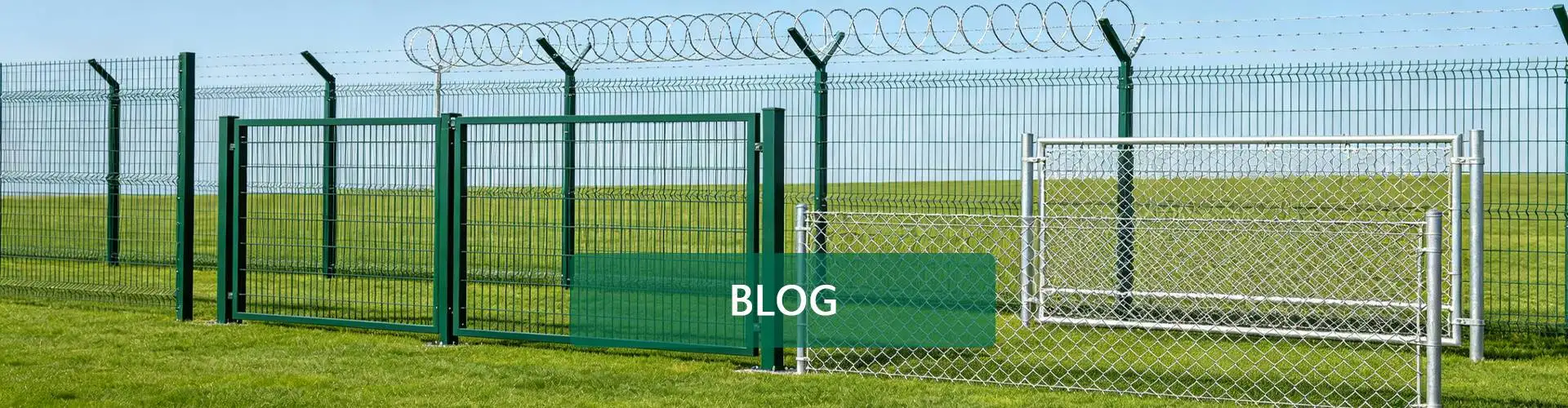
How high should a sports field fence be? That is often the first question a contractor asks. Yet height is only part of the decision. A fence behind a football goal has a different job from one beside a school walkway, and the mesh around a tennis court may need to meet different ball-containment requirements.
These differences affect the material order. Choose the wrong mesh opening, and the fence may not suit the intended sport. Select a coating without considering the local environment, and the owner may face avoidable maintenance work later.
Chain Link Fence offers a flexible way to enclose sports grounds because contractors can choose different mesh sizes, wire diameters, heights and finishes. The challenge is matching those options to the playing area rather than buying a standard product simply because it appears in a catalogue.
Key Takeaways
- Choose mesh opening according to the sport, ball size and intended use of the surrounding area.
- Set fence height for each section instead of assuming the entire sports ground needs one height.
- Compare wire diameter and coating requirements, not just the mesh opening.
- Check posts, tension components, gates and ground clearance alongside the mesh.
- For a reliable quotation, send the supplier a site layout, specification and bill of quantities.
Start with the Game Played Behind the Fence
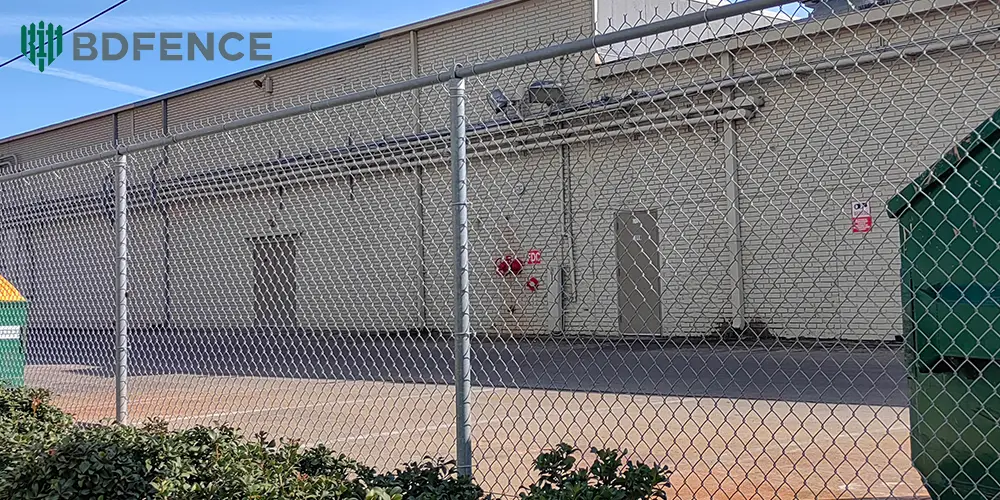
A football field, tennis court and multi-purpose school ground do not place identical demands on a fence. Before choosing mesh, look at the ball, the playing area and what lies beyond the boundary.
For example, a fence behind a football goal may need to contain balls that travel over the goal line. A tennis court has its own ball-containment needs, while a school recreation area may serve several activities throughout the week.
That last situation can make the decision harder. One part of the site may need a taller fence, while another can use a lower boundary that leaves the surroundings more open.
Start with a drawing of the playing area. Mark the sidelines, end zones, entrances, paths and nearby facilities. Then decide which sections need the same specification and which need a different arrangement.
This simple step helps the contractor avoid ordering one standard height for the whole site when the design calls for more than one.
Mesh Opening: What Are You Trying to Keep Inside?
The mesh opening controls the size of the spaces between the wires. A smaller opening leaves less space between adjacent wires, while a larger opening creates a more open pattern.
For sports fencing, the choice should follow the intended use. The designer needs to consider the ball, the direction of play and the risk of balls leaving the playing area. A product that works well for one sport may not suit another.
There is another point worth checking: mesh opening and wire diameter describe different things. A supplier can offer the same nominal opening with a different wire size, so the two products may have different material weights and physical characteristics.
When requesting a quotation, state the opening in millimetres. Also, ask the supplier to confirm how the drawing measures it. Clear dimensions make it easier to compare quotations without guessing what each supplier means.
If the sports facility has an approved technical specification, use it as the reference. Otherwise, discuss the intended sport and ball-containment needs with the project designer before selecting a mesh from a catalogue.
Wire Diameter Can Change the Price
Two rolls of chain link mesh may look similar from a distance, yet their wire diameters can differ. That difference affects how much steel goes into the product.
Consider a simple comparison. A 4.0 mm round wire has more steel cross-sectional area than a 3.0 mm wire of the same length. In a large fencing order, that difference can affect total material weight, handling and freight costs.
However, thicker wire is not automatically the right choice for every sports ground. The specification should match the intended use, the required durability and the overall fence design.
When comparing offers, check the wire diameter in millimetres rather than relying on a general description such as “heavy-duty mesh”. If the project uses a gauge number, ask the supplier to state the corresponding diameter and applicable standard.
Coated wire needs one extra check. Does the quoted diameter refer to the steel core or the finished wire after coating? These measurements can differ, so the buyer should make the definition clear before approving the order.
Fence Height: Don’t Treat Every Side the Same
The correct height depends on the sport, the layout and the purpose of each fence section. A single height may suit a small recreation area, but a larger facility may need a different arrangement behind the goals or around a court.
Before setting the height, check the available space outside the playing area. A boundary beside a public path may need to balance ball containment with visibility and pedestrian access. By contrast, a section behind a goal may need to account for balls travelling farther beyond the playing line.
For a multi-purpose sports ground, the design team should decide whether one continuous height will work or whether selected sections need a higher fence. The answer should come from the intended activities and approved design requirements, not a universal height recommendation.
Also, make sure the specification defines what the height measures. Mesh height and total fence height can differ when the design includes an extension above the mesh.
Once the height is confirmed, check the supporting posts and foundations. Taller fencing can change the loads on the supporting structure, so the project engineer needs to assess the post and foundation design for the actual site conditions.
Galvanized or PVC-Coated Mesh?
The coating affects both appearance and corrosion protection. The right choice depends on the site environment, project requirements and maintenance plan.
Galvanized chain link mesh uses a zinc coating to protect the steel. PVC-coated mesh adds a polymer layer and offers a coloured finish. Both options can suit outdoor applications when they meet the required specification.
However, colour alone tells the buyer very little about the protection system. Two green or black fences may use different coating processes and requirements.
For a sports facility near the coast, salt exposure may require particular attention. An inland school ground may face different conditions. Therefore, the buyer should specify the protective system according to the actual location rather than assuming that one finish suits every environment.
The finish also needs to cover the supporting components. Posts, top rails, tension bars, ties, brackets and gates should match the project requirements. Otherwise, the mesh may meet the specification while the rest of the fence remains unclear.
When requesting a quotation, state the required coating, colour and any applicable standard. If the project specifies coating thickness or inspection criteria, include those details in the request.
What About the Posts and Top Rail?
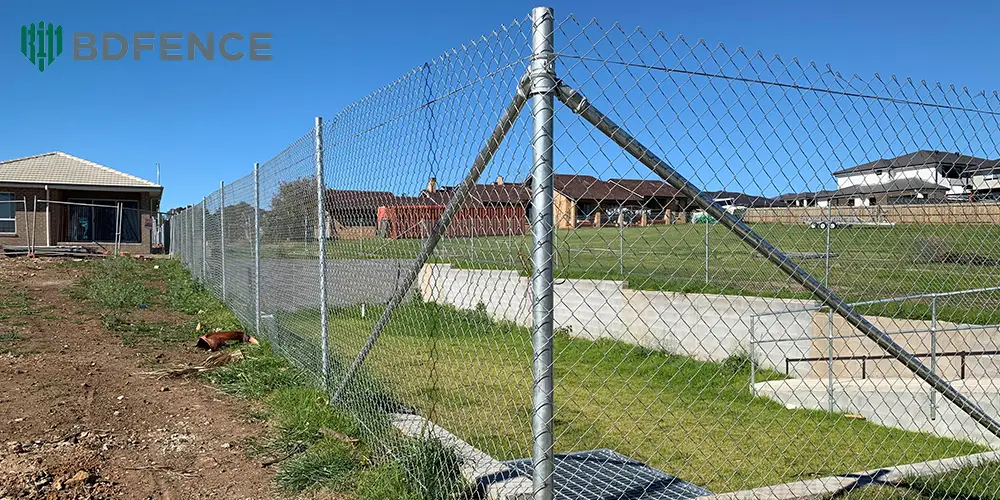
The mesh is only one part of a chain link fence. Posts support the fence line, while tension components help keep the fabric in position.
Line posts support the regular runs. Terminal posts sit at ends and corners or at points where the mesh tension stops or changes. Depending on the chosen system, the fence may also need a top rail, tension bars, bands and ties.
These components should match the fence height, layout and installation method. Posts embedded in concrete need different details from posts mounted on base plates.
Sloping ground adds another consideration. The contractor needs to decide how the fence will follow changes in ground level and how much clearance should remain below the mesh. At drainage crossings, the design must also allow water to flow without creating an unintended opening in the boundary.
Gates should appear on the same site drawing. A maintenance entrance may need a different opening from a pedestrian gate, and each opening affects the adjacent fence runs and post quantities.
A Practical Comparison Before You Order
Before choosing a product, put the main requirements side by side. This makes it easier to see whether two supplier quotations describe the same fence.
| Item | What to Check |
|---|---|
| Mesh opening | Required opening and measurement convention |
| Wire diameter | Steel diameter and any specified tolerance |
| Fence height | Required height for each section of the playing area |
| Coating | Protective system, colour and applicable requirements |
| Posts and rails | Dimensions, spacing and installation method |
| Gates | Opening dimensions, hardware and support arrangement |
| Accessories | Tension bars, bands, ties and required fittings |
| Supply scope | Included components, packing and delivery terms |
Imagine receiving two quotations for the same sports field. One includes only the mesh rolls, while the other includes the posts, top rails, fittings and gates. The second price will naturally look higher.
Before comparing the totals, make sure both suppliers have priced the same scope. Then review the technical details and commercial terms together.
For an overseas order, freight, customs clearance and local transport may also affect the final cost. Confirm the agreed shipping terms so the purchasing team can compare the actual supply cost rather than the factory price alone.
What Should Go into the RFQ?
A clear request for quotation saves time for both the buyer and the manufacturer. For a sports field project, prepare the following information where available:
- Site layout and total fence length.
- Type of sport and intended use of the area.
- Required fence height for each section.
- Mesh opening and wire diameter.
- Galvanized or PVC-coated finish.
- Post, rail and tensioning requirements.
- Gate locations, opening dimensions and hardware.
- Bill of quantities and delivery destination.
If the design is still developing, mark provisional dimensions clearly. A supplier can prepare a budget estimate using stated assumptions, but the buyer should confirm the final specifications before production.
It is also worth checking the drawing revision before releasing the order. A moved gate or a revised fence height can affect the panel count, post schedule and material list.
Discuss Your Sports Field Fence Requirements with BDFENCE
BDFENCE is a China-based metal fencing manufacturer supplying overseas contractors, distributors and project buyers. The company has more than 30 years of experience in metal fence manufacturing.
For a sports field enquiry, useful documents include the site layout, mesh specification, fence heights, post details, gate schedule and bill of quantities. These help establish the required mesh, supporting structure and finish.
BDFENCE can review the specified chain link mesh, posts, fittings and gates against the information provided. If the facility uses different fence heights or coatings in separate areas, identify those requirements in the schedule.
Sports-specific design requirements and any applicable safety approvals remain the responsibility of the project’s qualified professionals. The manufacturer’s role is to supply the agreed components to the confirmed specification.
If you are sourcing fencing for a school field, tennis court, football ground or multi-purpose sports facility, use Contact BDFENCE to send your drawings or BOQ and request a quotation.
FAQ
What mesh opening should I choose for a sports field?
The suitable opening depends on the sport, ball-containment needs and project specification. Confirm the required aperture with the designer before requesting a quotation.
What fence height is suitable for a football field or tennis court?
The height depends on the playing area, surrounding facilities and applicable design requirements. Different sections may need different heights.
Is galvanized or PVC-coated chain link fence better for sports facilities?
Both can suit outdoor sports areas when they meet the project requirements. The choice depends on the environmental exposure, required finish and maintenance plan.
Does wire diameter affect the quotation?
Yes. Wire diameter affects steel consumption and product weight. Compare offers using the same specified diameter and coating requirements.
What information should I send for a sports fence quotation?
Provide the site layout, sport type, fence heights, mesh opening, wire diameter, coating, post details, gates, quantities and delivery destination.
Contact BDFENCE
Hebei Bendin Industrial Technology Co., Ltd. (BDFENCE)
Planning a sports field fencing project? Send your site layout, BOQ or technical specification for a quotation based on your required mesh, height, coating and supporting components.
Phone: +86 18703182863
WhatsApp: +86 18703287372
Email: info@bd-fence.com
Website: https://bd-fence.com/
Inquiry: Contact BDFENCE