


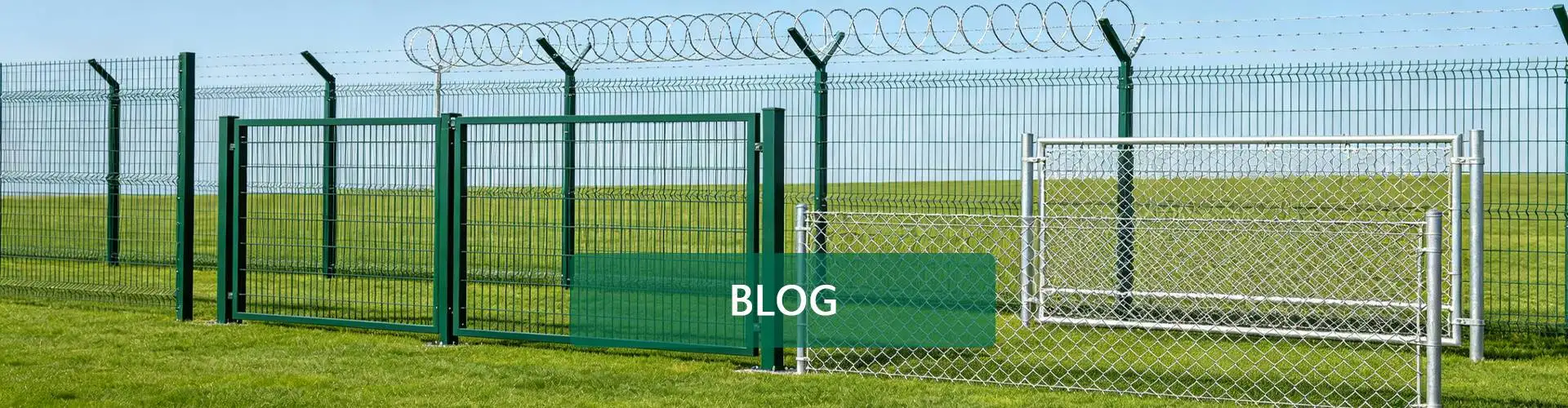
On a solar farm, the fence is usually one of the last things people notice on a project drawing. Yet its layout can affect access roads, drainage routes, maintenance areas and the amount of material the contractor needs to order.
A request for fencing around a 100-hectare solar site may provide the approximate perimeter length, but that figure alone does not tell a manufacturer how many gates are needed, where the fence changes direction or whether parts of the site require a different arrangement.
Chain Link Fence is a practical option for many solar farm boundaries, but the right specification depends on the site rather than the product name. Mesh, posts, tension components, gates and surface protection need to be considered together.
For EPC contractors and purchasing teams, the goal is straightforward: send a specification that manufacturers can quote accurately and installation crews can use without having to resolve basic dimensions on site.
Start with the Boundary Drawing
The first useful document is the latest site layout, not a supplier’s standard fence catalogue.
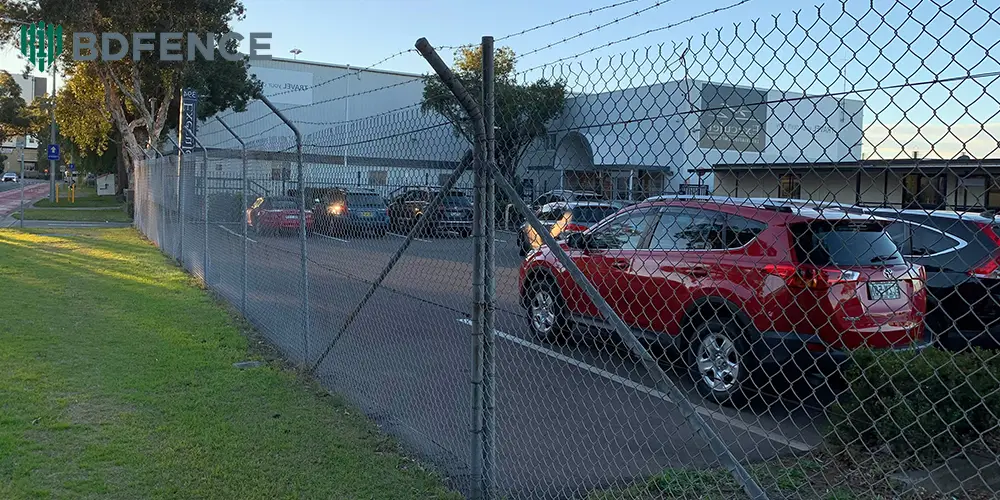
Solar farms can cover large areas, and the perimeter may cross access roads, drainage channels, uneven ground and existing property boundaries. Some sites also have separate enclosures around electrical equipment or other restricted areas.
These details affect the material quantity. A long straight run can use repeated mesh sections, while a vehicle entrance requires an opening, support posts and suitable gate hardware. A fence meeting an existing structure may need a shorter closing section instead of another standard panel.
Before requesting prices, mark the fence route, gate locations, corners and any areas where the layout changes. If internal equipment compounds require separate fencing, show them as separate sections rather than combining everything into one perimeter length.
This gives the manufacturer a clearer basis for preparing the bill of materials. It also helps the EPC team check whether the proposed fence package actually covers the whole site.
What Should the Chain Link Mesh Specification Include?
A specification that says only “galvanized chain link fence” leaves too much room for interpretation. Suppliers may quote different mesh openings, wire diameters or edge finishes while using the same general product description.
For a solar project, the RFQ should identify the required fence height, mesh opening and wire diameter. It should also state the coating requirement and any specified treatment of the top and bottom mesh edges.
Wire diameter should be given in millimeters wherever possible. If the project uses a gauge designation, identify the applicable standard or provide the corresponding required diameter. Gauge labels alone can cause confusion when suppliers work with different conventions.
For PVC-coated mesh, clarify whether the stated diameter refers to the steel core or the finished wire after coating. These are different measurements, and the quotation should reflect the intended specification.
The project may already have an approved fence schedule. If so, send that schedule to the manufacturer instead of asking several suppliers to interpret a short product description independently.
The Perimeter Length Is Only Part of the Quantity Calculation
Consider a solar project with several kilometers of outer fencing and multiple maintenance entrances. Dividing the total length by a standard mesh roll length provides only a preliminary estimate.
The final quantity depends on the approved layout, gate openings, terminal locations, corner arrangements and any special sections. The post count also depends on the specified spacing and installation design.
For example, a vehicle entrance interrupts the regular fence line. The mesh must terminate at the gate supports, and the sections beside the opening may need different dimensions from the standard runs. If the gate location changes after the material list is prepared, the panel and post quantities may need to be revised.
That is why gates and special sections should be included before the BOQ is finalized. It is easier to correct a drawing than to discover missing components after the main shipment has arrived.
Posts, Tensioning and the Ground Beneath the Fence
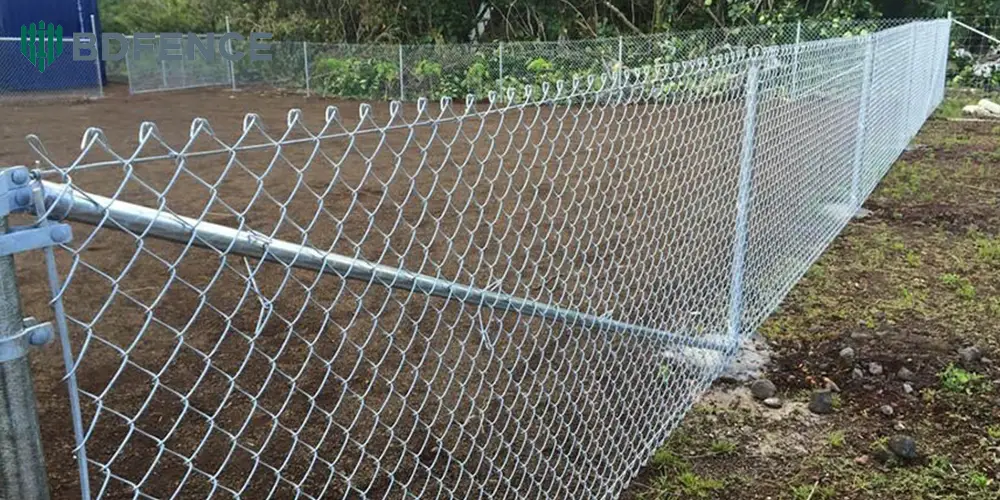
Chain link mesh is flexible, but the supporting structure still needs to be designed for the site. Line posts support the regular runs; terminal posts are used at ends, corners and other locations where the mesh tension terminates or changes. Gate posts have their own requirements because they support the gate structure.
The post specification should define the section, wall thickness, length and finish where applicable. The installation method must also be clear. Embedded posts and base plate-mounted posts involve different fabrication and foundation details.
Solar sites can cross areas with different ground conditions. A level section may allow a repeated arrangement, while a slope or drainage crossing may require a different approved detail. Ground clearance also matters: excessive gaps beneath the fence may undermine the intended boundary function.
The civil or structural engineer should approve the foundation design and any site-specific installation requirements. The manufacturer needs those confirmed dimensions to prepare the posts and associated components correctly.
Before production, check that the post schedule agrees with the fence layout. The nominal mesh roll length or panel width should not be used as a substitute for the approved post spacing.
Don’t Leave Gates Until the End of the RFQ
A solar farm needs access for construction, maintenance and authorized personnel. Depending on the site plan, the fence package may include vehicle gates, pedestrian gates and entrances to separate equipment areas.
For each gate, define the clear opening, height, frame arrangement and required hardware. If automation or access-control equipment is planned, identify those requirements separately and coordinate them with the responsible system supplier.
Gate positions affect more than the gate itself. They change the length of adjacent fence sections and may require different support posts or closing panels.
A useful BOQ lists gates separately and states whether the quotation should include the gate structure only or a more complete package with hinges, locking components and other specified accessories. Automated operators and electrical equipment should be included only when explicitly agreed.
This distinction helps buyers compare supplier quotations on an equal basis rather than choosing an apparently lower price that excludes important components.
Galvanized or PVC-Coated Chain Link Fence?
The coating decision should reflect the actual site environment and the project specification. Solar farms are built in a wide range of locations, so there is no single finish that automatically suits every installation.
Galvanized mesh is commonly used for outdoor boundaries. PVC-coated mesh provides a different finished appearance and adds a polymer layer over the steel wire. Where PVC coating is specified, the buyer should confirm the steel core diameter, finished wire diameter and coating requirements.
The supporting structure needs the same attention. Posts, tension bars, bands, ties, gate frames and other fittings should have suitable material and corrosion protection for the intended environment.
A project in a coastal location or an area with particular soil and atmospheric conditions may have different requirements from one in a more sheltered inland site. The appropriate coating system should follow the project’s approved technical requirements rather than a general assumption about the climate.
How to Prepare a BOQ That Manufacturers Can Actually Quote
A bill of quantities is most useful when it separates the main product from the supporting components. It should also identify items that do not follow the standard fence arrangement.
| BOQ Item | Information to Include |
|---|---|
| Chain Link Mesh | Height, mesh opening, wire diameter, edge finish and coating |
| Line Posts | Section, length, spacing and installation method |
| Terminal Posts | Locations, dimensions and connection requirements |
| Tension Components | Required bars, bands, ties and related fittings |
| Gates | Opening dimensions, frame, hardware and operating requirements |
| Special Sections | Slopes, corners, short closing sections and equipment enclosures |
| Surface Treatment | Specified protection for mesh, posts and fittings |
| Packing | Quantities, component identification and shipment arrangement |
Not every solar farm needs every item in the table. The approved design determines the actual scope. The purpose is to make the required components visible so that different manufacturers do not have to make their own assumptions.
When reviewing the quotations, check whether each supplier has priced mesh only or the complete fence system. A lower mesh price may not remain lower after posts, tension components, gates and shipping are included.
What EPC Buyers Should Check Before Placing the Order
For a large solar project, the main risk is often not the choice between two similar mesh products. It is a mismatch between the drawing, the BOQ and the supplier’s interpretation of the order.
Before approving the quotation, confirm that the panel specifications match the project schedule, the post quantities reflect the approved layout and the gate openings agree with the latest drawing. Check any special sections separately.
It is also worth identifying which dimensions are final and which remain provisional. A budget quotation can be prepared while the design is developing, but provisional dimensions should not be treated as approved production requirements.
Finally, make sure the commercial terms are clear. Packing, delivery basis, lead time and exclusions can all affect the actual purchasing decision. For overseas supply, a complete and clearly defined package is easier to manage than a low unit price with an unclear scope.
How BDFENCE Can Support Solar Farm Fence Procurement
BDFENCE is a China-based metal fencing manufacturer supplying overseas contractors, distributors and project buyers. Our team has more than 30 years of experience in metal fence manufacturing.
For a solar farm enquiry, useful documents include the site layout, fence specification, BOQ, gate schedule and available post or foundation details. These help define the required mesh, posts, tension components, gates and other items in the manufacturing scope.
BDFENCE can review the specified chain link mesh and related fence components against the information provided. Special sections and gate requirements should be identified before the final quantities and production details are confirmed.
Site-specific foundation design and engineering approval remain the responsibility of the project’s qualified professionals. The manufacturer’s role is to supply the agreed components to the confirmed specification.
If you are preparing a solar farm fencing package, send your drawing, BOQ or technical specification through Contact BDFENCE to request a project-based quotation.
FAQ
Why is Chain Link Fence used for solar farms?
Chain link fencing provides a continuous physical boundary while allowing visibility through the mesh. Its suitability depends on the site’s security requirements, ground conditions and approved design.
What information is needed to specify chain link fencing for a solar farm?
Provide the required height, mesh opening, wire diameter, coating, post arrangement, gates, total quantity and delivery destination. A site layout or BOQ helps clarify the full supply scope.
Should a solar farm fence include vehicle gates?
Where vehicle access is required, the gate locations and opening dimensions should be included in the layout and BOQ. The gate structure, support posts and hardware should be specified separately from the standard fence runs.
Can chain link fencing follow sloping ground?
It can accommodate some changes in ground level, but the installation method and required ground clearance should follow the approved site design.
Is galvanized or PVC-coated mesh better for solar farms?
The appropriate finish depends on the environmental exposure and project requirements. Buyers should confirm the specified coating for the mesh, posts and fittings rather than compare color alone.
Can BDFENCE quote from a solar project BOQ?
Yes. Buyers can send their BOQ, site layout or technical specification for a quotation based on the requested mesh, posts, gates and related components.
Contact BDFENCE
Hebei Bendin Industrial Technology Co., Ltd. (BDFENCE)
Planning a solar farm perimeter? Send your site layout, BOQ or fence specification for a quotation based on the required mesh, posts, fittings and gates.
Phone: +86 18703182863
WhatsApp: +86 18703287372
Email: info@bd-fence.com
Website: https://bd-fence.com/
Inquiry: Contact BDFENCE