


When buyers request a Chain Link Fence quotation, they usually focus on mesh opening, wire diameter and fence height.
However, another detail can affect the final product: the selvage type.
The top and bottom edges of chain link mesh can be finished in different ways. The most common options include knuckle, twist and knuckle-twist.
For a small fencing project, this difference may seem minor. For large commercial, industrial or security projects, the selvage type should be clearly defined in the specification.
Different edge finishes can affect safety, appearance, handling and the final quotation.
This guide explains the differences between these three chain link fence edge styles and what overseas buyers should confirm before placing an order.
What Does Selvage Mean on Chain Link Fence?
Selvage refers to the finished edge treatment of the chain link fabric.
During production, the wire is woven into a diamond mesh pattern. The top and bottom edges need a finishing method to prevent the mesh from becoming loose and to create the required edge condition.
The two main areas are:
- top selvage;
- bottom selvage.
When preparing a chain link fence specification, buyers may see descriptions such as:
- knuckle / knuckle;
- twist / twist;
- knuckle / twist;
- twist / knuckle.
These terms describe how the wire ends are finished at the mesh edges.
The correct choice depends on the project requirements, safety considerations and local market expectations.
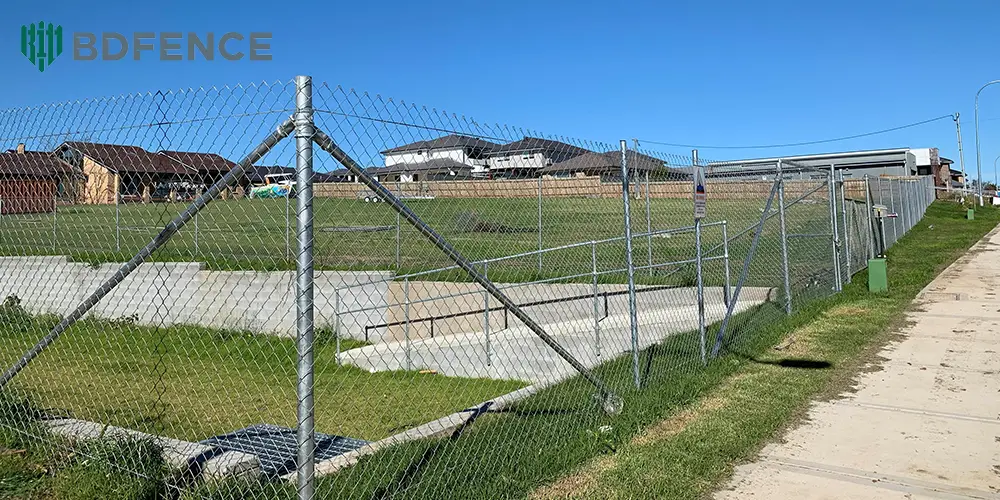
Knuckle Selvage: A Safer Finished Edge
A knuckle selvage bends the wire end back into a smooth loop.
The finished edge does not have a sharp exposed point.
This makes knuckle edges common for locations where people may frequently contact the fence, such as:
- residential boundaries;
- schools;
- parks;
- commercial properties.
The smooth edge can provide a cleaner appearance and reduce the risk of accidental contact with sharp wire ends.
For projects where appearance and public interaction are important, buyers often consider knuckle edges.
However, the final fence performance still depends on other specifications, including wire diameter, mesh opening, coating and support structure.
Twist Selvage: A Traditional Security Edge
A twist selvage finishes the wire by twisting the end back into the mesh.
This creates a more pointed edge compared with a knuckle finish.
Twist edges are often associated with higher-security applications because the exposed wire ends create an additional deterrent.
They may be used for:
- industrial boundaries;
- restricted areas;
- utility facilities;
- security perimeters.
However, the suitability depends on the project design and applicable safety requirements.
A twist edge does not replace other security features such as stronger wire, improved posts or additional protection systems.
It is only one part of the complete fence specification.
Knuckle-Twist Combination: A Balanced Option
Some projects require different edge conditions at the top and bottom of the mesh.
A common example is knuckle on one side and twist on the other.
The combination allows the project designer to balance safety and security requirements.
For example, a project may prefer a smoother upper edge while keeping a more security-focused lower or upper treatment.
The exact arrangement should be clearly stated in the purchase specification.
A description such as “knuckle-twist chain link fence” may still need clarification because suppliers and markets can describe the order of the two edges differently.
The safest method is to write the top and bottom edge separately.
Example:
Top: Knuckle / Bottom: Twist
or:
Top: Twist / Bottom: Knuckle
This avoids confusion during production.
Why Selvage Type Matters When Comparing Quotes
Two chain link fence quotations may look identical at first.
Both may show:
- same fence height;
- same mesh opening;
- same wire diameter;
- same coating.
However, the selvage type may be different.
That difference can affect:
- production method;
- material handling;
- finished appearance;
- project suitability.
For international purchasing, a quotation should clearly state:
- mesh opening;
- wire diameter;
- top selvage;
- bottom selvage;
- coating specification.
Without these details, buyers may compare two products that are not actually the same.
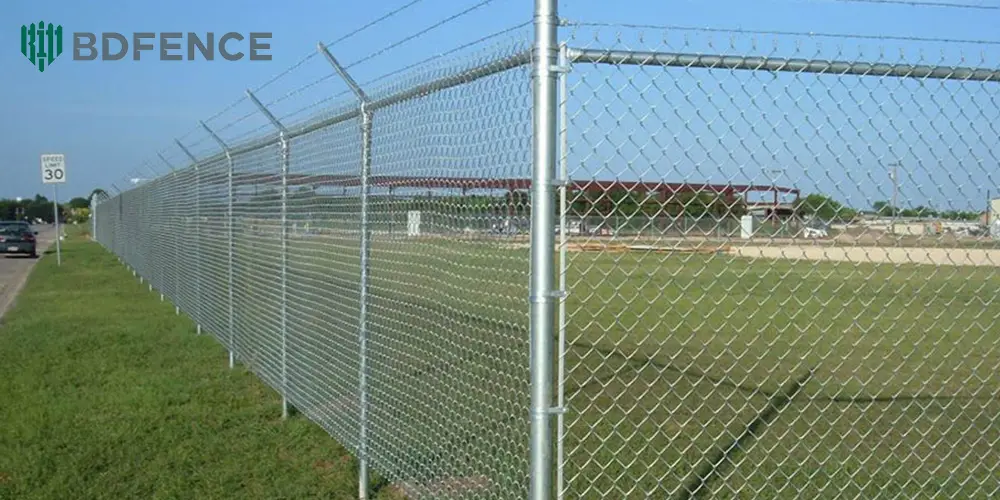
Selvage Selection Depends on the Application
There is no single selvage type that suits every project.
The correct choice depends on where the fence will be installed and how people interact with it.
| Application | Common Consideration |
|---|---|
| Residential areas | Smooth appearance and reduced sharp edges |
| Schools and public areas | Safety around pedestrians |
| Industrial sites | Boundary control and durability |
| Utility facilities | Security requirements and approved specifications |
| Large perimeter projects | Complete material consistency |
The final selection should follow the project specification rather than choosing a selvage type only because another fence used it.
How Selvage Type Works with Other Chain Link Fence Specifications
Selvage is only one part of the chain link fence specification.
A buyer should not select the edge finish separately from the rest of the fence system.
Other important specifications include:
- wire diameter;
- mesh opening;
- fence height;
- coating type;
- post system;
- installation requirements.
For example, a security project may require a thicker wire and stronger posts. Choosing a twist edge alone will not create a high-security fence if the other components do not match the project requirements.
Likewise, a residential project may prefer a smooth knuckle edge, but the final fence quality also depends on the steel wire, coating and installation system.
The complete specification should always be reviewed as one system.
Galvanized and PVC-Coated Chain Link Fence Selvage
Selvage type can be used with different surface finishes, including galvanized and PVC-coated chain link fence.
For galvanized mesh, buyers should confirm the required wire diameter, zinc coating specification and finished edge condition.
For PVC-coated mesh, there are additional details to confirm:
- steel core diameter;
- finished outside diameter;
- PVC color;
- coating quality.
The coating adds another layer to the finished product, but it does not change the basic purpose of the selvage.
The edge finish still determines how the wire ends are formed at the top and bottom of the mesh.
When requesting quotations, buyers should describe both the wire specification and the selvage requirement.
Common Mistakes When Ordering Chain Link Fence Selvage
Some specification problems appear repeatedly in international fence purchasing.
Only Mentioning the Mesh Size
A request such as “50mm chain link fence” does not fully define the product.
The supplier still needs to know the wire diameter, coating, height and edge finish.
Using Gauge Without the Actual Diameter
Gauge numbers can create confusion because different standards exist.
For international orders, confirming the wire diameter in millimeters makes the specification clearer.
Not Defining Top and Bottom Edges
A buyer may request “knuckle and twist” without explaining which edge uses which finish.
The factory should confirm:
- top edge treatment;
- bottom edge treatment.
This simple step can prevent production misunderstandings.
Comparing Suppliers Only by Price
A lower quotation may use a different wire diameter, coating specification or selvage type.
Before comparing prices, make sure both suppliers are quoting the same fence specification.
How BDFENCE Reviews Chain Link Fence Specifications
When customers contact BDFENCE for chain link fence projects, we review the available specifications before preparing a quotation.
Important information includes:
- wire diameter;
- mesh opening;
- top and bottom selvage;
- galvanized or PVC-coated finish;
- fence height;
- required accessories.
If a buyer sends only a product name, we may need additional details before confirming the price.
For example, “chain link fence with 9 gauge wire” does not tell us which gauge standard or actual millimeter diameter is required.
A clear specification helps both sides avoid misunderstandings.
Send Your Chain Link Fence Specification or BOQ
If you are comparing chain link fence suppliers, send your existing drawing, BOQ or technical specification to Contact BDFENCE.
Useful information includes:
- mesh opening;
- wire diameter;
- selvage type;
- coating requirement;
- fence height;
- post and fitting requirements;
- destination country.
Even a preliminary specification can help us understand the project requirements.
A clear quotation starts with a clear product definition.
Why Choose BDFENCE?
BDFENCE manufactures metal fencing products for overseas contractors, distributors and project buyers.
Our team has more than 30 years of experience in metal fence manufacturing.
The factory covers approximately 15,000㎡ with more than 190 employees and over 80 machines.
Our product range includes Chain Link Fence, 358 Fence and Steel Tubular Fence.
For chain link fence projects, we can manufacture mesh, posts, fittings and related components according to customer specifications.
FAQ
What is chain link fence selvage?
Selvage describes how the top and bottom edges of chain link mesh are finished. Common options include knuckle, twist and knuckle-twist.
What is the difference between knuckle and twist selvage?
Knuckle selvage bends the wire end into a smooth loop, while twist selvage twists the wire end into a more pointed finish. The choice depends on project requirements and safety considerations.
Which chain link fence selvage is better for residential projects?
Knuckle edges are commonly considered for residential and public areas because they provide a smoother finished edge. However, the complete fence specification should match the project requirements.
Does twist selvage make a chain link fence more secure?
Twist selvage can provide a more pointed edge condition, but overall fence security depends on the complete system, including wire diameter, posts, fittings and installation design.
Can BDFENCE provide different selvage options?
Yes. BDFENCE can review project requirements and provide chain link fence products with the required edge treatment, wire specification and coating options.
What information should I provide when ordering chain link fence?
Provide mesh opening, wire diameter, fence height, coating, selvage type, quantity and any required posts, fittings or gates.
Contact BDFENCE
Hebei Bendin Industrial Technology Co., Ltd. (BDFENCE)
Have an existing fence drawing, BOQ or technical specification? Share it with our team for a quotation based on your project requirements.
Phone:
+86 18703182863
WhatsApp:
+86 18703287372
Email:
info@bd-fence.com
Website:
https://bd-fence.com/
Inquiry:
Contact BDFENCE