


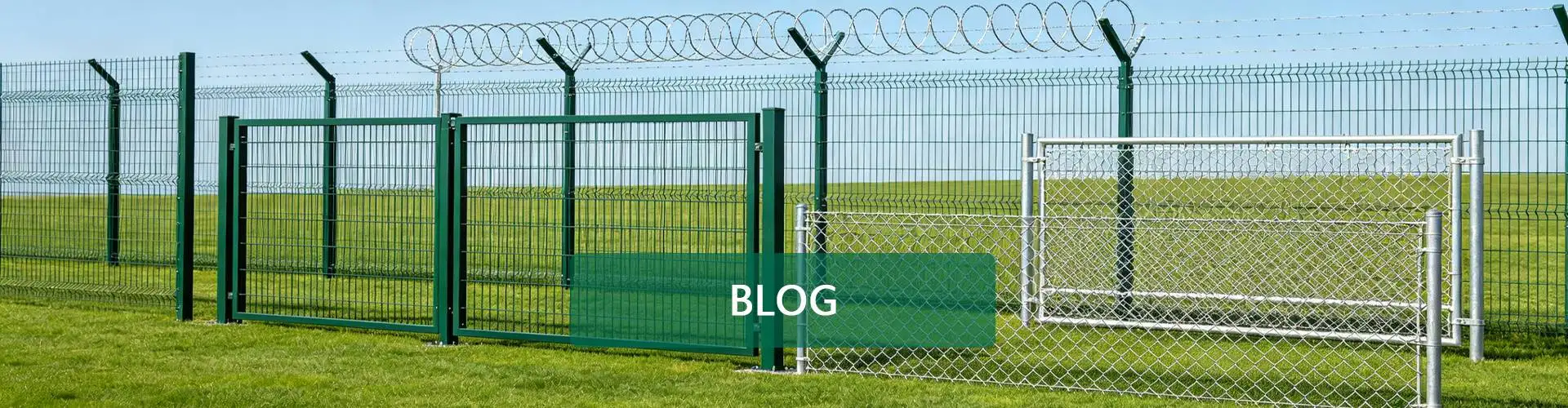
When buyers ask for a Chain Link Fence price per meter, they are usually expecting a simple number.
In practice, that number means very little unless the fence specification behind it is clear.
A one-meter section of fencing is not just wire mesh. It may also include part of the post system, tensioning components, hardware, gate allocation, coating cost, packaging, and transportation.
This is why two suppliers can quote very different prices for what appears to be the same Chain Link Fence.
The real question is not only:
“How much is Chain Link Fence per meter?”
A more useful question is:
“What exactly is included in that meter?”
Start with the Fence Configuration
Before discussing price, a buyer should first identify the basic fence configuration.
For example, a typical project may define:
- Fence height
- Mesh opening
- Wire diameter
- Galvanized or PVC-coated finish
- Post spacing
- Post dimensions
- Top rail or tension wire
- Gate requirements
Without these details, a price per meter is only a rough reference.
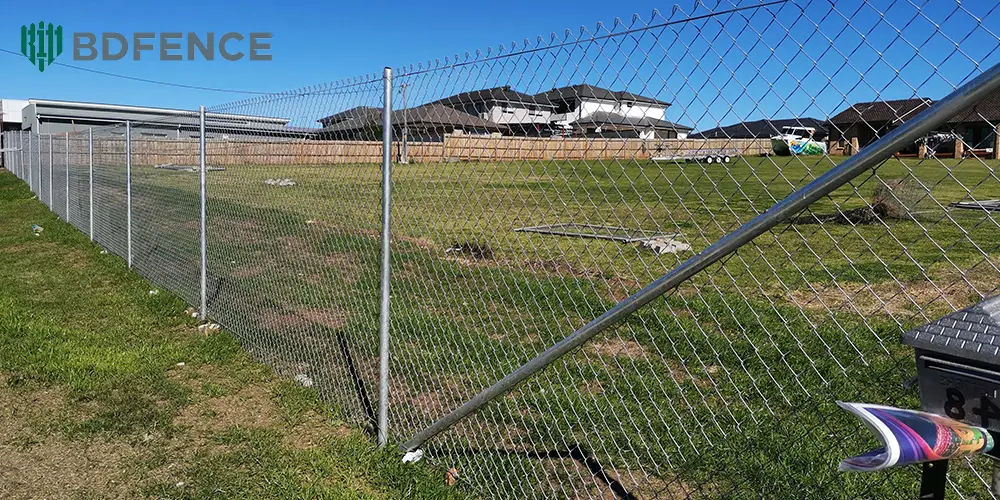
Why One Meter of Chain Link Fence Is Not Always the Same
Imagine two quotations for a 2-meter-high fence.
At first glance, both may look identical.
But one supplier may use:
- Thinner wire
- A larger mesh opening
- Lighter posts
- Fewer fittings
while another may use:
- Heavier wire
- A tighter mesh
- Stronger posts
- A more complete support system
The second quotation will naturally cost more per meter because more steel and more components are being supplied.
This is the first thing buyers should understand when comparing Chain Link Fence prices.
Wire Diameter Changes the Cost Faster Than Many Buyers Expect
Wire diameter has a direct influence on the amount of steel used in the mesh.
A small increase in diameter can create a noticeable difference across thousands of square meters of fencing.
Thicker wire also changes:
- Fence weight
- Handling requirements
- Transport weight
- Overall rigidity
For large projects, even a small wire specification difference can significantly change the final contract value.
Mesh Opening Is Another Hidden Cost Variable
A tighter mesh usually requires more wire within the same fence area.
This means a 50 × 50 mm mesh and a 60 × 60 mm mesh should not be treated as equivalent just because the fence height is the same.
When comparing quotations, buyers should always check:
- Actual mesh opening
- Actual wire diameter
- Whether dimensions are measured before or after coating
Fence Height Changes the Whole System
Increasing fence height does more than increase the amount of mesh.
It can also change the design of:
- Posts
- Bracing
- Foundations
- Gate frames
- Support components
This is why the price difference between a 1.8-meter fence and a 2.4-meter fence should not be calculated from mesh area alone.
The Post System Can Change the Budget More Than Expected
On long perimeter projects, posts can represent a substantial part of the material cost.
Buyers should pay attention to:
- Post outside diameter
- Wall thickness
- Post length
- Spacing between posts
- Corner post design
- Gate post design
A lighter post system can reduce the quotation quickly, but it may also mean the supplier is offering a different specification.
Galvanized or PVC Coated: The Finish Changes the Price
Surface treatment influences both appearance and long-term outdoor performance.
Galvanized Chain Link Fence is commonly used for industrial, utility, warehouse, and infrastructure applications.
PVC-coated Chain Link Fence is often selected for projects where appearance is more important, such as:
- Sports facilities
- Schools
- Residential sites
- Commercial boundaries
When comparing coated products, buyers should confirm whether the quoted wire diameter refers to the steel core or the finished coated wire.
That detail can make two quotations look more similar than they really are.
What Buyers Often Forget: The Small Parts
A complete Chain Link Fence system depends on many components that are easy to overlook during early quotation discussions.
These can include:
- Tension bars
- Bands
- Rail ends
- Tie wires
- Clamps
- Post caps
- Bolts
- Gate hinges
- Locking hardware
On a small fence, these items may seem minor.
On a multi-kilometer project, they can represent thousands of individual pieces.
If one quotation includes them and another does not, the price difference may be misleading.
Gates Distort the Average Price Per Meter
A project with no gates and a project with twenty vehicle entrances should not have the same average fence cost.
Large gates require:
- Heavier frames
- Gate posts
- Hinges
- Locks
- Additional hardware
For logistics centers, factories, ports, and utility projects, the gate schedule should be reviewed before calculating the final average price per meter.
Why Very Low Prices Need a Second Look
A low price is not automatically a problem.
But when one quotation is much lower than all others, buyers should check what changed.
Typical reasons include:
- Reduced wire diameter
- Larger mesh opening
- Lighter posts
- Longer post spacing
- Lower coating specification
- Missing fittings
- Excluded gates
The correct comparison is not “which quotation is cheapest?”
The correct comparison is:
“Which quotation matches the required specification?”
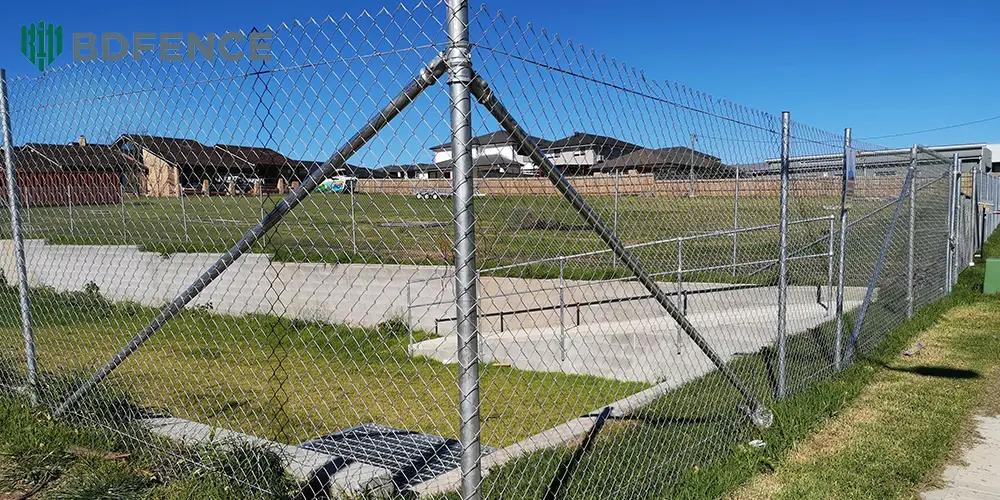
A Better Way to Estimate Chain Link Fence Cost
Instead of asking for one generic price per meter, project buyers can divide the quotation into four groups.
| Cost Group | Typical Items |
|---|---|
| Mesh | Wire diameter, mesh size, height, coating |
| Structure | Posts, braces, rails, foundations |
| Access | Pedestrian gates, vehicle gates, hardware |
| Accessories | Tension parts, clamps, caps, fasteners |
This approach makes it easier to see where price differences come from.
Example: Why a Project Price Can Change Quickly
Consider a long industrial perimeter.
The buyer initially requests:
- 2.0 m fence height
- 50 × 50 mm mesh
- Galvanized finish
Later, the project specification is changed to:
- 2.4 m height
- Thicker wire
- Heavier posts
- Additional vehicle gates
Even though the product is still called Chain Link Fence, the final price per meter can change substantially.
This is why early-stage budget prices and final project quotations should not be treated as the same thing.
When Price Per Meter Is Useful
Price per meter is useful when comparing suppliers only after the technical specification has been standardized.
For example, all suppliers should quote the same:
- Fence height
- Wire diameter
- Mesh opening
- Post size
- Post spacing
- Surface treatment
- Gate scope
- Accessory scope
Once these items are aligned, the price comparison becomes much more meaningful.
When Price Per Meter Is Not Useful
A generic price per meter is less useful when:
- The fence specification is not finalized
- The number of gates is unknown
- The post design has not been confirmed
- Different suppliers are quoting different coatings
- One quotation includes fittings and another does not
In these cases, a detailed project quotation is more valuable than a headline unit price.
What Information Should You Send for Pricing?
To receive an accurate Chain Link Fence quotation, provide as much of the following as possible:
- Total fence length
- Fence height
- Mesh opening
- Wire diameter
- Surface finish
- Post dimensions
- Post wall thickness
- Post spacing
- Top rail or tension wire requirements
- Gate quantities
- Gate dimensions
- Fence fittings
- Project drawings
- BOQ
- Destination port or country
This information allows the supplier to calculate the actual fencing system rather than guess from a general description.
How BDFENCE Prepares Chain Link Fence Quotations
BDFENCE can prepare quotations based on the actual project configuration rather than only a generic mesh price.
Depending on the order, the supply scope can include:
- Galvanized Chain Link Fence
- PVC-Coated Chain Link Fence
- Steel posts
- Top rails
- Tension components
- Fence fittings
- Pedestrian gates
- Vehicle gates
- Installation accessories
For project orders, buyers can provide drawings, BOQ documents, gate schedules, and destination information for review.
Final Buying Advice
The cheapest Chain Link Fence per meter is not always the lowest-cost fence for the complete project.
A useful quotation should tell you exactly what steel, posts, fittings, gates, and coatings are included.
If two prices are very different, compare the specification before comparing the supplier.
For large projects, the most accurate approach is to calculate the complete perimeter package and then derive the average cost per meter from that total.
Contact BDFENCE for Chain Link Fence Pricing
Hebei Bendin Industrial Technology Co., Ltd. (BDFENCE)
Website: https://bd-fence.com/
Phone: +86 18703182863
WhatsApp: +86 18703287372
Email: info@bd-fence.com
FAQ
Can Chain Link Fence be priced per meter?
Yes, but only after the fence specification is defined. Height, wire diameter, mesh opening, posts, coating, gates, and fittings all influence the final figure.
Why is one supplier’s Chain Link Fence much cheaper?
The lower price may come from thinner wire, larger mesh, lighter posts, fewer accessories, or a different coating specification. Compare the technical details before deciding.
Do gates affect the average price per meter?
Yes. Projects with multiple pedestrian or vehicle gates usually have a higher average material cost because gate frames, posts, hinges, and hardware are added to the perimeter package.
Should I ask for mesh price or complete fence price?
For project procurement, the complete system price is usually more useful because it includes the supporting structure and required installation components.
Can BDFENCE quote from drawings?
Yes. Project drawings, BOQ documents, gate schedules, and technical specifications can be used to prepare a more accurate quotation.