


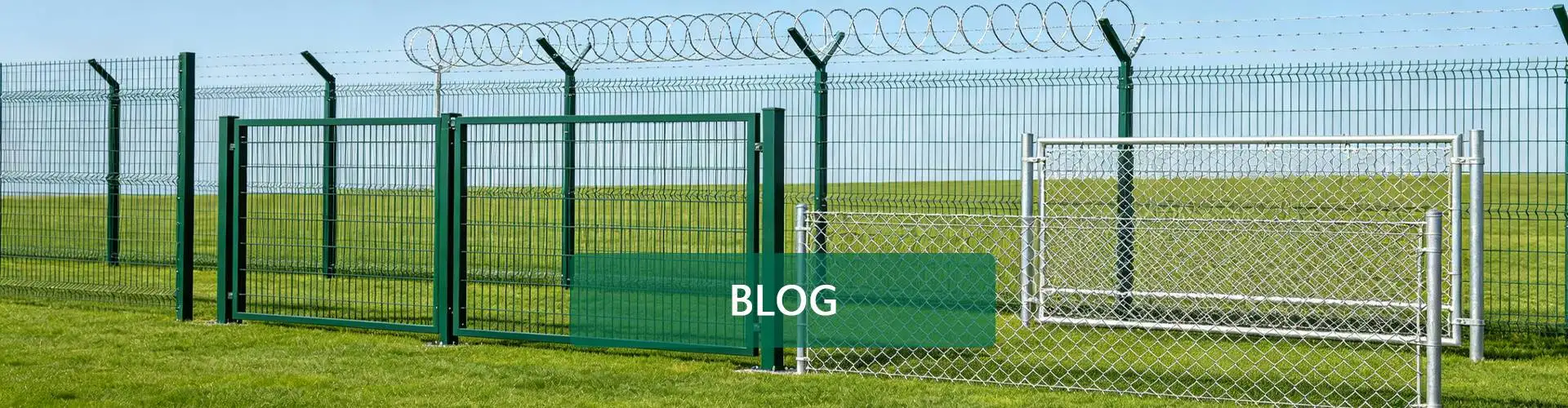
A Chain Link Fence can arrive as rolled mesh for installation along a continuous boundary, or as fabric fitted into individual steel frames. Both use woven wire mesh, but they are not the same product to purchase, transport or install.
For contractors ordering Chain Link Fence Panels, the first thing to establish is whether the project requires framed sections or conventional chain link fabric in rolls. This choice affects post spacing, fittings, freight volume and the work required on site.
01. What Is the Difference Between Panels and Rolls?
A chain link fence roll contains flexible woven mesh. Installers unroll the fabric, stretch it between terminal posts and secure it with tension bars, ties and other fittings.
A framed panel uses chain link fabric attached to a rigid steel frame. Each section connects to supporting posts or another approved structure.
Both options have their place.
| Item | Framed Chain Link Panels | Chain Link Mesh Rolls |
|---|---|---|
| Construction | Fabric within a steel frame | Flexible woven fabric |
| Installation | Individual sections | Continuous tensioned runs |
| Post spacing | Follows panel dimensions | Follows fence design |
| Site adjustments | May need custom sections | Fabric can be joined or shortened |
| Transport | Frames occupy more space | Rolls pack more compactly |
| Typical use | Modular or sectional fencing | Long perimeter boundaries |
Before comparing quotations, make sure both suppliers are pricing the same construction.
A roll of chain link fabric should not be described as a ready-to-install framed panel.
02. Where Do Framed Panels Make Sense?
Framed sections are useful where the project calls for clearly defined fence bays.
For example, a contractor may need several identical sections around an equipment compound. The approved design may also require panels that can be removed individually for future access.
In this situation, the frame dimensions become part of the manufacturing specification.
The buyer should identify the outside panel dimensions, frame tube size, mesh specification and connection arrangement.
One detail needs attention: the nominal panel width is not necessarily the clear distance between posts.
Brackets and frame connections occupy space. Therefore, the contractor should check the mounting dimensions before setting out the foundations.
For projects with many corners or irregular boundary lengths, custom panel widths may also be necessary.
03. Why Rolls Still Work Well for Long Boundaries
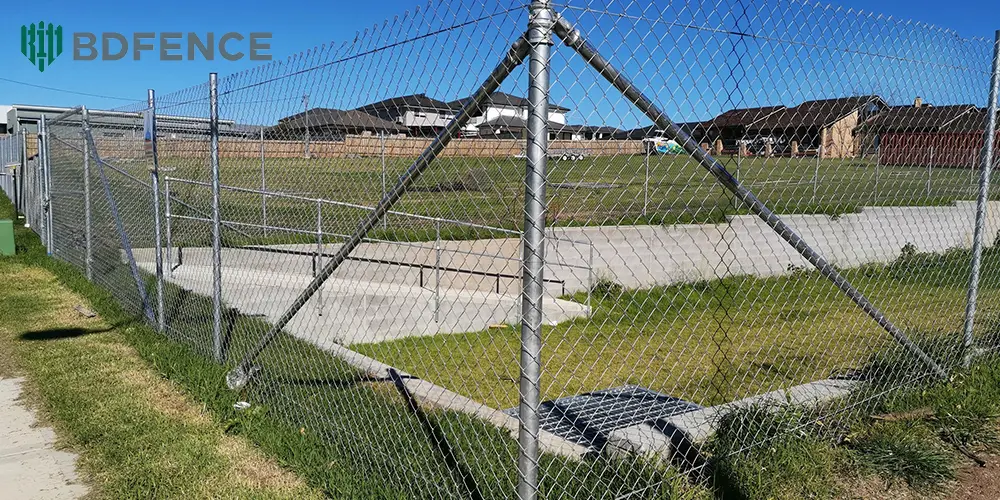
For a long industrial, agricultural or commercial perimeter, rolled chain link mesh is often the simpler purchasing option.
The fabric can follow continuous fence runs without requiring a separate steel frame for every bay.
However, the supporting system matters.
Line posts support the mesh along the boundary. Terminal and corner posts handle fabric tension at the appropriate locations.
The contractor must also specify the top support, bottom tension arrangement and fixing accessories.
For overseas procurement, rolled mesh can offer more compact packing than fully framed sections. Still, buyers should compare the complete landed cost rather than the mesh price alone.
04. Confirm the Mesh and Frame Specifications
The word “panel” does not establish the mesh opening, wire diameter or frame construction.
A useful RFQ should separate the fabric details from the supporting steelwork.
| Specification | What to State |
|---|---|
| Mesh opening | Required diamond aperture |
| Wire diameter | Steel core or finished coated diameter |
| Mesh finish | Galvanized or PVC coated |
| Panel height and width | Finished outside dimensions |
| Frame profile | Tube size and wall thickness |
| Fabric attachment | Approved fixing method |
| Supporting posts | Size and connection arrangement |
| Quantity | Total panels or mesh rolls |
For example, 50 × 50 mm mesh with 3.0 mm wire may be considered for some commercial fencing projects. However, those dimensions should follow the customer’s requirements rather than become a default for every order.
If the buyer requests framed panels, the supplier should confirm that the selected design is available before issuing the final quotation.
05. Don’t Overlook Shipping and Site Handling
A shipment of mesh rolls looks quite different from a shipment of framed fence panels.
Rolls can be grouped for container loading. Meanwhile, framed panels need suitable protection to prevent damage to the frames, fabric and finished surfaces.
The packing method may affect the number of units that fit in a container.
For larger orders, ask the supplier to identify the proposed package dimensions, weights and loading arrangement.
Also consider unloading.
Long framed sections may need more handling space than mesh rolls. As a result, a project with limited storage space could benefit from a different delivery arrangement.
These details belong in the purchasing discussion, not just the installation plan.
06. Chain Link Fence RFQ Checklist
Before sending your enquiry, confirm the product format and supply scope.
For mesh rolls: State the aperture, wire diameter, height, roll length, coating and total quantity.
For framed panels: Add the frame dimensions, panel width, attachment details, post connections and required quantity.
For either option, include the project country, shipping destination and relevant drawings.
BDFENCE supplies galvanized and PVC-coated chain link fencing in different mesh specifications and roll dimensions. We can also discuss compatible posts and fencing accessories.
If your project requires rigid framed chain link panels, send the frame drawing so our team can review the requested configuration and confirm the available supply options.
For other perimeter applications, see our metal fencing product range.
Request a Chain Link Fence Quotation
Need rolled mesh for a long boundary or framed sections for a commercial project?
Send BDFENCE the drawing, specifications, quantity and destination. Make sure the enquiry identifies whether you need mesh rolls, framed panels or a complete fence package.
Request a Chain Link Fence Quotation
BDFENCE — Hebei Bendin Industrial Technology Co., Ltd.
Website: bd-fence.com
WhatsApp: +86 18703287372
Email: info@bd-fence.com
Frequently Asked Questions
1. Are chain link fence panels the same as chain link mesh rolls?
No. Framed panels consist of mesh attached to steel frames. Rolls contain flexible chain link fabric for installation on a tensioned fence system.
2. Which option is better for long industrial boundaries?
Rolled chain link fabric is often practical for long continuous boundaries. Framed panels may suit projects requiring individual rigid sections.
3. Can chain link fence panels be made to custom sizes?
Frame dimensions can be specified for manufacturing review. Buyers should provide drawings and confirm production availability before placing an order.
4. What information should importers provide for a bulk quotation?
Include product type, mesh opening, wire diameter, coating, dimensions, quantity and shipping destination. For framed panels, provide the frame and connection specifications.
5. Can BDFENCE supply posts and accessories?
BDFENCE offers chain link fencing with related posts, rails and fixing accessories. Buyers should confirm the complete supply scope in the quotation.