


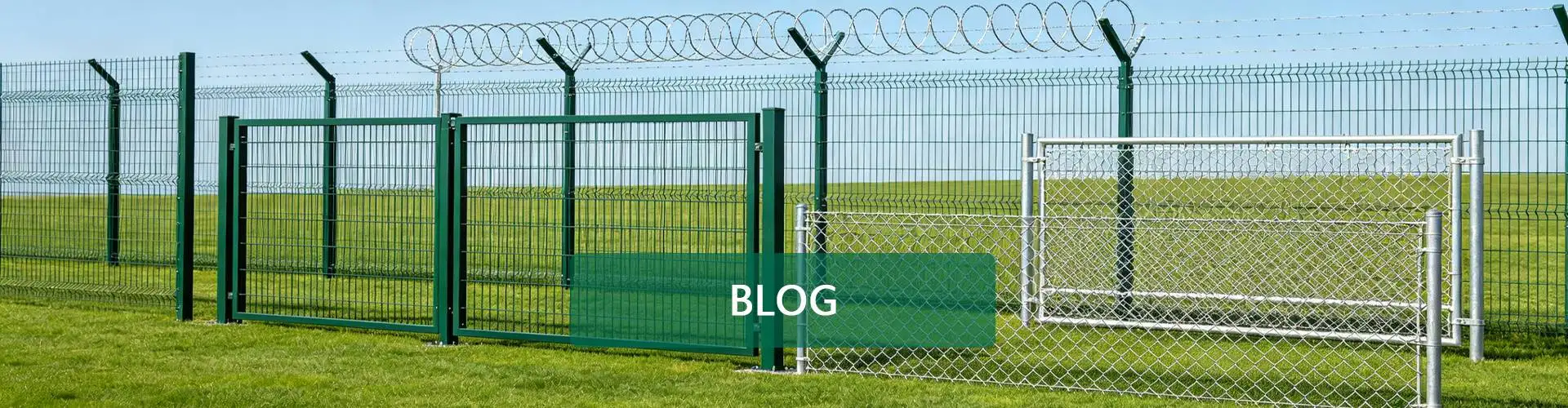
Chain Link Fence can look very similar from a distance, even when the mesh size is different.
However, changing the mesh opening from 2 inches to 1-1/2 inches or 1 inch changes much more than appearance.
The mesh opening affects how much wire is used, how heavy the roll becomes, how open the fence looks, what the fence can contain, and how much the finished project costs.
Therefore, the best mesh size is not simply the smallest one available.
The better choice is the opening that matches the job of the fence.
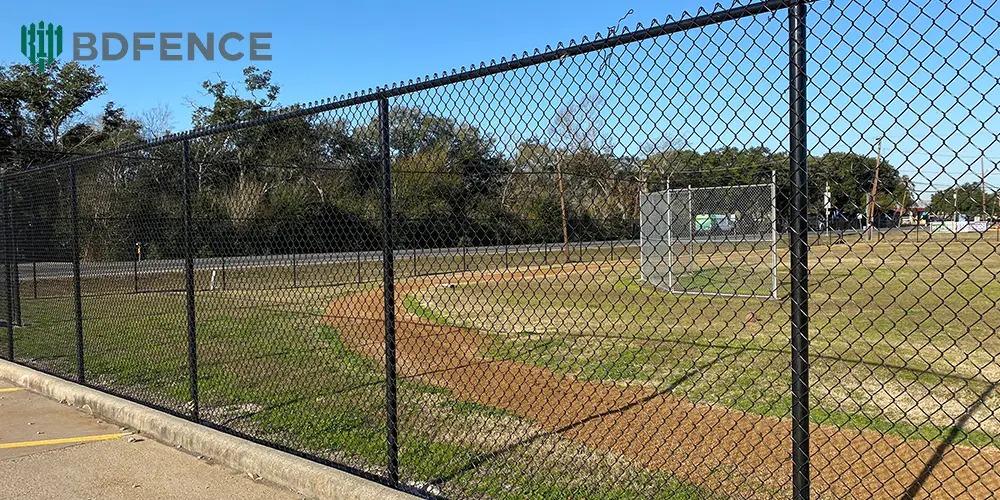
What Does Mesh Size Mean in Chain Link Fence?
Mesh size describes the opening formed by the woven wires.
Common project options include:
- 1-inch mesh
- 1-1/2-inch mesh
- 2-inch mesh
As the opening becomes smaller, more wire is needed to cover the same fence area.
That means mesh size influences both the physical structure and the commercial cost of the fence.
1″, 1-1/2″ and 2″ Mesh at a Glance
| Mesh Size | General Character | Typical Direction |
|---|---|---|
| 1″ | Tight opening, more wire per area | Sports, smaller-object containment, higher-control applications |
| 1-1/2″ | Middle ground between tight and open mesh | Commercial, sports and mixed-use projects |
| 2″ | More open mesh, lower wire consumption | General commercial and industrial perimeter fencing |
These are general selection directions only. Final mesh size should follow the approved project specification.
The First Difference Is Steel Consumption
Smaller mesh means more wire intersections within the same square meter of fence.
As a result, a 1-inch mesh generally uses more wire than a 2-inch mesh when wire diameter and fence area stay the same.
This can affect:
- Mesh weight
- Roll weight
- Material cost
- Handling
- Shipping weight
Therefore, buyers should not expect different mesh sizes to have the same price per meter.
Why 2-Inch Mesh Is Common for General Perimeters
A 2-inch mesh creates a relatively open Chain Link Fence structure.
This makes it useful for long commercial and industrial boundaries where the main goal is to define the perimeter without using unnecessary steel.
Typical applications may include:
- Warehouses
- Industrial facilities
- Storage yards
- Utility areas
- General commercial boundaries
For these projects, the more open mesh can provide a practical balance between visibility, material use, and cost.
When 1-1/2-Inch Mesh Becomes Useful
A 1-1/2-inch mesh sits between the open 2-inch format and the tighter 1-inch option.
This can make it useful where the project wants a denser mesh without moving to the highest wire consumption.
Possible applications include:
- Commercial facilities
- Sports enclosures
- School boundaries
- Recreation areas
- Mixed-use perimeter projects
For buyers who need more containment than 2-inch mesh but do not need 1-inch mesh, this middle option can be worth considering.
Why 1-Inch Mesh Is Different
A 1-inch opening creates a much tighter woven pattern.
That changes how the fence behaves in practical use.
It can be useful where the perimeter needs to retain smaller balls, reduce larger openings, or create a denser mesh surface.
However, that tighter pattern also means more wire per square meter.
Therefore, buyers should expect a higher mesh weight than a comparable 2-inch system using the same wire diameter.
Sports Facilities Are a Good Example
Sports fencing shows why mesh size should follow the application.
A perimeter around a football field and a fence around a tennis court do not necessarily need the same opening.
The project team should consider:
- Ball size
- Fence height
- Player activity
- Location behind goals
- Public access
- Required visibility
A tighter mesh can provide better containment in some sports applications, while a more open mesh may be suitable elsewhere on the same site.
Mesh Size Does Not Replace Wire Diameter
One of the most common specification mistakes is choosing a mesh opening without confirming the wire size.
A 1-inch mesh made with lighter wire is not the same product as a 1-inch mesh made with heavier wire.
Likewise, a 2-inch mesh can vary significantly depending on the wire gauge or actual diameter.
Therefore, buyers should always specify:
- Mesh opening
- Wire diameter or gauge standard
- Fence height
- Surface treatment
These four items define the mesh far more clearly than the mesh size alone.
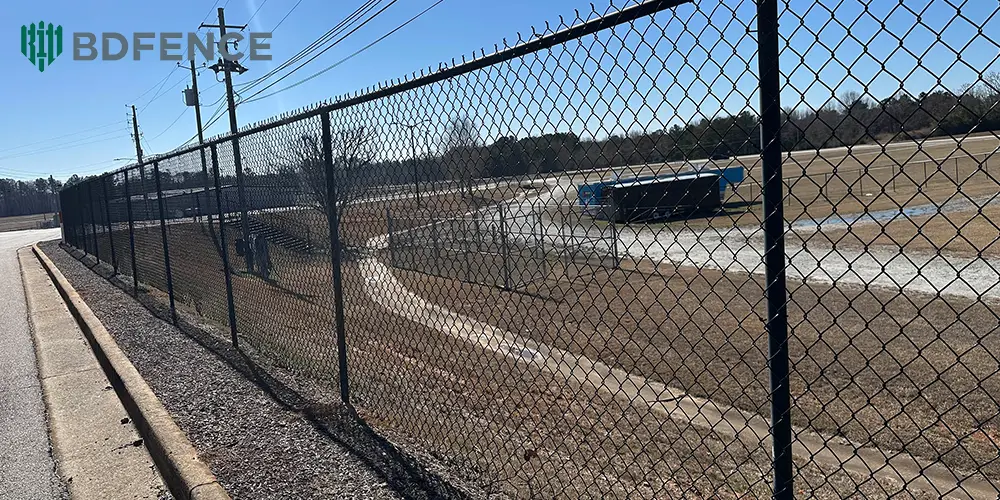
Gauge and Mesh Size Work Together
Suppose two projects both use 2-inch mesh.
One uses a lighter wire. The other uses a much heavier gauge.
The opening is the same, but the fence weight, rigidity, and price can be very different.
Now change the opening to 1 inch while keeping the heavier wire.
The steel consumption increases again.
For this reason, wire gauge and mesh size should always be reviewed together.
How Mesh Size Changes Visibility
Chain Link Fence is popular partly because it maintains open sightlines.
A larger 2-inch opening generally appears more open than a 1-inch mesh.
This can matter around:
- Security monitoring areas
- Commercial boundaries
- Industrial sites
- Sports grounds
However, visibility is also influenced by wire diameter, coating color, fence height, and viewing distance.
Therefore, mesh size is only one part of the visual result.
How Mesh Size Changes Fence Weight
Smaller openings require more wire to create the same fence area.
That means tighter mesh can affect the complete project beyond the roll itself.
Heavier mesh may influence:
- Roll handling
- Post loading
- Tension requirements
- Container weight
- Site unloading
For large projects, these differences can become significant.
Does Smaller Mesh Need Stronger Posts?
Not automatically, but the complete fence should be reviewed.
A heavier mesh can place more load on the supporting structure.
Therefore, buyers should consider:
- Post size
- Post wall thickness
- Post spacing
- Fence height
- Terminal post strength
- Tension components
A tighter mesh should not be selected without checking whether the supporting system matches the final fence weight.
How Mesh Size Affects Price Per Meter
A smaller mesh often costs more because it uses more wire across the same fence area.
However, final Chain Link Fence price also depends on:
- Wire diameter
- Fence height
- Galvanized or PVC-coated finish
- Post specification
- Post spacing
- Top rail or tension wire
- Gate quantity
- Order volume
Therefore, buyers should compare complete system specifications rather than mesh opening alone.
Can One Project Use Different Mesh Sizes?
Yes, if the project design allows it.
A large site may use different mesh openings in different zones.
For example:
| Project Zone | Possible Mesh Direction |
|---|---|
| General Industrial Boundary | 2″ mesh |
| Sports Area | 1-1/2″ or 1″ depending on use |
| Smaller-Object Containment Area | 1″ mesh |
| Secondary Commercial Boundary | 2″ mesh |
This approach can help the project use tighter mesh only where it creates real value.
Which Mesh Is Better for Warehouses?
For many warehouse and logistics boundaries, 2-inch mesh can provide a practical solution.
These projects often value:
- Long perimeter coverage
- Visibility
- Truck access
- Cost control
- Simple maintenance
However, if the project requires tighter openings for a specific security or operational reason, 1-1/2-inch or 1-inch mesh may also be considered.
Which Mesh Is Better for Sports Facilities?
Sports facilities need to look beyond the property boundary function.
The fence may also help contain balls or separate playing areas.
Therefore, tighter mesh can be useful depending on the sport and location.
For example, sections behind goals or around certain courts may require a different mesh than the general outer boundary.
Which Mesh Is Better for Commercial Properties?
Commercial projects can use several mesh sizes depending on the purpose of the fence.
A general back boundary may use a more open mesh, while a recreation or public-facing area may use a tighter or coated system.
The correct choice depends on whether the fence is mainly providing:
- Boundary control
- Security
- Sports containment
- Landscape integration
- Internal separation
How to Compare Supplier Quotations Correctly
Before comparing prices, make sure every supplier is quoting the same mesh.
| Specification | What to Confirm |
|---|---|
| Mesh Opening | 1″, 1-1/2″ or 2″ |
| Wire Size | Actual diameter or confirmed gauge standard |
| Fence Height | Same finished height |
| Finish | Galvanized or PVC coated |
| Posts | Diameter, wall thickness and spacing |
| Support System | Top rail, tension wire and related fittings |
| Gates | Quantity, dimensions and hardware |
Once these details match, the price comparison becomes much more meaningful.
A Simple Mesh Selection Method
Use the project requirement in this order:
- Define what the fence needs to contain or control
- Confirm required visibility
- Select the mesh opening
- Choose the wire diameter
- Confirm fence height
- Match the post system
- Choose galvanized or PVC-coated finish
- Review gates and accessories
- Compare the complete project cost
This method is more reliable than choosing the smallest mesh simply because it appears stronger.
What Should You Send BDFENCE for a Chain Link Fence Quote?
For an accurate quotation, send the available project information:
- Project country
- Total fence length
- Fence height
- Required mesh opening
- Wire diameter or gauge
- Galvanized or PVC-coated finish
- Core wire diameter for coated mesh if specified
- Post size and wall thickness
- Post spacing
- Top rail or tension wire requirements
- Pedestrian gate sizes and quantities
- Vehicle gate sizes and quantities
- Project drawings or BOQ
- Destination port
If the mesh opening has not been finalized, BDFENCE can review the application and available project specification before preparing the quotation.
How BDFENCE Supplies Chain Link Fence
Hebei Bendin Industrial Technology Co., Ltd. (BDFENCE) manufactures Chain Link Fence systems for commercial, industrial, warehouse, sports, infrastructure, residential, and utility projects.
Our project supply can include:
- Different mesh openings
- Different wire gauges
- Galvanized Chain Link Fence
- PVC-coated Chain Link Fence
- Line and terminal posts
- Top rails
- Tension components
- Pedestrian gates
- Vehicle gates
- Fence fittings
Project buyers can send drawings, BOQ documents, fence schedules, and gate requirements directly to BDFENCE for review and quotation.
Final Answer: 1″, 1-1/2″ or 2″ Mesh?
Choose 2-inch mesh when the project needs a practical and open perimeter with lower wire consumption.
Choose 1-1/2-inch mesh when the project needs a denser fence without moving to the tightest common opening.
Choose 1-inch mesh when the project requires a tighter woven structure for containment or other specific operational needs.
However, mesh opening should never be selected alone.
The final Chain Link Fence should combine the mesh size, wire diameter, fence height, posts, tension system, gates, and surface treatment around the actual project requirement.
Contact BDFENCE
Hebei Bendin Industrial Technology Co., Ltd. (BDFENCE)
Phone:
+86 18703182863
WhatsApp:
+86 18703287372
Email:
info@bd-fence.com
Website:
https://bd-fence.com/
FAQ
What is the most common Chain Link Fence mesh size?
2-inch mesh is widely used for general commercial and industrial perimeter fencing. However, the best opening depends on the project application.
Is 1-inch Chain Link Fence stronger than 2-inch mesh?
A 1-inch mesh uses more wire intersections across the same fence area, but complete fence performance also depends on wire diameter, posts, height, tensioning, and installation.
Does smaller mesh cost more?
Usually, smaller mesh uses more wire per square meter. Therefore, material weight and cost can increase when other specifications remain the same.
What mesh size is good for sports fencing?
It depends on the sport, ball size, fence height, and facility layout. Some sports areas may benefit from 1-inch or 1-1/2-inch mesh, while other sections can use a larger opening.
What mesh size is good for warehouse fencing?
2-inch mesh is often practical for warehouse and logistics boundaries where visibility, long perimeter coverage, and cost control are important.
Can BDFENCE manufacture 1″, 1-1/2″ and 2″ Chain Link Fence?
BDFENCE can manufacture different Chain Link Fence mesh openings according to the confirmed wire size, height, finish, and project requirements.
Can I send a BOQ for mesh size selection?
Yes. BDFENCE can review your BOQ, site drawing, fence schedule, gate requirements, and technical specifications before preparing a quotation.