


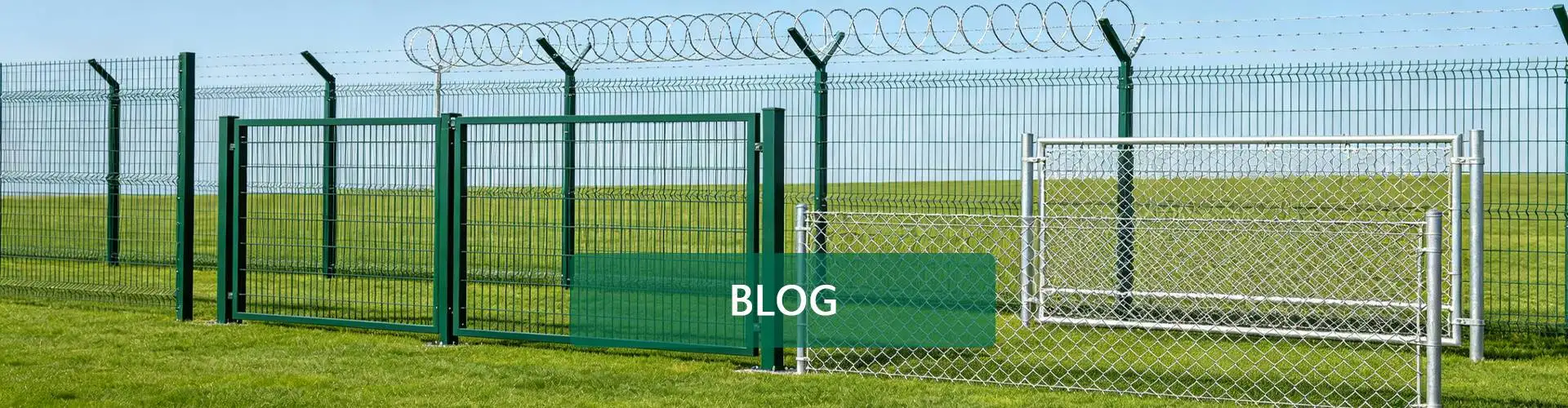
Finding a reliable Chain Link Fence manufacturer is an important step for importers, wholesalers and fencing contractors handling large-volume orders. A competitive quotation matters, but it should never be the only factor in supplier selection. Product consistency, manufacturing flexibility, material specifications and export experience can all influence the success of a purchasing decision. BDFENCE supplies Chain Link Fence products for commercial, industrial, agricultural and infrastructure projects, with different mesh configurations and surface treatment options.
However, comparing manufacturers can become difficult when suppliers offer different specifications under similar product descriptions. For example, two quotations may both describe galvanized chain link mesh, yet use different wire diameters, zinc coatings or mesh openings. Consequently, professional buyers should evaluate the manufacturer’s actual supply capabilities before confirming an order.
This guide explains what importers and project buyers should check when sourcing chain link fencing in bulk, from technical specifications and quality control to packaging and international shipping.
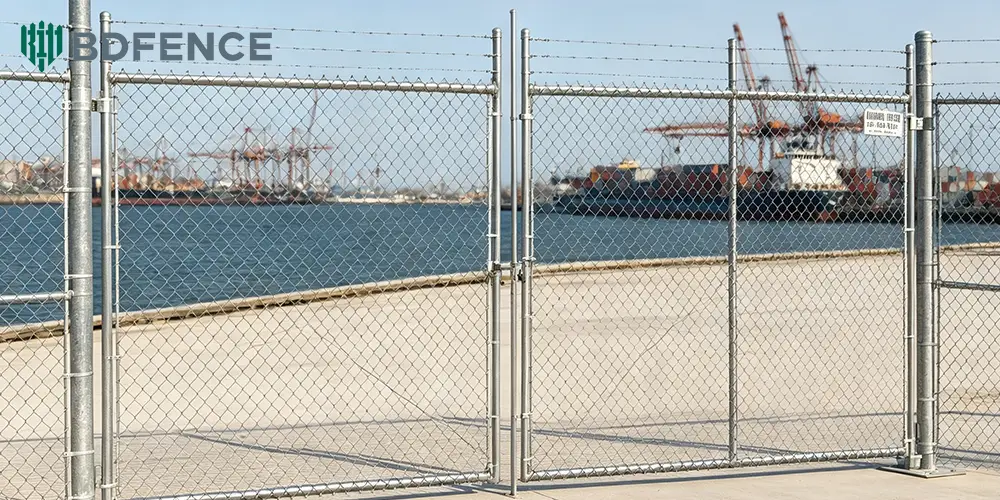
1. Check Whether the Manufacturer Can Meet Your Purchasing Requirements
Not every fencing supplier handles the same type of orders. Some focus on small retail quantities, while others supply distributors, construction contractors and large engineering projects.
Therefore, the first step is to understand whether the manufacturer can support your purchasing model.
For Importers and Wholesalers
Importers usually need stable product specifications and competitive purchasing costs. They may also require different mesh dimensions and finishes within one shipment.
When evaluating a supplier, consider:
- Available mesh opening sizes
- Wire diameter options
- Galvanized and PVC-coated finishes
- Roll heights and lengths
- Packaging specifications
- Product consistency between orders
In addition, ask whether the supplier can maintain the agreed specifications for repeat purchases. Consistency matters when you distribute products under your own business name.
For Fencing Contractors
Contractors often purchase materials according to project drawings or a bill of quantities (BOQ).
For this reason, they need a manufacturer that can understand technical requirements and coordinate the mesh, posts and accessories.
A complete material quotation can also help contractors prepare more accurate project budgets.
For Engineering and Infrastructure Projects
Large projects may involve multiple fencing sections with different requirements.
For example, an industrial development may need general perimeter fencing, equipment enclosures and separate access areas.
In this situation, buyers should provide drawings and technical schedules early. This allows the supplier to review the requirements before production begins.
2. Compare Chain Link Fence Specifications Before Comparing Prices
A low quotation does not necessarily represent good purchasing value.
Manufacturers may use different materials and production specifications, even when their product descriptions look similar.
Therefore, buyers should compare the technical details first.
Wire Diameter
Wire diameter affects the weight and construction of the mesh.
Common options include:
- 2.5 mm
- 3.0 mm
- 3.5 mm
- 4.0 mm
- 4.5 mm
However, buyers should confirm whether the stated diameter refers to the steel wire before coating or the finished coated wire.
This distinction helps prevent specification differences between suppliers.
Mesh Opening
Chain link mesh uses interconnected wires to form diamond-shaped openings.
Common configurations include:
- 40 × 40 mm
- 50 × 50 mm
- 60 × 60 mm
- 75 × 75 mm
- 100 × 100 mm
The appropriate opening depends on the intended application, containment requirements and project specifications.
Surface Treatment
Manufacturers commonly offer galvanized and PVC-coated chain link mesh.
Galvanized products use a zinc coating to protect the steel, while PVC-coated products add a polymer layer over the wire.
For outdoor projects, buyers should request the relevant coating specifications rather than relying on general descriptions.
Roll Dimensions
Roll height and length influence material calculations, packaging and transportation.
Before placing an order, confirm the finished dimensions and acceptable tolerances.
A detailed specification sheet makes it much easier to compare competing quotations accurately.
3. Evaluate the Manufacturer’s Customization Capabilities
Standard specifications can meet many general fencing requirements. Nevertheless, distributors and engineering contractors sometimes need customized products.
For this reason, manufacturing flexibility deserves attention during supplier evaluation.
A suitable manufacturer should be able to discuss requirements such as:
Custom Wire Diameter: Different wire thicknesses for different project applications.
Mesh Opening: Alternative diamond mesh dimensions according to customer specifications.
Roll Height: Different finished heights for commercial and industrial boundaries.
Surface Treatment: Galvanized or PVC-coated finishes based on the intended environment.
Packaging: Customized bundle identification and export packaging according to order requirements.
Accessories: Matching posts, rails and installation components where required.
Furthermore, buyers should confirm which customization options are available before requesting a final quotation.
Clear communication at this stage can prevent production changes and unnecessary delays later.
4. Ask About Quality Control Before Placing a Bulk Order
Product quality becomes particularly important when buyers purchase several hundred or several thousand rolls.
A small specification difference can affect an entire shipment. Therefore, professional importers should understand how manufacturers inspect finished products.
Here are several important inspection points.
Incoming Raw Material Inspection
The manufacturer should check incoming steel wire against the purchasing specifications.
Relevant items include wire diameter, material condition and surface quality.
Mesh Dimension Inspection
The production team should verify mesh openings and finished dimensions.
Consistent diamond openings help maintain a uniform appearance throughout the order.
Coating Inspection
For galvanized chain link mesh, buyers should confirm the zinc coating requirements.
For PVC-coated products, coating appearance, adhesion and thickness may form part of the inspection requirements.
Finished Product Inspection
Before shipment, buyers should check roll dimensions, mesh condition, packaging and order quantities.
Where necessary, they can also arrange third-party inspection according to the agreed purchase terms.
Most importantly, buyers should establish inspection criteria before production starts rather than discussing them after manufacturing.
5. Can the Manufacturer Supply a Complete Chain Link Fence Package?
Many project buyers prefer to source compatible fencing components from one supplier.
This approach can simplify purchasing coordination and reduce the risk of receiving components with incompatible dimensions.
Depending on the project, a complete supply package may include:
| Component | Purchasing Considerations |
|---|---|
| Chain link mesh | Wire diameter, mesh opening and coating |
| Line posts | Dimensions, wall thickness and finish |
| Corner posts | Structural requirements and dimensions |
| Terminal posts | Connection and tension requirements |
| Top rails | Diameter, length and material |
| Tension bars | Compatibility with mesh and posts |
| Fittings | Bands, tie wires, caps and fasteners |
| Gates | Opening dimensions and frame design |
For example, a contractor handling a warehouse perimeter may need mesh rolls, posts, top rails and several access gates.
Instead of purchasing each component separately, the contractor can request a coordinated material quotation.
BDFENCE also offers other metal fencing products through its complete fencing product range.
6. Check Export Packaging and Container Loading Arrangements
Product quality is only one part of international procurement. Packaging and transportation also affect the purchasing experience.
Chain link fence rolls can occupy considerable container space, particularly when buyers place large orders.
Therefore, discuss export packaging before confirming the purchase.
Important questions include:
- How many rolls will each package contain?
- What is the weight of each roll?
- How will the manufacturer protect the mesh during transportation?
- Can the supplier provide a packing list?
- What container loading arrangements are available?
- Can different specifications be combined in one shipment?
In addition, buyers should confirm whether the supplier can provide packaging labels or product identification according to their requirements.
Accurate packing information helps importers prepare customs documentation, warehouse planning and distribution arrangements.
7. Understand MOQ, Lead Time and Payment Terms
Commercial conditions can differ between manufacturers and orders.
As a result, buyers should confirm the purchasing terms before making a supplier comparison.
Minimum Order Quantity
MOQ depends on the product specifications, manufacturing arrangements and order requirements.
Some standard products may offer more flexible quantities, while customized orders may require a higher production commitment.
Ask the supplier to clarify the MOQ for each requested specification.
Production Lead Time
Production schedules depend on order volume, product configuration and current manufacturing arrangements.
For this reason, buyers should request an estimated production schedule based on the actual order rather than relying on a general delivery promise.
Payment Terms
International transactions may involve different payment arrangements.
Before placing an order, confirm the deposit, balance payment, production arrangements and relevant trade terms in writing.
A clear purchase agreement helps both parties manage expectations.
8. Why Different Countries May Require Different Chain Link Fence Specifications
A manufacturer serving international markets should understand that buyers do not all purchase the same fencing configuration.
Climate, construction practices, application requirements and local regulations can influence product selection.
Australia: Industrial and Commercial Fencing
Australian buyers may source chain link fencing for warehouses, agricultural properties, commercial developments and infrastructure projects.
They often need clear technical specifications, reliable export packaging and compatible accessories.
Malaysia: Factory and Warehouse Boundaries
Malaysia’s industrial and commercial sectors create demand for practical perimeter fencing.
Buyers should consider the local climate when selecting surface treatments and supporting components.
Vietnam and Thailand: Construction and Distribution
Contractors and distributors in these markets may require different mesh dimensions and roll configurations.
For bulk orders, clear product specifications and coordinated shipping arrangements can simplify procurement.
Middle East: Commercial and Infrastructure Projects
The Middle East includes a wide range of environmental conditions, from coastal locations to dry inland regions.
Therefore, buyers should select the coating and supporting materials according to the actual installation environment.
The manufacturer’s ability to discuss these differences can make technical communication more efficient.
9. Chain Link Fence or 358 Security Fence: Which Product Should You Source?
Importers and distributors sometimes need to offer several fencing categories to serve different customers.
Chain link fencing provides flexible woven mesh for general perimeter applications. However, projects requiring stronger anti-climb performance may need another solution.
A 358 Anti-Climb Security Fence uses narrow rectangular mesh openings and rigid welded panels.
It is commonly considered for:
- Critical infrastructure
- Restricted industrial facilities
- Prisons and detention facilities
- Airports
- High-security commercial sites
By contrast, chain link fencing remains a practical choice for many warehouses, farms, sports grounds and general boundary projects.
For fencing distributors, carrying both product categories can help serve customers with different security requirements.
10. Why Consider BDFENCE for Your Chain Link Fence Orders?
BDFENCE supplies metal fencing products for international importers, wholesalers, contractors and project buyers.
We understand that bulk purchasing requires more than a product catalogue and a price list. Buyers need clear specifications, coordinated materials and effective communication throughout the order process.
Our chain link fence supply options include:
- Galvanized Chain Link Fence
- PVC Coated Chain Link Fence
- Different wire diameters
- Multiple mesh opening sizes
- Various roll dimensions
- Matching posts and accessories
In addition, our wider fencing product range includes 358 Security Fence, Steel Tubular Fence and other perimeter protection solutions.
Whether you are sourcing products for distribution or preparing materials for a construction project, you can send us your specifications for review.
We can then discuss the available configurations and prepare a quotation based on your purchasing requirements.
11. Request a Bulk Chain Link Fence Quotation
Looking for a reliable chain link fence supplier for your distribution business or next engineering project?
BDFENCE welcomes inquiries from importers, wholesalers, fencing contractors and commercial project buyers.
To help us prepare an accurate quotation, please provide:
- Required wire diameter
- Mesh opening size
- Fence height and roll length
- Galvanized or PVC-coated finish
- Total order quantity
- Post and accessory requirements
- Destination country and preferred shipping port
- BOQ or technical drawings, if available
If you need multiple specifications, you can include them in one inquiry.
Our sales team can review the requirements and help you identify suitable product configurations.
Contact BDFENCE
Hebei Bendin Industrial Technology Co., Ltd.
Website: bd-fence.com
WhatsApp: +86 18703287372
Email: info@bd-fence.com
Frequently Asked Questions
1. What should importers check before choosing a chain link fence manufacturer?
Importers should compare manufacturing capabilities, wire specifications, mesh dimensions, coating quality, export packaging and purchasing terms. They should also confirm whether the supplier can support repeat orders.
2. Can chain link fence manufacturers produce customized mesh sizes?
Yes. Manufacturers can offer different wire diameters, mesh openings, roll heights and surface treatments according to their production capabilities and customer requirements.
3. What is the MOQ for bulk chain link fence orders?
MOQ varies according to product specifications, order quantity and production arrangements. Buyers should request a quotation based on their required configuration.
4. Can I order chain link fence with posts and accessories?
Yes. Buyers can request a complete supply package that includes mesh rolls, posts, rails, tension bars, fittings and gates, depending on the supplier’s product range.
5. How can I compare quotations from different chain link fence suppliers?
Use the same technical specifications when comparing prices. Check wire diameter, mesh opening, coating, roll dimensions, included accessories, packaging and shipping terms.
6. Can manufacturers support OEM or distributor orders?
Some manufacturers offer customized packaging, product specifications and order arrangements for distributors. Buyers should confirm the available services directly with the supplier.
7. What documents should I request when importing chain link fence?
Depending on the destination and trade requirements, buyers may need a commercial invoice, packing list, bill of lading and relevant product or inspection documents. Confirm the exact documentation requirements before shipment.
8. Can I send a BOQ or project drawing for a quotation?
Yes. A BOQ or technical drawing helps the manufacturer understand quantities, dimensions and accessory requirements. It can also reduce errors during quotation and order confirmation.