


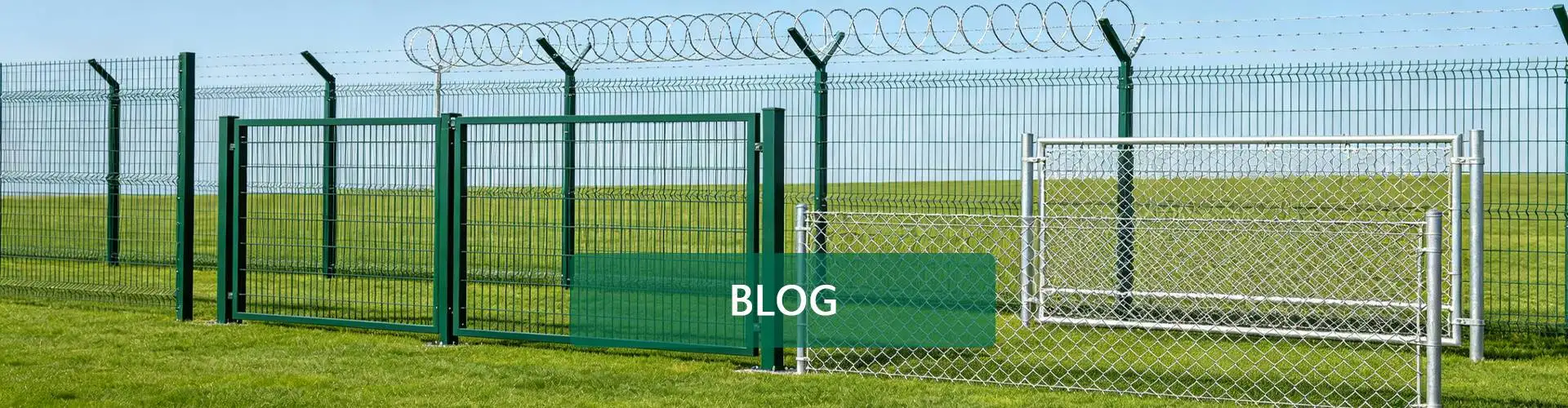

A logistics facility has a different fencing requirement from a small commercial property. Trucks enter throughout the day, trailers move between loading areas, and service vehicles need access to different parts of the site. Meanwhile, the perimeter must remain secure without interfering with daily operations.
The main vehicle entrance often creates the biggest challenge. A conventional swing gate needs room for its leaves to open. At a busy logistics entrance, that movement can interfere with truck lanes, parking areas or nearby loading operations.
For this illustrative U.S. project, the proposed perimeter combines Chain Link Fence with a cantilever sliding gate. The chain link mesh provides a practical boundary around the logistics facility, while the sliding gate controls the main vehicle entrance without requiring a swing area across the driveway.
However, these two products need to work as one system. The gate opening, counterbalance section, supporting posts, foundations and adjacent fence panels all require careful coordination.
This article examines the proposed design, component selection, U.S. gate requirements and procurement process. It is an engineering application example, not a claim that BDFENCE has completed this specific U.S. installation.
Project Overview
| Project Item | Proposed Details |
|---|---|
| Country | United States |
| Project Type | Logistics and Distribution Facility |
| Main Fence | Galvanized Chain Link Fence |
| Main Gate | Cantilever Sliding Vehicle Gate |
| Other Access | Separate Pedestrian Gates |
| Fence Application | Warehouse, Truck Yard and Service Perimeter |
| Supporting Components | Steel Posts, Tension Components, Gate Supports and Fittings |
| Gate Operation | Manual or Automated, Subject to Project Requirements |
| Surface Treatment | Hot-Dip Galvanized, Subject to Specification |
| Project Status | Illustrative Application Scenario |
What Did the Logistics Facility Need?
The proposed facility includes warehouse buildings, loading areas, truck circulation routes, outdoor storage and controlled access points.
Each area has a different operational purpose. Therefore, the fence layout needs to follow the way vehicles and people move around the property.
The project team identified four main requirements.
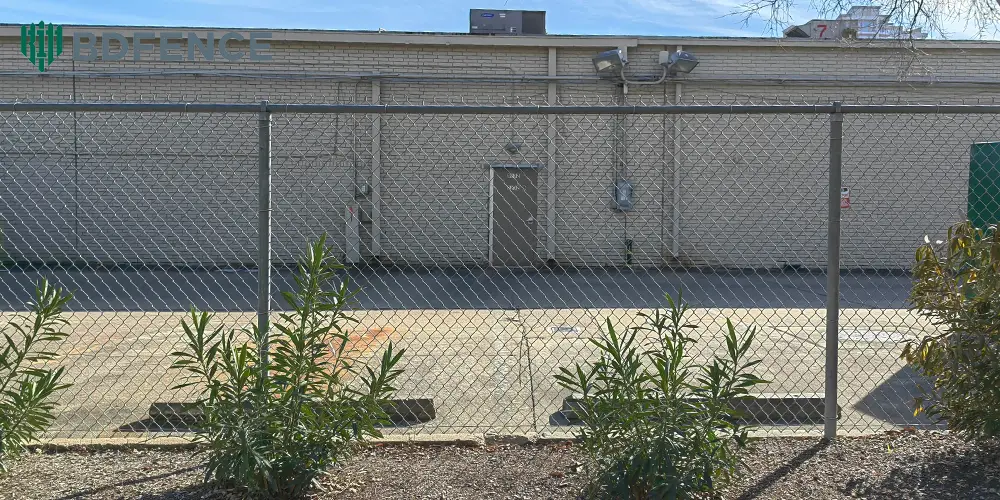
1. A continuous boundary around a large site
A logistics facility may have long property boundaries with several corners and changes in direction. The fence needs to cover these areas without making the installation unnecessarily complicated.
Chain Link Fence is a practical option for this type of perimeter. Its woven diamond mesh comes in rolls, which allows the contractor to cover long sections using a relatively straightforward post and tension system.
It also maintains visibility through the boundary. Security personnel can observe vehicle movement, storage areas and activity near the fence without relying on a solid wall.
2. Vehicle access throughout the working day
The main entrance needs to accommodate freight trucks, delivery vehicles and maintenance equipment.
A narrow opening can interrupt vehicle movement, while an unsuitable gate arrangement can create delays during busy periods.
The project team therefore needs to establish the required clear opening, gate movement and available operating space before choosing the gate system.
3. Separate access for employees and visitors
Not everyone needs to use the main vehicle entrance. Warehouse employees, security staff and visitors may require separate pedestrian access.
For this reason, the proposed perimeter includes individual pedestrian gates at designated locations. This helps separate routine foot traffic from truck movements.
4. Outdoor durability and manageable maintenance
The fence remains outdoors throughout the year. Rain, sunlight, moisture and local environmental conditions can affect the steel components.
The buyer therefore needs to specify suitable corrosion protection for the mesh, posts, gates and fittings. A coating description for the mesh alone does not define the complete fence system.
Why Chain Link Fence Was Selected for the Perimeter
For a logistics property, the fence often covers a much larger area than the main entrance. Using a practical mesh system across long boundary sections can help control material and installation costs.
Chain Link Fence offers several useful features for this application:
- Woven mesh supplied in rolls for long fence runs.
- Open diamond pattern that maintains visibility.
- Different wire diameters and mesh openings.
- Flexible installation around corners and changes in ground level.
- Compatible posts, tension components and gate infill options.
- Galvanized and PVC-coated product configurations.
For this U.S. application, the actual mesh size and wire diameter would follow the approved project specification. A warehouse perimeter does not automatically require the same configuration as an airport cargo area or a high-security industrial facility.
For reference, BDFENCE publishes chain link mesh options ranging from 40 × 40 mm to 100 × 100 mm, with wire diameters from 2.5 mm to 4.5 mm.
The buyer can also review different roll heights, roll lengths, post sizes and top rail options on the BDFENCE Chain Link Fence product page.
Why Choose a Cantilever Sliding Gate?
The main entrance needs a gate that can handle regular vehicle movement without taking up unnecessary driveway space.
A cantilever sliding gate works differently from a conventional swing gate. It moves sideways along the fence line and receives support from roller assemblies mounted beside the opening.
Unlike a ground-track sliding gate, the cantilever design does not require a running track across the vehicle entrance.
This arrangement can suit logistics facilities where trucks regularly cross the entrance and the driveway surface needs to remain clear.
The counterbalance section needs enough space
There is one detail that buyers sometimes overlook: the gate leaf is longer than the clear opening.
A cantilever gate includes an additional section behind the opening. This section acts as a counterbalance and allows the gate to remain supported while it moves.
As a result, the contractor needs enough space along the fence line for the complete gate to travel.
Consider a simple planning example. A logistics facility may have a wide truck entrance, but the available space beside the driveway is limited by a building or parking area.
Even if the gate can cover the opening, it may not have enough room to reach its fully open position. The designer should therefore show both the closed and open gate positions on the site drawing.
The exact counterbalance length depends on the selected gate system, opening width, gate height, weight and operator arrangement. Use the gate manufacturer’s approved drawing rather than a general estimate.
What components make up a cantilever gate?
A cantilever gate is more than a framed mesh panel. Its supporting and operating components must work together.
| Component | Function |
|---|---|
| Gate Frame | Supports the gate structure and mesh infill |
| Counterbalance Section | Provides the additional length needed to support the gate |
| Roller Carriages | Support and guide the moving gate |
| Guide Rollers | Help keep the gate aligned during movement |
| Support Posts | Carry the roller assemblies and gate loads |
| Receiver Post | Provides the closing position for the gate |
| Stops and Locking Hardware | Control the closed and open positions |
| Gate Operator | Moves the gate when the system uses automation |
Not every cantilever system uses identical hardware. The manufacturer should identify the selected carriage arrangement, guide components, gate frame and support details in the technical submittal.
Coordinating the Chain Link Mesh with the Gate
The gate and fixed fence should form one continuous boundary when the entrance closes.
For this proposed logistics facility, the gate would use chain link mesh infill to match the surrounding fence. This keeps the appearance consistent and avoids introducing an unrelated panel design at the main entrance.
However, the gate frame and fixed fence do not use exactly the same construction.
The fence mesh connects to line and terminal posts through tension bars, bands and other fittings. The gate mesh attaches to a rigid moving frame, which needs its own connection and tension arrangement.
The contractor should therefore confirm the following details before fabrication:
- Gate clear opening and overall frame dimensions.
- Mesh opening and wire diameter.
- Gate infill fixing arrangement.
- Frame tube dimensions and wall thickness.
- Counterbalance section dimensions.
- Guide and roller carriage positions.
- Gate support post locations.
- Connection between the gate and adjacent fence sections.
A gate that uses the correct mesh can still create installation problems if its frame dimensions or support positions do not match the site layout.
U.S. Gate Standards and Safety Requirements
For a project in the United States, the technical documents should identify the applicable gate standards and local requirements.
One important reference is ASTM F1184-23, which covers material, design and dimensional requirements for industrial and commercial horizontal sliding chain link gates. It includes Type II cantilever gates that span an opening without top or bottom support inside the opening.
For automated vehicle gates, the project team should also review ASTM F2200-24 and UL 325 where applicable. ASTM F2200 covers automated vehicular gate construction, while UL 325 addresses the safety of gate operators and systems.
These requirements matter because a powered gate creates moving and potential entrapment zones.
The selected system may require safety devices such as photoelectric sensors or sensing edges. The gate operator, protection devices and installation method should follow the applicable listing, project documents and local authority requirements.
Separate pedestrian access also deserves attention. Employees and visitors should use designated pedestrian entrances rather than rely on the large vehicle gate for routine foot traffic.
For reference, see:
- ASTM F1184-23: Industrial and Commercial Horizontal Slide Gates
- ASTM F2200-24: Automated Vehicular Gate Construction
- UL Solutions: Access Control and Gate Operator Safety
The project architect, engineer, gate supplier and local installer should confirm the applicable editions and approval requirements before construction.
Post and Foundation Coordination
Not every post in a logistics perimeter performs the same job.
Ordinary line posts support the chain link mesh. Corner posts handle changes in direction, while terminal posts support the ends of tensioned fence sections.
The cantilever gate requires a separate support arrangement. Its roller carriages transfer the gate loads to dedicated support posts and foundations.
For this reason, the gate support posts should not automatically use the same dimensions as standard fence posts.
The responsible engineer should review the gate opening, overall gate weight, support arrangement, soil conditions and relevant loads before approving the foundations.
The contractor should also check underground utilities before excavation. This is particularly important at logistics facilities, where service lines, drainage systems and paved truck routes may run close to the perimeter.
Before concrete work begins, compare the fence layout, gate drawings and foundation details. They should all refer to the same approved revision.
What BDFENCE Can Supply for a Logistics Fence Package
A large logistics project needs more than mesh rolls. The buyer must also coordinate posts, tension components, gates and installation fittings.
BDFENCE’s published Chain Link Fence range includes several product configurations.
| Component | Published Product Options |
|---|---|
| Wire Diameter | 2.5 / 3.0 / 3.5 / 4.0 / 4.5 mm |
| Mesh Opening | 40 × 40 / 50 × 50 / 60 × 60 / 75 × 75 / 100 × 100 mm |
| Roll Height | 1.2 / 1.5 / 1.8 / 2.0 / 2.4 / 2.8 / 3.0 m |
| Roll Length | 9 / 10 / 15 / 18 / 20 / 25 / 30 m |
| Top Rail | 32 / 40 / 48 mm diameter |
| Round Posts | 40 / 48 / 60 / 75 mm diameter |
| Post Wall Thickness | 1.5 / 1.8 / 2.0 / 2.5 mm |
These are published manufacturing options. The final combination should follow the approved project specification and structural requirements.
For the proposed logistics facility, the procurement schedule would separate the following items:
- Chain link mesh rolls.
- Line, corner and terminal posts.
- Gate posts and related steel components.
- Top rails and tension components.
- Brace bands, tension bands and clips.
- Vehicle gate mesh infill and agreed gate components.
- Pedestrian gates and related fittings.
- Packaging and export accessories.
The cantilever gate carriages, operator, safety devices and full gate assembly must have a clearly agreed supply responsibility. Buyers should not assume that these items are included in a standard chain link mesh quotation.
A Related BDFENCE Logistics Project Reference
BDFENCE has published a separate Chain Link Fence supply reference for an airport cargo and logistics zone.
That project involved approximately 12.8 km of perimeter fencing, 2,400 mm fence height, 50 × 50 mm mesh opening and 4.0 mm wire. The published supply scope also included approximately 4,700 steel posts, 26 pedestrian gates and 22 vehicle gates.
The system used heavy hot-dip galvanized chain link fencing and included tension components, fittings and installation accessories.
This reference demonstrates BDFENCE’s experience with large logistics perimeter supply. It is a separate project, and its published information does not identify the country or confirm a cantilever gate configuration.
Read the related project: How Chain Link Fence Secured a Large Airport Cargo and Logistics Zone.
Production Inspection and Export Packing
Large fencing orders require consistent specifications across multiple production batches.
For this proposed U.S. project, the inspection plan would cover the mesh, posts, fittings and gate-related components within the agreed supply scope.
Chain link mesh inspection
The factory should check the mesh opening, wire diameter, roll height, roll length and edge condition against the approved specification.
The inspection team should also review the visible surface condition and weaving consistency.
Post and fitting inspection
Post dimensions, wall thickness, length and surface treatment need to match the material schedule.
Small components deserve equal attention. Tension bands, brace bands, clamps, bolts and post caps should match the required quantities.
Gate component inspection
If the cantilever gate assembly forms part of the factory supply scope, its frame dimensions, mesh infill, connection points and hardware compatibility need separate checks.
The buyer should also confirm which parts require factory inspection and which checks belong to the local gate installer.
Export packing
Chain link rolls, steel posts, gate components and small fittings need suitable packing for international transport.
The packing list should identify each component group and its quantity. This helps the receiving team check the shipment before distributing materials around the site.
Large gate frames may require separate packing and loading arrangements. Confirm those requirements before finalizing the shipping plan.
Typical Installation Sequence
The contractor should start with the gate location because the entrance affects the surrounding fence layout.
- Review the approved perimeter drawing and site conditions.
- Confirm the vehicle gate opening and sliding direction.
- Check the gate counterbalance space and full travel path.
- Mark the line, corner, terminal and gate support post positions.
- Prepare the approved post and gate foundations.
- Install the fence posts and tension support components.
- Install and tension the chain link mesh.
- Assemble the cantilever gate support and operating system.
- Install pedestrian gates and other access components.
- Check fence alignment, gate travel, locking and safety devices.
The contractor should follow the gate manufacturer’s installation instructions and the approved engineering drawings. The final inspection should also confirm that the open gate does not interfere with nearby fence sections or vehicle routes.
What Should Be Checked Before Handover?
A logistics fence should be inspected as a complete perimeter system, not just as a collection of mesh rolls and steel posts.
For the chain link sections, check the fence alignment, mesh tension, post stability, fittings and visible surface condition.
For the cantilever gate, check its full opening and closing movement. The gate should travel along the approved path without binding or contacting the ground.
If the project uses an automatic operator, the qualified installer should complete the required safety-device and operating checks. The owner should also receive the relevant operating and maintenance information.
Finally, compare the installed components with the approved drawings and material schedule. Record any missing parts, damaged finishes or installation deviations before the project team closes the outstanding work.
Project Takeaway
A logistics facility needs a fence that supports daily operations as well as perimeter security.
Chain Link Fence provides a practical solution for long boundaries, while a cantilever sliding gate can help manage a wide vehicle entrance without requiring a swing area across the driveway.
However, the two systems need coordinated planning. The gate opening, counterbalance section, support posts, foundations, adjacent mesh and safety devices must all fit the site.
For U.S. projects, the buyer should also confirm the relevant ASTM requirements, gate operator listing and local approval conditions before manufacturing and installation.
Once the drawings and supply scope agree, the manufacturer and contractor can work from the same technical information. That is the starting point for a smoother procurement and installation process.
Discuss Your Logistics Fence Project with BDFENCE
BDFENCE is a China-based metal fencing manufacturer supplying overseas contractors, distributors and industrial project buyers.
For a U.S. logistics facility enquiry, the purchasing team can provide:
- Site layout and total perimeter length.
- Required chain link mesh size and wire diameter.
- Fence height and post specifications.
- Vehicle gate clear opening and gate drawings.
- Cantilever gate system and operating requirements.
- Pedestrian gate quantities and dimensions.
- Coating and inspection requirements.
- BOQ, delivery destination and requested shipping terms.
BDFENCE can review the chain link mesh, posts, fittings and agreed gate-related components against the project documents. The final responsibility for the cantilever gate assembly, operator, safety devices and installation should be confirmed in the contract.
For a project-based quotation, send your drawings or BOQ through Contact BDFENCE.
FAQ
Why use a cantilever sliding gate at a logistics facility?
A cantilever gate moves sideways rather than swinging across the driveway. It can suit wide truck entrances where a swing gate would interfere with vehicle movement, provided the site has enough space for the counterbalance section and full gate travel.
Does a cantilever sliding gate need a ground track?
A conventional cantilever system supports the gate with roller assemblies beside the opening. It does not require a running track across the vehicle entrance. The selected system still needs suitable support posts, foundations and guide components.
What U.S. standards should buyers check for an automated cantilever gate?
Project documents may reference ASTM F1184 for industrial and commercial horizontal slide gates. Automated vehicle gate systems should also be reviewed against ASTM F2200 and UL 325 where applicable. Confirm the required editions and local approval conditions.
Can chain link mesh be used as cantilever gate infill?
Yes. Chain link fabric can form the infill of a suitable gate frame. The frame, mesh attachment, tension arrangement and gate hardware need to follow the approved gate design.
What information is needed for a logistics fence quotation?
Provide the site layout, fence length, mesh opening, wire diameter, fence height, post details, gate opening, cantilever gate requirements, quantities and delivery destination.
Contact BDFENCE
Hebei Bendin Industrial Technology Co., Ltd. (BDFENCE)
Planning a Chain Link Fence and Cantilever Sliding Gate system for a logistics facility in the United States? Send your drawings, BOQ or technical specification for a quotation based on your project requirements.
WhatsApp: +86 18703287372
Email: info@bd-fence.com
Website: https://bd-fence.com/
Inquiry: Contact BDFENCE