



A delivery truck arrives at the warehouse entrance. The driver needs enough room to enter, turn and reach the loading yard. Meanwhile, the security team needs to control access without leaving the perimeter open for longer than necessary.
That entrance can become the most complicated part of an otherwise straightforward fence layout. The mesh fence follows the property boundary, but the gate needs space to move, strong support posts and a clear operating area. If the contractor considers these elements separately, the installation may run into problems before the first truck arrives.
For this illustrative logistics facility in Gauteng, South Africa, the proposed arrangement combines Chain Link Fence with a cantilever sliding gate. The mesh defines the perimeter, while the gate provides vehicle access without requiring a swing area inside or outside the entrance.
This is an engineering application example, not a verified BDFENCE installation. The final dimensions, gate configuration and foundation design would depend on the actual site drawings and approved requirements.
Key Takeaways
- Plan the vehicle entrance before calculating the final mesh and post quantities.
- Check the cantilever gate’s opening width, travel direction and required side clearance.
- Coordinate gate posts, foundations and operating hardware with the approved design.
- Specify the chain link mesh, framework and corrosion protection as one supply package.
- Confirm that the gate can complete its full travel without hitting fencing, parked vehicles or other site features.
- Use the latest layout, BOQ and gate drawings when approving production.
Start with the Vehicle Entrance
How much space does the gate actually need?
A cantilever sliding gate does not swing across the driveway. Instead, the gate moves sideways along a supporting system and extends beyond the clear opening as it travels.
That arrangement can be useful at a logistics facility where trucks need an unobstructed approach. It also removes the need for swing leaves to occupy the driveway or loading area.
However, the gate needs space beside the entrance. The gate leaf and its supporting arrangement must travel far enough to clear the opening. The available run-back space therefore matters just as much as the width of the driveway.
Before selecting the gate, the contractor should mark the clear opening and travel direction on the site plan. Next, check nearby buildings, parking spaces, pedestrian routes, drainage features and the adjacent fence line.
A gate may fit the opening on paper but still conflict with a parked truck or an existing wall when fully open. That is why the layout should show both the closed and open positions.
Keep vehicle and pedestrian access clear
A logistics facility may need a wide vehicle entrance and a separate pedestrian gate. Combining both movements into one opening can complicate site operations, depending on the layout and access-control plan.
The design team should identify where drivers, staff and visitors enter the property. It should also establish how emergency access and any required escape routes will operate.
For this scenario, the vehicle gate and pedestrian entrance would appear separately on the drawing. Each opening would have its own dimensions and hardware schedule.
This approach gives the contractor a clearer material list. It also reduces the risk of leaving an opening unfinished because the original fence quotation covered only the mesh and posts.
Why Use Chain Link Fence Along the Perimeter?
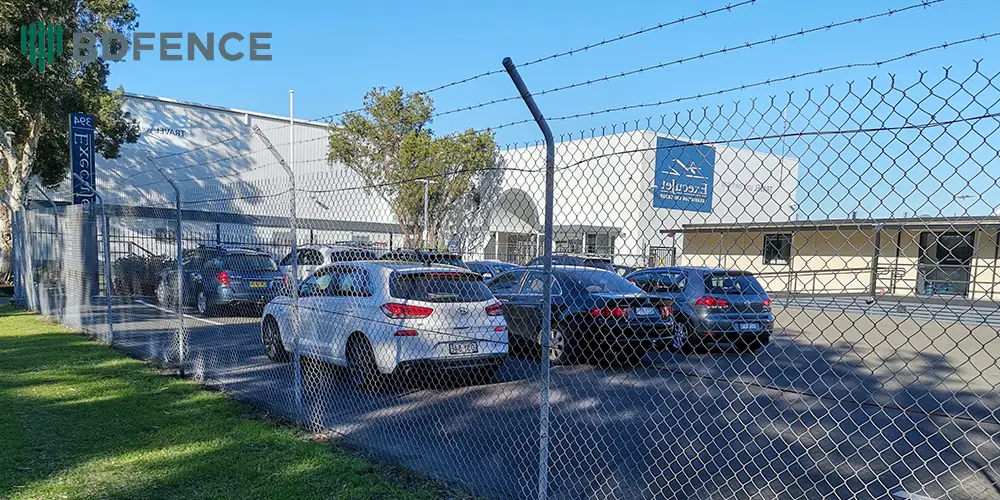
The proposed perimeter uses chain link mesh because it creates a continuous boundary while allowing people to see through the fence.
That visibility can help security staff observe activity around the warehouse yard. It also allows the fence to define the property without creating a completely solid barrier.
The actual mesh specification still needs to match the facility’s requirements. Fence height, wire diameter, mesh opening and coating should be confirmed before ordering. The project designer should also establish whether the site needs additional security measures beyond the standard mesh boundary.
For a long perimeter, the contractor may be able to repeat standard mesh rolls or panel sections across much of the site. However, the fence layout will change around the vehicle gate, corners, buildings and drainage crossings.
Those locations need their own measurements. A short closing section beside the gate may not use the same dimensions as a regular fence run.
How the Fence and Cantilever Gate Work Together
Check the connection at each side of the entrance
The chain link fence terminates at the gate area, where the supporting structure and gate posts take over. These connections need to match the approved arrangement.
At one side of the opening, the contractor must coordinate the fixed fence with the gate’s support and guide arrangement. At the other side, the gate needs a suitable receiving point when it closes.
The exact hardware depends on the selected gate system. A quotation should identify the gate frame, rollers or supporting assemblies, guide components, stops and locking arrangement required by that design.
Do not assume that a gate described as “cantilever sliding” includes every operating component. One supplier may quote the steel gate structure, while another includes a more complete hardware package.
For the logistics facility, the gate schedule should identify the included items separately. This makes the quotation easier to compare and helps the installation contractor prepare for delivery.
Check the gate’s full travel, not just the opening
A gate that closes correctly may still encounter a problem halfway through its travel.
For example, the moving frame might approach a fence post, a parked vehicle or a change in ground level. The contractor should review the entire movement path against the site plan before fixing the supporting components in place.
The gate also needs enough clearance above the finished surface. Road gradients, drainage channels and uneven ground can affect the available space beneath the moving assembly.
For this reason, the gate drawing should show the finished ground level and the intended gate movement. If the site levels change after the drawing is approved, the affected details need review before installation proceeds.
Posts and Foundations Need Their Own Design
A cantilever gate places different demands on its support system from those of an ordinary line post. The supporting arrangement must accommodate the gate’s weight, movement and relevant operating loads.
The responsible engineer should establish the foundation requirements using the gate dimensions, site conditions, applicable loads and selected support system. A standard footing detail should not be assumed suitable for every logistics facility.
The same principle applies to the fence posts. Their dimensions, spacing and installation method should match the approved chain link fence specification.
At the entrance, the contractor also needs to coordinate the gate support structure with the adjoining fence posts. If the gate foundation occupies space needed by a fence post, that conflict should be resolved on the drawing rather than during concrete work.
Before construction, compare the fence layout, gate drawing and foundation details. They should refer to the same site dimensions and design revision.
Choose the Mesh and Finish for the Site
South Africa has a range of environmental conditions. A logistics facility in inland Gauteng may face different exposure from a warehouse close to the coast.
The project specification should define the required corrosion protection for the mesh, posts, gate frame and exposed hardware. Depending on the application, the design may call for galvanized steel, a coated finish or a specified combination of treatments.
Colour alone does not establish the coating system. If the client requires a particular finish or coating standard, the purchasing documents should identify it clearly.
The chain link mesh also needs a defined wire diameter and opening size. These details affect the product supplied and help the buyer compare quotations on a consistent basis.
For the gate, the same review should cover the frame, support components and specified hardware. The finish on the moving assembly should meet the agreed requirements for the intended outdoor environment.
What Should the Supplier Quotation Include?
A logistics facility needs a coordinated perimeter package rather than a collection of unrelated components. Before comparing prices, the contractor should check which items each supplier includes.
| Supply Item | Details to Confirm |
|---|---|
| Chain Link Fence | Height, mesh opening, wire diameter and finish |
| Fence Posts | Profile, length, spacing and installation method |
| Fence Fittings | Tension components, ties, brackets and fasteners |
| Cantilever Gate | Clear opening, gate dimensions, travel direction and frame |
| Gate Hardware | Supporting assemblies, guides, stops and locking components |
| Gate Supports | Post arrangement and approved foundation requirements |
| Special Sections | Short closing panels, corners and connections to existing structures |
| Surface Treatment | Required protection for the mesh, posts, gate and hardware |
| Delivery | Packing, component identification and agreed shipping terms |
Consider two quotations for the same entrance. One includes the gate frame but excludes the operating hardware. The other includes the specified hardware and support components.
The second quotation may show a higher initial price, yet it may cover more of the required supply. The buyer should align the scope before comparing totals.
For an overseas order, the quotation should also identify the delivery basis and any excluded costs. Freight, customs clearance and local transport may affect the final purchasing cost, depending on the agreed terms.
What to Check Before Installation and Handover
The installation team should start with the latest approved drawings. The fence layout, gate dimensions, post schedule and BOQ need to describe the same arrangement.
At the first installed section, check that the mesh, posts and fixing components match the approved details. The contractor can then verify the remaining runs against the same reference.
For the cantilever gate, test the complete opening and closing movement. Watch for binding, unexpected ground contact, interference with the fence and problems with the closing position.
If the gate includes automation or access-control equipment, arrange the required commissioning checks with the responsible specialist. Mechanical installation alone does not confirm that the full electronic access system operates correctly.
Record any defects by location and component. A note such as “gate problem” is difficult to act on; a description that identifies the gate, the affected part and the observed issue gives the contractor a clear starting point for rectification.
How BDFENCE Can Support a Logistics Facility Fence Order
BDFENCE is a China-based metal fencing manufacturer supplying overseas contractors, distributors and project buyers. The company has more than 30 years of experience in metal fence manufacturing.
For a logistics facility enquiry, useful documents include the perimeter layout, chain link fence specification, gate opening dimensions, gate schedule and bill of quantities. These help establish the required mesh, posts, gate structure and related components.
BDFENCE can review the specified chain link fence products and related manufactured components against the information provided. If the cantilever gate is part of the requested supply, its dimensions, hardware scope and support requirements should be identified clearly in the enquiry.
Site-specific foundation design, structural approval and automated gate commissioning remain the responsibility of the relevant project professionals unless the contract explicitly includes those services.
If you are sourcing fencing for a warehouse, distribution centre or logistics park, send your drawings, BOQ or technical specification through Contact BDFENCE to request a quotation based on your requirements.
FAQ
Why use a cantilever sliding gate at a logistics facility?
A cantilever gate moves sideways rather than swinging across the driveway. It can suit entrances where swing clearance is limited, provided the site has enough space for the gate’s travel and supporting arrangement.
What should be checked before choosing a cantilever gate?
Confirm the clear opening, travel direction, available side space, gate dimensions, support arrangement and operating hardware. The site layout should show the gate in both its open and closed positions.
Can chain link fence be connected to a cantilever sliding gate?
Yes. The fence and gate can form one perimeter system, but the panel termination, gate supports and closing details must follow the approved drawings.
What information is needed for a quotation?
Provide the site layout, fence specification, gate opening dimensions, required hardware, quantities, coating requirements and delivery destination. A BOQ and gate drawing help define the supply scope.
Conclusion
For a logistics facility, the fence and gate should be planned as one perimeter system. The chain link runs define the boundary, while the cantilever gate controls the main vehicle entrance.
The important details sit where those components meet: the gate opening, support structure, adjacent panels, finished ground levels and operating clearance. Once the contractor resolves those details on the drawings, the supplier can quote a clearer and more complete package.
This South African scenario is an illustrative application, not a record of a completed installation. The final mesh, gate dimensions, foundations and hardware must follow the actual project’s approved design.
Contact BDFENCE
Hebei Bendin Industrial Technology Co., Ltd. (BDFENCE)
Planning a logistics facility fencing project? Send your site layout, gate drawing or BOQ for a quotation based on your required chain link fence, cantilever gate and related components.
Phone: +86 18703182863
WhatsApp: +86 18703287372
Email: info@bd-fence.com
Website: https://bd-fence.com/
Inquiry: Contact BDFENCE