


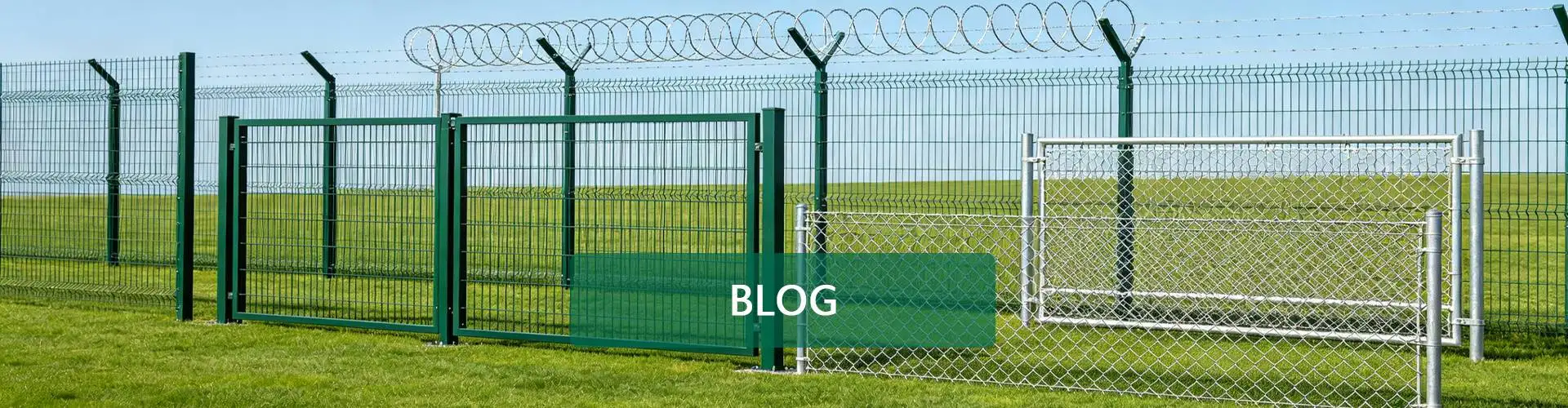

A logistics distribution yard in the Netherlands needed a perimeter fence around truck circulation areas, outdoor storage zones, loading operations, and controlled entrances.
The site remained active throughout the working day, while stored goods, trailers, and equipment could remain inside the yard after normal operating hours.
For this reason, the project required more than a basic property boundary.
BDFENCE supplied a Chain Link Fence system with barbed wire topping, together with steel posts, tension components, pedestrian gates, vehicle gates, and installation fittings for the logistics perimeter.
Project Profile
| Project Item | Details |
|---|---|
| Country | Netherlands |
| Sector | Logistics and Distribution |
| Application | Logistics Yard Perimeter |
| Main Fence | Chain Link Fence |
| Top Security | Barbed Wire |
| Post System | Steel Line, Corner, Terminal and Gate Posts |
| Access | Pedestrian and Vehicle Gates |
| Supply Scope | Mesh, Posts, Top Extensions, Barbed Wire, Gates and Fittings |
The Fence Had to Follow the Way the Logistics Yard Operated
A logistics yard is not a quiet perimeter with one entrance.
Trucks arrive, trailers wait in designated areas, employees move between buildings, maintenance teams access service zones, and loading operations continue close to the fence line.
Therefore, the perimeter layout needed to account for:
- Truck entrance and exit points
- Outdoor storage areas
- Trailer parking
- Loading and unloading zones
- Employee access
- Service areas
- Long boundary sections
The fence needed to control the site without blocking visibility around vehicle routes and operational areas.
Why Chain Link Fence Worked for the Main Perimeter
The customer needed to enclose a relatively large operational area.
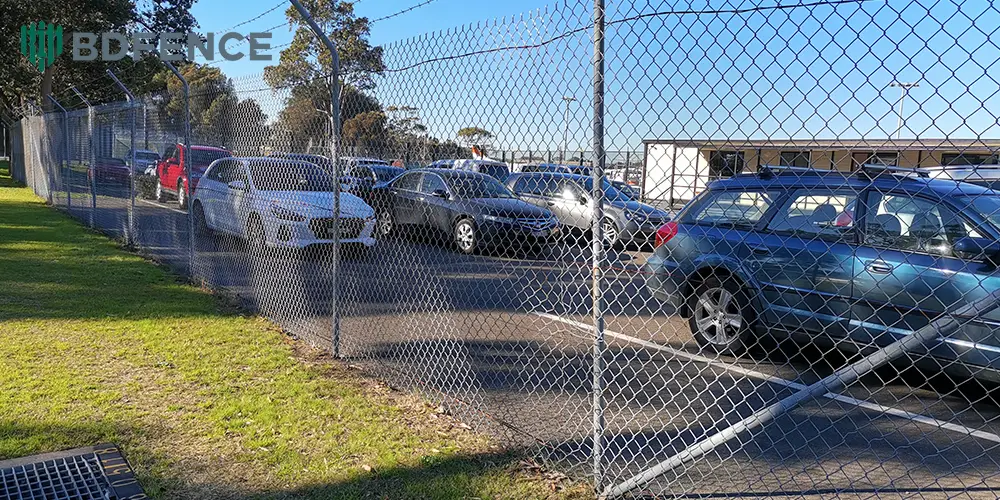
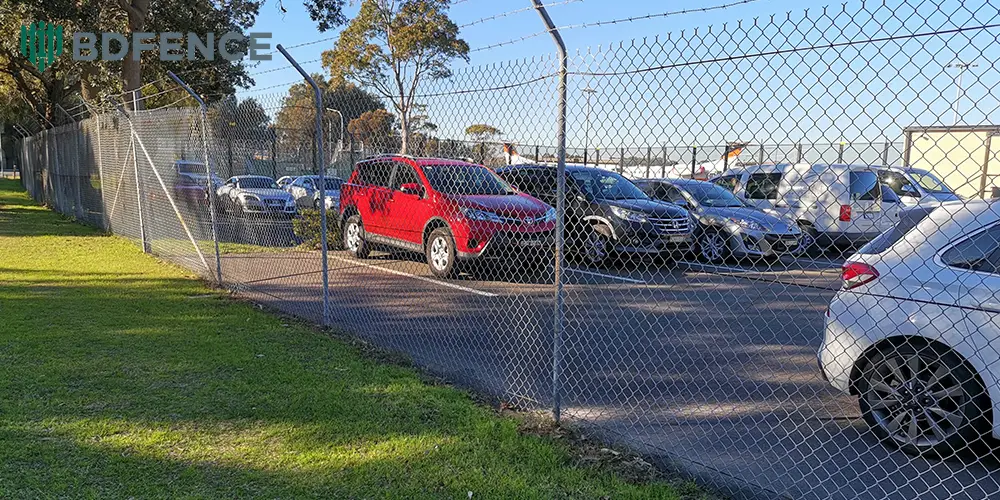
Chain Link Fence provided an open mesh perimeter that could cover long fence runs while maintaining sightlines through the boundary.
That visibility was useful around the logistics yard because staff could still observe:
- Vehicle movement
- Parking areas
- Outdoor storage
- Entrances
- Areas close to the perimeter
Unlike a solid boundary, the chain link structure did not unnecessarily close off the visual relationship between the yard and its surroundings.
Why Barbed Wire Was Added Above the Mesh
The normal fence line created the primary physical boundary.
However, the customer wanted an additional deterrent above the main perimeter in specified sections.
Barbed wire was therefore incorporated into the upper part of the fence system according to the approved project layout.
The two elements performed different roles:
- Chain link mesh created the main vertical boundary
- Barbed wire added another obstacle above the fence line
For the logistics yard, this provided a more security-focused perimeter without replacing the practical advantages of Chain Link Fence.
The Barbed Wire Changed the Post Design
Top security components need suitable structural support.
Therefore, BDFENCE did not treat the barbed wire as an accessory that could simply be added after the posts were produced.
The post arrangement had to consider:
- Finished fence height
- Post length
- Top extension design
- Barbed wire attachment points
- Mesh tension
- Corner and terminal locations
This allowed the normal fence and upper security section to work as one installation system.
Long Straight Runs Needed Reliable Mesh Tension
A logistics yard can include long, uninterrupted fence sections.
On these runs, good tension is important for maintaining a clean fence line.
The project therefore used compatible tension and connection components according to the approved configuration.
These included items such as:
- Tension bars
- Tension bands
- Brace bands
- Wire ties
- Rail or support connections where specified
- Bolts and nuts
- Post caps
The mesh, posts, and fittings had to match each other before installation began.
Corner Posts Did More Work Than Standard Line Posts
Not every post along a Chain Link Fence carries the same type of load.
Line posts support normal fence sections. At corners, however, the mesh changes direction and the tension acts differently.
Terminal points also need to anchor the end of a tensioned fence section.
For this reason, the project distinguished between:
- Line posts
- Corner posts
- Terminal posts
- Gate posts
This created a more logical support system than using one post specification everywhere without considering its position.
The Vehicle Entrance Was One of the Most Important Parts of the Project
The logistics yard depended on regular movement of trucks and service vehicles.
Therefore, vehicle access could not be treated as a small opening inside an otherwise continuous fence.
The gate area needed enough clear width for site operations while maintaining the perimeter when closed.
The vehicle gate package considered:
- Opening width
- Gate frame
- Chain link mesh infill
- Heavy gate posts
- Hinges
- Closing hardware
- Adjacent fence connections
Gate posts received particular attention because they needed to support both the moving gate and the surrounding fence system.
Pedestrian Access Was Separated from Truck Movement
Where the site layout allowed it, personnel access was handled separately from the main vehicle entrance.
This reduced the need for employees and visitors to use a truck gate for normal pedestrian movement.
Matching pedestrian gates used Chain Link Fence infill so they remained visually connected to the surrounding perimeter.
This also allowed the project to manage access according to the different ways people and vehicles entered the logistics yard.
Outdoor Storage Influenced the Security Layout
Some logistics yards store pallets, equipment, trailers, or cargo outside the main warehouse building.
That means the external perimeter can become an important part of the site’s security plan.
For this project, fence sections surrounding operational and storage zones needed a consistent boundary without blocking observation through the mesh.
The open Chain Link Fence structure supported that requirement, while the barbed wire provided an additional upper deterrent where specified.
What BDFENCE Supplied
| Component | Project Function |
|---|---|
| Chain Link Fence Mesh | Main logistics yard boundary |
| Line Posts | Support along standard fence runs |
| Corner Posts | Support at changes in direction |
| Terminal Posts | Anchor tensioned fence sections |
| Post Extensions | Support the upper security system |
| Barbed Wire | Additional perimeter deterrent |
| Tension Components | Support and secure the mesh |
| Pedestrian Gates | Personnel access |
| Vehicle Gates | Truck and service vehicle access |
Factory Checks Covered Mesh, Posts and Access Components
Checking only the Chain Link Fence rolls would not confirm that the complete package was ready for installation.
Therefore, BDFENCE reviewed the main component groups before packing.
| Component | Inspection Focus |
|---|---|
| Chain Link Mesh | Wire specification, mesh opening, height and roll dimensions |
| Steel Posts | Section size, wall thickness, length and post type |
| Top Extensions | Dimensions and compatibility with the barbed wire system |
| Tension Fittings | Type, size and quantity |
| Pedestrian Gates | Frame dimensions and hardware locations |
| Vehicle Gates | Frame alignment, posts and hardware |
| Accessories | Quantity against the packing requirement |
Packing Followed the Site Installation Logic
The project contained several types of long steel components as well as mesh rolls and small fittings.
BDFENCE therefore organized the export package by product category.
Mesh rolls were prepared separately, while posts and extensions were bundled according to their type.
Tension bands, bolts, caps, and other smaller components were packed in identified groups.
Gate parts were also separated from normal line-fence materials.
As a result, the installation contractor could identify the components more easily after delivery.
Installation Began with Corners, Terminals and Gate Openings
Before the mesh was installed, the contractor first established the points that controlled the rest of the fence layout.
These included:
- Property corners
- Changes in fence direction
- Terminal locations
- Truck gates
- Pedestrian entrances
The line posts could then be positioned between these fixed points.
This provided a clearer structure for the long Chain Link Fence runs.
How the Perimeter Was Installed
The general installation sequence followed the approved logistics yard layout:
- Set out the perimeter
- Mark corners, terminal points, and entrances
- Install line, corner, terminal, and gate posts
- Complete the required post foundations
- Install the specified support and tension components
- Position and tension the Chain Link Fence mesh
- Secure the mesh along the perimeter
- Install the top extensions
- Install the specified barbed wire system
- Install pedestrian and vehicle gates
- Inspect fence alignment and connection points
What the Completed Logistics Perimeter Delivered
| Operational Need | Fence Response |
|---|---|
| Long Site Boundary | Chain Link Fence mesh system |
| Open Visibility | Woven mesh maintained sightlines |
| Additional Top Security | Barbed wire where specified |
| Truck Movement | Dedicated vehicle gates |
| Personnel Movement | Separate pedestrian access |
| Mesh Stability | Matched posts and tension components |
| Complete Installation | Mesh, posts, top system, gates and fittings supplied together |
The completed fence allowed the logistics yard to remain visually open while creating a controlled perimeter around its operational areas.
The Cheapest Mesh Roll Would Not Have Been the Cheapest Project
For logistics buyers, this project highlights an important purchasing issue.
A quotation based only on Chain Link Fence mesh does not show the real cost of a completed yard perimeter.
The project also needs:
- Different post types
- Tension components
- Top extensions
- Barbed wire
- Pedestrian gates
- Large vehicle gates
- Gate posts
- Installation fittings
Therefore, buyers should compare complete fence packages instead of selecting a supplier from the mesh roll price alone.
What Should a Logistics Yard RFQ Include?
A clear RFQ helps different suppliers quote the same perimeter system.
Useful information includes:
- Project country
- Total perimeter length
- Fence height
- Mesh opening
- Wire gauge or actual diameter
- Galvanized or coated finish
- Line post specification
- Corner and terminal post requirements
- Post spacing
- Top extension design
- Barbed wire requirement
- Pedestrian gate dimensions and quantities
- Vehicle gate dimensions and quantities
- Site drawing or fence layout
- BOQ
- Destination port
If the site has separate entrance and exit lanes for trucks, these should also be shown clearly on the project layout.
Why Choose BDFENCE for Logistics Fence Projects?
Hebei Bendin Industrial Technology Co., Ltd. (BDFENCE) manufactures Chain Link Fence systems for logistics centers, warehouses, industrial yards, utility facilities, infrastructure projects, and commercial boundaries.
Our project supply can include:
- Galvanized Chain Link Fence
- PVC-coated Chain Link Fence
- Line, corner, and terminal posts
- Top extensions
- Barbed wire configurations according to project requirements
- Tension components
- Pedestrian gates
- Vehicle gates
- Fence fittings and accessories
Project buyers can send site layouts, BOQ documents, gate schedules, and technical fence specifications directly to BDFENCE for review and quotation.
Project Takeaway
For this Netherlands logistics yard, the value of the fence did not come from the Chain Link Fence mesh alone.
The useful system came from matching the mesh with the site’s operations.
Long fence runs needed tension and support. Truck entrances needed larger gates and heavier gate posts. Personnel needed separate access. The specified sections also used barbed wire above the normal fence line as an additional perimeter deterrent.
That combination created a fence designed around logistics operations rather than a generic boundary copied from another project type.
Contact BDFENCE
Hebei Bendin Industrial Technology Co., Ltd. (BDFENCE)
Phone:
+86 18703182863
WhatsApp:
+86 18703287372
Email:
info@bd-fence.com
Website:
https://bd-fence.com/
FAQ
Why add barbed wire to a logistics yard Chain Link Fence?
Where permitted by the approved project design and local requirements, barbed wire can provide an additional physical deterrent above the main Chain Link Fence boundary.
Is Chain Link Fence suitable for logistics centers?
Yes. Chain Link Fence can cover long perimeter runs while maintaining visibility around truck routes, storage areas, and operational zones. The final mesh, post, gate, and security specifications should match the project requirements.
Do logistics yard vehicle gates need different posts?
Large vehicle gates place different loads on their supporting posts than normal fence panels. Therefore, gate post size, wall thickness, foundation, and hardware should be selected for the actual gate design.
Can BDFENCE supply barbed wire supports with the fence posts?
Yes. BDFENCE can coordinate compatible posts, top extensions, and specified top-security components as part of the complete fence package.
Can the logistics yard use PVC-coated Chain Link Fence?
Yes. Galvanized and PVC-coated mesh options can be produced according to the required wire specification, project environment, and appearance requirements.
Can BDFENCE supply separate pedestrian and truck gates?
Yes. Pedestrian and vehicle gates can be customized according to the opening dimensions, mesh specification, frame requirements, and project layout.
Can I send a logistics yard layout for quotation?
Yes. BDFENCE can review the site plan, perimeter length, truck entrances, pedestrian access, mesh requirements, post schedule, top-security requirement, and BOQ before preparing a quotation.