


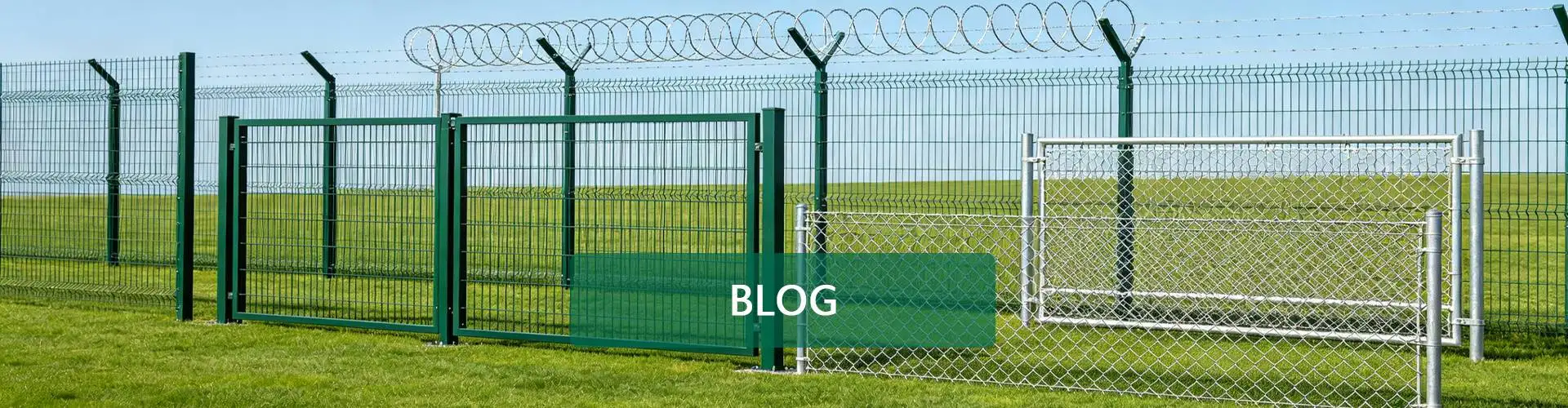

An airport perimeter rarely consists of one simple fence line.
There are long straight boundaries, service roads, maintenance entrances, corners, vehicle gates and sections where the fence meets another security zone.
For an airport service perimeter project in South Africa, the Chain Link Fence therefore had to be considered as a complete perimeter system—not simply as rolls of mesh.
This project scenario shows how BDFENCE approaches that type of inquiry from the supplier side, and what airport contractors and project buyers should confirm before requesting a quotation.
The Drawing Told Us More Than the Total Fence Length
The first useful document for a perimeter project is not always the product specification.
Often, it is the site drawing.
A total quantity such as “several kilometers of Chain Link Fence” tells a factory how much perimeter exists. It does not tell us how that perimeter is divided.
On an airport site, the drawing may show long uninterrupted runs followed by corners, service entrances and restricted access points.
Those changes matter.
A straight section mainly repeats the same fence components. A gate opening interrupts that repetition. A corner changes the post and fitting arrangement. An end or transition creates another terminal point.
So before calculating materials, the perimeter needs to be broken into sections.
Not Every Airport Boundary Needs the Same Fence Configuration
This is an important point for airport projects.
“Airport fence” is not one universal specification.
A service boundary, maintenance area, equipment compound and higher-security airside section may have different requirements. Local regulations, airport security specifications and project engineering requirements take priority.
Chain Link Fence can be suitable for certain airport perimeter and service-area applications when the approved project design calls for it.
For areas requiring a different security level, another fence configuration may be specified.
As a manufacturer, our job is not to replace the project security design. Our job is to manufacture the confirmed fence system correctly and make sure the supply scope matches the drawing and BOQ.
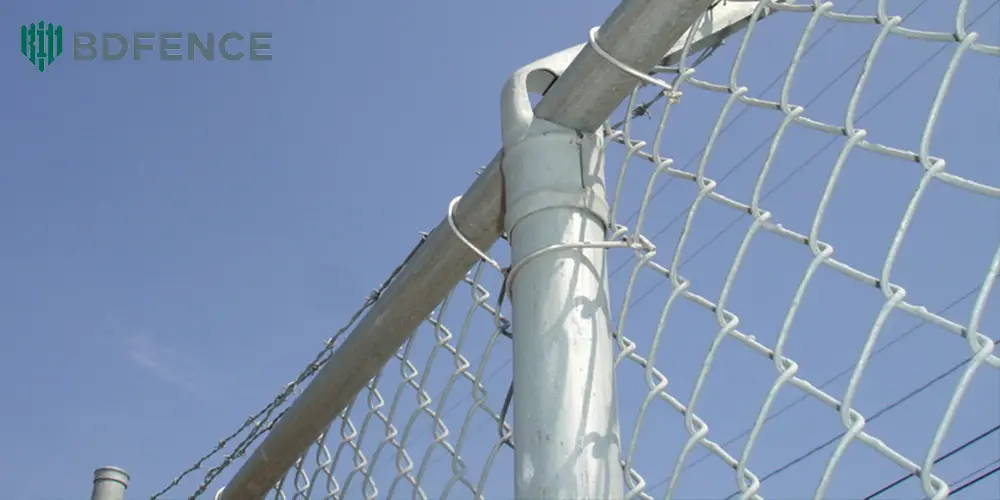
Mesh Was Only the Starting Point
The buyer needed to define the Chain Link Fence fabric first.
That meant confirming:
- mesh opening;
- actual wire diameter;
- finished fence height;
- galvanized or coated finish;
- roll dimensions where applicable.
For international projects, BDFENCE recommends confirming actual wire diameter rather than relying only on a gauge number.
Gauge systems can differ.
If PVC-coated mesh is specified, the steel core diameter and finished coated diameter should also be distinguished clearly in the purchase specification.
These details remove ambiguity before production begins.
The Long Straight Runs Were the Easy Part
Airport perimeter drawings often contain long fence runs.
Once the main specification is confirmed, these sections are relatively repetitive from a manufacturing point of view.
Mesh.
Line posts.
Top rail, where specified.
Bottom tension wire, where specified.
Ties and related connections.
Repeat.
But a supplier should not use that repetition to calculate the entire airport perimeter.
The exceptions are where the material schedule becomes more interesting.
Every Corner Changes the Component Count
A line post supports the fence along a normal run.
A corner post has another job.
The mesh changes direction there, so the terminal connection and associated fittings need to be considered accordingly.
That sounds obvious during installation.
It is easier to miss when somebody prepares a purchasing sheet using only total meters and average post spacing.
For a large airport boundary, even a small mistake repeated across multiple corners and terminal points can create a noticeable shortage when the material reaches the jobsite.
Service Gates Needed Their Own Material Schedule
The fence could not simply continue across every road.
Airport maintenance and service traffic needs controlled openings.
That means the gate locations need to be taken out of the normal fence run and treated separately.
A vehicle gate can involve:
- gate frame;
- gate infill;
- support posts;
- hinges or other operating hardware;
- latching components;
- project-specific accessories.
The exact arrangement depends on whether the project uses swing gates, sliding gates or another approved access system.
Gate width also matters.
A wide vehicle entrance should not be treated as an ordinary Chain Link Fence panel with hinges added to it. The gate frame and support arrangement need to suit the opening and project design.
The Small Fittings Could Not Be an Afterthought
Mesh and posts dominate the shipment visually.
A missing box of fittings can still hold up installation.
For this type of perimeter supply, the material schedule may include tension bars, tension bands, brace bands, rail ends, caps, ties, bolts and other specified connections.
The quantities depend on what happens along the fence line.
For example, a tension bar is associated with terminating the edge of the chain link fabric. It is not something that should simply be calculated at the same quantity as the line posts.
The same principle applies to many other fittings.
First understand the layout. Then count the hardware.
Top Security Had to Match the Approved Airport Design
Some airport perimeter sections may require additional security above the main fence.
Where barbed wire, extension arms or another approved top arrangement is specified, it needs to be included early in the material review.
It can affect the post configuration, fittings and gate treatment.
BDFENCE therefore asks buyers to include top-security details in the RFQ instead of adding them after the main fence has already been priced.
The final arrangement should always follow the airport’s approved security requirements and applicable project standards.
One Question Changed the Quotation: What Exactly Is Included?
This is where the project becomes relevant to almost any B2B Chain Link Fence buyer.
Suppose three suppliers receive the same airport perimeter length.
All three send back a price per meter.
The numbers are different.
That does not automatically mean one factory is simply more expensive.
Check what sits behind the number.
| Component | What the Buyer Should Check |
|---|---|
| Chain link mesh | Mesh opening, actual wire diameter, height and finish |
| Line posts | Section, wall thickness, spacing and finish |
| Terminal/corner posts | Whether separately specified and correctly counted |
| Top rail | Whether included and how it connects |
| Bottom tension wire | Whether required and included |
| Fittings | Bands, bars, caps, ties, bolts and connection hardware |
| Gates | Opening size, frame, support posts and hardware |
| Top security | Specified arms, wire and related fittings |
For project purchasing, comparing the same supply scope is more useful than comparing two headline prices per meter.
Already Have an Airport Fence BOQ?
You do not need to rewrite it for BDFENCE.
Send us the existing BOQ, fence schedule, drawing or specification.
We can use the same documents as the basis for reviewing the Chain Link Fence supply scope and preparing our quotation.
This is particularly useful when a contractor or procurement team is comparing several suppliers and wants the quotations based on the same project requirements.
Phone: +86 18703182863
WhatsApp: +86 18703287372
Email: info@bd-fence.com
Production Was Organized Around the Fence System
Once the specification and component schedule were confirmed, production could follow the different material groups.
Mesh specifications needed to match the order.
Steel posts and rails needed their corresponding dimensions and finish.
Gate components needed to match their designated openings.
Fittings had to correspond with the terminal, rail and mesh connections shown in the supply scope.
For BDFENCE, this type of order is easier to control when the components remain connected to the project schedule rather than being treated as unrelated products.
Before Packing, Check the Awkward Pieces
Repeated materials are usually easy to count.
The unusual pieces deserve another look.
Gate components.
Terminal hardware.
Special fittings.
Different post types.
Top-security accessories, if specified.
These are exactly the items that can be inconvenient to replace locally after an international shipment has arrived.
Clear package identification also helps the receiving team separate material groups when the shipment reaches the project.
What This Airport Project Means for Other Buyers
You may not be building an airport.
The purchasing lesson is still useful for logistics parks, power facilities, warehouses, industrial plants and other large perimeters.
Do not begin with:
“How much is Chain Link Fence per meter?”
Begin with:
“What does one complete meter of my project actually include?”
Then identify the exceptions—corners, ends, gates, changes in height and special security sections.
That produces a much better basis for comparing suppliers.
Send BDFENCE Your Perimeter Drawing
If you are currently sourcing Chain Link Fence for an airport, industrial facility, logistics center, utility project or another large perimeter, you can start with the documents you already have.
Send BDFENCE:
- PDF or CAD perimeter drawing;
- BOQ or fence schedule;
- Chain Link Fence specification;
- required fence height;
- mesh opening and wire diameter;
- gate opening sizes;
- top-security requirements;
- estimated quantity;
- destination country or port.
No complete BOQ yet?
Send a marked perimeter sketch with the fence length, corners and gate locations. It gives us a much better starting point than total meters alone.
BDFENCE can then prepare the quotation around the confirmed project requirements and supply scope.
Why Source Chain Link Fence from BDFENCE?
Hebei Bendin Industrial Technology Co., Ltd. supplies metal fencing for international projects under the BDFENCE brand.
Our manufacturing background includes more than 30 years of metal fence production experience, supported by a 15,000㎡ factory, more than 190 employees and over 80 machines.
BDFENCE products have been supplied to customers in more than 70 countries.
For project buyers, our focus is not limited to selling chain link mesh. We can work with the confirmed project requirements to supply mesh, posts, rails, gates and related fittings as a coordinated fence package.
FAQ
Is Chain Link Fence suitable for airport perimeter projects?
It can be used for airport perimeter or service-area applications where the approved project design specifies Chain Link Fence. Airports can contain different security zones, so fence type, height, top security and other details should follow the applicable airport and project requirements.
What information should I send for an airport Chain Link Fence quotation?
A perimeter drawing or BOQ is particularly useful. Also provide fence height, mesh opening, actual wire diameter, surface finish, gate details, top-security requirements and destination. If some specifications are still open, identify them rather than guessing.
Can BDFENCE quote from our existing BOQ?
Yes. You can send your existing BOQ, fence schedule or specification. Using the same project documents can also make it easier to compare quotations from different suppliers on a similar supply scope.
Can BDFENCE supply posts and fittings together with Chain Link Fence mesh?
Yes. According to the confirmed specification, BDFENCE can supply chain link mesh together with posts, rails, tension components, gates and related fittings.
Should gates be included in the total fence-meter calculation?
Gate openings should be identified separately. They interrupt the normal fence run and introduce gate frames, support posts and hardware that need their own specification and quantity.
Can I request a quote if the airport fence specification is not complete yet?
Yes. Send the information already available, such as a drawing, preliminary BOQ or marked perimeter plan. BDFENCE can use it as the starting point for discussing the fence supply requirements. Final specifications should follow the project’s approved design.
Contact BDFENCE
Hebei Bendin Industrial Technology Co., Ltd. (BDFENCE)
Phone:
+86 18703182863
WhatsApp:
+86 18703287372
Email:
info@bd-fence.com
Website:
https://bd-fence.com/