


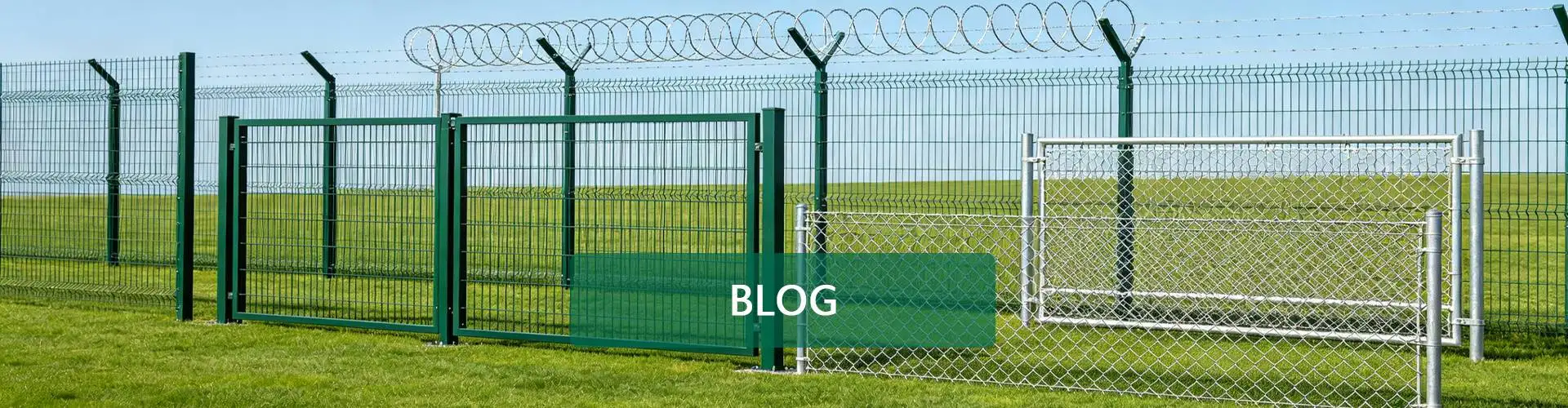
Calculating a Steel Tubular Fence project is not as simple as dividing the total perimeter by one panel width.
A complete steel fence system may include:
- Fence panels
- Line posts
- Corner posts
- End posts
- Pedestrian gates
- Vehicle gates
- Gate posts
- Brackets
- Fasteners
- Post caps
If the project includes slopes, separate fence runs, multiple entrances, or changes in direction, the final quantity can differ significantly from a simple perimeter calculation.
The most reliable approach is to calculate the fence by individual runs and access points, then combine everything into one BOQ.
Start with a Site Plan, Not Just a Total Length
Before calculating materials, mark the full fence route.
The drawing should show:
- Total property boundary
- Separate fence sections
- Corner locations
- Pedestrian gates
- Vehicle gates
- Unfenced openings
- Changes in elevation
- Different fence heights if applicable
This gives a much clearer material schedule than simply writing “1,500m Steel Tubular Fence.”
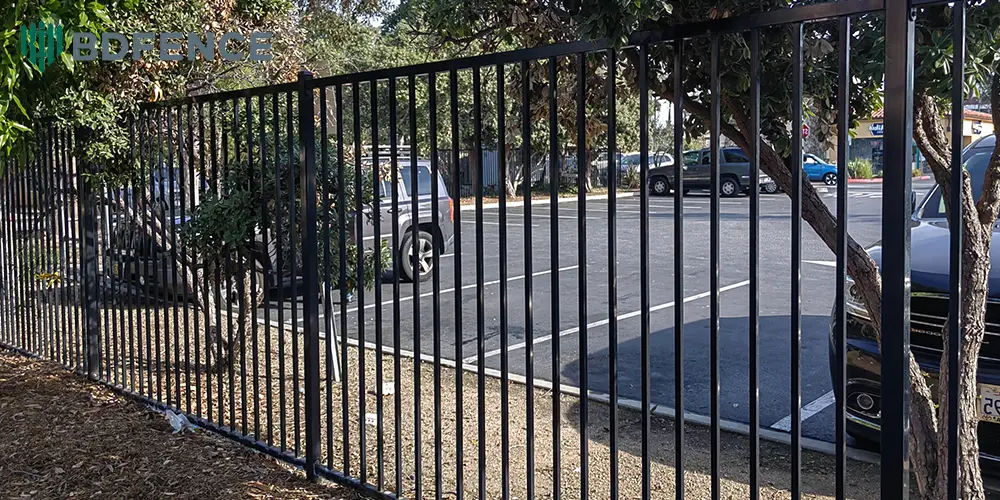
Step 1: Calculate the Net Fence Length
Start with the total fence route and deduct all gate openings and areas that will not receive standard fence panels.
Use:
Net Fence Length = Total Fence Length − Gate Openings − Other Unfenced Sections
For example:
| Project Item | Length |
|---|---|
| Total Fence Route | 1,000 m |
| Two Vehicle Gates | 12 m total |
| Four Pedestrian Gates | 4 m total |
| Net Standard Fence Length | 984 m |
The 984m is the length used for the first panel calculation.
Step 2: Confirm the Standard Panel Width
Steel Tubular Fence is normally supplied as rigid fabricated panels.
Common panel widths vary by project.
Before calculating quantity, confirm:
- Panel width
- Fence height
- Picket spacing
- Post spacing
- Bracket arrangement
Panel width directly affects both panel and post quantities.
Step 3: Calculate the Number of Fence Panels
Use:
Panel Quantity = Net Fence Length ÷ Panel Width
Always round up to the next full panel where the layout requires complete panels.
If the net fence length is 984m and the standard panel width is 2.4m:
984 ÷ 2.4 = 410
The project would therefore require approximately:
410 standard fence panels
What If the Length Does Not Divide Exactly?
Real project dimensions rarely divide perfectly by the standard panel width.
For example:
985m ÷ 2.4m = approximately 410.4 panels
In this situation, the project may use:
- 410 standard panels plus one custom panel
- A small adjustment in several panel widths
- A different layout near the end post
The final arrangement should follow the project drawing rather than simply ordering 411 identical panels.
Step 4: Calculate Line Posts
Line posts sit between normal fence panels.
For one straight fence run:
Number of Post Positions = Number of Panels + 1
However, this simple formula only applies when the fence is one straight continuous run with no gates or corners.
For a real project, some of these post positions become:
- Corner posts
- End posts
- Gate posts
Therefore, count post types separately from the drawing.
Step 5: Count Corner Posts Separately
Every change in fence direction creates a corner condition.
A simple rectangular site may have four corners.
An irregular commercial or industrial property may have many more.
Corner posts can require a different specification because they connect fence runs from different directions.
They should therefore appear as a separate BOQ item.
Step 6: Count End Posts
End posts are used where a fence run stops.
They may appear:
- At property boundaries
- Beside gate openings
- At separated fence zones
- Where fencing terminates against a wall or structure
Do not assume every run continues continuously around the site.
Step 7: Count Pedestrian Gates
Pedestrian gates should be calculated as complete systems.
Each gate may include:
- Gate frame
- Steel picket infill
- Two gate-side posts depending on design
- Hinges
- Locking hardware
- Stops or latches
- Surface treatment
The gate opening should be removed from the standard panel length calculation.
Step 8: Count Vehicle Gates
Vehicle gates usually have a much larger effect on project cost than pedestrian gates.
The gate schedule should identify:
- Opening width
- Gate height
- Swing or sliding type
- Number of leaves
- Gate frame tube size
- Gate post size
- Manual or automated operation
For large openings, gate posts may be significantly heavier than normal line posts.
Example: Gate Quantity
Assume the project includes:
- 4 pedestrian gates
- 2 vehicle gates
The material schedule should not simply show “6 gates.”
It should separate:
| Gate Type | Quantity |
|---|---|
| Pedestrian Gate | 4 |
| Vehicle Gate | 2 |
| Pedestrian Gate Posts | According to approved design |
| Vehicle Gate Posts | According to gate width and structure |
Step 9: Calculate Brackets
Steel Tubular Fence panels usually connect to posts using brackets or another approved fixing system.
Bracket quantity depends on:
- Panel height
- Number of rails
- Connection method
- Number of panels
For example, if each panel requires four brackets:
410 panels × 4 = 1,640 brackets
The final quantity should follow the actual panel design.
Step 10: Calculate Fasteners
Each bracket may require bolts, nuts, screws, or other fasteners.
The total fastener quantity should be calculated from the fixing system rather than estimated loosely.
If each bracket requires two fasteners:
1,640 brackets × 2 = 3,280 fastening sets
Large projects may also include a reserve quantity for installation.
Step 11: Count Post Caps
Post caps are easy to overlook.
The number normally follows the number of applicable steel posts.
However, line posts, corner posts, and gate posts may use different cap sizes.
List them separately where necessary.
Step 12: Check Fence Height
Fence height does not normally change the number of panels when the horizontal layout stays the same.
However, it changes:
- Steel usage per panel
- Picket length
- Post length
- Gate height
- Surface-treatment area
- Panel weight
- Shipping weight
Therefore, a quantity calculation should always be linked to the confirmed height.
Step 13: Confirm Picket Spacing
Picket spacing affects how many vertical tubes are used in each panel.
Closer spacing generally means:
- More pickets per panel
- More steel weight
- More welds
- Higher fabrication cost
This does not usually change the number of panels, but it changes the material quantity inside each panel.
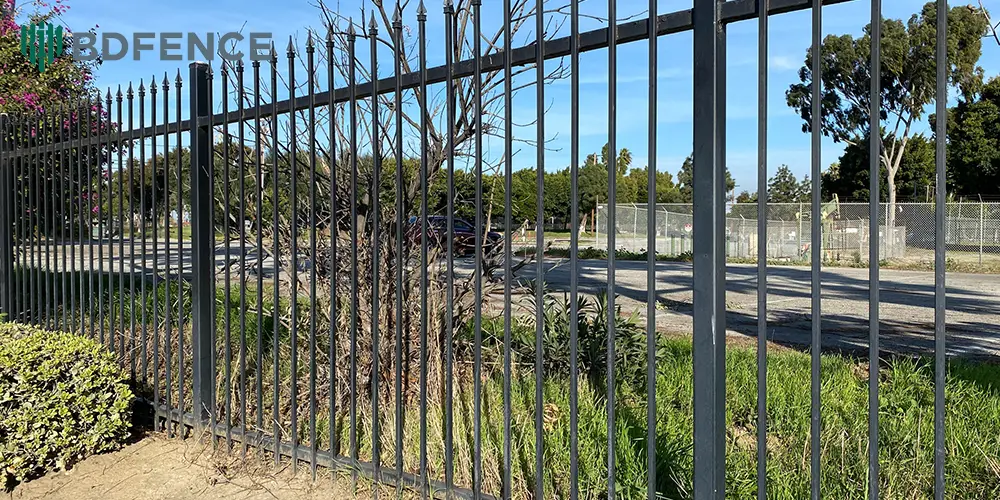
How to Estimate Picket Quantity per Panel
A simplified method is:
Approximate Picket Quantity = Panel Clear Width ÷ Picket Center Spacing
However, actual quantity depends on:
- Picket width
- Clear gap
- Edge spacing
- Panel frame or post connection
For accurate production, use the approved panel drawing rather than a simplified formula alone.
Step 14: Calculate Horizontal Rails
Steel Tubular Fence panels may use two, three, or another number of horizontal rails depending on the design.
If each panel uses two rails:
410 panels × 2 = 820 rail pieces
If each rail is 2.4m long:
820 × 2.4m = 1,968m of rail tube
This type of calculation becomes useful when estimating steel weight or preparing production quantities.
Step 15: Calculate Picket Tube Length
The total picket tube requirement can be estimated by:
Picket Quantity × Picket Length
For example, if the project uses:
- 20 pickets per panel
- 410 panels
- 1.8m picket length
Then:
20 × 410 = 8,200 pickets
8,200 × 1.8m = 14,760m of picket tube
Actual fabrication quantity should still include cutting and production requirements.
Step 16: Calculate Post Tube Length
Post quantity alone does not show the total amount of steel.
You also need total post length.
For example:
Total Post Tube Length = Post Quantity × Individual Post Length
Remember that post length may be longer than the finished fence height if the post is embedded into the foundation.
Fence Height and Post Length Are Not the Same
A 1.8m fence may use a post longer than 1.8m.
The total post length can include:
- Above-ground fence height
- Bottom clearance
- Embedment depth
- Top extension if required
Base-plated posts follow a different calculation.
Step 17: Separate Base-Plated and Embedded Posts
Some commercial projects install fence posts into concrete foundations.
Others use welded base plates and anchor bolts.
These two systems need different quantities.
A base-plated post may also require:
- Steel base plate
- Anchor bolts
- Washers
- Nuts
List these separately in the BOQ.
Step 18: Account for Sloping Ground
Sloping and uneven terrain can change panel quantities.
The project may require:
- Shorter custom panels
- Stepped sections
- Different post lengths
- Special corner panels
- Adjusted gate locations
For these projects, calculate from the elevation drawing rather than only the horizontal site plan.
Step 19: Account for Separate Fence Zones
Large sites may use different fence specifications in different areas.
For example:
| Zone | Fence Requirement |
|---|---|
| Main Entrance | 1.8m Decorative Steel Tubular Fence |
| Commercial Frontage | 1.8m Steel Picket Fence |
| Service Area | 2.0m Heavier Steel Tubular Fence |
| Internal Separation | Lower Fence |
Each zone should be calculated separately because panel height, post size, gate requirements, and surface treatment may differ.
Step 20: Add a Spare Material Allowance
Large projects often include a small quantity of spare materials.
Possible spares include:
- Fence panels
- Line posts
- Brackets
- Fasteners
- Post caps
- Gate hardware
The spare quantity should follow the project size, site conditions, maintenance plan, and procurement policy.
A Sample 1,000m Steel Fence Calculation
Assume:
- Total fence route: 1,000m
- Two 6m vehicle gates
- Four 1m pedestrian gates
- Standard panel width: 2.4m
- Fence height: 1.8m
First calculate net standard fence length:
1,000 − 12 − 4 = 984m
Then calculate standard panels:
984 ÷ 2.4 = 410 panels
The project then needs to calculate:
- Line posts
- Corner posts
- End posts
- Pedestrian gate posts
- Vehicle gate posts
- Brackets
- Fasteners
- Post caps
- Gate frames
- Gate hardware
This creates a complete quantity schedule rather than only a panel count.
Why the Same 1,000m Perimeter Can Need Different Quantities
Consider two projects with exactly 1,000m of fencing.
Project A has:
- 4 corners
- 2 gates
- Flat ground
- One fence height
Project B has:
- 14 corners
- 8 gates
- Sloping ground
- Several fence zones
The total length is the same, but Project B may require more:
- Special posts
- Custom panels
- Gate posts
- Brackets
- Hardware
- Installation planning
That is why perimeter length alone is not enough for an accurate quotation.
How Panel Width Changes the Total Quantity
For a simplified 1,000m net fence length:
| Panel Width | Approximate Panel Quantity |
|---|---|
| 2.0m | 500 panels |
| 2.4m | About 417 panels |
| 2.5m | 400 panels |
| 3.0m | About 334 panels |
Wider panels reduce panel and post quantity, but the final width should still match the structural and fabrication requirements.
How Gate Quantity Changes the Project
Gate openings reduce standard fence length, but they add more expensive fabricated components.
Each additional gate can add:
- Gate frame steel
- Picket infill
- Heavy gate posts
- Hinges
- Locks
- Stops
- Automation equipment if required
For this reason, a project with more gates can cost more even if it uses fewer standard fence panels.
How to Build a Steel Fence BOQ
| BOQ Category | What to Include |
|---|---|
| Fence Panels | Width, height, picket size, spacing and quantity |
| Line Posts | Section, wall thickness, length and quantity |
| Corner Posts | Separate size and quantity |
| End Posts | Separate quantity |
| Pedestrian Gates | Opening size, quantity and hardware |
| Vehicle Gates | Opening width, gate type, quantity and frame specification |
| Gate Posts | Section, wall thickness, length and quantity |
| Brackets | Type and quantity |
| Fasteners | Bolts, nuts, screws and quantity |
| Post Caps | Size and quantity |
| Surface Treatment | Galvanized, powder coated or combined system |
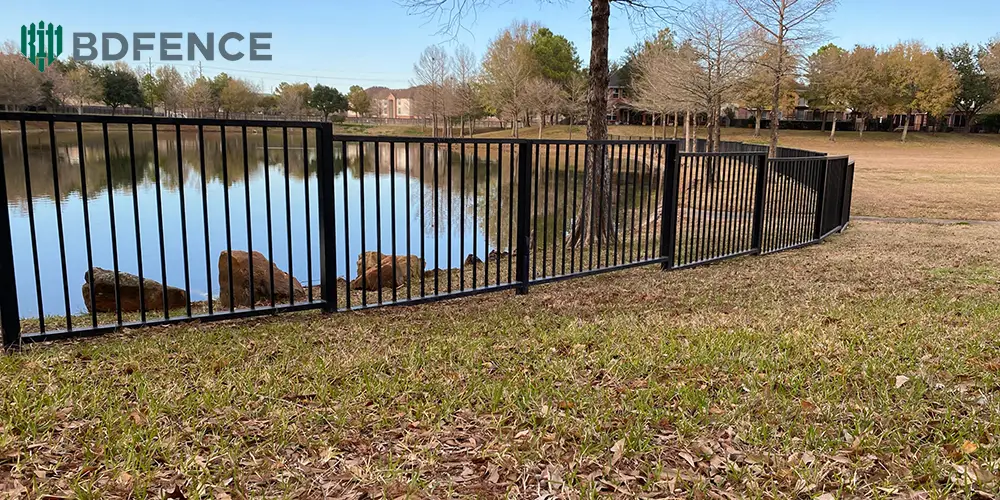
What Information Do You Need Before Calculating?
Before preparing the BOQ, confirm:
- Total fence length
- Fence layout
- Fence height
- Panel width
- Picket tube size
- Picket wall thickness
- Picket spacing
- Rail size
- Rail quantity
- Post size
- Post wall thickness
- Post installation method
- Gate quantities and dimensions
- Surface treatment
- RAL color if required
- Sloping-ground information
Without these details, the calculation remains only an estimate.
Why Buyers Should Calculate by Fence Run
For large projects, one of the easiest ways to reduce mistakes is to create a fence-run schedule.
| Fence Run | Length | Special Condition |
|---|---|---|
| Run A | 220m | Main commercial frontage |
| Run B | 180m | One pedestrian gate |
| Run C | 260m | Sloping ground |
| Run D | 190m | One vehicle gate |
| Run E | 150m | Two corners |
Calculate each run separately, then combine the quantities.
This makes it easier to identify custom panels, gate posts, and special sections.
What Should You Send BDFENCE for Quantity Calculation?
For a more accurate material review and quotation, send:
- Project country
- Project application
- Site plan
- Total fence length
- Fence height
- Panel width
- Picket tube size and wall thickness
- Picket spacing
- Rail specification
- Post size and wall thickness
- Pedestrian gate schedule
- Vehicle gate schedule
- Sloping-ground or elevation information
- Surface treatment
- RAL color if required
- BOQ if available
- Destination port
BDFENCE can review the project layout and help organize panels, posts, gates, brackets, fasteners, and accessories into a complete quotation.
How BDFENCE Supports Large Steel Tubular Fence Projects
Hebei Bendin Industrial Technology Co., Ltd. (BDFENCE) manufactures Steel Tubular Fence and Steel Picket Fence systems for commercial properties, residential communities, schools, logistics centers, industrial facilities, and infrastructure projects.
Our project supply can include:
- Standard Steel Tubular Fence panels
- Custom-width panels
- Different fence heights
- Customized picket spacing
- Steel line, corner, and end posts
- Pedestrian gates
- Swing vehicle gates
- Sliding gates
- Gate posts
- Brackets and fasteners
- Galvanized finishes
- Powder-coated finishes
- Galvanized + powder-coated systems
Project buyers can send fence drawings, BOQ documents, site plans, elevation drawings, and gate schedules directly to BDFENCE for review and quotation.
Final Answer: How Do You Calculate Steel Fence Panels, Posts and Gates?
Start with the complete site plan and deduct all gate openings from the standard fence length.
Divide the remaining length by the confirmed panel width to calculate the approximate number of Steel Tubular Fence panels.
Then calculate line posts, corner posts, end posts, and gate posts separately according to the fence layout.
Add pedestrian gates and vehicle gates as complete systems rather than treating them as normal fence openings.
After that, calculate brackets, fasteners, post caps, custom panels, and any slope-related components.
For large projects, calculate each fence run separately and combine everything into one BOQ.
This produces a much more accurate material schedule than simply multiplying total perimeter length by a standard fence price.
Contact BDFENCE
Hebei Bendin Industrial Technology Co., Ltd. (BDFENCE)
Phone:
+86 18703182863
WhatsApp:
+86 18703287372
Email:
info@bd-fence.com
Website:
https://bd-fence.com/
FAQ
How do I calculate the number of Steel Fence panels?
Subtract gate openings and unfenced sections from the total fence length, then divide the remaining length by the standard panel width. Adjust for custom end panels where required.
How many fence posts do I need?
The quantity depends on the number of fence panels, separate runs, corners, end points, and gates. Line posts, corner posts, end posts, and gate posts should be counted separately.
Do gate openings reduce the number of fence panels?
Yes. Gate openings reduce the standard fence length, but they add gate frames, gate posts, hinges, locks, and other hardware.
How do I calculate brackets for Steel Tubular Fence?
Multiply the number of panels by the number of brackets required per panel according to the approved fixing design.
Does picket spacing affect material quantity?
Yes. Closer picket spacing generally increases the number of pickets, steel weight, weld points, and fabrication cost per panel.
Does sloping ground change the quantity calculation?
Yes. Sloping terrain may require stepped panels, shorter custom panels, different post lengths, and special gate or corner sections.
Can BDFENCE calculate quantities from a site plan?
Yes. BDFENCE can review the fence layout, panel dimensions, post schedule, gate locations, slopes, and technical requirements before preparing a quotation.
Can BDFENCE prepare a complete Steel Fence BOQ?
BDFENCE can review available drawings and project information and organize panels, posts, gates, brackets, fasteners, and related accessories into a complete supply quotation.