


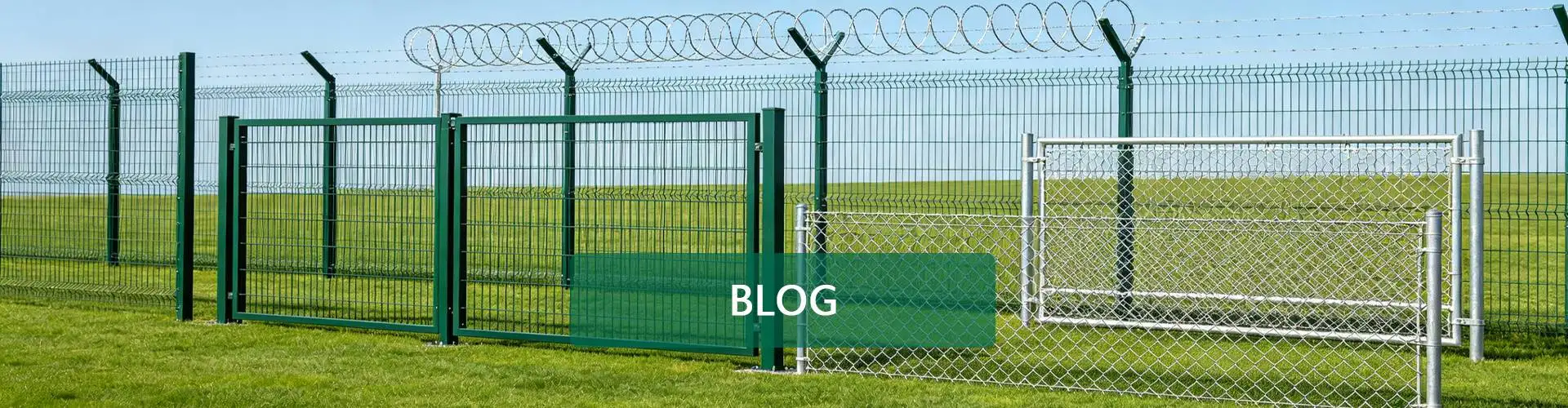
A large Chain Link Fence project should not be calculated by total perimeter length alone.
A 500m boundary, a 2,000m logistics yard, and a 6,000m industrial perimeter may all use Chain Link Fence, but the final material quantities can change significantly depending on post spacing, corners, gates, fence height, mesh roll length, and tension layout.
For buyers, the most useful question is not:
“How many meters of Chain Link Fence do I need?”
A better question is:
“How many mesh rolls, posts, tension components, gates, and fittings are required for the complete perimeter?”
Start with the Perimeter Drawing
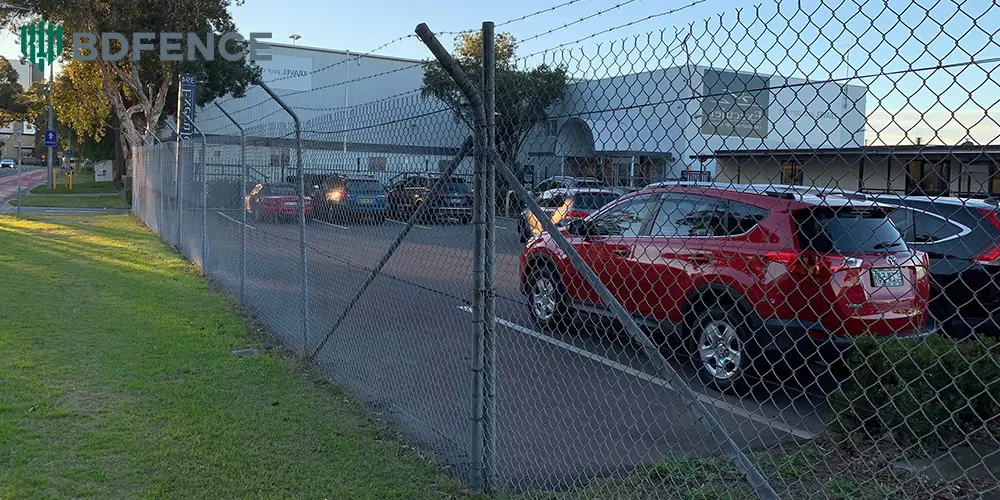
Before calculating materials, divide the site into actual fence runs.
Do not treat the project as one continuous number if the perimeter includes:
- Corners
- Vehicle gates
- Pedestrian gates
- Separate fence sections
- Changes in direction
- Internal fenced zones
- Open areas with no fence
Each break in the fence can create additional terminal posts, gate posts, braces, tension bars, and fittings.
Step 1: Calculate the Net Fence Length
Start with the total perimeter length, then deduct gate openings and any sections that will not receive mesh.
A simple formula is:
Net Fence Length = Total Perimeter Length − Gate Openings − Unfenced Sections
For example:
| Project Item | Length |
|---|---|
| Total Perimeter | 2,000 m |
| Two Vehicle Gates | 12 m total |
| Four Pedestrian Gates | 4 m total |
| Net Mesh Fence Length | 1,984 m |
This net length becomes the starting point for the mesh calculation.
Step 2: Calculate the Number of Chain Link Mesh Rolls
Chain Link Fence is commonly supplied in rolls.
The quantity depends on:
- Net fence length
- Roll length
- Fence height
- Required waste allowance
The basic formula is:
Number of Rolls = Net Fence Length ÷ Roll Length
Always round up to the next full roll.
Example: 1,984m Fence with 15m Rolls
If each Chain Link Fence roll is 15m long:
1,984 ÷ 15 = approximately 132.27 rolls
The project therefore needs at least:
133 rolls
Before ordering, buyers may also add a small reserve depending on the project conditions.
Should You Add Extra Mesh?
For large projects, ordering exactly the calculated quantity can create risk.
Extra mesh may be useful for:
- Cutting losses
- Site adjustments
- Damaged sections
- Future maintenance
- Irregular corners
- Installation errors
The allowance should follow the actual project and purchasing policy rather than using one universal percentage for every job.
Step 3: Calculate Line Posts
Line posts are installed along normal straight fence runs.
The approximate quantity depends on post spacing.
A simplified formula is:
Line Intervals = Fence Run Length ÷ Post Spacing
However, terminal, corner, and gate posts should be separated from normal line posts.
Example: Post Spacing Changes the Quantity Quickly
For a simplified 1,000m straight run:
| Post Spacing | Approximate Intervals |
|---|---|
| 2.0 m | 500 |
| 2.5 m | 400 |
| 3.0 m | About 333 |
This is why post spacing has a major effect on:
- Post quantity
- Concrete quantity
- Installation labor
- Fittings
- Shipping weight
- Total project cost
Do Not Count Corner Posts as Line Posts
Corners perform a different structural function.
At a corner, the fence changes direction and mesh tension acts from different sides.
Therefore, corner posts should normally be listed separately in the BOQ.
For example, a rectangular perimeter typically has four main corners, but a complex industrial site may have many more changes in direction.
Step 4: Count Terminal Posts
Terminal posts are used where a fence run ends or where tension must be anchored.
They may be required at:
- Fence ends
- Gate openings
- Changes in fence sections
- Special termination points
For large projects, terminal posts should be counted directly from the perimeter drawing rather than estimated only from total fence length.
Step 5: Count Gate Posts Separately
Every gate introduces its own structural posts.
A pedestrian gate typically requires two gate-side supports according to the gate design.
A vehicle gate may require heavier posts because of:
- Gate width
- Gate height
- Frame weight
- Mesh infill
- Hinges or sliding hardware
- Operating method
Do not use standard line-post quantities for gate posts.
Example: Gate Post Quantity
Suppose a project includes:
- 2 vehicle gates
- 4 pedestrian gates
If each gate opening requires two gate posts, the project would need:
(2 + 4) × 2 = 12 gate posts
The exact specification may differ according to the gate design, but this shows why gates need a separate material schedule.
Step 6: Calculate Tension Bars
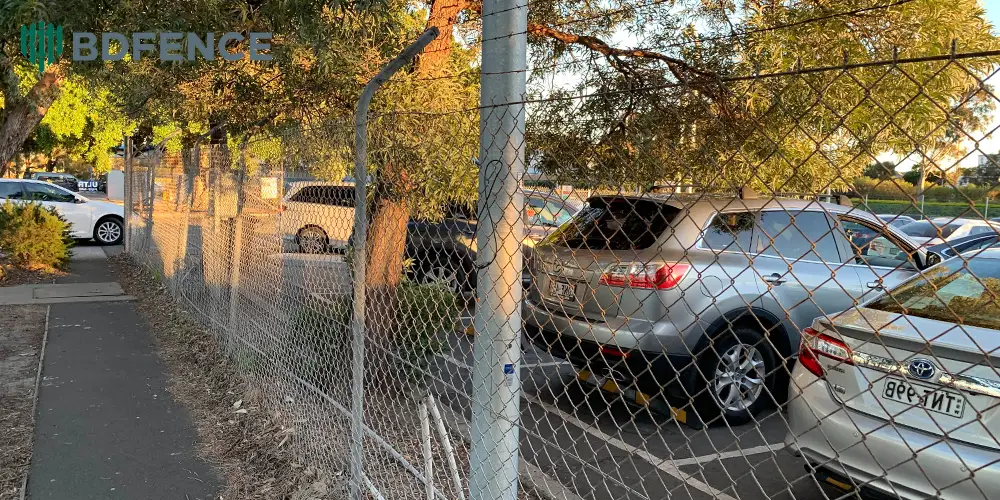
Tension bars are normally used at terminal, corner, and gate locations to connect the Chain Link Mesh to structural posts.
The quantity depends on the number of tensioned mesh ends.
A straight fence section between two terminal posts generally needs a tension arrangement at both ends.
A corner can require tension connections in more than one direction.
Therefore, count tension-bar locations from the actual fence layout.
Step 7: Calculate Tension Bands
Tension bands connect the tension bar to the terminal or gate post.
The quantity depends on:
- Fence height
- Number of terminal points
- Gate-post connections
- Project fixing specification
A taller fence generally requires more connection points than a lower fence.
Therefore, buyers should not calculate tension-band quantities from perimeter length alone.
Step 8: Calculate Brace Bands and Braces
Corner, terminal, and gate posts may use brace components to support the tensioned fence system.
Depending on the design, the project may include:
- Brace bands
- Horizontal braces
- Diagonal braces
- Rail-end fittings
These quantities are usually tied to the number of structural post locations rather than the number of line posts.
Step 9: Calculate Wire Ties
Wire ties secure the Chain Link Mesh to line posts and support rails or wires.
The quantity depends on:
- Number of line posts
- Fence height
- Tie spacing
- Top-rail or tension-wire configuration
For large projects, this can become a significant quantity.
Do not treat wire ties as a minor accessory that can be estimated at the end without reference to the post layout.
Step 10: Calculate Top Rail or Top Tension Wire
Some Chain Link Fence systems use a top rail.
Others may use tension wire or another approved support arrangement.
If the project uses continuous top rail, the required quantity is normally close to the net fence length, adjusted for:
- Gate openings
- Connections
- End fittings
- Cutting allowance
Top support components should follow the approved fence design.
Step 11: Calculate Bottom Tension Wire if Required
Some projects specify bottom tension wire to help maintain the lower edge of the mesh.
If required, its quantity is generally related to the net mesh fence length.
Again, deduct gate openings and account for termination points.
Step 12: Calculate Barbed Wire or Top Security
Industrial and security projects may include barbed wire or another approved top-security system.
The quantity depends on:
- Total fence length receiving top security
- Number of strands
- Post-extension arrangement
- Gate treatment
For example, if 1,500m of fence requires three strands of barbed wire:
1,500m × 3 = 4,500m of barbed wire
A suitable allowance may then be added for connections and installation.
Step 13: Count Post Caps
Post caps are simple to calculate but easy to forget.
In most systems, the quantity follows the number of applicable posts.
However, line-post caps, terminal-post caps, and gate-post caps may use different designs.
Therefore, separate them in the material schedule where necessary.
Step 14: Calculate Concrete or Foundation Requirements
Fence supply and civil works are often quoted separately, but buyers should still understand how post quantity affects foundations.
The total concrete requirement depends on:
- Number of posts
- Foundation diameter
- Foundation depth
- Soil conditions
- Fence height
- Gate-post loads
Gate-post foundations may be larger than normal line-post foundations.
Foundation dimensions should follow the approved engineering design rather than a universal formula.
Build the BOQ by Fence Run, Not by Product Type First
For a large perimeter, a useful method is to calculate each fence run separately.
For example:
| Fence Run | Length | Special Conditions |
|---|---|---|
| Run A | 420 m | One vehicle gate |
| Run B | 310 m | Two corners |
| Run C | 560 m | Barbed wire topping |
| Run D | 275 m | Two pedestrian gates |
| Run E | 419 m | Standard perimeter |
After each run is calculated, the quantities can be combined into the final BOQ.
This reduces the chance of missing terminal posts or gate-related fittings.
A Sample Material Calculation
Consider a simplified commercial or industrial project with:
- 2,000m total perimeter
- 2.4m fence height
- 2.5m nominal post spacing
- 2 vehicle gates at 6m each
- 4 pedestrian gates at 1m each
- 15m mesh rolls
First calculate the net mesh length:
2,000 − 12 − 4 = 1,984m
Mesh rolls:
1,984 ÷ 15 = 132.27
Round up:
133 rolls minimum
Next, calculate the approximate line-post intervals based on the fence runs, then remove positions occupied by corners, terminals, and gate posts.
Finally, add:
- Corner posts
- Terminal posts
- Gate posts
- Tension bars
- Tension bands
- Brace components
- Wire ties
- Post caps
- Top rail or tension wire
- Barbed wire if required
This produces a much more useful BOQ than simply ordering 2,000 meters of mesh.
Why You Should Not Use One Formula for Every Site
A rectangular site and an irregular industrial plant can have the same perimeter length but very different material quantities.
The irregular site may contain:
- More corners
- More gates
- More terminal points
- Different post spacing
- Separate security zones
That can increase posts and fittings even when the total number of fence meters stays the same.
How Gate Openings Affect Mesh and Post Quantities
A gate reduces the amount of mesh required, but it adds other materials.
Every gate can introduce:
- Gate frame steel
- Gate mesh infill
- Gate posts
- Hinges or sliding hardware
- Locks
- Additional foundations
Therefore, gate openings should never simply be deducted from the perimeter and forgotten.
How Fence Height Changes Material Quantities
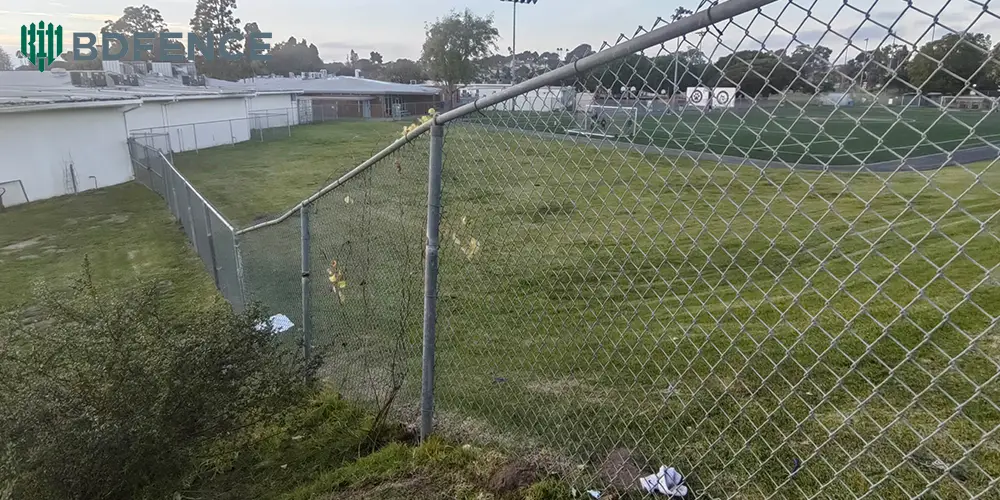
Fence height does not significantly change the number of line posts when post spacing remains the same, but it changes many other quantities.
A taller fence may require:
- More mesh steel
- Longer posts
- Stronger posts
- More tension bands
- Larger gate frames
- More wire ties
- Different foundations
Therefore, quantity and specification calculations should be performed together.
How Wire Gauge Changes the Total Shipment
The perimeter length may stay the same, but heavier wire increases the total mesh weight.
For example, moving from a lighter commercial wire to 9 Gauge or 6 Gauge can affect:
- Roll weight
- Handling
- Container payload
- Total freight
- Post requirements
- Gate infill weight
For export projects, buyers should calculate both material quantity and shipping weight.
How Mesh Opening Changes Material Weight
A tighter mesh opening uses more wire across the same fence area.
Therefore, two projects with the same perimeter and wire diameter can still have different mesh weights if the mesh opening changes.
Always calculate using the confirmed:
- Fence height
- Mesh opening
- Wire diameter
Do Not Forget Spare Materials
Large projects often benefit from a small quantity of spare components.
Possible spares include:
- Extra mesh roll
- Line posts
- Post caps
- Tension bands
- Wire ties
- Bolts and nuts
- Gate hardware
The spare-material policy should depend on the project size, site location, and future maintenance plan.
A Practical Chain Link Fence Material Checklist
| Category | Material to Calculate |
|---|---|
| Mesh | Chain Link Fence rolls |
| Line Support | Line posts |
| Structural Posts | Corner, terminal and end posts |
| Access | Pedestrian and vehicle gates |
| Gate Support | Gate posts |
| Mesh Tension | Tension bars and tension bands |
| Bracing | Brace bands, braces and rail ends |
| Mesh Attachment | Wire ties and fasteners |
| Top Support | Top rail or tension wire |
| Bottom Support | Bottom tension wire if specified |
| Top Security | Extension arms and barbed wire if specified |
| Finishing | Post caps and accessories |
What Information Do You Need Before Calculating a BOQ?
Before preparing the material schedule, confirm:
- Total perimeter length
- Fence height
- Mesh opening
- Wire diameter or gauge standard
- Mesh roll length
- Post spacing
- Corner locations
- Terminal points
- Gate quantities and dimensions
- Top-rail or tension-wire requirement
- Top-security requirement
- Surface treatment
- Site drawing
Without these details, the material estimate will remain approximate.
Why a Site Drawing Is Better Than a Single Perimeter Number
Suppose two buyers both request a quotation for 2,000m of Chain Link Fence.
One site is almost rectangular with two gates.
The other site has twelve corners, six gates, and several separated fence sections.
The mesh length may be similar, but the second project can require significantly more:
- Terminal posts
- Corner posts
- Gate posts
- Braces
- Tension bars
- Fittings
This is why BDFENCE recommends providing a perimeter plan whenever possible.
What Should You Send BDFENCE for Material Calculation?
For a more accurate quantity review and quotation, send:
- Project country
- Project application
- Perimeter drawing
- Total fence length
- Fence height
- Mesh opening
- Wire diameter or gauge standard
- Roll length if specified
- Post spacing
- Line-post specification
- Corner and terminal post requirements
- Pedestrian gate schedule
- Vehicle gate schedule
- Top-security requirement
- Surface treatment
- BOQ if available
- Destination port
BDFENCE can review the perimeter layout and help organize mesh, posts, gates, tension components, fittings, and accessories into a more complete project quotation.
How BDFENCE Supports Large Chain Link Fence Projects
Hebei Bendin Industrial Technology Co., Ltd. (BDFENCE) manufactures Chain Link Fence systems for warehouses, logistics centers, industrial plants, solar farms, commercial properties, utility facilities, and infrastructure projects.
Our project supply can include:
- Galvanized Chain Link Fence
- PVC-coated Chain Link Fence
- Different wire gauges and mesh openings
- Line posts
- Corner and terminal posts
- Gate posts
- Pedestrian gates
- Vehicle gates
- Sliding gates
- Tension bars and bands
- Brace components
- Wire ties
- Top-security components
- Fence fittings and accessories
Project buyers can send perimeter drawings, BOQ documents, gate schedules, and technical specifications directly to BDFENCE for review and quotation.
Final Answer: How Do You Calculate Chain Link Fence Materials?
Start with the site drawing, not only the total perimeter length.
First calculate the net mesh length after deducting gate openings. Then calculate mesh rolls according to roll length.
Next, calculate line posts according to each fence run and post spacing. Count corner posts, terminal posts, and gate posts separately.
After that, calculate tension bars, bands, braces, wire ties, top support, bottom tension wire, post caps, gates, and top-security components where required.
Finally, add a reasonable spare-material allowance according to the project size and installation conditions.
For large projects, the most reliable BOQ comes from calculating each fence run individually and then combining the quantities into one final material schedule.
Contact BDFENCE
Hebei Bendin Industrial Technology Co., Ltd. (BDFENCE)
Phone:
+86 18703182863
WhatsApp:
+86 18703287372
Email:
info@bd-fence.com
Website:
https://bd-fence.com/
FAQ
How many Chain Link Fence posts do I need?
The quantity depends on fence length, post spacing, corners, terminals, and gates. Calculate each fence run separately and count corner, terminal, and gate posts outside the normal line-post quantity.
How do I calculate Chain Link Fence mesh rolls?
Divide the net fence length by the roll length and round up to the next full roll. Consider adding a suitable reserve for cutting, damage, or future maintenance.
Should gate openings be deducted from the fence length?
Yes. Gate openings reduce the main mesh length, but the project still needs gate frames, gate posts, hardware, and related foundations.
How much post spacing should I use?
Many projects use spacing in the approximate 2m to 3m range, but the final spacing should match fence height, mesh specification, post size, site conditions, and project requirements.
How do I calculate barbed wire quantity?
Multiply the fence length receiving top security by the number of barbed-wire strands, then include a suitable installation allowance.
Do I need extra Chain Link Fence material?
Large projects often include spare mesh, fittings, or posts for installation adjustments and future maintenance. The reserve quantity should follow the project conditions and procurement policy.
Can BDFENCE calculate materials from a perimeter drawing?
Yes. BDFENCE can review the site layout, fence length, mesh specification, post spacing, gate schedule, and top-security requirements before preparing a more complete material quotation.
Can BDFENCE prepare a BOQ for a large Chain Link Fence project?
BDFENCE can review available project drawings and technical requirements and organize the required mesh, posts, gates, tension components, fittings, and accessories for quotation.