


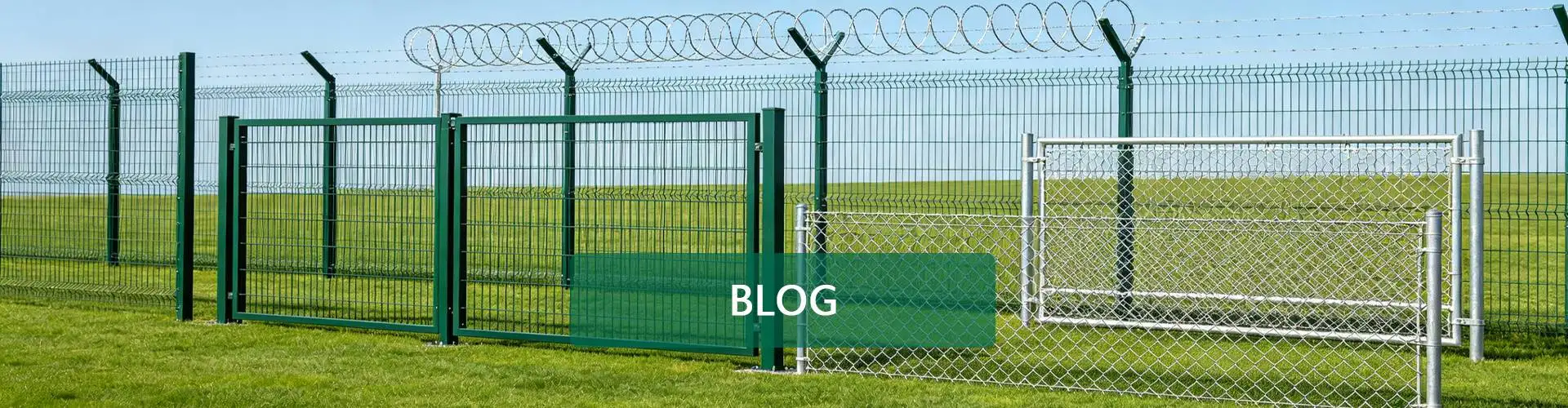
Buying Chain Link Fence from China can be cost-effective for commercial, industrial, solar, logistics, infrastructure, and security projects.
However, comparing suppliers only by price per meter can create problems later.
Two quotations may both say “2-inch galvanized Chain Link Fence,” while the actual wire diameter, coating, roll size, post wall thickness, gate specification, packing method, and container quantity are completely different.
For international buyers, the safest approach is to build the purchase around a complete technical specification.
This guide explains what to confirm before placing a Chain Link Fence order with a Chinese manufacturer.
Start with the Actual Wire Diameter, Not the Gauge Name Alone
Gauge is one of the first items buyers ask about.
Common project inquiries may include:
- 6 Gauge Chain Link Fence
- 9 Gauge Chain Link Fence
- 11 Gauge Chain Link Fence
- Other commercial wire sizes
The problem is that gauge terminology can vary between markets.
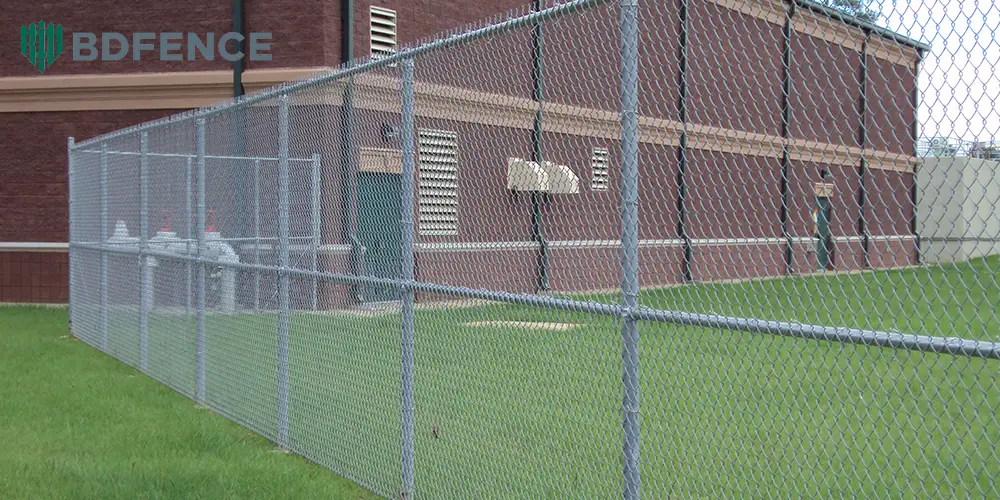
Therefore, when buying Chain Link Fence internationally, confirm the actual steel wire diameter in millimeters.
Your RFQ should ideally state both:
- Required gauge if your project uses a gauge standard
- Required wire diameter in mm
This reduces the risk of two suppliers quoting different wire sizes under similar descriptions.
For PVC-Coated Fence, Confirm Core Wire and Finished Diameter
PVC-coated Chain Link Fence requires one extra check.
Some quotations may show the finished outside diameter after coating, while others may refer to the steel wire diameter before coating.
These are not the same.
For example, your quotation should clearly identify:
- Steel core wire diameter
- Finished coated wire diameter
- PVC color
- Coating requirement
Without this information, two products can look similar on paper while containing different amounts of steel.
Choose the Mesh Opening Based on the Application
Mesh opening affects visibility, wire consumption, weight, and the general character of the fence.
Common Chain Link Fence openings may include:
- 1 inch
- 1-1/2 inch
- 2 inch
- Other project-specific sizes
A tighter mesh normally uses more wire across the same fence area.
A larger mesh opening can reduce steel consumption when the wire diameter and fence dimensions remain similar.
When Does 2-Inch Mesh Make Sense?
2-inch mesh is widely considered for commercial and industrial perimeter fencing where buyers want a balance between:
- Visibility
- Material efficiency
- Fence weight
- Project cost
- General boundary control
It can work well for warehouses, solar farms, industrial sites, and long commercial boundaries when the approved project specification allows it.
When Should You Consider a Tighter Mesh?
Smaller mesh openings may be considered when the project needs a denser woven structure.
Possible applications include:
- Higher-security zones
- Special sports applications
- Animal-control requirements
- Projects with specific opening limits
The correct choice should follow the project function rather than simply selecting the smallest mesh available.
Confirm Fence Height Before Comparing Prices
Fence height directly affects total mesh area, post length, gate height, shipping weight, and project cost.
Common commercial and industrial requirements may include:
- 1.5m
- 1.8m
- 2.0m
- 2.4m
- 3.0m
A 3m-high Chain Link Fence is not simply a taller version of a 1.8m fence.
As height increases, the project should also review:
- Post size
- Post wall thickness
- Post spacing
- Terminal posts
- Bracing
- Gate structure
- Foundations
Galvanized or PVC-Coated Chain Link Fence?
The two common finish directions are galvanized and PVC coated.
The better option depends on the environment, appearance, and project specification.
| Finish | Typical Buying Priority |
|---|---|
| Galvanized | Functional outdoor use and metallic appearance |
| PVC Coated | Color, landscape integration and additional outer coating |
For PVC-coated products, buyers should still check the galvanized or otherwise protected steel core specification where applicable.
For Coastal Projects, Do Not Specify the Mesh Alone
If the fence will be installed near the sea or in a humid environment, corrosion protection should cover the complete system.
Review:
- Chain Link Mesh
- Line posts
- Corner posts
- Terminal posts
- Gate posts
- Gate frames
- Tension components
- Fasteners
A well-protected mesh provides limited value if other exposed steel components deteriorate much earlier.
Do Not Forget the Posts
Many buyers focus heavily on mesh price and leave the posts until later.
That can make quotations difficult to compare.
A proper post specification should include:
- Round, square, or rectangular section
- Outside diameter or section size
- Wall thickness
- Total post length
- Surface treatment
- Post spacing
A supplier quoting a smaller or thinner post can reduce the project price significantly.
Line Posts, Terminal Posts and Gate Posts Are Not the Same
Different posts perform different jobs.
A complete project can include:
- Line posts
- Corner posts
- End posts
- Terminal posts
- Gate posts
Terminal and corner posts handle mesh tension differently from normal line posts.
Gate posts may need a much heavier specification because they support moving frames.
Confirm Post Spacing in the RFQ
Post spacing affects both material quantity and installation cost.
For many projects, buyers may see spacing somewhere around 2m to 3m, but there is no universal spacing for every fence.
Final spacing can depend on:
- Fence height
- Wire diameter
- Mesh opening
- Post size
- Wall thickness
- Wind exposure
- Terrain
- Top security
Always compare quotations using the same post spacing.
Ask Whether the Quote Includes Tension Components
Chain Link Fence needs more than mesh and posts.
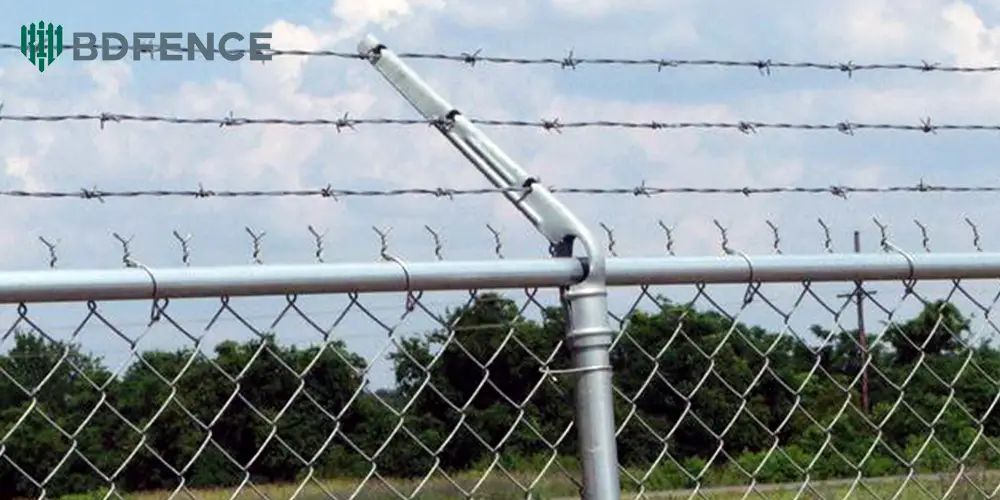
Depending on the design, the system may require:
- Tension bars
- Tension bands
- Brace bands
- Rail ends
- Wire ties
- Top rail
- Top tension wire
- Bottom tension wire
- Post caps
- Bolts and nuts
Some suppliers quote only the major components first.
Before placing the order, confirm exactly what is included.
Gate Specifications Should Be Sent with the Fence RFQ
Do not wait until the mesh and posts are finalized before discussing gates.
The project may need:
- Pedestrian gates
- Double swing gates
- Sliding vehicle gates
- Large truck entrances
For each gate, confirm:
- Clear opening
- Gate height
- Frame tube size
- Frame wall thickness
- Mesh infill
- Gate-post size
- Hinges or sliding hardware
- Locking requirements
Why Large Gates Can Change the Total Order Value
A wide vehicle gate contains much more fabricated steel than a standard fence section.
It may also require:
- Heavy gate posts
- Different foundations
- Special hardware
- Guide systems
- Automation preparation
This is why a complete gate schedule helps suppliers prepare a more realistic quotation.
Ask How the Chain Link Mesh Is Packed
Packing matters for international orders because the product needs to move through:
- Factory handling
- Container loading
- Sea freight
- Port unloading
- Local transport
- Site storage
Chain Link Fence mesh is commonly packed in rolls.
The exact packing method can depend on:
- Fence height
- Roll length
- Wire diameter
- Mesh weight
- Customer requirements
Confirm the Roll Length Before Ordering
Roll length affects:
- Number of rolls
- Individual roll weight
- Site handling
- Loading efficiency
If your project has a specific roll-length requirement, include it in the RFQ.
Otherwise, the supplier may quote its normal production length.
Posts Should Be Bundled and Identified
A complete project may include several post types.
Clear identification helps the installation team separate:
- Line posts
- Corner posts
- Terminal posts
- Gate posts
For larger projects, packing lists and bundle identification can reduce sorting time after delivery.
Small Fittings Need Their Own Packing Plan
Small accessories are easy to lose if they are mixed loosely with larger materials.
Ask the supplier how it will pack:
- Tension bands
- Brace bands
- Bolts
- Nuts
- Wire ties
- Post caps
- Gate hardware
For project orders, identified cartons or grouped packages make site receiving easier.
Container Loading Is Part of the Purchase Decision
When buying from China, product price is only one part of the delivered cost.
Container loading efficiency also matters.
The order may include:
- Mesh rolls
- Long steel posts
- Large gate frames
- Accessories
These products have very different shapes.
The supplier should plan the loading so the container uses both payload and available space efficiently.
Heavy Gauge Mesh Can Increase Container Weight Quickly
Moving from a lighter wire to 9 Gauge or 6 Gauge increases steel content.
Across a large project, this affects:
- Mesh roll weight
- Total cargo weight
- Container quantity
- Freight cost
- Site unloading requirements
For export projects, ask for both product quantity and estimated shipment weight.
Large Gates Can Affect Container Loading
A wide gate frame may use a large amount of container space even when its weight is not extreme.
For large gate projects, confirm:
- Gate packing dimensions
- Whether gates ship assembled or partially assembled
- Loading orientation
- Protection during transport
This is especially important for sliding gates and wide industrial entrances.
Ask for a Packing List Before Shipment
A useful packing list should help the buyer identify what is inside the shipment.
It may include:
- Mesh roll quantity
- Post quantities by type
- Gate quantities
- Accessory cartons
- Gross weight
- Net weight
- Package count
This helps with port clearance, receiving, and site inventory.
Clarify the Shipping Term
When comparing Chinese suppliers, confirm which trade term the quotation uses.
For example, a quotation may be based on:
- EXW
- FOB
- CFR
- CIF
The commercial responsibility and included transport cost differ between these terms.
Do not compare an EXW price directly with a CIF price as if they included the same services.
FOB Can Be Useful for Buyers with Their Own Freight Forwarder
Under an FOB-style purchase arrangement, the buyer can often manage the ocean freight through its own forwarder while the supplier handles the agreed export-side responsibilities.
This can be useful for importers that already consolidate other products from China.
The exact responsibilities should always follow the confirmed sales contract and applicable Incoterm.
CIF Can Make Early Budgeting Easier
Some buyers prefer a quotation that includes ocean freight to the destination port.
This can make early landed-cost budgeting easier.
However, buyers should still check which destination-side charges are not included.
The quotation should clearly state the trade term and named port.
Confirm the Destination Port Early
Freight cannot be estimated accurately without the destination.
Provide:
- Destination country
- Destination port
- Required trade term
This allows the supplier to calculate packing and shipping more realistically.
What Export Documents May Be Required?
Document requirements depend on the destination country and contract.
A typical commercial shipment may involve documents such as:
- Commercial invoice
- Packing list
- Bill of lading
- Certificate of origin where required
- Other project or customs documents when specified
Buyers should confirm any special documentation before production is completed.
Ask for Production Photos Before Loading
For overseas buyers who cannot visit every order in person, production and packing photos can help confirm the shipment status.
Useful photos may show:
- Mesh rolls
- Wire diameter checks
- Mesh opening
- Posts
- Gate frames
- Surface finish
- Packing
- Container loading
These records do not replace formal inspection where one is required, but they can improve communication.
Should You Arrange Third-Party Inspection?
For large or technically sensitive orders, buyers may choose to arrange independent inspection before shipment.
Inspection scope can be based on the purchase specification and may include:
- Wire diameter
- Mesh opening
- Fence height
- Roll length
- Post dimensions
- Post wall thickness
- Gate dimensions
- Surface condition
- Packing quantities
The inspection criteria should be agreed before production.
How to Compare Two China Chain Link Fence Quotations
Do not compare only the total price.
| Quotation Item | What to Compare |
|---|---|
| Wire | Actual diameter and gauge standard |
| Mesh | Opening and fence height |
| Finish | Galvanized or PVC-coated specification |
| Roll | Roll length and packing |
| Line Posts | Diameter/section, wall thickness and length |
| Terminal Posts | Size and structural specification |
| Post Spacing | Distance between posts |
| Gates | Opening, frame and gate-post specification |
| Fittings | Included tension and connection components |
| Packing | Roll, post, fitting and gate packing method |
| Shipping | Trade term and destination port |
Common Buying Mistake #1: Asking Only for Price Per Meter
“Please quote 2m high Chain Link Fence per meter” is not enough information for a reliable comparison.
Suppliers may make different assumptions about:
- Wire diameter
- Mesh opening
- Post size
- Post spacing
- Finish
- Accessories
The lowest price may simply reflect the lightest assumed specification.
Common Buying Mistake #2: Using Gauge Without Millimeters
International buyers should avoid relying only on gauge numbers.
Always confirm the actual steel diameter.
This is especially important when comparing quotations from several countries or suppliers.
Common Buying Mistake #3: Ignoring Post Wall Thickness
A post outside diameter does not tell the full story.
Two 60mm posts can have different wall thicknesses and different steel weights.
Your RFQ should state both dimensions where possible.
Common Buying Mistake #4: Forgetting Gate Posts
Large vehicle gates may require much stronger posts than the normal fence line.
If gate posts are not included clearly in the quotation, the buyer may face additional cost later.
Common Buying Mistake #5: Comparing FOB and CIF Prices Directly
Different trade terms include different responsibilities and transport costs.
Make sure all suppliers quote on the same commercial basis before comparing totals.
Common Buying Mistake #6: Ordering Without a Spare-Material Plan
For large overseas projects, buying a small quantity of spare components can be useful.
Possible spare materials include:
- Mesh rolls
- Line posts
- Tension bands
- Wire ties
- Post caps
- Fasteners
- Gate hardware
The quantity should match the project size and maintenance plan.
A Better Chain Link Fence RFQ Template
A useful RFQ can include:
- Project country
- Project application
- Total fence length
- Fence height
- Mesh opening
- Gauge and actual wire diameter
- Core wire and finished diameter for PVC-coated mesh
- Galvanized or PVC-coated finish
- Required roll length
- Line-post size and wall thickness
- Terminal-post specification
- Post spacing
- Top rail or tension wire requirement
- Pedestrian gate sizes and quantities
- Vehicle gate sizes and quantities
- Top-security requirement
- Packing requirement
- Trade term
- Destination port
- BOQ or perimeter drawing
What Should You Send BDFENCE?
If you already have a BOQ or fence drawing, send it directly.
If not, provide the available project information and BDFENCE can review the specification before preparing the quotation.
For large orders, a perimeter drawing is especially useful because it helps identify:
- Fence runs
- Corners
- Terminal points
- Gate openings
- Separate security zones
Why Buy Chain Link Fence from BDFENCE in China?
Hebei Bendin Industrial Technology Co., Ltd. (BDFENCE) manufactures Chain Link Fence systems for commercial, industrial, logistics, solar, utility, sports, infrastructure, and perimeter-security applications.
Our project supply can include:
- Galvanized Chain Link Fence
- PVC-coated Chain Link Fence
- Different wire diameters and gauges
- Different mesh openings
- Customized fence heights
- Line posts
- Corner and terminal posts
- Gate posts
- Pedestrian gates
- Swing vehicle gates
- Sliding gates
- Tension components
- Top-security components
- Fence fittings and accessories
Project buyers can send BOQ documents, perimeter layouts, gate schedules, packing requirements, and destination-port information directly to BDFENCE for review and quotation.
Final Buying Checklist
Before confirming a Chain Link Fence order from China, make sure your purchase order or approved specification clearly shows:
- Actual wire diameter
- Mesh opening
- Fence height
- Roll length
- Surface treatment
- Post sizes and wall thicknesses
- Post spacing
- Terminal and corner posts
- Gate specifications
- Tension components
- Top security if required
- Packing method
- Trade term
- Destination port
- Required export documents
When these items are aligned, supplier quotations become much easier to compare.
More importantly, the product arriving at the destination is more likely to match the actual project requirement rather than only the lowest price on the quotation sheet.
Contact BDFENCE
Hebei Bendin Industrial Technology Co., Ltd. (BDFENCE)
Phone:
+86 18703182863
WhatsApp:
+86 18703287372
Email:
info@bd-fence.com
Website:
https://bd-fence.com/
FAQ
What information should I provide when buying Chain Link Fence from China?
Provide fence height, mesh opening, actual wire diameter, surface treatment, roll length, post sizes, post spacing, gate schedule, accessories, total quantity, trade term, and destination port.
Should I buy Chain Link Fence by gauge or millimeters?
For international purchasing, it is safer to confirm the actual wire diameter in millimeters. If your project uses a gauge specification, include both the gauge and corresponding wire diameter.
What should I check when buying PVC-coated Chain Link Fence?
Confirm the steel core wire diameter, finished coated diameter, mesh opening, PVC color, fence height, and coating requirement.
Is galvanized or PVC-coated Chain Link Fence better for export projects?
Both can be suitable. The correct option depends on the environment, appearance, corrosion requirement, and approved project specification.
Can Chinese suppliers provide fence posts and gates together with the mesh?
Yes. A complete project supply can include mesh, line posts, terminal posts, gate posts, pedestrian gates, vehicle gates, tension components, and accessories.
How should Chain Link Fence be packed for sea shipping?
Mesh is typically packed in rolls, posts are bundled, smaller fittings are grouped or boxed, and gates are packed according to their dimensions and transport requirements. Final packing should be confirmed with the supplier.
Should I buy FOB or CIF?
The suitable trade term depends on how you manage freight and import logistics. Buyers using their own forwarder may prefer one arrangement, while others may prefer a quotation including freight to the destination port. The quotation should clearly state the applicable Incoterm and named location.
Can BDFENCE calculate container quantity and shipping cost?
BDFENCE can review the confirmed fence specification, total quantity, posts, gates, packing requirements, and destination port to prepare the export quotation and shipment plan.