



Project Overview
Logistics warehouses require practical perimeter fencing to separate operational areas, manage vehicle access and protect outdoor storage spaces. For facilities with large boundary areas, the fencing system must also support efficient installation and reasonable maintenance costs.
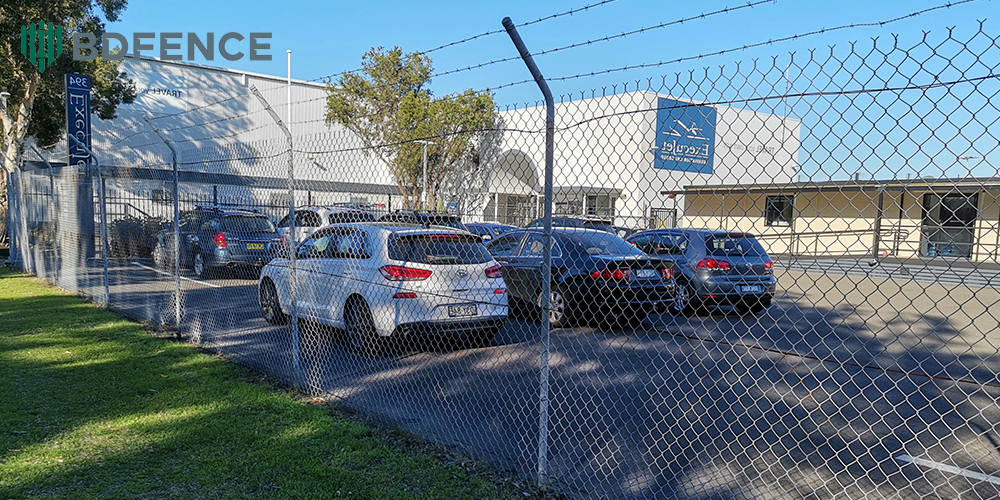
This project application focuses on an Australian logistics warehouse that requires a perimeter barrier around its outdoor operating area. The main objective is to establish a clear boundary while maintaining visibility for daily warehouse operations.
After reviewing the application requirements, a galvanized Chain Link Fence system provides a practical option for general perimeter protection. Its woven mesh structure allows airflow and visibility, while the roll format helps contractors manage installation across long boundary sections.
1. Project Requirements
The warehouse perimeter has several functional requirements. Therefore, the fencing specification needs to consider more than the mesh itself.
Clear Separation Around the Warehouse
The site needs a physical boundary between warehouse operations and surrounding areas. The fence should help define the property line without creating a completely enclosed visual barrier.
Visibility for Daily Operations
Warehouse teams regularly monitor vehicle movements, loading areas and outdoor storage spaces.
An open mesh structure allows staff to maintain visibility across the perimeter. In addition, it can support the operation of cameras and other site monitoring equipment.
Suitable Outdoor Corrosion Protection
Australian projects can experience different environmental conditions depending on their location. A warehouse near the coast may face greater salt exposure than an inland facility.
For this reason, the buyer needs to confirm the appropriate galvanized coating specification before ordering.
Coordinated Materials for Installation
The contractor requires more than mesh rolls. Posts, top rails, tension components and other accessories must match the selected fencing configuration.
A coordinated supply package can simplify material purchasing and installation planning.
2. Recommended Chain Link Fence Configuration
For this type of warehouse perimeter, the project specification should cover the following components.
| Item | Proposed Configuration |
|---|---|
| Fence type | Galvanized Chain Link Fence |
| Mesh structure | Diamond-shaped woven steel mesh |
| Wire diameter | To be confirmed according to project requirements |
| Mesh opening | To be confirmed according to security and application needs |
| Fence height | Based on site layout and local requirements |
| Surface treatment | Hot-dip galvanized |
| Supporting structure | Steel line posts, corner posts and terminal posts |
| Accessories | Top rails, tension bars, bands and fixing components |
The final dimensions should follow the contractor’s drawings and approved material schedule.
Why Choose Galvanized Chain Link Mesh?
A galvanized finish provides zinc protection for the steel wire. This makes it a commonly considered option for outdoor warehouse boundaries and industrial applications.
However, buyers should not rely on the word galvanized alone. The specified zinc coating level and product quality requirements need to appear clearly in the purchase documents.
For locations with significant coastal exposure, the project team should review whether additional corrosion protection is necessary.
3. Planning the Fence Layout and Access Points
A logistics warehouse needs a fencing layout that works with its daily transportation activities.
For this reason, the contractor should identify the main access points before calculating the total mesh quantity.
Vehicle Entrances
Truck entrances need sufficient clearance for loading and unloading operations. Gate positions should also allow vehicles to enter and leave without interfering with warehouse traffic.
Pedestrian Access
Separate pedestrian access can help organize employee movements and reduce unnecessary interaction with vehicle routes.
Corner and Boundary Sections
Corner positions require suitable posts and connections to support the fence structure.
Meanwhile, long straight sections need appropriate line post spacing to maintain alignment and mesh tension.
Uneven Ground
If the site includes changes in ground elevation, the contractor should decide how the fence will follow the terrain.
Depending on the slope and design, installers may use stepped sections or follow the ground profile.
A clear site drawing helps the manufacturer understand these requirements before preparing the material quotation.
4. Complete Fencing Components for the Warehouse
The mesh provides the main physical barrier, but the supporting structure determines how the complete fence comes together.
For this project application, the material schedule should include several key components.
Chain Link Mesh
The woven steel mesh forms the main perimeter barrier. Buyers should confirm the wire diameter, opening size, roll height and coating specification.
Line Posts
Line posts support the mesh along straight boundary sections. Their dimensions and spacing should match the approved design.
Corner and Terminal Posts
These posts support changes in direction and fence termination points. The contractor should consider the structural requirements at each location.
Top Rails
Top rails provide additional support along the upper edge of the fencing system.
Tension Bars and Bands
These components connect the mesh to the posts and help maintain suitable tension.
Gates and Fittings
Gate frames, hinges, latches and other fittings should match the access requirements and the overall corrosion protection specification.
By coordinating these items in one purchasing schedule, the contractor can reduce compatibility issues during installation.
5. Procurement Considerations for an Australian Warehouse Project
International project procurement requires careful coordination between the buyer, manufacturer and installation contractor.
In this case, the purchasing team should prepare a detailed technical schedule before requesting quotations.
The schedule should cover:
- Total perimeter length
- Required fence height
- Mesh opening
- Wire diameter
- Galvanized coating requirements
- Post dimensions and spacing
- Gate quantities and dimensions
- Required accessories
- Packaging and shipping requirements
In addition, the buyer should provide a BOQ or site drawing whenever possible.
This information allows the manufacturer to review the material requirements and prepare a more complete quotation.
Why Compare Complete Supply Packages?
A mesh-only quotation may appear less expensive than a package that includes posts and accessories.
However, the contractor still needs to purchase those additional components.
Therefore, comparing complete supply packages gives buyers a clearer picture of the total material cost.
6. Installation and Quality Control Considerations
Proper installation helps the fencing system maintain its intended structure and appearance.
Before installation, the contractor should inspect the delivered materials and compare them with the purchase specifications.
Important checks include:
- Mesh opening consistency
- Wire diameter
- Roll dimensions
- Galvanized surface condition
- Post dimensions
- Accessory quantities
- Packaging condition
During installation, workers should avoid unnecessary damage to the protective coating.
They should also install posts according to the approved layout and use suitable tensioning methods to maintain the mesh alignment.
For outdoor warehouse environments, regular inspections can help identify loose fittings, coating damage and early corrosion.
7. Why Chain Link Fence Suits General Warehouse Boundaries
A logistics warehouse does not necessarily require the same security system across every part of its property.
General boundary areas may prioritize visibility, practical installation and cost control. Meanwhile, restricted equipment areas or sensitive storage zones may require additional protection.
Chain link fencing offers several practical advantages for general warehouse boundaries:
- Flexible woven mesh construction
- Clear visibility across the perimeter
- Different wire and mesh configurations
- Suitable options for galvanized outdoor applications
- Compatibility with posts, rails and access gates
- Convenient supply in mesh rolls
However, chain link fencing should not replace a higher-security barrier where the project requires stronger anti-climb performance.
For those locations, the contractor can consider a separate security fencing system.
8. Alternative Security Solutions for Restricted Warehouse Areas
Some logistics facilities contain high-value goods, restricted storage zones or sensitive operating areas.
These sections may require a different level of perimeter protection.
BDFENCE also supplies 358 Anti-Climb Security Fence for applications that require narrow mesh openings and rigid welded panels.
A warehouse project can therefore use chain link fencing around general boundaries and a higher-security system around selected restricted sections.
This approach allows the project team to match the fencing specification to the actual security needs of each area.
9. BDFENCE Supply Support for Warehouse Fencing Projects
BDFENCE supplies metal fencing products for international distributors, contractors and project buyers.
For chain link fence projects, our product options include galvanized and PVC-coated mesh in different wire diameters, mesh openings and roll dimensions.
We can also discuss compatible supporting components, including:
- Steel fence posts
- Top rails
- Tension bars and bands
- Fixing accessories
- Related perimeter fencing products
For buyers handling multiple fencing requirements, our complete fencing product range also includes 358 Security Fence, Steel Tubular Fence and other metal fencing solutions.
Project buyers can share their drawings, BOQ or technical specifications so our sales team can review the required product configuration.
10. Request a Chain Link Fence Quotation for Your Project
Are you sourcing chain link fencing for a warehouse, logistics facility or industrial property in Australia?
BDFENCE welcomes inquiries from importers, wholesalers, fencing contractors and engineering procurement teams.
To help us prepare a suitable quotation, please provide:
- Project location
- Total fence length
- Required fence height
- Mesh opening
- Wire diameter
- Galvanized or PVC-coated finish
- Post and rail specifications
- Gate quantities
- Required accessories
- Estimated order quantity
If you already have a BOQ or technical drawing, you can send it directly to our sales team.
We can review the specifications and discuss a suitable fencing supply package for your project.
Contact BDFENCE
Hebei Bendin Industrial Technology Co., Ltd.
Website: bd-fence.com
WhatsApp: +86 18703287372
Email: info@bd-fence.com
Frequently Asked Questions
1. Why is chain link fence suitable for warehouse perimeter applications?
Chain link fencing provides a visible physical boundary and allows airflow across the site. It also comes in different mesh configurations, making it suitable for many general warehouse and industrial applications.
2. What chain link fence specifications should an Australian warehouse project confirm?
The buyer should confirm wire diameter, mesh opening, fence height, galvanized coating requirements, post dimensions and gate specifications. Site drawings and local project requirements should guide the final selection.
3. Can BDFENCE supply chain link mesh with posts and accessories?
Yes. Buyers can discuss a complete supply package that includes mesh rolls, steel posts, top rails, tension components and compatible fittings.
4. Is galvanized chain link fence suitable for coastal warehouses?
Galvanized mesh can be considered for outdoor use, but coastal exposure requires careful coating selection. Buyers should confirm the zinc coating specification and assess whether additional corrosion protection is necessary.
5. Can chain link fencing be combined with 358 security fencing?
Yes. A project can use chain link fencing for general boundaries and 358 panels around restricted or higher-security areas, depending on the site design.
6. What information should contractors provide when requesting a quotation?
Contractors should provide the total perimeter length, fence height, mesh opening, wire diameter, coating requirements, post specifications and gate quantities. A BOQ or technical drawing can make the quotation process more accurate.
7. Can chain link fence be supplied for large commercial projects?
Yes. Buyers can discuss bulk quantities, customized specifications, compatible accessories and export packaging with the manufacturer.