


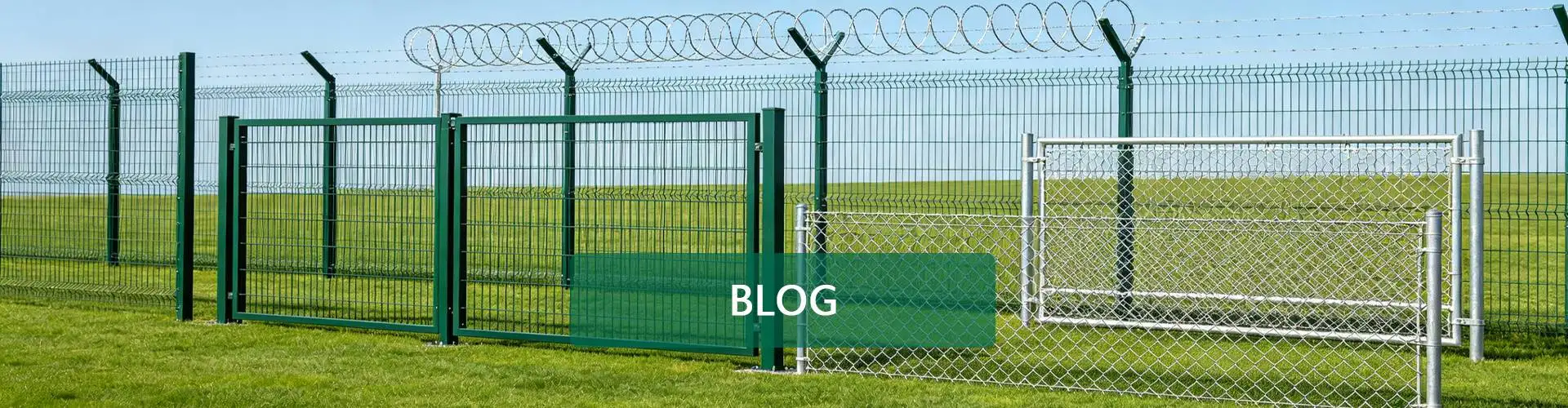

A power substation project in Saudi Arabia required a heavy-duty perimeter fence to separate the electrical facility from surrounding areas and support controlled site access.
Unlike a general commercial boundary, this perimeter formed part of the site’s physical security layout. The fence specification therefore needed to consider the mesh, posts, tension system, gates, fittings, and outdoor environment as one complete package.
For this project, BDFENCE supplied a heavy-duty 6 Gauge Chain Link Fence system configured for the substation perimeter, together with matching steel posts, tension components, pedestrian access, vehicle gates, and installation accessories.
Why a Saudi Arabian Power Substation Needed a Different Fence Specification
A substation perimeter has a different job from a fence around a residential or ordinary commercial property.
The boundary needs to clearly separate controlled electrical infrastructure from public or unauthorized areas. Meanwhile, maintenance teams still need practical access through designated entrances.
For the Saudi Arabia project, the fence system needed to address several priorities:
- A substantial perimeter mesh
- Controlled access to the substation
- Reliable support across long fence sections
- Suitable outdoor corrosion protection
- Compatible pedestrian and vehicle gates
- A complete set of installation fittings
Because of these requirements, the project team selected a heavier Chain Link Fence specification rather than treating the boundary as a standard light-duty fence.
Project Profile
| Project Item | Details |
|---|---|
| Country | Saudi Arabia |
| Project Sector | Power Infrastructure |
| Application | Electrical Substation Perimeter |
| Fence Type | Heavy-Duty Chain Link Fence |
| Wire Specification | 6 Gauge according to confirmed project standard |
| Post System | Heavy-Duty Steel Posts |
| Access System | Pedestrian and Vehicle Gates |
| Installation Environment | Outdoor Infrastructure Site |
| Supply Scope | Mesh, Posts, Gates, Tension Components and Fittings |
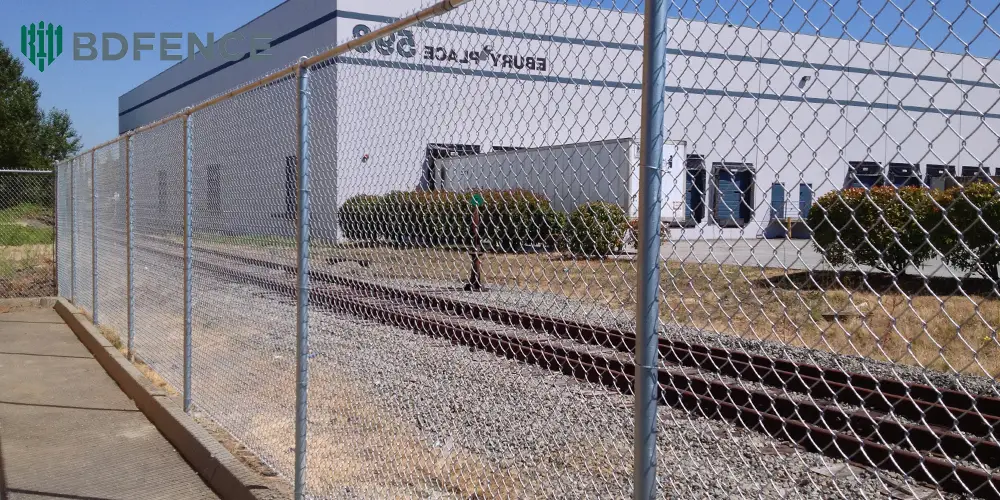
Why 6 Gauge Chain Link Fence Was Used
The customer required a heavier wire specification for the main perimeter.
Compared with lighter Chain Link Fence mesh, heavy-gauge wire contains more steel and produces a more substantial mesh structure.
That made it suitable for the project’s perimeter requirements.
However, BDFENCE did not rely on the words “6 gauge” alone when confirming production.
Gauge conventions are not identical in every market. Therefore, the actual wire diameter and applicable project standard were confirmed before manufacturing.
This step is important for international projects because two suppliers can sometimes use the same gauge description while referring to different physical wire sizes.
The Project Was Designed Around the Complete Fence System
One of the key considerations was the relationship between the heavy mesh and its supporting structure.
A heavier mesh needs an appropriate post and tension system. Simply increasing the wire size without reviewing the other components can create an unbalanced specification.
For this reason, BDFENCE reviewed the fence configuration around several connected elements:
- Wire diameter
- Mesh opening
- Fence height
- Line posts
- Corner posts
- Terminal posts
- Gate posts
- Post spacing
- Tension components
- Gate openings
This allowed the mesh and supporting components to function as one perimeter system.
Different Parts of the Substation Required Different Components
The fence line did not perform the same function at every location.
Long straight sections mainly required consistent mesh support. Corners and termination points, however, had to manage changes in direction and mesh tension.
Access points introduced another requirement because gate posts needed to support moving gate frames while connecting correctly with the adjacent fence.
| Fence Zone | Main Requirement |
|---|---|
| Straight Perimeter | Consistent line post spacing and mesh tension |
| Corner Positions | Stronger support for changes in fence direction |
| Terminal Sections | Secure termination of tensioned mesh |
| Pedestrian Entrance | Controlled personnel access |
| Vehicle Entrance | Wider opening for authorized site vehicles |
Mesh Tension Was Especially Important
Chain Link Fence does not depend only on wire thickness. Correct tension plays a major role in how the completed fence performs and looks.
Therefore, the project package included the required tension and connection components for the confirmed fence configuration.
These could include:
- Tension bars
- Tension bands
- Brace bands
- Rail connections
- Wire ties
- Bolts and nuts
- Post caps
Matching these components with the heavy-duty mesh and posts helped the installation contractor maintain a stable fence line around the substation.
Controlled Access Was Built into the Perimeter
Maintenance personnel and authorized vehicles needed to enter the electrical facility without compromising the continuity of the surrounding boundary.
Therefore, gate design was treated as part of the fence package rather than a separate purchase.
BDFENCE coordinated:
- Pedestrian gate frames
- Vehicle gate frames
- Chain Link Fence gate infill
- Gate posts
- Hinges
- Locks and closing hardware
- Related connection components
Using compatible fence and gate components also simplified coordination during installation.
Outdoor Conditions Were Considered Before Production
Saudi Arabian infrastructure projects can expose outdoor steel products to strong sunlight, heat, dust, and long-term environmental exposure.
Therefore, surface protection was an important part of the specification.
The required corrosion-protection system was confirmed according to the project requirements before production.
In addition, BDFENCE checked that the main mesh, posts, gates, and related steel components followed the approved finish requirements.
How the 6 Gauge Mesh Was Checked
For a heavy-duty fence order, checking only the roll length is not enough.
BDFENCE inspected the characteristics that directly affected the agreed mesh specification and installation.
Inspection points included:
- Actual wire diameter
- Mesh opening
- Fence height
- Roll dimensions
- Mesh formation
- Edge configuration
- Surface condition
The wire diameter check was particularly important because the project specified 6 Gauge Chain Link Fence.
Confirming the physical diameter provided a clearer production reference than relying only on a gauge name.
Posts, Gates and Fittings Were Checked as a Package
The substation perimeter could only work properly if the supporting components matched the mesh.
Therefore, quality control also covered:
| Component | Inspection Focus |
|---|---|
| Heavy-Duty Mesh | Wire diameter, mesh opening and dimensions |
| Line Posts | Size, wall thickness, length and finish |
| Corner / Terminal Posts | Specification and fitting compatibility |
| Gate Posts | Dimensions and gate matching |
| Gate Frames | Dimensions, alignment and hardware positions |
| Fence Fittings | Type, dimensions and quantity |
Packaging Was Planned for Site Identification
A complete Chain Link Fence order contains more than mesh rolls.
The Saudi Arabia project also required several post types, gate components, tension hardware, and smaller installation accessories.
Therefore, BDFENCE organized the shipment by component category.
Mesh rolls and larger steel components were secured for transport, while smaller fittings were packed separately to make identification easier after arrival.
This reduced unnecessary sorting between different fence components before installation.
Installation Followed the Substation Layout
Before installing the mesh, the contractor first established the perimeter route and confirmed all corners, terminal positions, and access points.
The main installation sequence followed this logic:
- Set out the substation perimeter
- Confirm pedestrian and vehicle gate locations
- Install line, corner, terminal, and gate posts
- Complete the required post foundations
- Install support and tension components
- Position the heavy-duty Chain Link Fence mesh
- Tension each fence section
- Secure the mesh to the supporting system
- Install pedestrian and vehicle gates
- Check the completed perimeter for alignment and connection quality
What the Project Achieved
The completed fence created a clearly defined perimeter around the power substation while maintaining practical access for authorized personnel and vehicles.
More importantly, the project did not depend on heavy wire alone.
The 6 Gauge Chain Link Fence was combined with matching posts, tension components, gates, and fittings so that the complete perimeter followed the same design logic.
| Requirement | Project Approach |
|---|---|
| Heavy Perimeter Mesh | 6 Gauge Chain Link Fence |
| Structural Support | Matched heavy-duty post system |
| Mesh Stability | Coordinated tension components |
| Personnel Access | Dedicated pedestrian gates |
| Maintenance Vehicle Access | Matching vehicle gates |
| Outdoor Use | Project-specified corrosion protection |
What Other Power and Utility Projects Can Learn from This Case
For substations and other utility facilities, choosing a heavier wire gauge should be only the beginning of the specification process.
The buyer should also ask whether the supporting posts, terminal assemblies, tension components, gate posts, and access hardware match the heavier mesh.
This is especially important when comparing quotations.
A lower quotation may appear to offer the same 6 Gauge Chain Link Fence while using different post sizes, wall thicknesses, fittings, or gate specifications.
Therefore, project buyers should compare the complete fence schedule instead of comparing only the mesh price.
Planning a Chain Link Fence Project for a Substation or Utility Facility?
BDFENCE can prepare a project quotation based on drawings, BOQ documents, fence schedules, or basic perimeter requirements.
For a faster technical review, provide:
- Project country
- Total fence length
- Fence height
- Required gauge and gauge standard
- Actual wire diameter if specified
- Mesh opening
- Surface treatment
- Post dimensions and wall thickness
- Post spacing
- Gate sizes and quantities
- Additional security requirements
- Project drawing or BOQ
- Destination port
If the fence schedule is still being developed, send the available project information first. BDFENCE can review the requirements and help organize the fence supply specification.
Why BDFENCE for Utility Perimeter Fence Projects?
Hebei Bendin Industrial Technology Co., Ltd. (BDFENCE) manufactures Chain Link Fence systems for power, utility, industrial, commercial, warehouse, and infrastructure applications.
For project orders, BDFENCE can coordinate:
- Heavy-gauge Chain Link Fence mesh
- Galvanized and coated options
- Line posts
- Corner and terminal posts
- Gate posts
- Tension components
- Fence fittings
- Pedestrian gates
- Vehicle gates
Instead of quoting the mesh alone, we can review the fence as a complete project package based on the customer’s technical requirements.
Contact BDFENCE
Hebei Bendin Industrial Technology Co., Ltd. (BDFENCE)
Phone:
+86 18703182863
WhatsApp:
+86 18703287372
Email:
info@bd-fence.com
Website:
https://bd-fence.com/
FAQ
Why use 6 Gauge Chain Link Fence around a power substation?
A heavy-gauge mesh can suit projects that require a more substantial perimeter fence. However, the final specification should also consider fence height, mesh opening, posts, tension components, gates, and the site’s security requirements.
Is 6 gauge the same wire diameter in every country?
Not necessarily. Gauge conventions can vary between markets and standards. Therefore, international buyers should confirm both the gauge designation and the actual wire diameter before production.
Does heavy-duty Chain Link Fence require stronger posts?
The supporting structure should be reviewed whenever a heavier mesh is specified. Post diameter, wall thickness, spacing, corner posts, terminal posts, and foundations should match the complete fence design.
Can Chain Link Fence be used for electrical substations?
Chain Link Fence can be used as a perimeter system for utility and infrastructure sites when its specification meets the project’s engineering and security requirements.
Can BDFENCE supply gates with the substation fence?
Yes. BDFENCE can supply pedestrian gates, vehicle gates, gate posts, Chain Link Fence infill, hinges, locks, and related hardware according to the confirmed project requirements.
Can BDFENCE manufacture Chain Link Fence from a project BOQ?
Yes. Buyers can send BOQ documents, drawings, fence schedules, gate schedules, and technical specifications for review and quotation.