


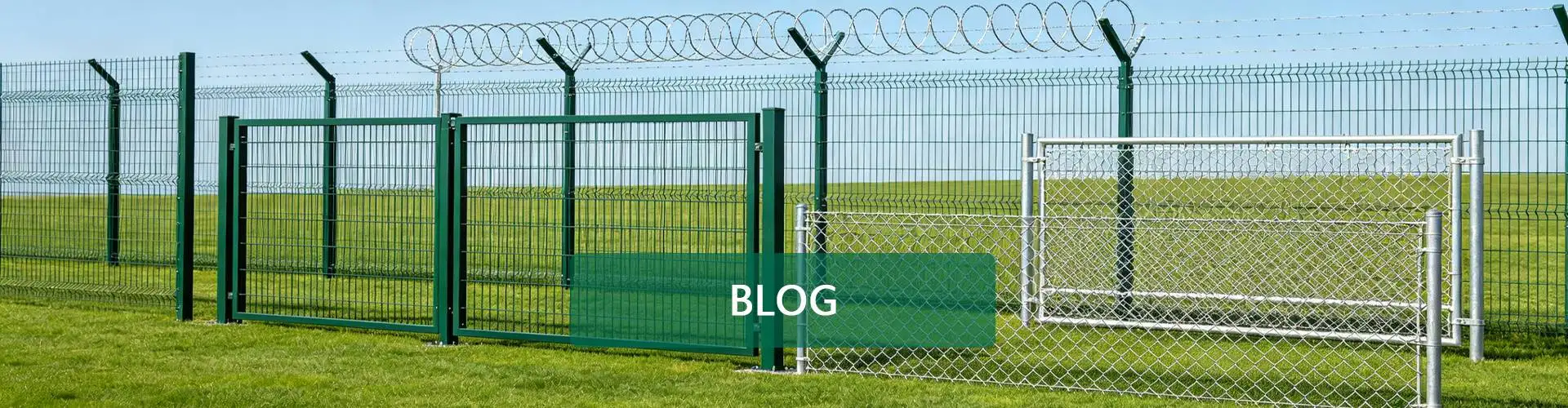

A data center project in Germany required a perimeter fence for the controlled area surrounding its critical IT infrastructure.
For this type of facility, the fence needed to do more than mark the property line. It had to support controlled access, maintain visibility for security monitoring, and create a perimeter that was more difficult to climb than conventional open-mesh fencing.
BDFENCE supplied a 4mm Wire 358 Security Fence system for the project, including 358 welded mesh panels, steel posts, security fixings, pedestrian gates, vehicle gates, and installation accessories.
Why a Data Center Needed a Dedicated Security Perimeter
Data centers contain servers, network equipment, power systems, cooling equipment, backup generators, and other critical infrastructure.
As a result, access to the site has to be managed carefully.
The external fence formed the first physical boundary before personnel or vehicles reached the controlled areas inside the facility.
The project therefore focused on four practical requirements:
- Restricted perimeter access
- Anti-climb characteristics
- Clear visibility through the fence
- Compatible security gates and fittings
These requirements made 358 Security Fence a suitable choice for the project.
Project Profile
| Project Item | Details |
|---|---|
| Country | Germany |
| Project Sector | Data Center / Critical Infrastructure |
| Application | Controlled Perimeter Security |
| Product | 358 Security Fence |
| Mesh Opening | 76.2 × 12.7 mm |
| Wire Diameter | 4.0 mm |
| Fence Structure | Welded Security Mesh Panels |
| Access | Pedestrian and Vehicle Security Gates |
| Supply Scope | Panels, Posts, Security Fixings, Gates and Accessories |
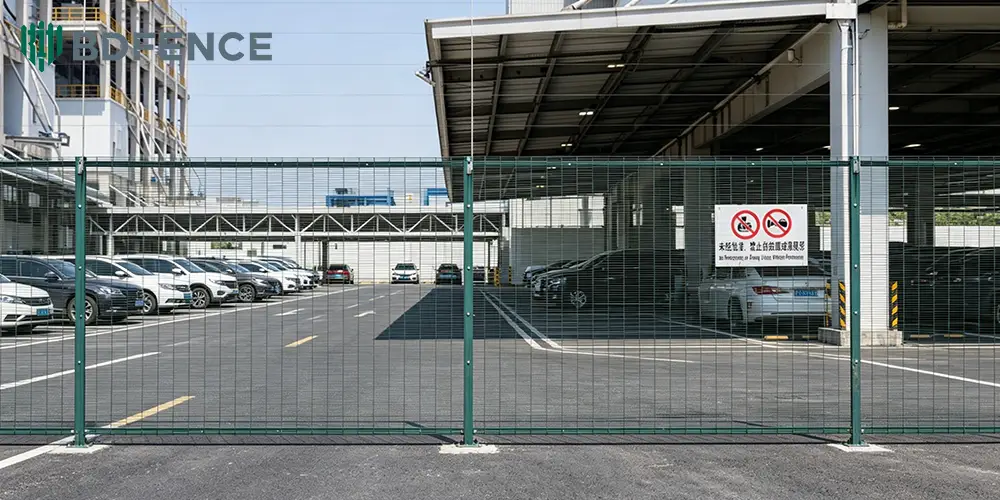
Why the Project Specified 4mm Wire
Wire diameter was one of the specifications confirmed before production.
The project used 4.0 mm horizontal and vertical wires to create a rigid welded panel together with the narrow 358 mesh opening.
However, wire diameter was not evaluated alone.
BDFENCE also reviewed the panel dimensions, post system, fixing method, gate configuration, and surface treatment so that each component matched the overall perimeter design.
This matters because a security fence should be evaluated as a system rather than by one specification on a data sheet.
The 76.2 × 12.7 mm Mesh Changed the Character of the Perimeter
The narrow mesh opening is one of the main reasons 358 Fence is used for security-sensitive sites.
Compared with fencing that uses much larger openings, the 76.2 × 12.7 mm mesh provides very limited conventional hand and foot holds.
Therefore, climbing the fence is more difficult.
At the same time, the welded mesh remains open enough for security teams to maintain visibility through the perimeter.
For the data center, this combination was important because the fence needed to create a physical barrier without unnecessarily obstructing observation of the surrounding area.
Security Visibility Was Part of the Fence Decision
A solid perimeter can block views in both directions. That is not always desirable around a monitored facility.
The 358 mesh allowed the project to maintain sightlines through the fence.
This supported a perimeter layout where physical fencing and site surveillance could work together instead of functioning as separate systems.
In addition, the relatively flat welded mesh surface created a clean and controlled appearance around the data center.
Posts and Fixings Were Matched to the Security Panels
A 358 panel alone does not create a complete security perimeter.
The connection between the panel and post is equally important.
For this project, BDFENCE coordinated the steel posts and fixing arrangement with the panel dimensions and installation requirements.
The system included:
- 358 welded mesh panels
- Steel security posts
- Panel fixing components
- Security fasteners
- Post caps
- Gate posts
- Installation accessories
This avoided sourcing the mesh, posts, and connection hardware from unrelated specifications.
Access Points Were Treated as Part of the Perimeter
The data center needed controlled openings for both personnel and authorized vehicles.
Therefore, the gate areas had to follow the same security logic as the surrounding fence.
BDFENCE supplied gate components according to the confirmed project requirements, including:
- Pedestrian security gates
- Vehicle security gates
- Heavy-duty gate posts
- 358 mesh gate infill
- Hinges
- Locking-related hardware
- Connection accessories
Using the same mesh style in the gate infill also maintained a consistent appearance across the perimeter.
What Was Checked Before the Panels Left the Factory?
For a data center project, consistency across a long security fence line matters.
Before packing, BDFENCE checked the main panel characteristics against the confirmed production requirements.
| Inspection Item | What Was Checked |
|---|---|
| Wire | Actual wire diameter |
| Mesh | 76.2 × 12.7 mm opening |
| Panel | Width, height and overall dimensions |
| Welded Structure | Mesh formation and weld condition |
| Posts | Dimensions, length and finish |
| Fixings | Type, dimensions and quantity |
| Gates | Frame dimensions and component matching |
| Surface | Visible finish condition |
Protecting the Finished Fence During Export
The panels still had to arrive at the German project site in suitable condition for installation.
Therefore, packaging was planned around both product protection and site handling.
358 panels were stacked and secured to reduce movement during transportation. Posts were bundled separately, while fixing components and smaller accessories were packed by category.
Gate components also needed clear identification because they would be installed at specific access positions rather than continuously along the perimeter.
This organization made it easier for the installation team to identify the correct materials after delivery.
Installation Started with the Security Layout
The contractor first confirmed the fence route rather than immediately installing panels.
This allowed the team to identify corners, changes in direction, pedestrian entrances, vehicle entrances, and other important perimeter positions.
The installation then followed a controlled sequence:
- Confirm the data center perimeter line
- Mark post and gate positions
- Install the steel posts
- Complete the required foundations
- Position the 358 panels
- Secure panels with the specified fixing system
- Install pedestrian security gates
- Install vehicle security gates
- Check panel alignment and connection points
Careful post alignment was especially important because the rigid welded panels do not behave like flexible chain link mesh during installation.
What the Data Center Gained from the 358 System
After installation, the fence created a clearly controlled external perimeter around the facility.
| Data Center Requirement | 358 Fence Response |
|---|---|
| Restricted Perimeter | Rigid welded security panels |
| Reduced Climbing Opportunity | Narrow 76.2 × 12.7 mm mesh |
| Security Visibility | Open welded mesh structure |
| Rigid Panel Construction | 4.0 mm wire specification |
| Controlled Personnel Access | Matching pedestrian security gates |
| Controlled Vehicle Access | Matching vehicle gates |
| System Consistency | Matched panels, posts and security fixings |
The main benefit was not one individual specification. Instead, the project combined narrow mesh, 4mm wire, rigid panels, secure connections, and controlled access into one perimeter system.
Why Data Center Buyers Should Compare More Than the 358 Panel Price
Two suppliers can quote a product called “358 Fence” while offering different complete systems.
For example, differences may exist in:
- Actual wire diameter
- Panel dimensions
- Post dimensions and wall thickness
- Post spacing
- Fixing design
- Fastener specification
- Surface treatment
- Gate frame construction
- Included accessories
Therefore, comparing only the panel price can hide important differences between quotations.
For a data center or other security-sensitive project, buyers should compare the complete perimeter specification.
Where Else Can 4mm 358 Security Fence Be Used?
The same type of security fence can also be considered for projects where controlled perimeter access and anti-climb characteristics are important.
Typical applications include:
- Data centers
- Power substations
- Utility facilities
- Telecommunication sites
- Industrial compounds
- Secure storage facilities
- Transport infrastructure
- Other controlled-access sites
However, panel height, post design, fixing system, gates, and additional security features should always follow the requirements of the individual project.
Planning a 358 Fence Project for a Data Center?
If you are preparing a data center, critical infrastructure, or high-security perimeter project, send BDFENCE the available fence schedule, BOQ, drawings, or technical requirements.
For a more accurate quotation, provide:
- Project country
- Total fence length
- Required fence height
- Panel dimensions
- Wire diameter
- Mesh specification
- Post size and wall thickness
- Post spacing
- Fixing requirements
- Surface treatment and color
- Pedestrian gate sizes and quantities
- Vehicle gate sizes and quantities
- Additional perimeter security requirements
- Project drawings or BOQ
- Destination port
If some specifications are still being developed, BDFENCE can review the available project information before preparing the supply proposal.
Why Choose BDFENCE for 358 Security Fence Projects?
Hebei Bendin Industrial Technology Co., Ltd. (BDFENCE) manufactures 358 Security Fence systems for data centers, utilities, industrial facilities, infrastructure projects, and other security-sensitive applications.
Our project supply can include:
- 358 welded security panels
- Customized steel posts
- Security fixing systems
- Post caps
- Pedestrian security gates
- Vehicle security gates
- Installation accessories
Project buyers can send drawings, BOQ documents, fence schedules, and gate requirements directly to BDFENCE for technical review and quotation.
Contact BDFENCE
Hebei Bendin Industrial Technology Co., Ltd. (BDFENCE)
Phone:
+86 18703182863
WhatsApp:
+86 18703287372
Email:
info@bd-fence.com
Website:
https://bd-fence.com/
FAQ
Why is 358 Security Fence suitable for data centers?
Its narrow welded mesh provides limited conventional hand and foot holds while maintaining visibility through the perimeter. This makes it useful for sites that need both physical boundary control and security observation.
What is the mesh size of 358 Security Fence?
A common 358 configuration uses approximately 76.2 × 12.7 mm mesh. Final specifications should always follow the approved project requirements.
Is 4mm wire commonly used for 358 Fence?
Yes. A 4.0 mm wire diameter is a common metric configuration for 358 welded security panels. However, other specifications may be produced when required by the project.
Can 358 Fence work with CCTV around a data center?
The open mesh structure maintains sightlines through the perimeter, which can support security observation. The final CCTV layout and fence design should be coordinated according to the site’s security plan.
Can BDFENCE supply security gates with 358 Fence?
Yes. BDFENCE can supply pedestrian and vehicle gates with matching 358 mesh infill, gate posts, hinges, hardware, and related accessories according to the confirmed design.
Can the height and color of the 358 Fence be customized?
Yes. Panel height, post specification, surface treatment, powder-coated color, gate dimensions, and fixing arrangements can be customized according to project requirements.
Can I send a data center BOQ or drawing for quotation?
Yes. BDFENCE can review BOQ documents, fence layouts, technical specifications, and gate schedules before preparing a quotation.