


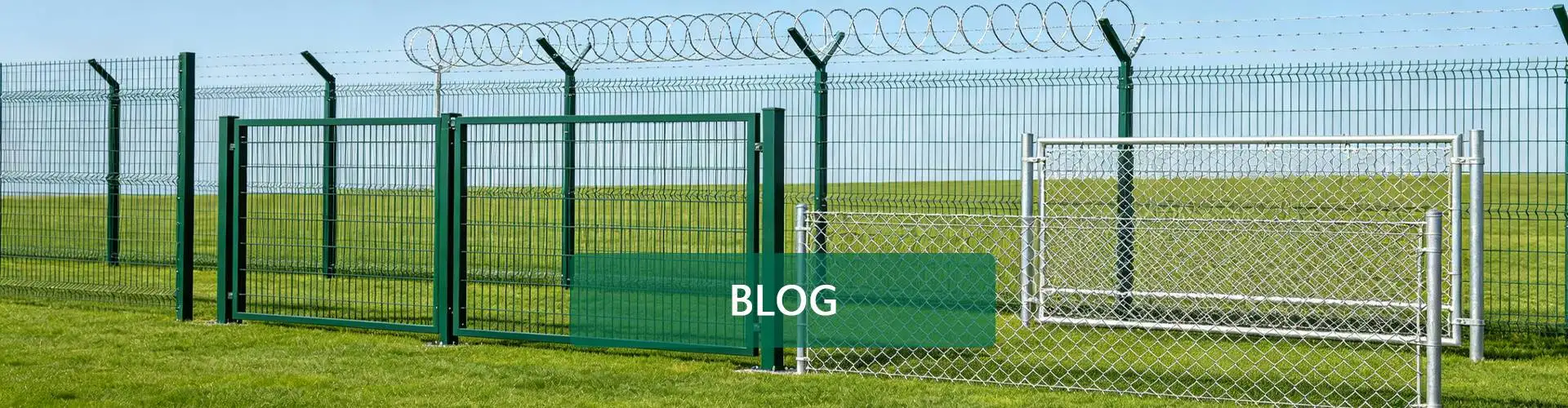

A truck entrance can complicate an otherwise simple fence layout. The gate needs enough room for vehicles, the mesh panels must fit on both sides, and the posts must line up with the approved drawing. Meanwhile, the fence still needs to follow the site boundary without blocking drainage or access routes.
For this illustrative project in South Africa, the proposed solution uses 358 Fence around an industrial warehouse and loading yard. The plan includes a vehicle entrance, a pedestrian gate and several straight fence runs.
The challenge goes beyond choosing a mesh panel. The contractor needs to match the panel dimensions, posts, fixing hardware and gates before ordering the materials. This example explains how a project team can approach those decisions. It is an application scenario, not a claim that BDFENCE completed this installation.
Key Takeaways
- Mark every gate, corner and change in ground level before calculating panel quantities.
- Specify the 358 mesh opening and wire diameter instead of relying on the product name alone.
- Match the post spacing to the actual panel and fixing system.
- Choose the coating according to the site’s environmental conditions.
- Compare complete supply packages, including posts, fixings and gates.
- Keep the approved drawings and material schedule consistent before production.
Start with the Industrial Site Layout
Locate the vehicle entrance first
Imagine the proposed warehouse boundary on a site drawing. Most of the fence follows straight lines, but a wide opening interrupts the front section. The rear boundary also crosses a drainage channel.
These two locations need separate attention. The entrance affects the gate, support posts and adjoining panels. The drainage crossing requires a detail that protects the intended boundary while allowing water to flow.
For this reason, the contractor should mark the gate, corners, drainage routes and changes in ground level before calculating the order. A total perimeter length gives a useful estimate, but it does not provide a complete material schedule.
Once the layout is clear, the team can separate standard panels from custom sections. This makes it easier to calculate quantities and explain the requirements to the manufacturer.
Define what the fence needs to do
An industrial warehouse may need a clear boundary around its loading yard and storage areas. However, different parts of the site may have different security requirements.
The security team should define the intended level of protection and identify any additional requirements for gates, access control, lighting or surveillance. The fence specification must follow that design.
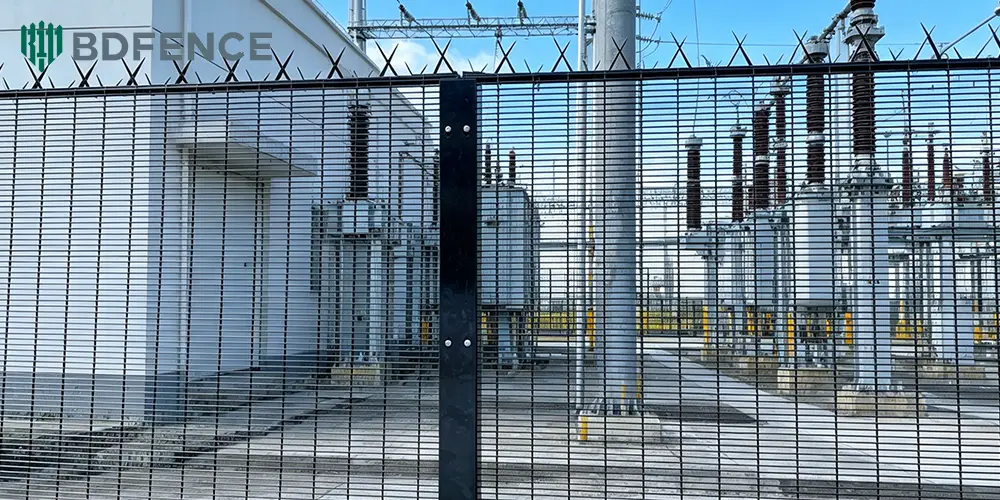
358 mesh has narrow openings that make conventional handholds and footholds difficult to use. Nevertheless, the mesh alone does not prove that the complete fence meets a particular security rating. The posts, connections, gates and installation also matter.
Choose the Correct 358 Mesh Specification
Check the opening and wire diameter
A common 358 mesh specification uses nominal 76.2 × 12.7 mm spacing and approximately 4 mm steel wire. However, the drawing must explain how the supplier measures the opening.
For example, the distance between two wire centres differs from the clear gap between their surfaces. If a specification defines 12.7 mm as the centre-to-centre distance, the clear gap will be smaller. Therefore, the buyer should request a dimensioned drawing rather than rely on the product name alone.
Wire diameter matters as well. A 4 mm wire contains more steel than a 3.5 mm wire of the same length. As a result, the two options can differ in weight, material cost and physical characteristics.
Before comparing quotations, check whether the stated diameter refers to the bare steel wire or the finished coated wire. This distinction helps prevent confusion when suppliers offer different surface treatments.
Make sure the panel matches the approved design
Two suppliers may offer panels with the same height and width but different wire sizes or mesh openings. At first glance, the products may look similar. The technical details, however, can tell a different story.
The contractor should compare the supplier’s drawing with the approved project specification. If a supplier proposes a different wire configuration, the buyer must treat it as an alternative and obtain approval before ordering.
BDFENCE publishes different 358 mesh configurations and panel options. Buyers can review the Industrial Park 358 Fence range as a product reference, then confirm the required dimensions and finish for their own project.
Posts and Fixings Must Work with the Panels
A panel may have the correct dimensions and still fail to fit if the installer uses the wrong post spacing.
Consider a nominal 2.4 m-wide panel. The contractor cannot automatically assume that the distance between post centres must also be 2.4 m. The fixing brackets, clamp bars and panel edges affect the final setting-out dimensions.
Therefore, the manufacturer should provide the panel drawing and the matching post connection detail. The site team can then use the approved dimensions when setting out the foundations.
The fixing system deserves the same attention. Depending on the design, the fence may use brackets, clamp bars or specified security fasteners. Each component must match the post profile and panel arrangement.
For an industrial site, the security specification may also require tamper-resistant fixings. If so, the drawing should identify the required hardware and its position. A quotation that simply says “security bolts included” does not provide enough detail.
Confirm the foundation design before installation
The correct foundation depends on the site conditions, fence height, post design and relevant loads. A post embedded in concrete also has different requirements from one mounted on a base plate.
The responsible engineer must approve the foundation dimensions and anchoring arrangement. The contractor should then check the approved details against underground services and other site constraints.
If a pipe or cable prevents a post from reaching its planned position, the team needs an approved revision. Moving the post without checking the panel layout can create new alignment problems along the fence line.
Give the Gates Their Own Schedule
The vehicle entrance needs more than a gap between two mesh panels. It requires a gate assembly with defined dimensions, support posts and operating hardware.
First, confirm the clear opening required by the vehicles using the site. Next, select the gate arrangement according to the available space and approved design. A sliding gate needs room to travel, while a swing gate needs enough clearance for its leaves.
The pedestrian entrance should appear separately on the layout. Its opening, hinges, latch and support posts may differ from those of the vehicle gate.
Meanwhile, the panels beside each entrance need to fit the remaining spaces. A short closing section may require a custom width, especially where the gate sits close to a corner or building.
List each gate separately in the bill of quantities. Also, state whether the supplier must provide only the steel gate structure or the specified hardware and access-control components. This makes the supply scope easier to compare.
Choose a Coating for the Actual Site
South Africa has different environmental conditions across its regions. An inland industrial property may face different exposure from a site near the coast.
Galvanizing provides a zinc coating that protects steel against corrosion. Powder coating adds a coloured finish and another protective layer. Some projects require a combination of treatments, depending on the specification.
The buyer should identify the required coating system and any applicable acceptance criteria. Colour alone does not define the level of corrosion protection.
In addition, the coating schedule should cover the posts, brackets, gate frames and exposed fasteners. Otherwise, the mesh may meet the requirement while other parts of the fence remain unclear.
Ask the supplier to confirm how the finish applies to each component group. If the installation team later needs to cut or drill a coated part, it must follow the approved modification and repair procedure.
What Should the Quotation Include?
For this proposed industrial facility, the contractor would need a supply package that covers more than the mesh panels.
| Item | Details to Confirm |
|---|---|
| 358 Mesh Panels | Mesh spacing, wire diameter, height, width and finish |
| Posts | Profile, wall thickness, length and installation method |
| Fixings | Brackets, clamp bars, fasteners and connection details |
| Vehicle Gate | Clear opening, gate type, frame and hardware |
| Pedestrian Gate | Opening dimensions, hinges, latch and support posts |
| Special Sections | Corner panels, custom widths and drainage transitions |
| Surface Treatment | Required coating system for panels and supporting components |
| Delivery | Packing, shipping terms and destination |
When comparing suppliers, check whether each quotation covers the same items. One offer may include panels only, while another includes posts, fixing hardware and gates.
For imported fencing, the delivered cost also matters. International freight, customs clearance, local transport and other charges may affect the final amount, depending on the agreed shipping terms.
As a result, the lowest factory price does not always represent the lowest total purchasing cost. The buyer should compare the same specification and supply scope before making a decision.
What Should Be Checked Before Production?
Before the manufacturer starts production, the contractor should reconcile the latest fence layout, panel drawings, gate schedule and bill of quantities.
For example, moving a gate can change the width of nearby panels. A revised fence height may also affect the post design. Therefore, the team should confirm that all documents use the same approved revision.
The inspection requirements should be clear as well. If the contract calls for dimensional checks, coating records or specific test reports, identify those requirements before the order is released.
It is also useful to agree how the factory will label and pack the components. Clear references for standard panels, custom sections, posts and gate parts help the receiving team check the shipment against the approved schedule.
If any design details remain provisional, mark them clearly. A preliminary quotation can use stated assumptions, but the factory should not treat those assumptions as final production instructions without approval.
How BDFENCE Can Support the Supply
BDFENCE is a China-based metal fencing manufacturer supplying overseas contractors, distributors and project buyers. The company has more than 30 years of experience in metal fence manufacturing.
For a South African industrial fence enquiry, send the site layout, required mesh specification, panel dimensions, post details, gate schedule and bill of quantities. These documents help establish the requested supply scope.
BDFENCE can review the specified 358 mesh panels, posts, fixings and gates against the information provided. If the project needs custom panel widths or a particular connection system, identify those requirements in the enquiry.
The project’s qualified professionals remain responsible for structural design, foundation approval and the overall security requirements. The manufacturer’s role is to supply the agreed components to the confirmed specification.
If you are planning an industrial perimeter, use Contact BDFENCE to send your drawings or BOQ and request a quotation.
FAQ
What mesh size is commonly used for 358 security fencing?
A common reference is 76.2 × 12.7 mm spacing with approximately 4 mm steel wire. However, the approved drawing should define the measurement convention and tolerances.
Can 358 mesh panels use different post systems?
Yes. The suitable post and fixing arrangement depends on the panel design and project requirements. The manufacturer and installation team should use matching drawings.
What coating should I specify for a South African industrial site?
The required coating depends on the location, environmental exposure and project specification. Confirm the protective system for the panels, posts and exposed fittings.
What information is needed for a 358 fence quotation?
Provide the fence layout, mesh specification, panel dimensions, post and fixing details, gate schedule, coating requirements, quantities and delivery destination.
Contact BDFENCE
Hebei Bendin Industrial Technology Co., Ltd. (BDFENCE)
Planning a 358 security fence project in South Africa? Send your drawings, BOQ or technical specification for a quotation based on the required panels, posts, fixings and gates.
Phone: +86 18703182863
WhatsApp: +86 18703287372
Email: info@bd-fence.com
Website: https://bd-fence.com/
Inquiry: Contact BDFENCE