


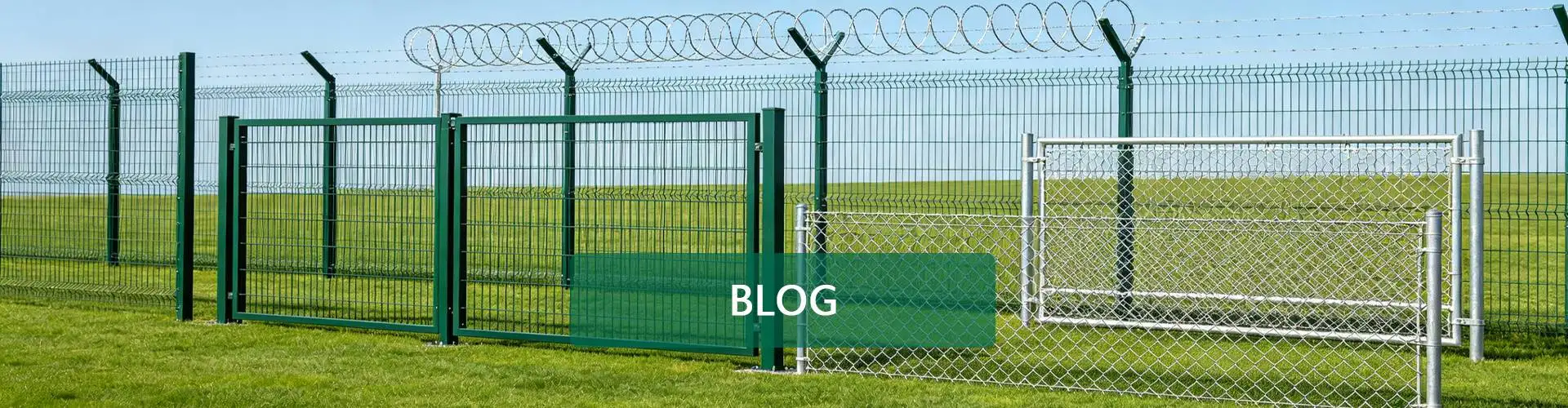

An oil and gas facility cannot treat its perimeter fence as an ordinary property boundary. The fence may run beside access roads, utility corridors, equipment compounds and areas where entry is restricted to authorized personnel. A poorly coordinated fence specification can create problems long before anyone attempts to cross the boundary.
For this illustrative project in Saudi Arabia, the proposed perimeter system uses 358 Fence panels with steel posts and security fixings. The aim is to provide a difficult-to-climb physical barrier while allowing security personnel to maintain visibility through the fence line.
The choice of mesh is only part of the work. An oil and gas project also needs to consider the environment, access points, foundation design and the practical difficulty of installing hundreds of fence sections across a large site.
This article examines how such a fence package could be specified and procured. It is a project application example, not a record of a completed BDFENCE installation.
Project Overview
| Project Item | Details |
|---|---|
| Country | Saudi Arabia |
| Industry | Oil and Gas |
| Product | 358 Security Fence |
| Application | Oil and gas facility perimeter protection and controlled-access boundaries |
| Proposed System | 358 welded mesh panels, steel posts, security fixings and specified access gates |
| Primary Considerations | Perimeter security, corrosion protection, site conditions and installation coordination |
| Project Status | Illustrative project scenario; not a verified completed installation |
The Perimeter Is Not One Continuous, Identical Fence Line
On a drawing, a facility boundary may appear as a single line around the site. In practice, different sections can have different requirements.
A stretch of fencing beside an internal road may need to maintain visibility for patrol vehicles. Another section may connect to an equipment compound, where the available space is limited. At the main entrance, the fence must integrate with a vehicle gate, pedestrian access and the facility’s security procedures.
These differences matter when the fence schedule is prepared. A quantity such as 2,000 linear meters tells the supplier how much boundary needs to be covered, but it does not explain how many corner posts, terminal posts, gates or special panels will be required.
For the Saudi Arabian facility considered here, the proposed approach would be to divide the perimeter into identifiable sections before preparing the final material list. Straight runs could use standard panels where the design allows, while changes in direction, ground level and access requirements would be reviewed separately.
That may take more effort at the drawing stage, but it is preferable to discovering missing components after the shipment reaches the construction site.
Why Consider 358 Security Mesh for an Oil and Gas Facility?
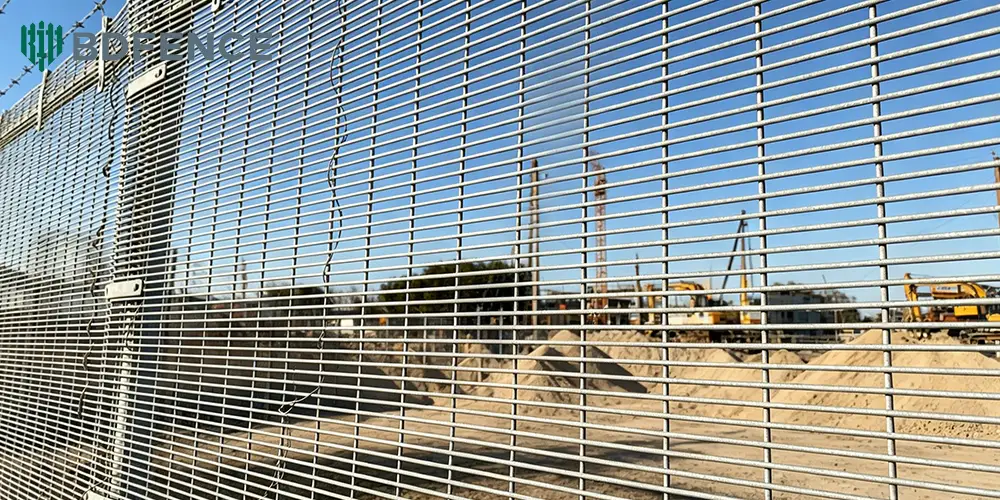
358 fencing is known for its narrow rectangular mesh openings. A commonly specified configuration uses openings of approximately 76.2 × 12.7 mm with 4 mm nominal wire, although the final dimensions and tolerances must follow the approved product specification.
The small openings make it difficult to obtain a foothold or handhold compared with many conventional fencing meshes. They also make access with some common cutting tools more difficult. These characteristics explain why 358 mesh is considered for infrastructure and restricted-access applications.
However, the mesh should not be presented as a complete security solution on its own.
Its effectiveness depends on the surrounding system: posts, fixings, foundations, gates and any required monitoring or access-control measures. A strong panel attached with unsuitable hardware can leave a weakness at the connection. A carefully specified perimeter can still be compromised by an inadequately designed gate.
For an oil and gas facility, the fence therefore needs to be evaluated as one element of a wider physical security design, rather than as a standalone product with a guaranteed security rating.
Panel Height, Post Design and the Question of Foundations
One of the first questions a supplier may receive is whether a 2.4 m or 3.0 m fence would be more suitable. That decision belongs to the project’s security and engineering requirements, not to a manufacturer’s general catalogue.
For this illustrative application, the final height would be established by the approved perimeter specification. Once the panel height is known, the engineer and manufacturer can coordinate the post arrangement, fixing positions and any additional security extensions.
Foundation design deserves particular attention in a large oil and gas site. The ground may vary along the fence route, and local wind exposure can affect the structural loading. It would be inappropriate to assign a single post embedment depth simply because a particular height of 358 panel has been selected.
Consider a post drawing showing 2,500 mm of exposed steel above finished ground level. The total manufactured length still cannot be confirmed until the approved embedment or base plate arrangement is known. If the civil design changes, the steel cutting dimensions may change with it.
This is one reason why the post schedule should be reviewed alongside the foundation drawings before production. The factory can manufacture the required steel components, but the foundation geometry and structural adequacy must be approved by the responsible project engineer.
What the Desert Environment Means for Fence Materials
Saudi Arabia is often associated with hot, dry conditions, but an oil and gas project may also face airborne dust, temperature variation and, in coastal or industrial areas, potentially corrosive exposure.
It would be a mistake to assume that every location in the country has the same corrosion environment.
For example, a facility near the coast may require a different protective coating specification from an inland site. Industrial contaminants, moisture and maintenance conditions can also influence material selection.
A project specification may call for hot-dip galvanizing, an additional powder-coated finish or another approved corrosion-protection system. The choice should reflect the required service environment and applicable project standards.
For galvanized steel components, the coating requirements should identify the relevant standard and acceptance criteria. Where powder coating is specified, the pretreatment, coating system, color and inspection requirements should also be clear.
Small components should not be overlooked. Bolts, clips, clamp bars and other fittings need compatible corrosion protection. There is little benefit in specifying a durable finish for the main panels while leaving the connection hardware insufficiently protected.
The Fixing System Matters More Than It Appears
In a typical product photograph, the 358 mesh panel occupies most of the frame. The fixing components are much less visible.
For a security perimeter, those small components deserve careful attention.
Depending on the approved system, panels may be attached using clamp bars, clips and security fasteners. The connection design must suit the panel geometry and post section, while allowing the installation team to assemble the fence according to the approved drawings.
Buyers should confirm whether the quotation includes all the necessary fixing components. A supplier offering panels and posts at a competitive price may not be quoting the same package as another supplier that includes the complete fixing system.
Connection details also affect installation. If the panel width, post centers and fixing positions do not match, the contractor may need to modify components on site. That is especially undesirable when the materials have already been galvanized or powder coated.
For a remote oil and gas facility, avoiding this type of rework is an important part of supply planning.
Gates Are Part of the Security Boundary
A long fence line may contain only a few entrances, but those openings can require more coordination than many standard panels.
Vehicle gates must accommodate the facility’s operational requirements. Pedestrian gates may need to work with access-control equipment, locking arrangements or security procedures defined by the operator.
The proposed gate design should therefore be reviewed separately from the standard fence panel schedule.
Items requiring confirmation include gate opening dimensions, frame construction, support posts, hinges, locking hardware and the interface with any access-control system. The foundation requirements for gate posts may also differ from those for ordinary line posts.
In some facilities, emergency access and operational movement place additional constraints on the design. These requirements should come from the project’s approved security and access plans.
For procurement, the important point is simple: the gate package should be included in the same coordination process as the perimeter fence, even when it is manufactured or supplied as a separate item.
From the BOQ to a Manufacturable Fence Package
Suppose a contractor sends a manufacturer a bill of quantities listing 358 fence panels, steel posts and several gates. That is a useful starting point, but it may not be enough to release the materials for production.
The manufacturer still needs to know how the panels connect, whether all posts have the same length and where special sections occur.
For a project of this kind, the following information would make the quotation more reliable:
| BOQ or Drawing Item | Information to Define |
|---|---|
| 358 Mesh Panels | Height, width, wire diameter, mesh opening and coating specification |
| Line Posts | Section, wall thickness, length, steel grade and fixing positions |
| Corner and Terminal Posts | Locations, connection arrangement and any special fabrication |
| Foundation Interface | Approved embedment or base plate details |
| Fixing Components | Clamp bars, clips, bolts and security hardware |
| Gates | Opening sizes, frames, support posts and required hardware |
| Surface Protection | Galvanizing, coating system and inspection requirements |
| Packing and Identification | Component marking, packing method and shipment requirements |
It is also helpful to identify which dimensions are confirmed and which remain provisional. A preliminary quotation can be prepared before the civil design is complete, but that should not be confused with an approved manufacturing package.
When the drawings are finalized, the supplier and buyer can check that the panel schedule, post quantities and connection details agree before fabrication begins.
Shipping and Installation Planning for a Remote Facility
For overseas fence procurement, the work does not end when the materials leave the factory.
A shipment containing mesh panels, posts and small fixing components must be organized so that the installation contractor can identify and use the correct materials. Missing or mixed fittings can slow down a crew even when all the major steel components have arrived.
One possible approach is to separate the packing information by component type and clearly identify any nonstandard posts or gate assemblies. The packing list should agree with the approved supply schedule.
Transport and handling arrangements also deserve attention. Long posts, coated panels and gate frames may need different protection during loading and unloading. The appropriate packing method depends on the component dimensions, coating requirements and agreed shipping conditions.
For an oil and gas facility located far from major distribution centers, replacement parts may not be available quickly. This makes accurate quantities and clear identification particularly valuable.
Before installation starts, the contractor should also verify the setting-out dimensions, foundation readiness and approved installation drawings. The fence manufacturer’s drawings and the civil contractor’s documents need to describe the same system.
What This Project Scenario Shows
The proposed Saudi Arabian oil and gas perimeter illustrates a common procurement challenge: the visible fence panel is only one part of a much larger package.
A 358 mesh specification may be relatively straightforward to describe. The more difficult work often lies in coordinating the post lengths, foundation interfaces, fixing details, gates and corrosion-protection requirements.
For a large facility, these details can influence the final material quantities and installation schedule. A mismatch that would be inconvenient on a small property can become a much larger problem when repeated across a long perimeter.
The best time to resolve those questions is while the drawings and BOQ are being reviewed, before the steel components are fabricated.
How BDFENCE Can Support Oil and Gas Fence Procurement
BDFENCE is a China-based metal fencing manufacturer supplying overseas contractors, importers and project buyers. Our manufacturing team has more than 30 years of experience in the metal fencing industry.
For a 358 security fence inquiry, we can review the available panel specifications, post drawings, fixing requirements and other details relevant to the manufacturing scope.
Where the project includes special post lengths, security extensions or gate requirements, these should be identified before the final quotation and production drawings are approved.
We can also discuss packing and component identification requirements for export shipments. The final security design, structural calculations and foundation approval remain the responsibility of the appropriate project professionals.
If you are preparing a perimeter fence package for an oil and gas facility, send your drawings, BOQ or technical specification through Contact BDFENCE.
Frequently Asked Questions
Why is 358 fencing considered for oil and gas facilities?
Its narrow mesh openings can make climbing and cutting more difficult than with many conventional fence meshes, while maintaining visibility through the perimeter. Overall security performance depends on the complete fence system and the facility’s security design.
What height of 358 fence is suitable for an oil and gas perimeter?
The height should follow the approved security and engineering specification. Commonly available panel heights do not establish the correct requirement for every facility.
Can 358 security fencing be used in Saudi Arabia’s climate?
Yes, provided the materials and protective coating system are specified for the actual site environment. Inland, coastal and industrial exposure conditions may require different corrosion-protection approaches.
Should oil and gas projects use embedded posts or base plate posts?
Either arrangement may be considered, depending on the civil design and supporting structure. The approved engineering drawings should determine the installation method and foundation details.
Can BDFENCE supply customized 358 fence posts and fixing components?
BDFENCE can review customer drawings and specifications for customized fence manufacturing, including panel dimensions, post details and compatible fixing components, subject to technical confirmation.
What information is needed for an oil and gas fence quotation?
Provide the perimeter layout, panel specifications, post schedule, coating requirements, gate details, quantities and destination. Approved foundation and connection drawings are particularly helpful when available.
Contact BDFENCE
Hebei Bendin Industrial Technology Co., Ltd. (BDFENCE)
Have a 358 security fence drawing, BOQ or technical specification for an oil and gas facility? Share it with our team for a quotation based on your project requirements.
Phone: +86 18703182863
WhatsApp: +86 18703287372
Email: info@bd-fence.com
Website: https://bd-fence.com/
Inquiry: Contact BDFENCE