


When a project moves from general perimeter control to high-security protection, the fence can no longer be selected by price per meter alone.
Buyers need to think about how the perimeter may actually be challenged.
Can someone climb it easily? Can the mesh be deformed? How are the panels or mesh fixed to the posts? Are the gates built to the same security level? Does the top of the fence need an additional security layer?
These questions are where the difference between 358 Fence and Chain Link Fence becomes much more important.
Both systems can be used for secure perimeters. However, they achieve security in very different ways.
Quick Answer
For projects where anti-climb performance, rigid welded construction, controlled fixing points, and a more difficult-to-grip mesh are major priorities, 358 Security Fence is generally the more security-focused system.
Chain Link Fence can still work well for industrial and security applications, especially where long perimeter coverage, visibility, flexibility, and cost control matter.
However, when Chain Link Fence is used on a high-security site, the project usually needs more attention to wire gauge, mesh size, posts, terminal tension, top security, and gate design.
Why the Mesh Structure Matters
The biggest difference begins with how the fence itself is made.
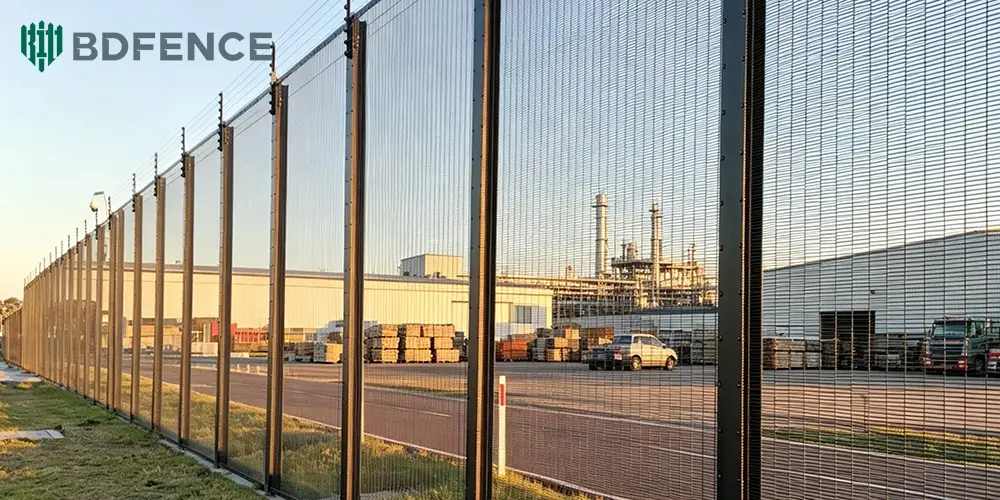
358 Fence uses rigid welded wire panels.
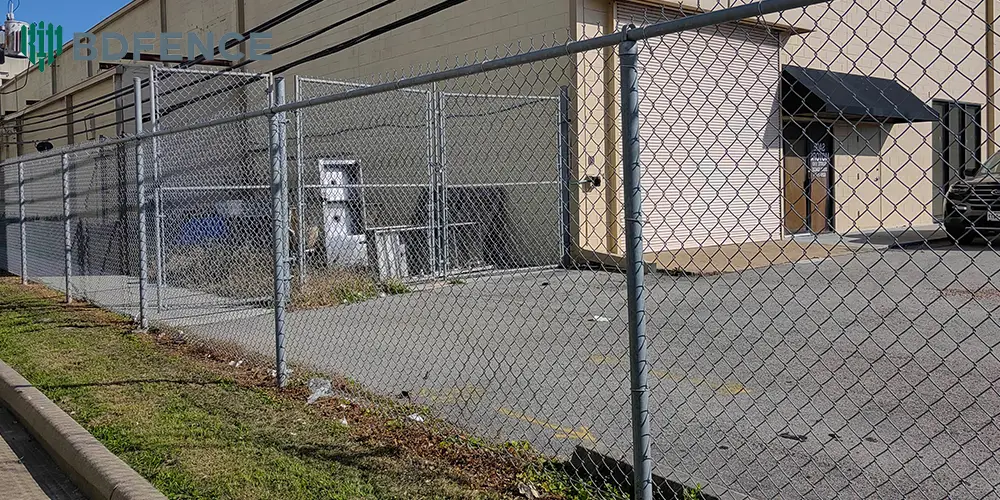
Chain Link Fence uses woven wire mesh.
That difference changes how each perimeter behaves.
| Item | 358 Fence | Chain Link Fence |
|---|---|---|
| Construction | Rigid welded mesh panel | Flexible woven mesh |
| Typical Security Character | Anti-climb security system | Flexible perimeter system |
| Panel Movement | Low when properly fixed | Mesh can flex under load |
| Installation Method | Rigid panels fixed to posts | Mesh tensioned between structural posts |
| Common Use Direction | High-security and restricted sites | Commercial, industrial and security perimeters |
358 Fence Makes Climbing More Difficult
A common 358 Fence mesh is approximately 76.2 × 12.7 mm.
The narrow opening creates very limited conventional hand and foot holds.
That is one of the main reasons 358 Fence is widely considered for high-security projects.
The small opening also creates a very different climbing surface from standard Chain Link Fence.
Chain Link Fence Has Larger Openings
Chain Link Fence commonly uses larger diamond-shaped mesh openings.
Depending on the project, these may include 1-inch, 1-1/2-inch, 2-inch, or other sizes.
Larger openings can make the fence easier to grip than a narrow 358 mesh.
For general commercial and industrial boundaries, this may be acceptable.
For high-security sites, the project may need to compensate with:
- Greater fence height
- Heavy wire gauge
- Smaller mesh opening
- Barbed wire or razor wire where permitted
- Stronger terminal posts
- Additional surveillance and access control
Rigid Panels and Flexible Mesh Behave Differently
358 Fence is made from rigid welded panels.
When properly fixed to steel posts, the panel behaves as a relatively stiff unit.
Chain Link Fence behaves differently because the woven mesh has more flexibility.
This can be useful on uneven ground and long perimeters, but the security design depends more heavily on correct tension.
If the mesh loses tension, the performance and appearance of the fence can change.
Why Panel Fixings Matter in 358 Fence
A 358 panel does not become a high-security fence simply because the mesh opening is small.
The panel-to-post connection is equally important.
Depending on the project, 358 Fence can use:
- Full-length fixing bars
- Steel security plates
- Security clamps
- Anti-tamper bolts
- Specialized nuts
These components help create a controlled and repeatable connection between the rigid panel and the support post.
Chain Link Fence Depends on Tension Points
Chain Link Fence does not use rigid welded panels.
Instead, the mesh is tensioned between structural points.
That means terminal posts, corner posts, tension bars, brace bands, and related fittings play a major role.
For high-security Chain Link Fence, buyers should pay close attention to:
- Terminal post size
- Post wall thickness
- Mesh tension
- Tension bars
- Bracing
- Wire ties
- Top security configuration
A heavy mesh without a strong terminal system does not create a strong complete fence.
Wire Diameter Changes Both Systems
Wire thickness still matters in both fence types.
For 358 Fence, buyers may compare different wire diameters such as 3mm, 4mm, or 5mm.
For Chain Link Fence, buyers may compare 11 Gauge, 9 Gauge, 6 Gauge, or actual wire diameters.
Thicker wire generally adds more steel and weight.
However, thicker wire does not automatically make one system more secure than the other.
Mesh geometry, construction method, posts, fixings, gates, and fence height remain critical.
Cut Resistance Is Not Only About Wire Thickness
Buyers sometimes compare fences by asking which wire is harder to cut.
That is only one part of the perimeter-security problem.
The complete system also determines:
- How easily the fence can be gripped
- How much the mesh can move
- How the fence is attached to the posts
- How quickly damaged sections can be accessed
- Whether the gate system creates a weaker point
For high-security projects, security should be reviewed as a system rather than a single wire property.
Fence Height Changes the Comparison
A low 358 Fence and a tall Chain Link Fence do not create the same perimeter.
Height remains one of the most important security variables.
Possible project directions may include:
| Security Requirement | Possible Fence Direction |
|---|---|
| General Commercial Security | Chain Link or lower 358 depending on project |
| Industrial Security | Heavy Chain Link or 358 Fence |
| Data Center / Critical Utility | 358 often considered |
| Correctional / High-Security Restricted Site | 358 or specialized multi-layer perimeter |
The final height should follow the approved security design rather than a generic rule.
Which Fence Works Better with Razor Wire?
Both systems can be designed with additional top security where permitted and specified.
Possible configurations can include:
- Barbed wire
- Razor wire
- Post extensions
- Other approved top-security systems
However, the supporting posts must be designed to carry the top system.
The additional security layer should therefore be included before the posts are finalized.
Why 358 Fence Is Common Around Data Centers
Data centers usually require a combination of anti-climb performance, clear visibility, controlled access, and rigid perimeter construction.
358 Fence can match these priorities because:
- The mesh opening is narrow
- The panels are rigid
- Security fixings can be controlled
- The fence remains visually open
- Gate systems can use matching 358 infill
For this type of facility, these characteristics may justify the higher cost compared with a basic Chain Link Fence system.
Why Chain Link Fence Can Still Work for Industrial Security
Not every industrial site needs 358 Fence around every meter of boundary.
Chain Link Fence can still be a practical security solution for:
- Large industrial sites
- Solar farms
- Logistics yards
- Warehouse compounds
- Utility sites
- Remote boundaries
The project can increase security by adjusting:
- Wire gauge
- Mesh opening
- Fence height
- Post specification
- Top security
- Gate design
This can make Chain Link Fence attractive on large sites where total perimeter length is a major cost factor.
A High-Security Project May Use Both
The choice does not always need to be one fence type for the entire property.
A large industrial or infrastructure site may use:
| Security Zone | Possible Fence Direction |
|---|---|
| Critical Equipment Compound | 358 Security Fence |
| Main Restricted Perimeter | 358 Security Fence |
| Remote Outer Boundary | Heavy Chain Link Fence |
| General Industrial Area | Chain Link Fence |
| Internal High-Security Zone | 358 Security Fence |
This allows the project to use the more expensive high-security system where it creates the most value.
Gate Security Can Decide the Real Performance
The best fence panel in the world cannot compensate for a weak gate.
High-security projects should review:
- Gate height
- Frame section
- Infill specification
- Gate post size
- Hinges
- Locking system
- Automation where required
- Connection to adjacent fence sections
A gate should follow the same security logic as the surrounding perimeter.
358 Gates Use Rigid Security Mesh Infill
A 358 Fence project can use matching welded mesh inside the pedestrian or vehicle gate frame.
This creates visual and technical continuity across the entrance.
However, the gate frame and posts still need separate structural design because the gate is a moving component.
Chain Link Gates Are More Flexible but More Functional
Chain Link Fence gates use woven mesh infill.
They can work well for:
- Industrial entrances
- Truck yards
- Utility sites
- Commercial facilities
The main advantages are practical construction and compatibility with long Chain Link Fence runs.
Which Fence Is Easier to Install on Uneven Ground?
Chain Link Fence usually has an advantage on irregular terrain because the woven mesh is flexible.
358 Fence uses rigid welded panels.
On slopes, the project may need:
- Stepped panels
- Custom panel sizes
- Adjusted post positions
This can increase installation planning and fabrication requirements.
Which Fence Is Easier to Repair?
The answer depends on the type of damage.
Chain Link Fence mesh can sometimes be repaired locally by replacing damaged woven sections or fittings.
358 Fence normally uses rigid panels, so significant damage may require repair or replacement of the affected panel.
However, the rigid panel structure also means the fence does not rely on continuous mesh tension in the same way as Chain Link Fence.
How Maintenance Differs
For 358 Fence, inspection may focus on:
- Panel fixings
- Post bases
- Surface damage
- Gate hardware
- Anti-tamper bolts
For Chain Link Fence, inspection may focus on:
- Mesh tension
- Damaged wire
- Ties
- Terminal fittings
- Post alignment
- Gate hardware
Neither system is maintenance-free.
How Cost Changes the Decision
358 Fence usually involves more fabrication and a more rigid component system.
The project may include:
- Welded mesh panels
- Security posts
- Fixing bars
- Anti-tamper fasteners
- Matching security gates
This often results in a higher initial cost than a conventional Chain Link Fence perimeter.
Chain Link Fence can be more economical across very long boundaries because the mesh is supplied in rolls and the system uses a different support structure.
When Paying More for 358 Fence Makes Sense
The higher cost may be justified when the project prioritizes:
- Anti-climb performance
- Rigid panels
- Controlled security fixings
- Restricted access
- High-value assets
- Critical infrastructure
In these applications, the fence is part of a larger security strategy rather than a simple property boundary.
When Heavy Chain Link Fence Makes More Sense
Chain Link Fence may provide better value when:
- The perimeter is very long
- The site is industrial rather than specialized high security
- Terrain is irregular
- Budget control matters
- Heavy wire and top security can meet the approved requirements
In these cases, upgrading the entire site to 358 Fence may not provide enough additional value.
358 Fence vs Chain Link Fence: Practical High-Security Comparison
| Buying Factor | 358 Fence | Chain Link Fence |
|---|---|---|
| Anti-Climb Character | Strong advantage due to narrow mesh | Depends on mesh size, height and top security |
| Panel Rigidity | Rigid welded panel | Flexible woven mesh |
| Security Fixings | Controlled panel-to-post system | Tension and tie system |
| Long Perimeter Cost | Higher | Often more economical |
| Uneven Terrain | More planning required | More flexible |
| Gate Integration | Strong security continuity | Practical and functional |
| High-Security Application | Often preferred | Possible with suitable specification |
What Should Buyers Compare Before Choosing?
For 358 Fence, check:
- Mesh opening
- Wire diameter
- Panel height
- Panel width
- Post size
- Post wall thickness
- Fixing system
- Anti-tamper hardware
- Gate specification
- Top security
For Chain Link Fence, check:
- Mesh opening
- Actual wire diameter
- Fence height
- Line-post specification
- Terminal post specification
- Post spacing
- Tension system
- Gate specification
- Top security
A Better Way to Choose the Fence
Use the project risk level instead of product preference.
- Define what the site is protecting
- Identify the highest-risk perimeter zones
- Confirm required fence height
- Review anti-climb requirements
- Confirm gate locations
- Review top-security requirements
- Check terrain and installation conditions
- Compare the complete system cost
- Use 358 Fence where the added security is justified
- Use heavy Chain Link Fence where it meets the approved requirement more efficiently
What Should You Send BDFENCE?
For a high-security fence quotation, send:
- Project country
- Project sector
- Total perimeter length
- Security level
- Required fence height
- Preferred fence type
- Wire diameter
- Mesh opening
- Post specification if available
- Top security requirement
- Pedestrian gate dimensions and quantities
- Vehicle gate dimensions and quantities
- Site layout
- BOQ or security drawing
- Destination port
If the fence type has not yet been finalized, BDFENCE can review the perimeter layout and project requirements and prepare 358 Fence and Chain Link Fence configurations for comparison.
How BDFENCE Supports High-Security Fence Projects
Hebei Bendin Industrial Technology Co., Ltd. (BDFENCE) manufactures both 358 Security Fence and Chain Link Fence systems for data centers, industrial facilities, utilities, solar projects, logistics sites, infrastructure, and other controlled-access applications.
Our project supply can include:
- 358 welded security panels
- Heavy-duty Chain Link Fence
- Customized steel posts
- Security fixing systems
- Terminal and corner posts
- Anti-tamper fasteners
- Pedestrian gates
- Vehicle gates
- Top-security supports
- Galvanized and coated finishes
- Installation accessories
Project buyers can send BOQ documents, perimeter layouts, security drawings, and gate schedules directly to BDFENCE for technical review and quotation.
Final Answer: 358 Fence or Chain Link Fence?
For projects where anti-climb performance, rigid welded construction, controlled fixings, and high-security perimeter design are major priorities, 358 Fence is usually the more security-focused option.
For projects where the perimeter is extremely long, terrain is irregular, or cost efficiency is a larger concern, a correctly specified heavy-duty Chain Link Fence can still provide strong practical value.
The best decision is not always using one fence everywhere.
A large high-security site can use 358 Fence around critical zones and heavy Chain Link Fence around lower-risk or remote boundaries.
The correct choice depends on the security role of each part of the perimeter.
Contact BDFENCE
Hebei Bendin Industrial Technology Co., Ltd. (BDFENCE)
Phone:
+86 18703182863
WhatsApp:
+86 18703287372
Email:
info@bd-fence.com
Website:
https://bd-fence.com/
FAQ
Is 358 Fence more secure than Chain Link Fence?
358 Fence is generally more security-focused because of its narrow anti-climb mesh, rigid welded panels, and controlled fixing systems. However, complete perimeter performance still depends on height, posts, gates, fixings, and the overall security design.
Can Chain Link Fence be used for high-security projects?
Yes. Heavy wire, smaller mesh, taller fence heights, stronger posts, secure gates, and additional top security can increase the performance of a Chain Link Fence system.
Why is 358 Fence harder to climb?
A common 358 mesh uses approximately 76.2 × 12.7 mm openings, which provide very limited conventional hand and foot holds compared with larger-opening fence systems.
Is 358 Fence more expensive than Chain Link Fence?
It often has a higher initial cost because of welded panel fabrication, security posts, fixing systems, and gate construction. Final cost depends on the complete project specification.
Which fence is better for data centers?
358 Fence is often considered for data center perimeters because anti-climb mesh, rigid panels, visibility, and security fixings align well with controlled-access applications.
Which fence is better for industrial plants?
Both can work. 358 Fence may be used around critical or restricted zones, while heavy Chain Link Fence can be practical for long general industrial boundaries.
Can a project use both 358 Fence and Chain Link Fence?
Yes. Large facilities can use different fence systems by security zone where the approved project design allows it.
Can BDFENCE quote both systems for comparison?
Yes. BDFENCE can review your BOQ, perimeter layout, security level, fence height, gate schedule, and project requirements and prepare suitable 358 Fence and Chain Link Fence configurations.