


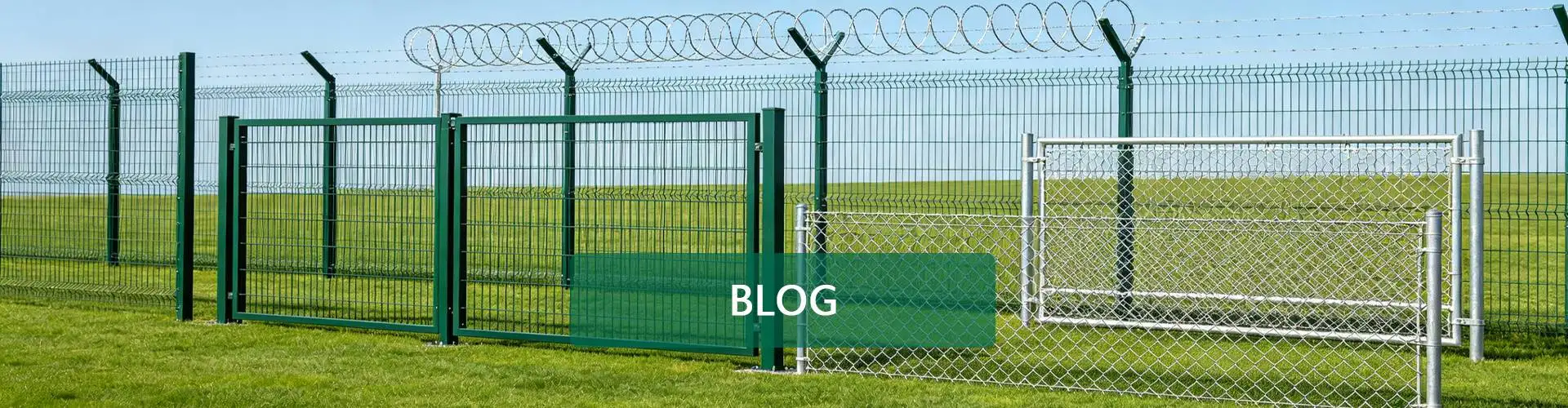
358 Fence and 3510 Fence can look surprisingly similar when viewed from a distance. Both use narrow rectangular welded mesh, both can create a clean security perimeter, and both are available with steel posts, security fixings, and matching gates.
However, they are not the same fence.
The main differences are found in the mesh opening, wire diameter, panel weight, anti-climb characteristics, and intended security level.
For project buyers, these differences affect more than technical specifications. They can also change the amount of steel in the fence, supporting post requirements, transportation weight, and total project budget.
So, instead of asking which fence is simply “better,” it is more useful to ask:
Does this part of the project actually need 358 Fence, or can 3510 Fence provide the required level of perimeter control?
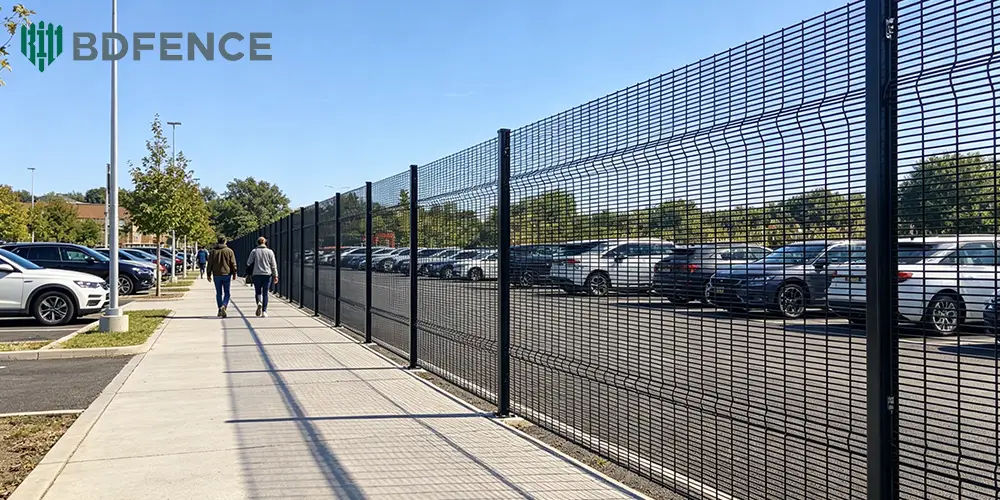
First, Decode the Names 358 and 3510
The product names provide a useful starting point for understanding the difference.
Traditional 358 terminology refers to approximately:
- 3-inch horizontal mesh dimension
- 0.5-inch vertical mesh dimension
- 8-gauge wire reference
A common metric 358 configuration is approximately:
- 76.2 × 12.7 mm mesh
- 4.0 mm wire
3510 follows a similar naming logic. A commonly supplied configuration is approximately:
- 76.2 × 25.4 mm mesh
- 3.0 mm wire
Therefore, the two products may share a similar rectangular mesh appearance, but 358 generally uses a narrower opening and heavier wire.
Final specifications can vary by project, so buyers should always confirm the actual mesh opening and wire diameter instead of relying only on the product name.
358 Fence vs 3510 Fence at a Glance
| Specification | 358 Fence | 3510 Fence |
|---|---|---|
| Common Mesh Opening | 76.2 × 12.7 mm | 76.2 × 25.4 mm |
| Common Wire Diameter | 4.0 mm | 3.0 mm |
| Mesh Character | Very narrow rectangular mesh | Larger rectangular opening |
| Panel Weight | Generally heavier | Generally lighter |
| Anti-Climb Characteristic | Higher | Moderate to high, depending on design |
| Visibility | Good | Good |
| Material Consumption | Higher | Lower |
| Typical Project Direction | Higher-security perimeter | Commercial or medium-security perimeter |
This comparison assumes the common specifications above. A project-specific 3510 or 358 panel may use a different wire diameter, height, post system, or coating.
The Biggest Difference Is Actually Inside One Square Meter
This is where the comparison becomes more useful for a buyer.
Consider one square meter of fence.
A 358 panel uses a much tighter 12.7 mm mesh dimension. Meanwhile, a typical 3510 panel uses a 25.4 mm dimension in the corresponding direction.
That means the 358 configuration requires more closely spaced wires.
Then add another difference: a common 358 specification uses 4.0 mm wire, while a common 3510 configuration may use 3.0 mm wire.
As a result, 358 Fence generally puts considerably more steel into the same fence area.
This affects:
- Panel weight
- Rigidity
- Material consumption
- Handling
- Shipping weight
- Fence cost
Therefore, comparing the two products only by panel dimensions misses an important part of the purchasing decision.
Why Does the Smaller 358 Mesh Matter for Security?
The 12.7 mm opening is one of the defining characteristics of 358 Security Fence.
Its narrow spacing provides very limited conventional hand and foot holds. Consequently, climbing the fence is more difficult than climbing many conventional welded mesh systems with larger openings.
The narrow mesh can also make it more difficult to manipulate the fence using some common hand tools.
This does not mean that any fence is impossible to climb or breach. Instead, 358 Fence should be understood as a perimeter product with stronger anti-climb characteristics.
That distinction is particularly relevant for projects where delaying unauthorized perimeter access is an important part of the security strategy.
What Changes When the Opening Becomes 25.4 mm?
3510 Fence opens the mesh spacing compared with 358 Fence.
This changes the balance of the product.
The fence can still create a narrow-mesh welded perimeter, but it generally uses less steel and produces a lighter panel when compared under similar dimensions.
For projects that do not require the tighter 358 specification, this can be commercially useful.
Instead of paying for the highest security specification around every meter of the site, a buyer can select a fence that better matches the actual risk level.
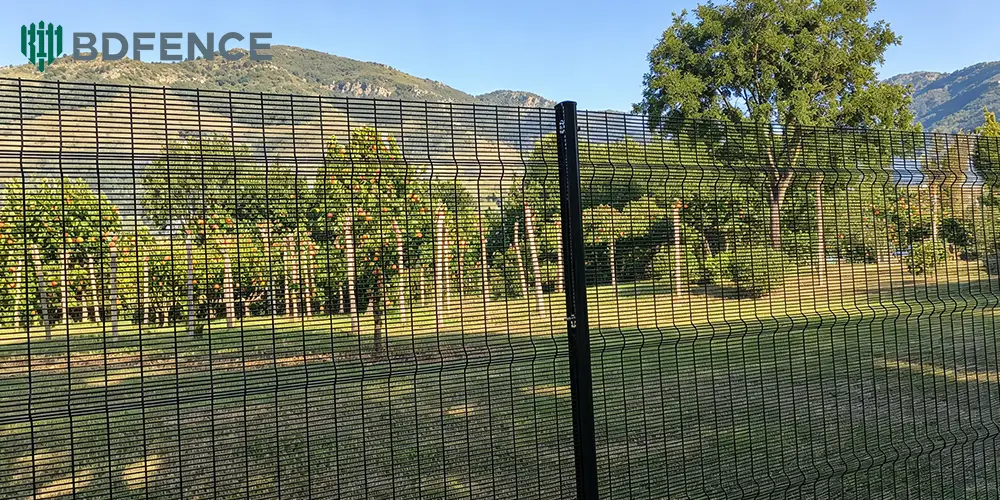
Which Fence Is More Rigid?
If we compare common configurations, 358 Fence normally has the advantage.
The combination of 4.0 mm wire and tighter mesh creates a heavier welded panel.
However, panel rigidity should not be judged from the mesh name alone.
A complete fence also depends on:
- Panel height
- Panel width
- Post dimensions
- Post wall thickness
- Post spacing
- Panel-to-post connection
- Foundation design
For example, a heavy 358 panel installed on an inadequate post system does not automatically create a well-designed security perimeter.
What About Visibility Through the Fence?
Both products retain the open character of welded mesh fencing.
This can be valuable around sites that use CCTV, guards, lighting, or other perimeter monitoring systems.
Instead of creating an opaque wall, security personnel can maintain sightlines through the fence.
3510 has a larger opening, so it can appear slightly more open. However, visibility also depends on viewing distance, fence height, coating color, lighting, and camera position.
For security-sensitive projects, fence selection and surveillance planning should therefore be coordinated rather than considered separately.
Where the Cost Difference Comes From
A buyer may receive a 3510 quotation that is noticeably lower than a 358 quotation and assume that one supplier is simply cheaper.
That conclusion can be misleading.
If the 3510 option uses a larger mesh opening and thinner wire, it contains less steel per square meter.
Therefore, part of the price difference comes directly from the product specification.
The final system price can also change because of:
- Panel height
- Post size
- Post wall thickness
- Post spacing
- Fixing system
- Galvanizing
- Powder coating
- Gate quantity
- Gate construction
- Packing and transportation
For this reason, buyers should not compare a 358 panel price directly with a 3510 panel price without first normalizing the specifications.
A Better Question: Where Will the Fence Be Installed?
Not every meter of a large site necessarily carries the same security risk.
Imagine an industrial or infrastructure project with several perimeter zones.
The site may include:
- Main controlled perimeter
- Critical equipment area
- Public-facing boundary
- Staff parking area
- Secondary internal boundary
- Low-risk landscape section
Specifying the same fence everywhere can be simple, but it may not always be the most efficient use of the project budget.
Instead, the project team can evaluate the required security level by zone.
Where 358 Fence Usually Makes More Sense
358 Fence should be considered when perimeter resistance and anti-climb characteristics carry greater importance.
Typical applications can include:
- Data centers
- Prison and correctional facilities
- Power infrastructure
- Utility compounds
- Critical industrial facilities
- Restricted storage areas
- Transport infrastructure
- Other controlled-access facilities
In these environments, the additional steel and tighter mesh may provide value that justifies the higher material cost.
Where 3510 Fence Can Be the More Practical Choice
3510 Fence can make sense when the project wants a narrow-mesh welded appearance but does not require the full 358 specification.
Possible applications include:
- Commercial boundaries
- Business parks
- Schools and campuses
- Warehouses
- Residential developments
- Secondary industrial boundaries
- Internal controlled zones
In these cases, a lighter specification can reduce unnecessary steel consumption while still creating a defined welded-mesh perimeter.
Can One Project Use Both 358 and 3510 Fence?
Yes, provided the security design allows it.
In fact, this can be a useful way to allocate the fencing budget.
For example, a project could specify:
| Project Zone | Possible Fence Direction |
|---|---|
| Critical Equipment Perimeter | 358 Security Fence |
| Main Restricted Boundary | 358 Security Fence |
| Secondary Internal Boundary | 3510 Fence |
| General Commercial Perimeter | 3510 Fence where approved |
This approach avoids treating every fence section as if it has exactly the same security function.
However, any mixed specification should follow the project’s approved security and engineering requirements.
Do Not Forget the Posts
This is one of the easiest details to overlook when comparing quotations.
A supplier may quote a heavy 358 panel but pair it with a different post specification from another supplier.
Therefore, always compare:
- Post section size
- Post wall thickness
- Post length
- Post spacing
- Base plate or embedded installation
- Surface treatment
- Panel fixing method
The same principle applies to 3510 Fence.
A good quotation should make it clear what supports each panel rather than listing only the mesh specification.
Security Fixings Can Change the Complete System
For higher-security projects, the panel-to-post connection deserves special attention.
Different systems may use:
- Full-length clamp bars
- Individual brackets
- Security bolts
- Specialized anti-tamper fasteners
The appropriate fixing method depends on the required security level, post design, installation method, and project specification.
Therefore, two fences with identical 76.2 × 12.7 mm mesh may still represent different complete security systems.
358 vs 3510: Which Should You Choose?
The decision becomes easier when you start with the project requirement rather than the product name.
| If Your Priority Is… | Consider… |
|---|---|
| Stronger anti-climb characteristics | 358 Fence |
| Tighter security mesh | 358 Fence |
| Heavier welded panel | 358 Fence |
| Critical perimeter application | 358 Fence |
| Lower material consumption | 3510 Fence |
| General commercial perimeter | 3510 Fence may be sufficient |
| Secondary project zones | 3510 Fence where approved |
| Maximum budget efficiency across a large site | Consider zoning the fence specification |
How to Compare 358 and 3510 Quotations Correctly
Before deciding which supplier offers better value, place the specifications side by side.
Check at least:
- Actual mesh opening
- Actual wire diameter
- Panel height and width
- Panel weight if available
- Post size and wall thickness
- Post spacing
- Fixing system
- Galvanizing and coating requirements
- Gate specifications
- Included fittings
- Packing method
- Trade terms
Only after these items are aligned does a price comparison become meaningful.
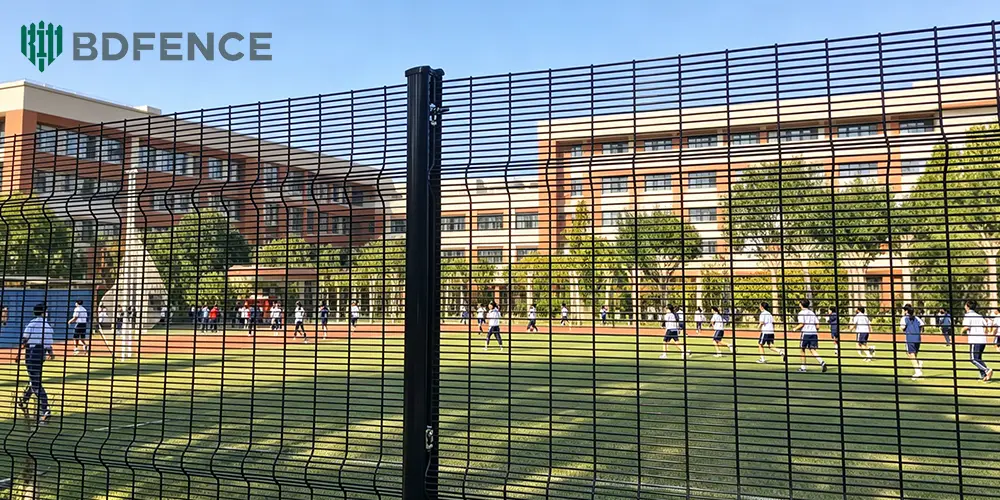
What Should You Send BDFENCE for a Project Recommendation?
If you are deciding between 358 Fence and 3510 Fence, send the available project information to BDFENCE.
Useful details include:
- Project country
- Application or industry
- Total perimeter length
- Required fence height
- Security level or project specification
- Preferred mesh size
- Wire diameter
- Post requirements
- Surface treatment
- Powder-coated color
- Pedestrian gate quantities
- Vehicle gate quantities
- Drawings, BOQ, or fence schedule
- Destination port
If the fence specification has not been finalized, BDFENCE can review the available information and quote suitable configurations for comparison.
Why Choose BDFENCE?
Hebei Bendin Industrial Technology Co., Ltd. (BDFENCE) manufactures welded security fence systems for commercial, industrial, infrastructure, utility, and high-security projects.
Our project supply can include:
- 358 Security Fence panels
- 3510 welded mesh panels
- Customized steel posts
- Security fixing systems
- Post caps
- Pedestrian gates
- Vehicle gates
- Installation accessories
Project buyers can send drawings, BOQ documents, fence schedules, and gate requirements for technical review and quotation.
Final Answer
The difference between 358 Fence and 3510 Fence is not simply a different product name.
A common 358 configuration uses 76.2 × 12.7 mm mesh with 4.0 mm wire, while a common 3510 configuration uses approximately 76.2 × 25.4 mm mesh with 3.0 mm wire.
Consequently, 358 Fence generally contains more steel, produces a heavier panel, and provides stronger anti-climb characteristics.
3510 Fence, meanwhile, can reduce material consumption and may offer a more economical solution for commercial, secondary, or moderate-security areas.
The right choice depends on where the fence will be installed and what that section of the perimeter actually needs to do.
Contact BDFENCE
Hebei Bendin Industrial Technology Co., Ltd. (BDFENCE)
Phone:
+86 18703182863
WhatsApp:
+86 18703287372
Email:
info@bd-fence.com
Website:
https://bd-fence.com/
FAQ
What is the main difference between 358 Fence and 3510 Fence?
The main differences are mesh opening and wire diameter. A common 358 configuration uses 76.2 × 12.7 mm mesh with 4.0 mm wire, while a common 3510 configuration may use approximately 76.2 × 25.4 mm mesh with 3.0 mm wire.
Is 358 Fence stronger than 3510 Fence?
When comparing the common specifications above, 358 Fence generally creates a heavier and more rigid welded panel. However, complete fence performance also depends on posts, spacing, fixings, foundations, and panel dimensions.
Which fence has better anti-climb characteristics?
358 Fence generally provides stronger anti-climb characteristics because its 12.7 mm narrow mesh offers very limited conventional hand and foot holds.
Is 3510 Fence cheaper than 358 Fence?
It can be. A typical 3510 configuration uses a larger mesh opening and thinner wire, which reduces steel consumption. Final cost also depends on height, posts, coating, gates, fittings, quantity, and shipping.
Can 3510 Fence be used for commercial projects?
Yes. Depending on the required security level, 3510 Fence can be considered for commercial boundaries, warehouses, campuses, residential developments, and secondary industrial zones.
Can 358 and 3510 Fence be used on the same project?
Yes, when permitted by the project design. For example, 358 Fence can protect higher-risk zones while 3510 Fence can be used around approved lower-risk or secondary sections.
Can BDFENCE customize both 358 and 3510 Fence?
Yes. BDFENCE can customize panel dimensions, wire diameter, mesh specification, posts, fixing systems, surface treatment, colors, and gates according to project requirements.
Can I send a BOQ to compare 358 and 3510 Fence?
Yes. BDFENCE can review your BOQ, fence drawings, technical specifications, and gate schedule and prepare suitable fence configurations for quotation.