


A 358 security fence quotation can be quite detailed about the mesh and surprisingly vague about the fixings.
You might see the panel height, wire diameter, mesh opening, post size and coating finish all listed on the same page. Then, near the bottom, there is a short line that says “security clips included.”
That line deserves a closer look.
The fixing system connects the mesh panel to the steel posts. It affects how the fence goes together, how the connections remain secure and what the installer needs on site.
Two factories can offer the same 358 mesh panel but use very different fixing arrangements. One may supply individual clips. Another may use a long clamp bar that holds the panel edge against the post.
Neither arrangement is automatically the better choice. The question is whether the complete system matches the security requirements and the project drawing.
A Detail That Can Change the Whole Fence Quotation
Consider a contractor purchasing 358 fencing for an industrial facility.
The tender drawing specifies a 4mm wire mesh with the familiar narrow 358 openings. It also shows the required fence height and general post arrangement.
However, the fixing detail is missing.
Supplier A offers individual security clips at several points along the post.
Supplier B proposes a continuous clamp bar along the panel edge.
Both quotations describe the product as a 358 anti-climb fence.
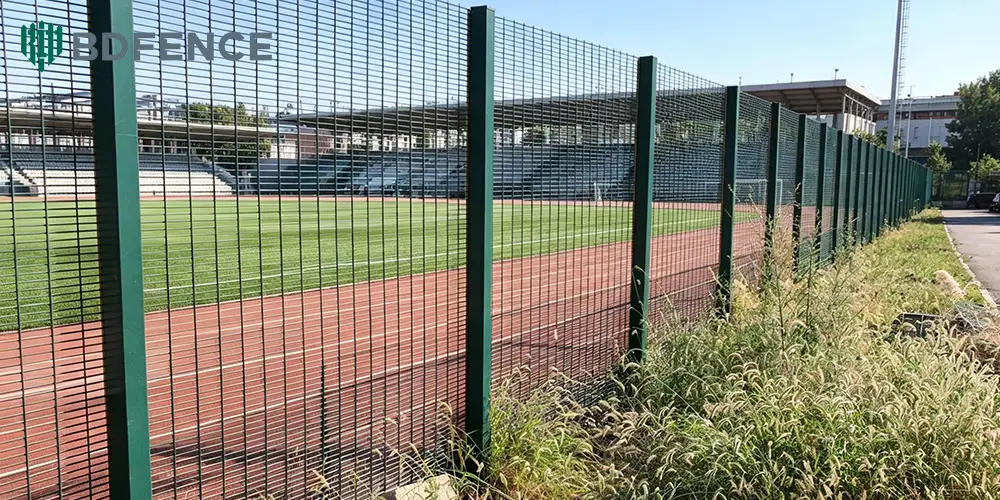
From a distance, the finished fences might look similar. At the post connection, however, they are different systems.
The contractor cannot compare the two prices properly until the fixing arrangement is clear.
A clamp-bar offer may include long steel strips, matching bolts and a particular post profile. A clip-based offer may use several smaller brackets and its own hardware.
The number of parts, material weight and installation steps can all differ.
This is why we prefer to quote the mesh, posts and fixings as one matched system.
How Individual 358 Fence Clips Work
A clip-based connection uses separate fixing points to hold the mesh panel against or alongside the post.
The exact clip shape depends on the fence manufacturer’s system.
Some designs use formed metal brackets. Others use plates or purpose-made security clips with matching bolts.
The installer positions the panel, aligns the fixing points and secures the hardware according to the approved installation details.
For contractors, individual clips can be convenient when the system is familiar and the correct parts arrive with the fence.
They also make each connection point easy to identify during installation.
However, there is an important limitation.
A clip is only as useful as the complete connection around it. The clip material, bolt, post wall, hole position and number of fixing points all affect the assembly.
Adding a few extra clips without checking the design does not automatically improve the security rating.
Similarly, using a standard bolt in place of a specified security fastener may change the intended resistance to tampering.
The approved connection detail should decide which hardware belongs on the fence.
What Is a Clamp Bar on a 358 Security Fence?
A clamp bar is a longer steel member used to secure the mesh panel edge against the supporting post.
Rather than relying on separate short brackets alone, the system uses a bar with fixing points along its length.
The bar and post must fit the panel correctly.
For example, the position of the mesh wires, bolt holes and post face all influence how the parts come together.
The clamp bar may give the fence a more continuous-looking connection along the panel edge.
However, its performance still depends on the complete design.
The bar thickness, length, hole arrangement, fasteners and post specification all matter.
A poorly matched clamp bar is not a security upgrade simply because it covers more of the panel edge.
For this reason, the factory should supply the clamp bar as part of an agreed fence system rather than as an unrelated accessory.
The Difference Is Easier to See at the Post
The most useful comparison is not a product photo showing two complete fences.
It is a close-up of the post connection.
With individual clips, you can see separate fixing points along the panel edge.
With a clamp bar, a longer steel member runs along the connection and secures the mesh at the specified locations.
Both systems still need suitable fasteners.
Both also depend on the correct relationship between the panel width and the post spacing.
This last point is easy to miss.
A panel described as 2,500mm wide does not automatically require posts at 2,500mm centers. The actual setting-out distance depends on the post profile, fixing arrangement and approved dimensions.
If a contractor prepares the foundations before confirming that detail, the panels may not fit as expected.
For an overseas project, that mistake is particularly inconvenient. The supplier may be thousands of kilometers away when the installation crew discovers the problem.
Which System Is Harder to Remove?
Security is often the main reason buyers ask about clamp bars.
A longer bar may appear more difficult to interfere with than several individual clips.
However, appearance alone does not prove that one fixing system provides greater resistance to attack or removal.
The fasteners, their accessibility, the connection design and the strength of the surrounding components all matter.
Some clip systems use purpose-made security hardware. Clamp-bar systems can also use security fasteners.
The correct choice depends on the required security performance and the evidence supporting the proposed system.
If a project specification requires a tested or approved fence arrangement, the buyer should request documentation for the complete panel, post and fixing system.
A general statement such as “anti-tamper fixing” is not the same as a verified performance result.
BDFENCE can manufacture to a confirmed fixing specification, but the project security designer should approve any change from the required system.
Installation: Where the Differences Become Practical
On a long perimeter, the installation team repeats the same connections many times.
That makes the fixing arrangement an important part of the site work.
With individual clips, installers handle several smaller components at each post. They need the correct clip positions, fasteners and tightening instructions.
A clamp-bar system uses longer members that must align with the mesh and post fixing points.
Neither method is always faster.
Installation time depends on the panel height, number of connections, post design, crew experience and site conditions.
A contractor familiar with one system may work efficiently with it. Another crew may prefer the arrangement already shown in the project’s approved drawings.
Before choosing a fixing system to save installation time, ask the supplier for the actual connection drawing and component list.
It is much more useful than relying on a general claim that one method installs faster.
A Common Problem: Mixing Panels and Posts from Different Suppliers
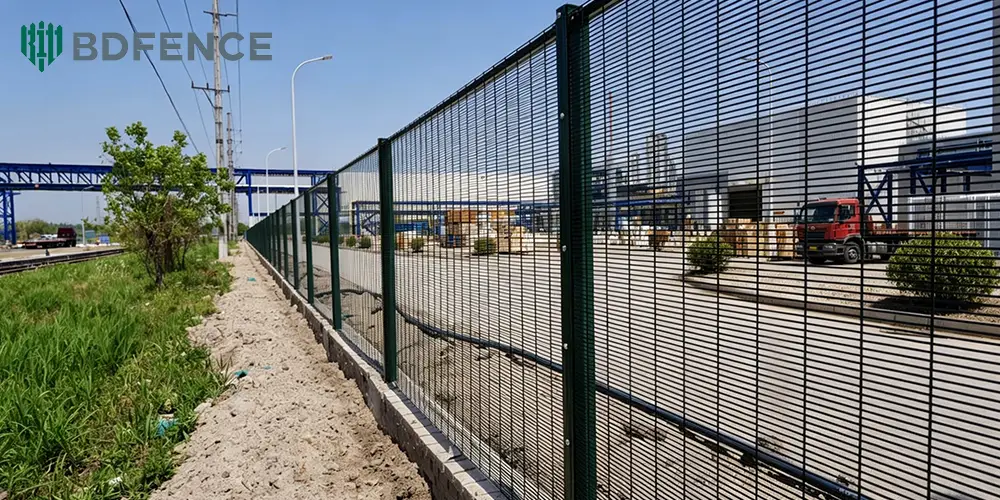
Sometimes a buyer purchases 358 mesh panels from one factory and posts or accessories from another.
That can work when the specifications match.
But it also creates room for mistakes.
The panel width may differ from the fixing system’s intended dimensions. The post holes may not align with the clips or clamp bars. Even the supplied bolts may have the wrong length for the connection.
The problem is not necessarily poor product quality.
The components may simply belong to different systems.
For this reason, we recommend checking the following details before combining parts from different suppliers.
| Item | What Needs to Match |
|---|---|
| 358 mesh panel | Overall dimensions and edge arrangement |
| Steel post | Section, wall thickness and fixing face |
| Individual clips | Shape, position and required quantity |
| Clamp bar | Length, section and hole positions |
| Fasteners | Size, length, grade and security type |
| Post spacing | Approved center-to-center distance |
| Surface finish | Required corrosion protection |
| Installation detail | Correct assembly and tightening instructions |
A complete drawing should show how these parts connect.
Without it, the buyer may receive individually acceptable products that do not assemble into the intended fence.
Does a Clamp Bar Cost More Than Clips?
There is no reliable answer based on the fixing name alone.
A clamp bar may use more steel than a small individual clip, but a clip-based system may require several clips and fasteners along each post.
Production methods, material thickness, coating and order quantity also affect the cost.
More importantly, the quotation must cover the complete connection.
Suppose one supplier includes all clamp bars, bolts and matching posts. Another quotes mesh panels and posts but lists the clips separately.
The second price may look lower at first.
Once the buyer adds the missing hardware, the difference may change.
For a project with hundreds of fence bays, even a small difference in the fixing package can affect the total order value.
A useful quotation should therefore state exactly what comes with each panel or post.
The buyer should not need to guess whether the fixing hardware is included.
The Finish Matters at the Connection Too
358 fencing is often used outdoors for industrial, utility and other controlled-access boundaries.
The mesh panels may have a specified galvanized or powder-coated finish. The posts and fixings need suitable corrosion protection as well.
Small connection parts should not be ignored.
If the project requires a particular coating system, the clips or clamp bars and their fasteners must follow the approved requirements.
Cut edges, contact between different metals, damaged coatings and water traps can all affect long-term performance.
A factory should not assume that a coated panel makes the entire fence system corrosion-resistant.
The connection components deserve the same attention as the visible mesh.
What We Would Check on a BDFENCE Inquiry
When a customer sends us a 358 fence drawing, we look for the connection detail as well as the mesh specification.
If the drawing already shows clips or clamp bars, that gives us a clear starting point.
We can then review the requested post section, panel dimensions, hardware and finish.
If the drawing only says “358 fence with security fixings,” we need more information.
The project may have a preferred fixing system or a security requirement that limits the available options.
For an early-stage inquiry, we can discuss possible arrangements based on the customer’s needs. However, any final selection must follow the approved project requirements.
We also need to know whether the quotation should include gates, special panels and other perimeter components.
A fence order is easier to manage when the material list describes the complete system rather than the mesh alone.
Before You Order, Ask for the Fixing Detail
If you are comparing 358 security fence manufacturers, ask each supplier to show the proposed panel-to-post connection.
You do not need a complicated drawing package for the first discussion.
A clear connection drawing and component list can answer several important questions:
- Does the fixing system match the specified post?
- What hardware comes with each connection?
- How does the panel fit between or against the posts?
- What post spacing does the system require?
- Does the connection meet the project’s security requirements?
- Are the fixings included in the quoted price?
If you already have a BOQ or tender drawing, send it directly to BDFENCE.
We can prepare a quotation based on the available specifications and identify any fixing details that still need confirmation.
Phone: +86 18703182863
WhatsApp: +86 18703287372
Email: info@bd-fence.com
So, Clips or Clamp Bars?
For a standard project, the right answer may be the fixing system already approved in the drawing.
For a new security fence design, the decision requires a closer look at the intended security performance, post arrangement, installation conditions and total cost.
Individual clips can provide a practical connection when the complete system meets the project requirements.
Clamp bars offer a different way to secure the panel edge, but they are not automatically more secure simply because they use a longer steel member.
The important point is that the panel, post, fixing hardware and installation details work together.
A good 358 fence quotation should make that relationship clear.
BDFENCE 358 Security Fence Manufacturing
BDFENCE is the fencing brand of Hebei Bendin Industrial Technology Co., Ltd., a metal fence manufacturer in China.
Our team has more than 30 years of metal fence manufacturing experience. The factory covers approximately 15,000㎡ and operates with more than 190 employees and over 80 machines.
We supply 358 security fencing and other metal fence products to international contractors, distributors and project buyers.
For 358 fence inquiries, we can work from customer drawings and confirmed specifications covering mesh panels, posts, fixings, gates and special sections.
Whether your project uses clips or clamp bars, we recommend confirming the complete connection before production.
FAQ
Are clamp bars more secure than individual 358 fence clips?
Not automatically. Security depends on the complete panel-to-post connection, fasteners, post design and any required testing or approval. A longer bar alone does not prove higher security performance.
Can I replace 358 fence clips with clamp bars?
Only after confirming compatibility and obtaining any required design approval. The post, panel dimensions, hole positions and hardware may need to change.
How many clips are needed for a 358 fence panel?
There is no universal number. The required quantity depends on the panel height, post design, fixing system and approved project specification.
Do clamp bars work with every 358 fence post?
No. Clamp bars must match the post section, fixing positions and panel arrangement. A bar designed for one system may not fit another.
Should 358 fence fixings be galvanized or powder coated?
The finish should follow the project’s corrosion protection requirements. Clips, clamp bars and fasteners may have different coating specifications, so confirm each component.
Can BDFENCE quote 358 fencing with either fixing system?
BDFENCE can review customer requirements for clip-based or clamp-bar arrangements and prepare a quotation based on the confirmed design and available manufacturing options.
Contact BDFENCE
Hebei Bendin Industrial Technology Co., Ltd. (BDFENCE)
Phone: +86 18703182863
WhatsApp: +86 18703287372
Email: info@bd-fence.com
Website: https://bd-fence.com/