


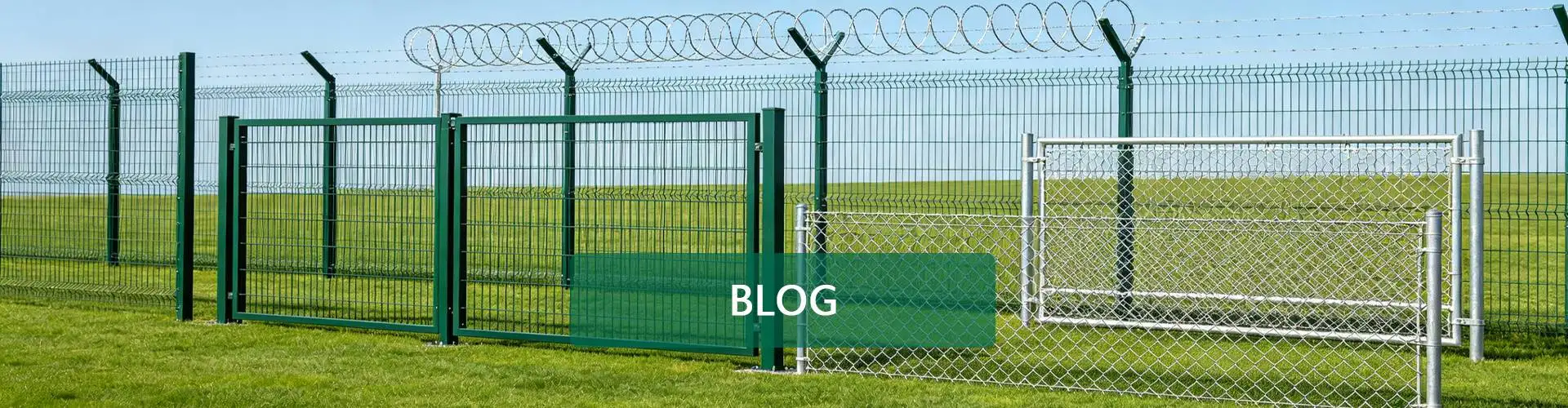

An automotive components factory in Mexico required a rigid fencing system to separate production-related areas, logistics routes, equipment zones, and controlled-access sections.
The site did not need the very narrow anti-climb mesh used for high-security 358 Fence. However, the customer wanted a welded mesh system that remained rigid across long fence runs and provided clear visibility between operational areas.
BDFENCE supplied a 2D Double Wire Fence system with welded mesh panels, steel posts, fixing components, pedestrian gates, and vehicle access gates.
Instead of treating the fence as one continuous boundary, the project was planned around the different functions inside the industrial facility.
Project Profile
| Project Item | Details |
|---|---|
| Country | Mexico |
| Sector | Automotive Components Manufacturing |
| Application | Industrial Perimeter and Internal Zone Separation |
| Main Product | 2D Double Wire Fence |
| Panel Structure | Double Horizontal Wire Welded Mesh |
| Access System | Pedestrian and Vehicle Gates |
| Supply Scope | Panels, Posts, Fixings, Gates and Accessories |
The Factory Needed More Than a Property Boundary
Industrial fencing often performs several jobs inside one site.
For this factory, the fence system helped organize areas such as:
- Production buildings
- Material storage areas
- Equipment zones
- Truck circulation routes
- Staff access points
- Restricted operational sections
Therefore, visibility was important. Staff needed to see through the fence while the physical boundary remained clearly defined.
The rigid structure of the 2D panels also helped create a more permanent industrial perimeter than a flexible mesh system.
Why 2D Double Wire Fence Was Selected
The defining feature of a 2D Fence is its double horizontal wire construction.
Instead of using one horizontal wire at each mesh line, two horizontal wires reinforce the vertical wire.
This structure increases panel rigidity without requiring the V-shaped bends commonly seen in 3D welded mesh panels.
For the factory, that offered several practical advantages:
- Rigid welded panel construction
- Good visibility through operational areas
- Clean industrial appearance
- Compatibility with multiple fence heights
- Easy integration with pedestrian and vehicle gates
- Clear separation between factory zones
The Wire Specification Had to Match the Application
2D Fence is available in different wire combinations.
Typical specifications may include:
- 6/5/6 mm
- 8/6/8 mm
- Other project-specific combinations
In a 6/5/6 configuration, the two horizontal wires are typically 6mm while the vertical wire is 5mm.
An 8/6/8 configuration uses heavier wires and therefore contains considerably more steel.
However, heavier is not automatically better for every section of an industrial site.
The appropriate specification should reflect the required rigidity, fence height, exposure, post system, and project budget.
Different Factory Zones Can Need Different Fence Decisions
One useful approach for industrial projects is to divide the site by function before selecting the fence specification.
| Factory Zone | Main Fence Priority |
|---|---|
| External Boundary | Rigid perimeter control |
| Production Area | Clear separation and visibility |
| Equipment Zone | Controlled personnel access |
| Material Storage | Defined operational boundary |
| Truck Route | Vehicle separation and strong gate access |
| Staff Entrance | Controlled pedestrian movement |
This approach prevented the project from being reduced to one question: “What is the strongest panel?”
Instead, each part of the fence system had a defined job.
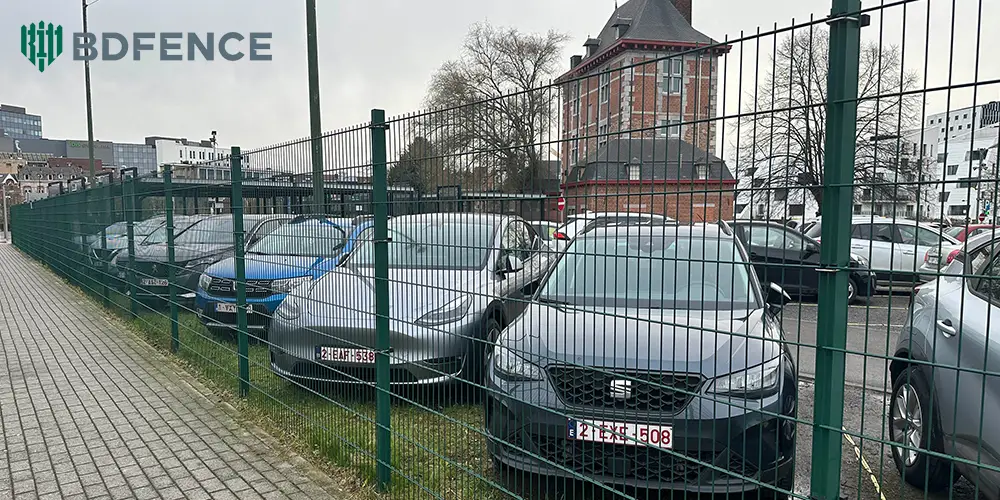
Panel Height Was Coordinated with Each Zone
Fence height influences more than the visible boundary.
As a 2D panel becomes taller, the project should also review:
- Post section
- Post wall thickness
- Post length
- Fixing quantity
- Foundation requirements
- Gate height
For this reason, fence height and supporting components were considered together rather than specifying panels first and posts later.
Posts Were Matched to the Double Wire Panels
2D panels can be relatively heavy because of the additional horizontal wires.
The post system therefore needed to match:
- Panel height
- Panel width
- Wire combination
- Post spacing
- Installation method
- Site conditions
Post outside dimensions alone were not enough to define the support system.
Wall thickness also needed to be confirmed because two posts with the same outside section can have different steel weights and rigidity.
Panel-to-Post Connections Were Part of the System
A rigid panel needs a suitable connection to transfer loads into the supporting posts.
Depending on the approved design, a 2D Fence system can use:
- Steel brackets
- Clamps
- Fixing plates
- Bolts and nuts
- Other project-specific fixing components
The fixing quantity was matched to the panel height and connection arrangement.
This avoided a common purchasing problem: ordering a heavy panel but comparing suppliers using only the panel specification.
Visibility Helped Inside the Industrial Facility
Solid barriers can block sightlines between operational areas.
The open welded mesh structure allowed personnel to see through the boundary while still defining restricted areas.
This was useful around production-related zones where supervisors and workers needed visual awareness of nearby activity.
At the same time, the flat double-wire panels maintained a clean and organized appearance across the facility.
Pedestrian Gates Controlled Staff Movement
Pedestrian gates were positioned where workers needed controlled access between operational zones.
The gate system used a design coordinated with the adjacent 2D Fence.
The specification considered:
- Clear opening width
- Gate height
- Frame tube size
- 2D mesh infill
- Gate posts
- Hinges
- Locking hardware
Using matching mesh infill helped the gates remain visually consistent with the surrounding fence.
Vehicle Gates Required a Separate Structural Review
Truck and service entrances create a different load condition from standard fence panels.
Therefore, vehicle gates were not calculated as oversized fence panels.
The project considered:
- Vehicle opening width
- Gate type
- Frame structure
- Frame wall thickness
- Mesh infill
- Gate post size
- Gate post wall thickness
- Operating hardware
This was especially important around logistics routes where gates could experience frequent daily operation.
The Gate Posts Were Different from Normal Line Posts
Line posts support fixed welded panels.
Gate posts support moving steel frames.
As a result, the gate-post specification needed to reflect the actual gate dimensions and operating method.
For larger vehicle entrances, heavier posts could be required compared with the standard fence line.
Surface Treatment Was Applied as a Complete-System Decision
The panels were only one part of the exposed steel system.
The project also considered corrosion protection for:
- Steel posts
- Gate frames
- Gate posts
- Brackets
- Visible connection components
Depending on the final project requirement, 2D Fence can be supplied with galvanized, powder-coated, or galvanized + powder-coated finishes.
For colored industrial fencing, the required RAL color should be confirmed before production.
Factory Production Focused on Panel Consistency
A long industrial fence makes dimensional differences easy to notice after installation.
Therefore, production checks focused on keeping the welded panels consistent.
| Component | Inspection Focus |
|---|---|
| 2D Panels | Wire diameter, mesh spacing, dimensions, welds and flatness |
| Steel Posts | Section, wall thickness, length and straightness |
| Fixings | Dimensions, fit and quantity |
| Pedestrian Gates | Frame dimensions, alignment and mesh infill |
| Vehicle Gates | Frame structure and post compatibility |
| Surface Finish | Visible coating condition and consistency |
Flat Panels Needed Suitable Export Packing
2D Fence panels are rigid and relatively heavy compared with flexible fence mesh.
During export packing, the main priorities included:
- Keeping panel stacks stable
- Reducing movement between panels
- Protecting the visible finish
- Separating posts from panels
- Grouping small fixings
- Protecting gate frames
The packing arrangement also helped the installation team identify different components after delivery.
Installation Followed the Factory Zone Layout
The fence was installed according to the site layout rather than as one uninterrupted perimeter.
A typical installation sequence included:
- Confirm fence lines and functional zones
- Mark corners, end points, and gate openings
- Set out post positions
- Prepare foundations or base-plate locations
- Install and align posts
- Position the 2D welded panels
- Secure panels with the approved fixing system
- Install pedestrian gates
- Install vehicle gates
- Check alignment, connections, and gate operation
What BDFENCE Supplied
| Component | Function |
|---|---|
| 2D Double Wire Panels | Industrial perimeter and internal separation |
| Line Posts | Standard panel support |
| Corner / End Posts | Direction changes and fence termination |
| Fixing Components | Panel-to-post connection |
| Pedestrian Gates | Controlled personnel access |
| Vehicle Gates | Truck and service access |
| Gate Posts | Support moving gate structures |
| Installation Accessories | Complete fence assembly |
Why an Industrial Buyer Should Compare the Complete Fence System
Two quotations can show the same 2D wire specification while representing different complete systems.
For example, suppliers may quote different:
- Panel widths
- Post sections
- Post wall thicknesses
- Post spacing
- Fixing quantities
- Gate frames
- Gate posts
- Surface treatments
Therefore, comparing only the price of a 6/5/6 or 8/6/8 panel can give an incomplete picture of the project cost.
What Should Be Included in an Industrial 2D Fence RFQ?
For a more accurate quotation, provide:
- Project country
- Industrial application
- Total fence length
- Fence layout or site drawing
- Fence height
- Panel width
- Horizontal wire diameter
- Vertical wire diameter
- Mesh opening
- Post size
- Post wall thickness
- Post spacing
- Installation method
- Pedestrian gate schedule
- Vehicle gate schedule
- Surface treatment
- RAL color if required
- BOQ if available
- Destination port
If the final panel and post specifications have not yet been selected, BDFENCE can review the available project information before preparing the quotation.
Why Choose BDFENCE for 2D Fence Projects?
Hebei Bendin Industrial Technology Co., Ltd. (BDFENCE) manufactures welded mesh fence systems for industrial facilities, factories, logistics centers, warehouses, schools, sports facilities, residential developments, utilities, and infrastructure projects.
Our 2D Fence supply can include:
- 6/5/6 double wire panels
- 8/6/8 double wire panels
- Customized wire combinations
- Different panel heights and widths
- Steel line posts
- Corner and end posts
- Fixing systems
- Pedestrian gates
- Vehicle gates
- Heavy gate posts
- Galvanized finishes
- Powder-coated finishes
- Galvanized + powder-coated systems
Project buyers can send drawings, BOQ documents, fence schedules, gate requirements, and technical specifications directly to BDFENCE for review and quotation.
Project Takeaway
For this automotive components factory in Mexico, the main value of the 2D Fence was not simply the additional horizontal wire.
The double-wire structure provided a rigid foundation for a complete industrial fencing system.
Panels defined the factory zones, posts supported the welded mesh, pedestrian gates controlled staff movement, and vehicle gates coordinated with logistics traffic.
For industrial buyers, the most useful approach is to specify the complete system around the function of each site zone rather than purchasing welded panels as an isolated product.
Contact BDFENCE
Hebei Bendin Industrial Technology Co., Ltd. (BDFENCE)
Phone:
+86 18703182863
WhatsApp:
+86 18703287372
Email:
info@bd-fence.com
Website:
https://bd-fence.com/
FAQ
Why use 2D Double Wire Fence for an industrial facility?
The double horizontal wires create a rigid welded panel that can provide clear boundary control, visibility, and a structured appearance around industrial areas.
Is 6/5/6 or 8/6/8 better for an industrial project?
The appropriate specification depends on fence height, required rigidity, post system, site conditions, and budget. 8/6/8 contains more steel, while 6/5/6 may be sufficient for many general industrial applications.
Can 2D Fence be used inside a factory?
Yes. It can be used for internal zone separation, equipment areas, storage sections, service routes, and other controlled areas when the approved project design allows it.
Can 2D Fence include vehicle and pedestrian gates?
Yes. BDFENCE can supply matching pedestrian gates, swing vehicle gates, gate posts, and other access components according to the confirmed project specification.
Do heavy 2D panels need stronger posts?
Post section, wall thickness, spacing, foundation, and fixing method should be reviewed together with panel height, width, and wire weight.
Can 2D Fence be powder coated?
Yes. Powder-coated and galvanized + powder-coated finishes can be supplied in different RAL colors according to confirmed requirements.
Can BDFENCE customize the mesh and panel dimensions?
Yes. Wire combinations, mesh openings, panel dimensions, posts, fixings, gates, and finishes can be customized according to the confirmed project specification.